The Whisky Warehouse No. 8 – Glenturret 8 year 57.5%

This would be my 3rd Glenturret 8 year from an independent bottler! We were rather impressed by the North Star’s Glenturret – which was distilled the same month as this Warehouse cask and bottled within a month of each other. I’d also had the pleasure of trying Chorlton’s Ruadh Maor aka peated Glenturret.

So what about this one from The Whisky Warehouse No. 8?

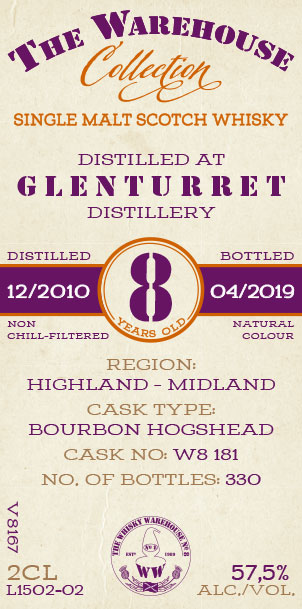
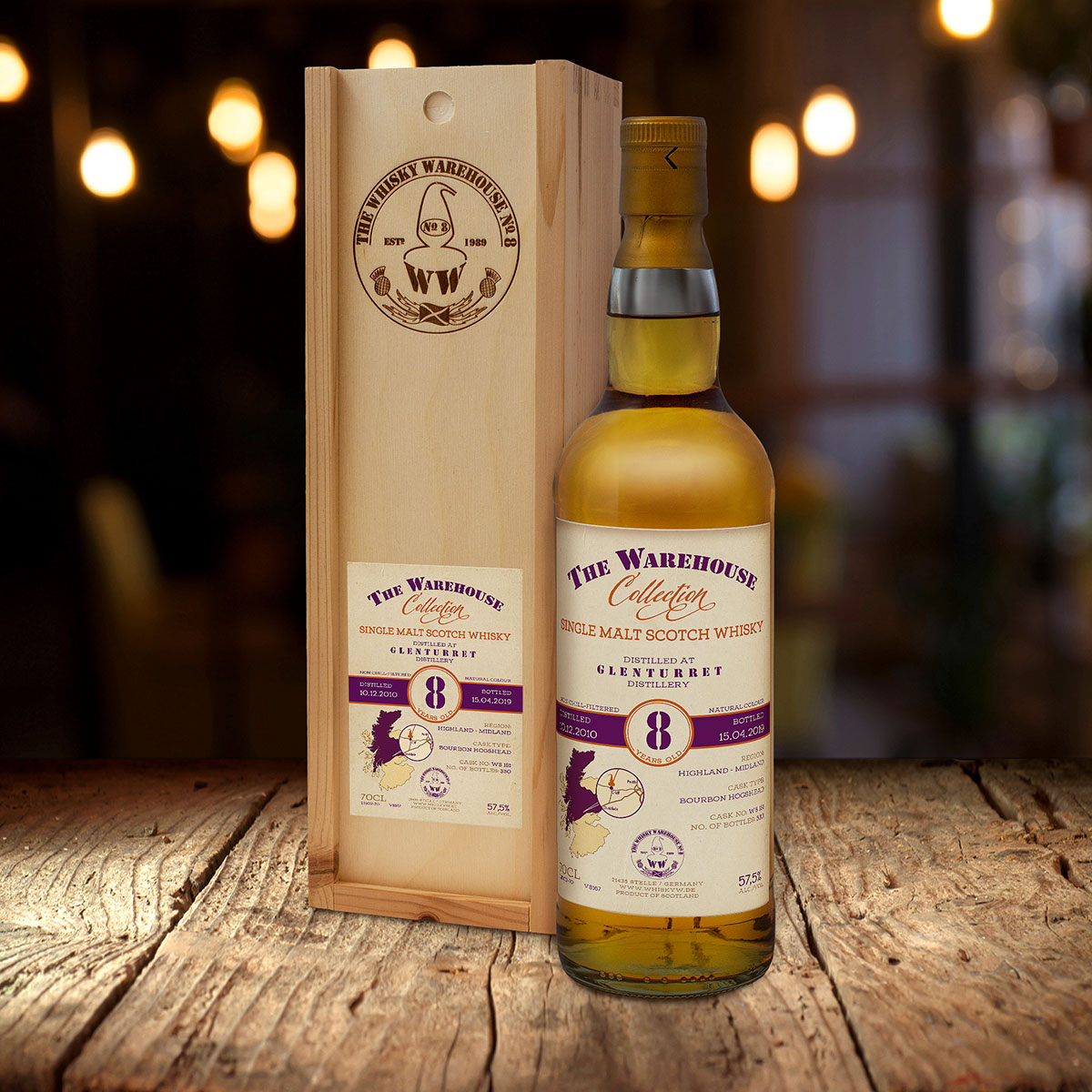
Glenturret 8 year (Dec 2010 / Apr 2019) Bourbon Hogshead Cask No. W8 181, 57.5% 330 Bottles

  • Nose – Even before putting in the glass, we had a whiff of our wee bottle and went – Mmmm….sweet smoked bacon! And then into the glass it went and… huh? Where did the delicious aroma go? Instead we found a brine, hay… predominantly cereals like hot (slightly boring) porridge, wet fall leaves, rubber gum… is that gym shoe? Curious
  • Palate – Ah.. now here is the light peat smoke, bay leaves, cinnamon spice, a bit of ginger bread… not a heavy peat, more like peat ‘adjacent’
  • Finish – It does last…

Let’s be honest, we were a tad disappointed. I happened to have the North Star Glenturret bottle handy and pulled it out to compare, making my virtual tasting companions a wee bit jealous. Yup! There were all the fabulous elements we enjoyed about the Glenturret – a nuanced peat, tasty cereals, maple bacon… We dismissed the Glenturret and moved on to our other minis..

However a funny thing happened along the way… as it patiently sat there… an amazing alchemy with air took place. We returned for a revisit and we delighted to discover much that we enjoyed in the North Star was now present! Where had all those lovely qualities been hiding?

  • Nose – Gingerbread joined the light puff of smoke,
  • Palate – Some cheese, smoked meats chased by cinnamon spice
  • Finish – Remained dry and long

Even on the first go, we enjoyed the palate more than nose alone… however with the revisit it was clear this had all the makings of a rather enjoyable dram. Certainly one to wait for it…. wait for it… as it just might be “Legend… wait for it…. dary!

Curious about other Glenturret experiences?

If you don’t want to miss a post, why not follow Whisky Lady on:

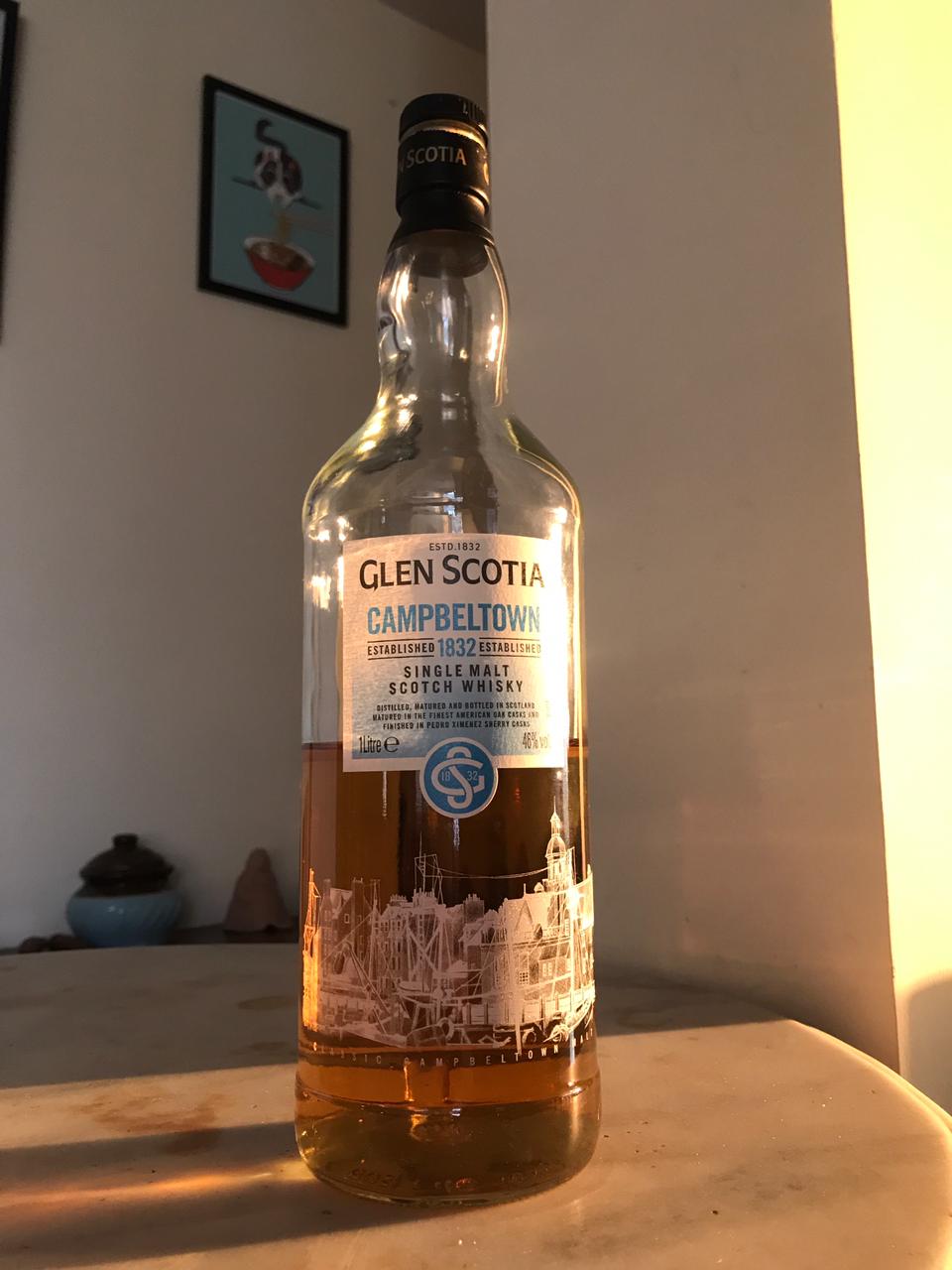
Glen Scotia 1832 Campbeltown 46%

Last in our Campbeltown trio was a no-age statement (NAS) Travel Retail offering from Glen Scotia. While one may be tempted to have an NAS before age statement whiskies, in this case, I knew this expression was both more peated than a standard Glen Scotia, plus experimentation with a PX sherry cask finish, so it ‘felt’ intuitively like the one to close with… even though the least expensive of the bunch!

That’s part of the magic with tasting order – when trying whiskies side by side, selecting the right progression of profiles is critical. Try something really intense up front and you can overwhelm the senses to miss completely the nuances of a subtler dram. It seems self-evident, but can be tricky when you’ve never tried that particular expression and have to go by a ‘gut’ feel basis what you do know of the distillery, potential impact of the wood, particularly as described peat levels can be notoriously unreliable – both by ppm and the ‘eye’ (palate) of the beholder!

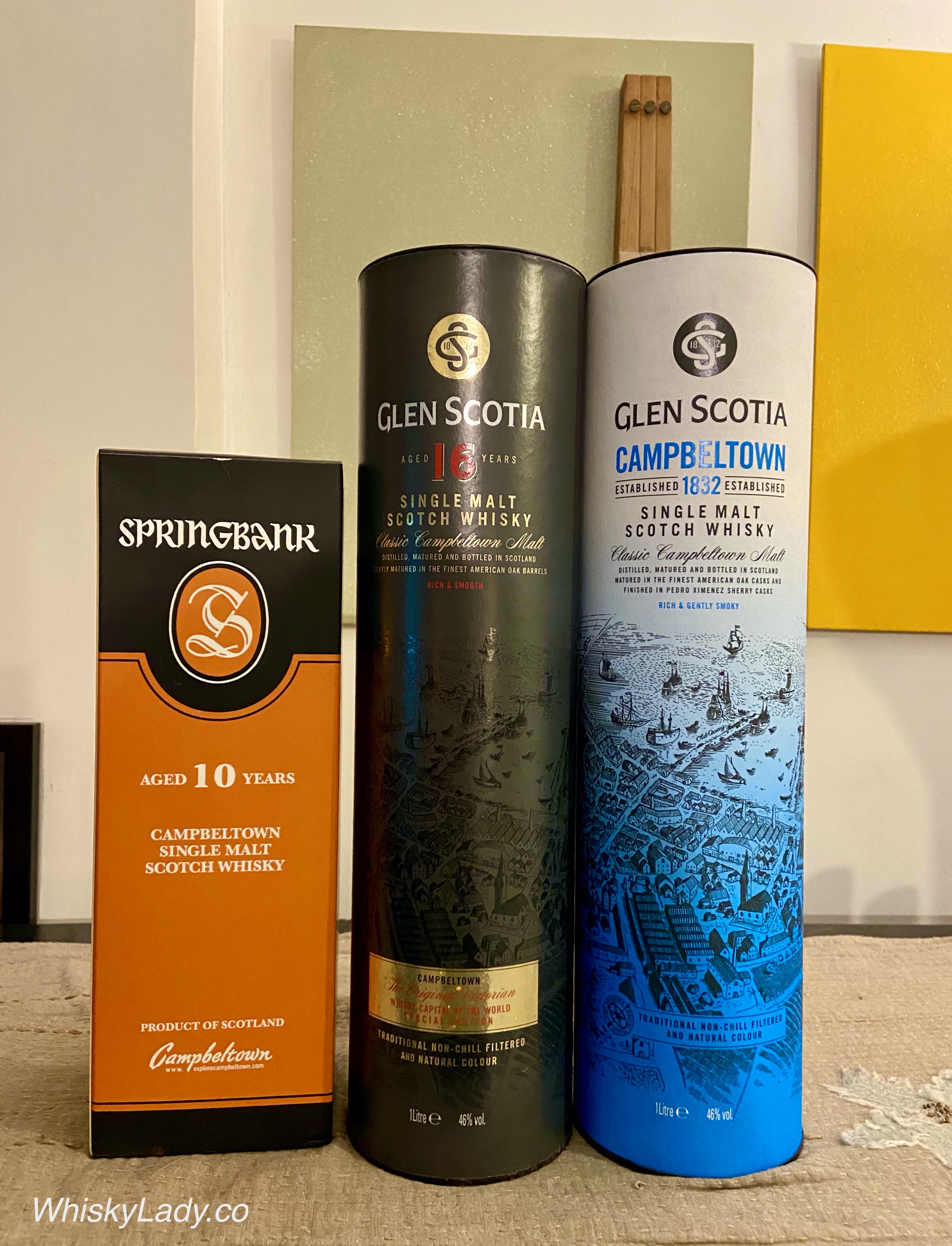
In this case, my blind-tasting companions from the first session confirmed the appropriateness of starting with the Springbank 10 year, followed by the Glen Scotia 16 year and this expression. So I followed the same approach for the Whisky Ladies virtual session held a few weeks later!

Whereas the small group of ladies began with this NAS followed by the Springbank 10 and Glen Scotia 16. We had quite similar impressions of all three whiskies – so with this Campbeltown trio, the tasting order made little difference!

Glen Scotia 1832 Campbeltown 46%

  • Nose
    • Mixed group – Started with Williams pear or dishrag (depending on who you ask!), walnut, caramel or toffee, bacon, dates, the gulkand that goes into paan, hints of vanilla, one also got kerosene or motor oil, sour leather… after some time – don’t laugh – but I got gummy bears!
    • Virtual ladies – For us, it started with overripe almost spoilt fruits, quite pungent, oily, shifting from sweet overripe black grapes to bananas, then figs to nuts, with rum raisin.. shifted again to dahi… after even more time the overripe fruit dimension was replaced by other elements like cardamon kheer, a touch of smoke
    • During our share and compare, the other group of ladies added their sense of honey lemon, comforting.. with a vanilla perfume
  • Palate
    • Mixed group – A clean peat with cinnamon, salt, and smoke, pepper fry, sweet stewed fruits, nice and round
    • Virtual ladies – The 1st sip was a bit of a shock of bitter spice, but after the initial ‘punch’, the 2nd sip was smooth, still having spice but chased with subtle sweet peat, and resin, with that tasty bitterness lingering… there was also a herbal green element we couldn’t quite place which the other group of ladies nailed – green capsicum
  • Finish
    • Mixed group – Salt and pepper spice, dry
    • Virtual ladies – The bit of bitterness remained, dry with black pepper licorice spice

In our mixed group, we initially found it a bit unbalanced… there was a curious quality for some time until it settled down. Once that “motor oil” quality finally dispersed and it began to grow on us. When we compared this Glen Scotia 1832 with the others, we found all three had dry finishes with this one a bit spicier than the others. Certainly, the peat was more pronounced too, though clearly not a typical Islay style.

As for our ladies? For us, it was all the contrasts that made us slow down and really explore this one.  As interesting as the nose was to begin with, after a few sips, it lost a bit of its pungency. However, by contrast, the palate grew on us more and more. This whisky challenged us – in a good way, reminding us why it is so fun to explore different dimensions with others. The other group also enjoyed it – sharing the warm and tingly combined with a perfume finish.

Bottom line – it was a ‘yes’ from all.

What do the folks at Glen Scotia have to say?

The higher peat content gives a more sweet and smoky character and a beautiful rounded finish.

  • Nose – Peat smoke on a salty sea breeze with background notes of crème caramel and vanilla
  • Palate – Golden syrup (light treacle), spiced apple and vanilla. Light medicinal peat notes bring balance to the mid-palate
  • Finish – Long, lingering peat with dried fruit notes adding sweetness

I purchased this whisky late Oct 2019 from Munich airport for EUR 62 on my way back home to Mumbai…. ahhh…. those were the days when we could freely fly back and forth!

And with that, we finished our wee journey to the Campbeltown region with Springbank and Glen Scotia!

Interested in other Glen Scotia experiences? Check out:

Curious to know more? Why not follow Whisky Lady on:

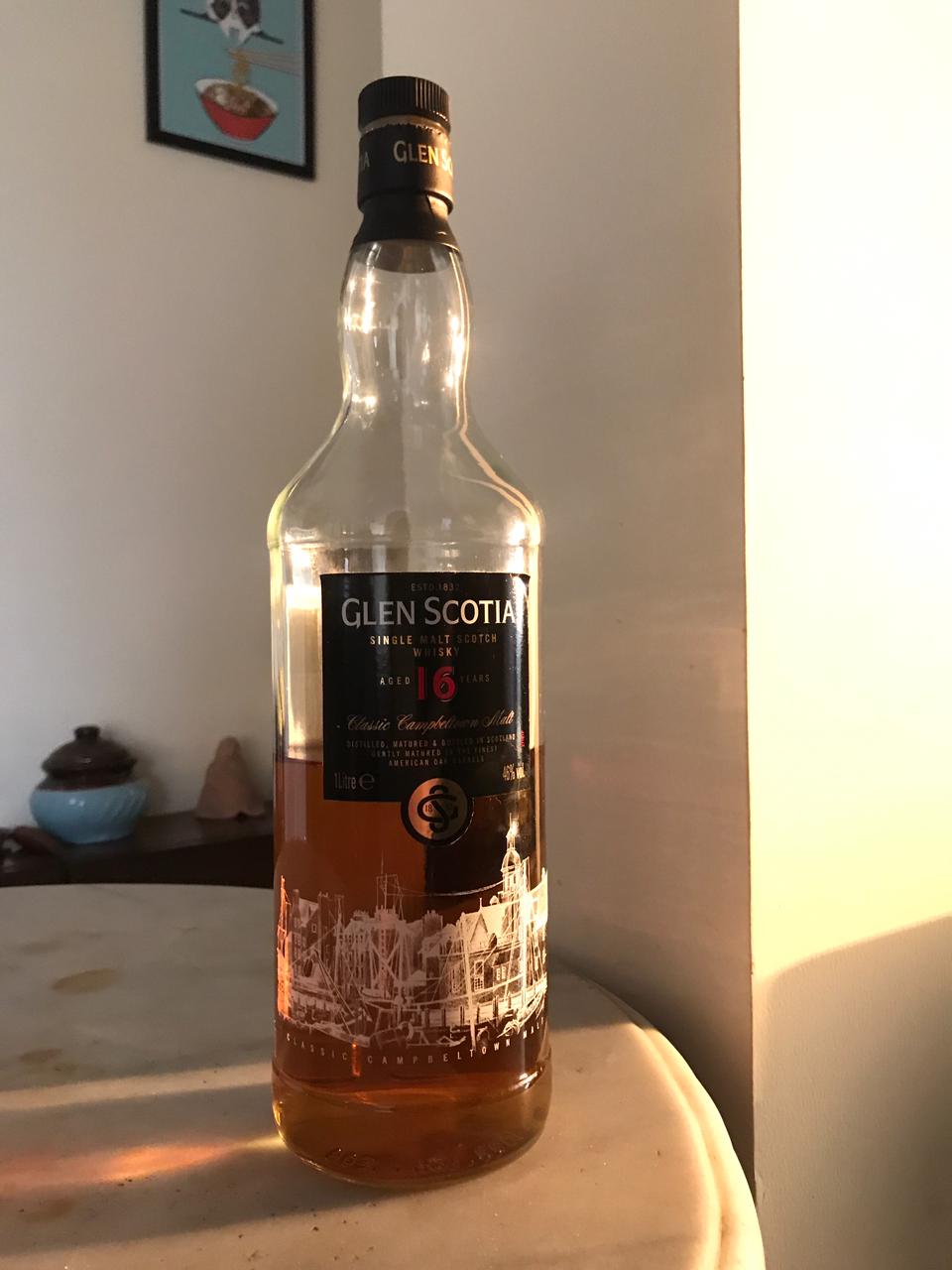
Campbeltown – Glen Scotia 16 year 46%

Today part of the Loch Lomond Group, Campbeltown’s Glen Scotia traces its history to 1832, however certainly had a few ‘silent’ periods. The first halt in 1930 was due to the dramatic fall of distilling in the Campbeltown region triggered by the depression, temperance movement, and rising distribution costs. Originally known as “Scotia”, the distillery re-opened a few years later as “Glen Scotia” when bought by the Bloch Brothers. Fast forward to the next major decline in the whisky industry – and no surprise – they again shut production from 1984 to 1989, starting up again when bought by the Gibson group.

With our history lesson now over, what about the whisky? Well… it has both lightly peated and non-peated variants, playing around with American oak / ex-bourbon, oloroso, and PX sherry casks.

As for our collective tasting experience? I’d explored a few minis from Glen Scotia with a regular tasting companion. We found the entry expression – Double Cask 46% – was quite a good indicator of what is to come, noting the 15 year took a bit of time to ‘warm’ up, whereas the Victoriana 51.5% was a clear ‘crowd-pleaser’ from the start.

So then… what about this 16-year old?

Glen Scotia 16 year 46%

  • Colour – Copper and gold
  • Nose
    • Mixed group – Musty cupboard, sour fruits, a bit like a fruity brandy, lots of honey, oak, floral talcum, rose peppermints, coffee sweets, chicory, lightly salted, dry spice, more light wood, grass, celery, cherry blossoms
    • Virtual Ladies – A nice bourbon, fruits and nuts with cocoa, changes so much in a gentle way… toffee, berries shifting to cherries… sweet but not too sweet… our IRL ladies also found beeswax
  • Palate
    • Mixed group – Spiced Christmas oranges with cloves, dry salt, cigar leaf, gooseberries, apple-like calvados, sour plum, almonds, dry sherry, peppery spice, a hint of peat
    • Virtual ladies – Simply delicious! Incredibly silky with a great well-rounded mouth feel. We tasted figs with dates, with a gentle roasted quality…  our IRL ladies agreed – noting what really stood out was the velvety smoothness with a hint of mint at the back
  • Finish
    • Mixed group – Salty dry
    • Virtual ladies – Sweet milk chocolate, after lingering for some time slowly eases out with a dry black licorice
  • Water – A few drops didn’t hurt… but why dilute something so fine? Truly not needed

For the mixed group, we concluded overall that it had quite a friendly nose – more interesting and complex than the palate. Even after the glass was empty, the aromas were most appealing. For a few in our cross-country virtual tasting (from London to scattered locations around Europe to Mumbai) this was the favourite.

As for our ladies? We agreed! We found it had a fabulous harmony, making its presence felt in a gentle enticing way. The kind of dram you want some ‘alone time’ with…. slow down and simply enjoy.

What more do we know? Just that it was matured in ex-bourbon and American oak (presumably virgin?) for a minimum of 16 years and released for Travel Retail. While the distillery notes do not indicate it was matured or finished in sherry casks, both their tasting notes and our experience would indicate a hint.

What do the folks at Glen Scotia have to say about their 16 year?

  • Nose – Fresh sea spray and floral notes give way to softer caramel and vanilla
  • Palate – Rich sherry flavours, toffee, raisins and roasted hazelnut. Apricot and orange add more subtle fruit notes
  • Finish – Long dry finish with touches of peat combining with nutty elements and coastal, salty notes

I picked it up in Singapore’s Changi Airport in November 2018 for SGP 167 (approx EUR 105 / INR 9,100). A bit pricey, but then that is also Singapore…

What did we explore in our Campbeltown evening aside from the Glen Scotia 16-year?

Don’t want to miss Whisky Lady posts? Follow this blog on:

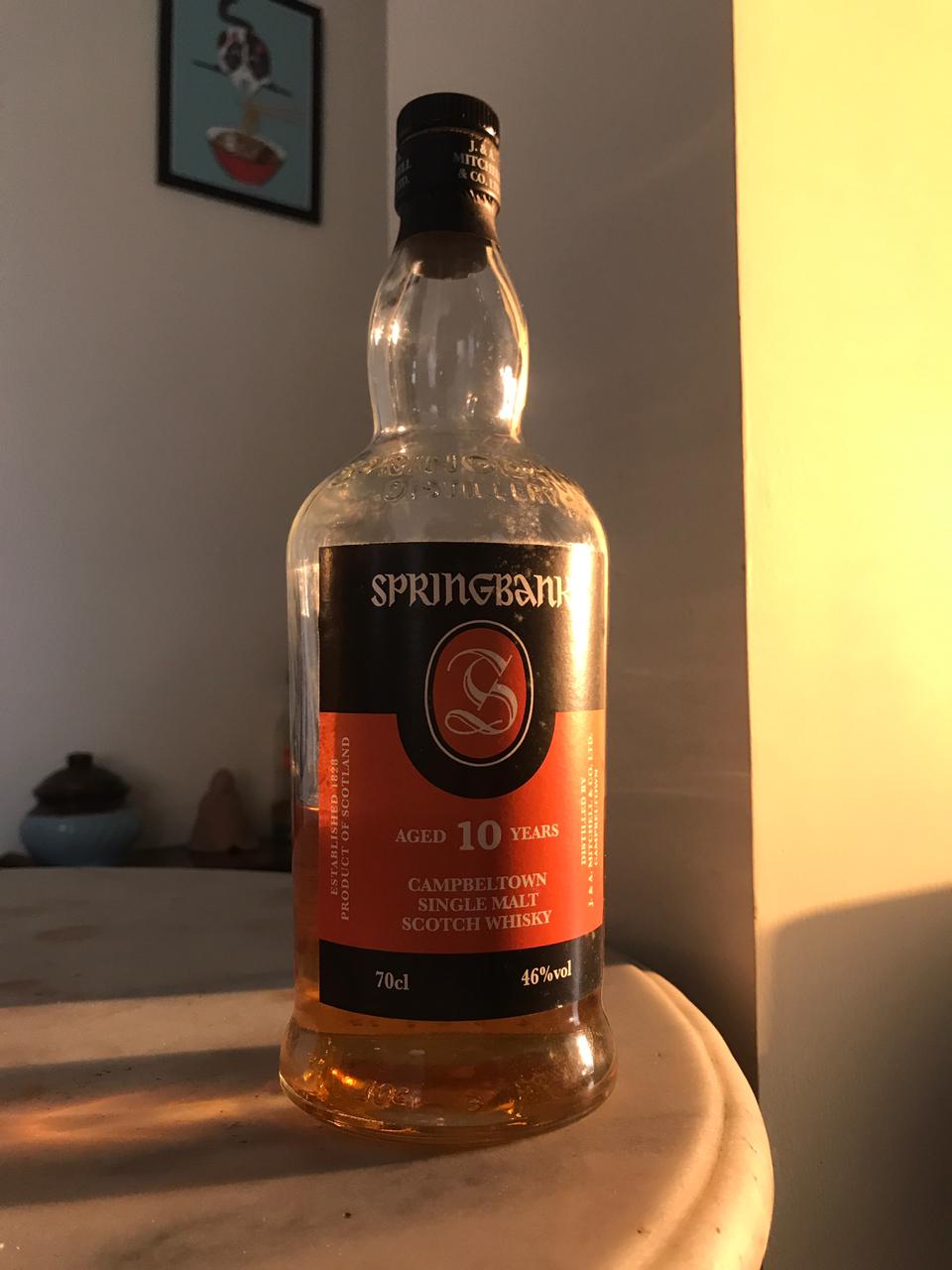
Campbeltown – Springbank 10 year 46%

This isn’t my first Campbeltown trio… Even more so, we are no stranger to Springbank distillery – I counted over a dozen different tasting experiences from the last few years! I’ve even tried this 10 year expression – back in 2015 and again 2019. Overall the experiences have been positive, so I was curious to see what we find this time around!

This whisky was sampled on two occasions – once by a mixed group from London to Paris to Nurnberg and Mumbai and the 2nd as a combination of Whisky Ladies connecting virtual and a very small group in real life, culminating in a comparison of our experiences.

Springbank 10 year 46%

  • Nose
    • Mixed group – Fruity, honey, fresh wood, tropical fruit – particularly pink guava, pineapple, toffee and vanilla cream, cake frosting and pastry…
    • Ladies virtual  – Started off quite tropical, spice, apricot, opening up to increasing sweetness, cream… over time some maple honey emerged with cereals
  • Palate
    • Mixed Group – Subtle peat, smoky, salty, a nice woodiness… after the 2nd sip, sweet spice of nutmeg, allspice, dry cherry
    • Ladies virtual – The first sip was a bit harsh – burning down the throat to the finish. After the initial spice kick, further sips were easier but still lots of black pepper and nutmeg
  • Finish
    • Mixed Group – Lighter touch, like a dry wine finish, a bit bitter and peppery
    • Ladies virtual – Very peppery finish, quite dry
  • Water – Lots of overripe fruit, spicier, sour fruit (tried only by the mixed group)

Our mixed group was a bit more charitable in our overall assessment We found that while initially there was no hint of peat on the nose, it came through on the palate. While it wasn’t a crowd pleaser, we found it settled into a mellow sweet peat.

The Ladies were all pretty clear that this one did not impress. Several had otherwise good Springbank experiences – including a venerable Springbank 37 year! Those who joined “In Real Life”, found it bitter, and oily, with some cilantro. Especially when we revisited it after trying the others, it was flat to the nose and palate. Disappointing, I’m afraid.

What about the Springbank official tasting notes?

Our 10-year-old offers whisky drinkers the perfect introduction to the Springbank range. Matured in a combination of bourbon and sherry casks, it is perfectly balanced from the first sip through to the full, rich finish.

  • Nose: Orchard fruit (pear) with a hint of peat, vanilla and malt.
  • Palate: Malt, oak, spice, nutmeg and cinnamon, vanilla essence.
  • Finish: Sweet, with a lingering salty tingle.

Would we agree? Alas not really…

What else did we explore in our Campbeltown evening?

Don’t want to miss Whisky Lady posts? Follow this blog on:

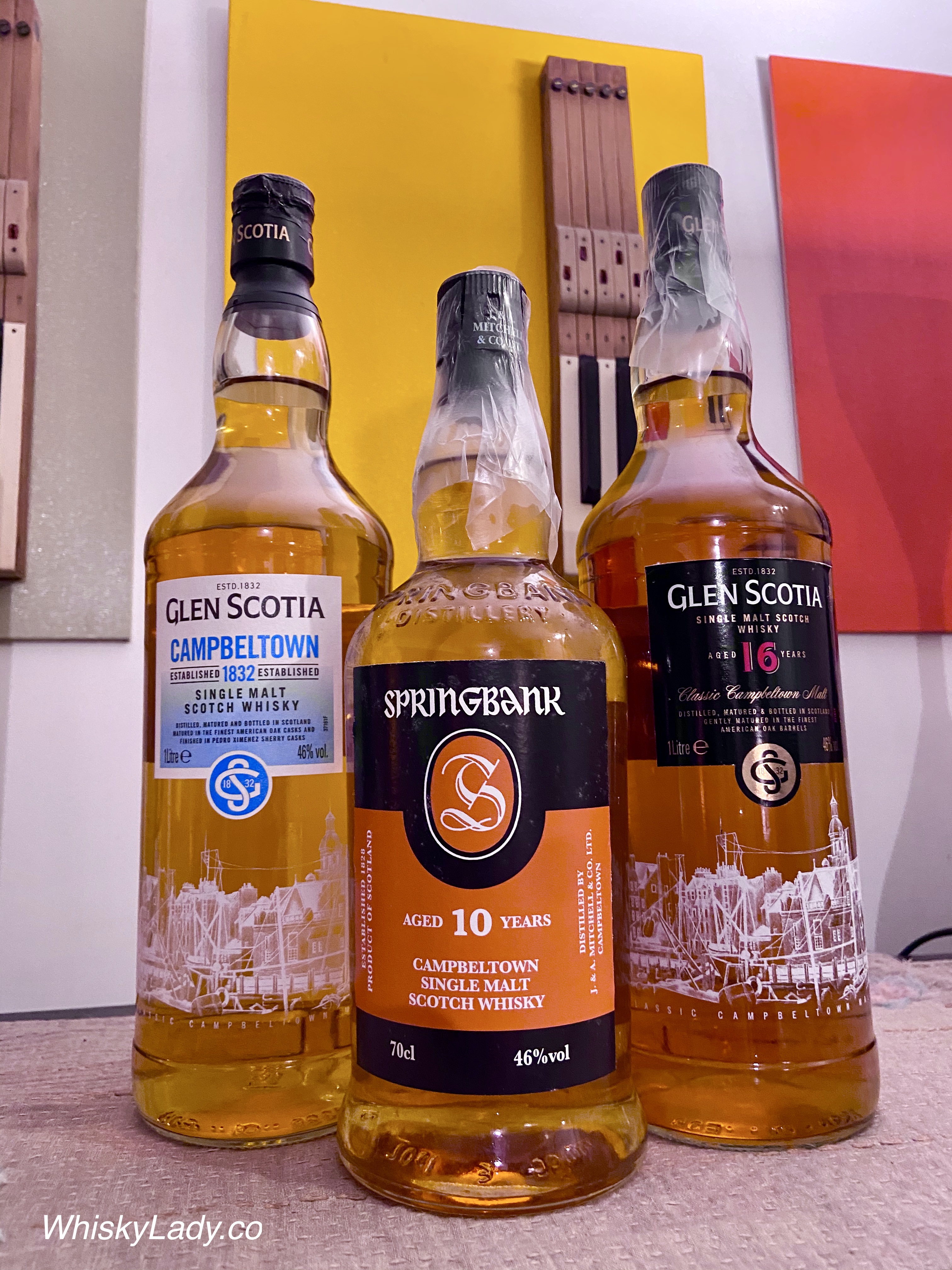
Campbeltown Trio – Glen Scotia, Springbank

There may be limited distilleries in the Campbeltown region, however while it doesn’t have the range of other regions like the compact but prodigious Speyside, sprawling yet plentiful Highlands or the Islay character, it quietly yet firmly refuses to give up.

While once there were 30 distilleries, today stand 3 – Glen Scotia, Glengyle (Kilkerran) and Springbank – and I thought it past time we slow down to explore at least a small sample from Campbeltown.

While my original plan was to have representation from each of the three distilleries, in the end, I satisfied myself with 3 contrasting expressions from 2 distilleries.

What did we explore in our Campbeltown evening?

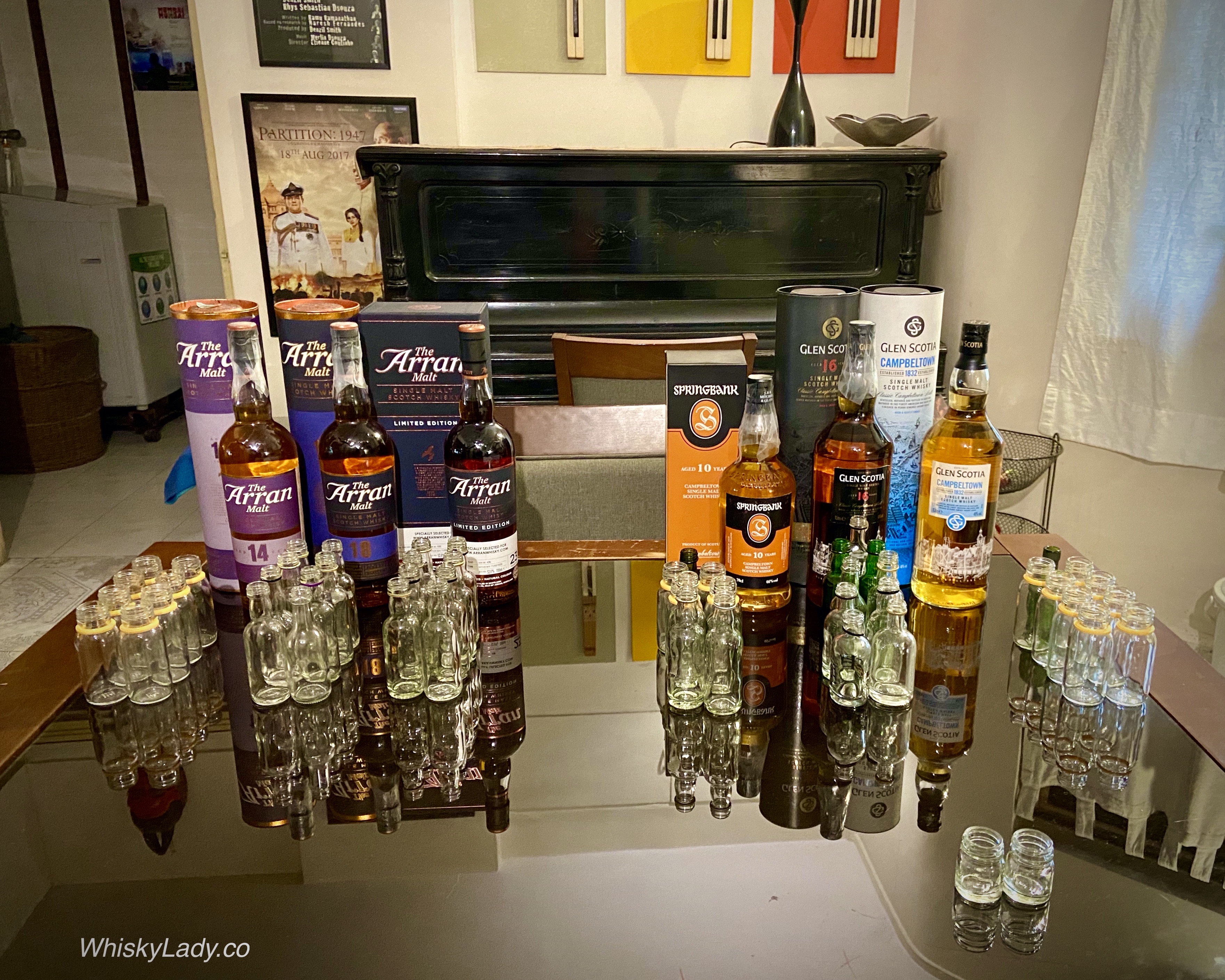
All of the whiskies were opened in January 2021 and redistributed to interested partakers. In an interesting twist – this trio had multiple dimensions to its tasting experience:

  • Combination of Whisky Ladies in Europe and a couple guys from Bombay Malt & Cigar brought together virtually, sipping from London to Paris, south of France to Nurnberg and of course Mumbai… with samples that were better traveled than some people!
  • Virtual Whisky Ladies in India – mostly Mumbai with one in Delhi and remaining bottles making their way to a very small (socially distanced!) gathering in Bandra “IRL”… after about 45 mins of tasting separately, the virtual and ‘real’ groups joined together to compare notes

It followed an earlier session exploring an Arran vertical. This just goes to show – we refuse to be daunted by limited travel, and limited sourcing means – where there is a will, there is a way!

Don’t want to miss Whisky Lady posts? Follow this blog on:

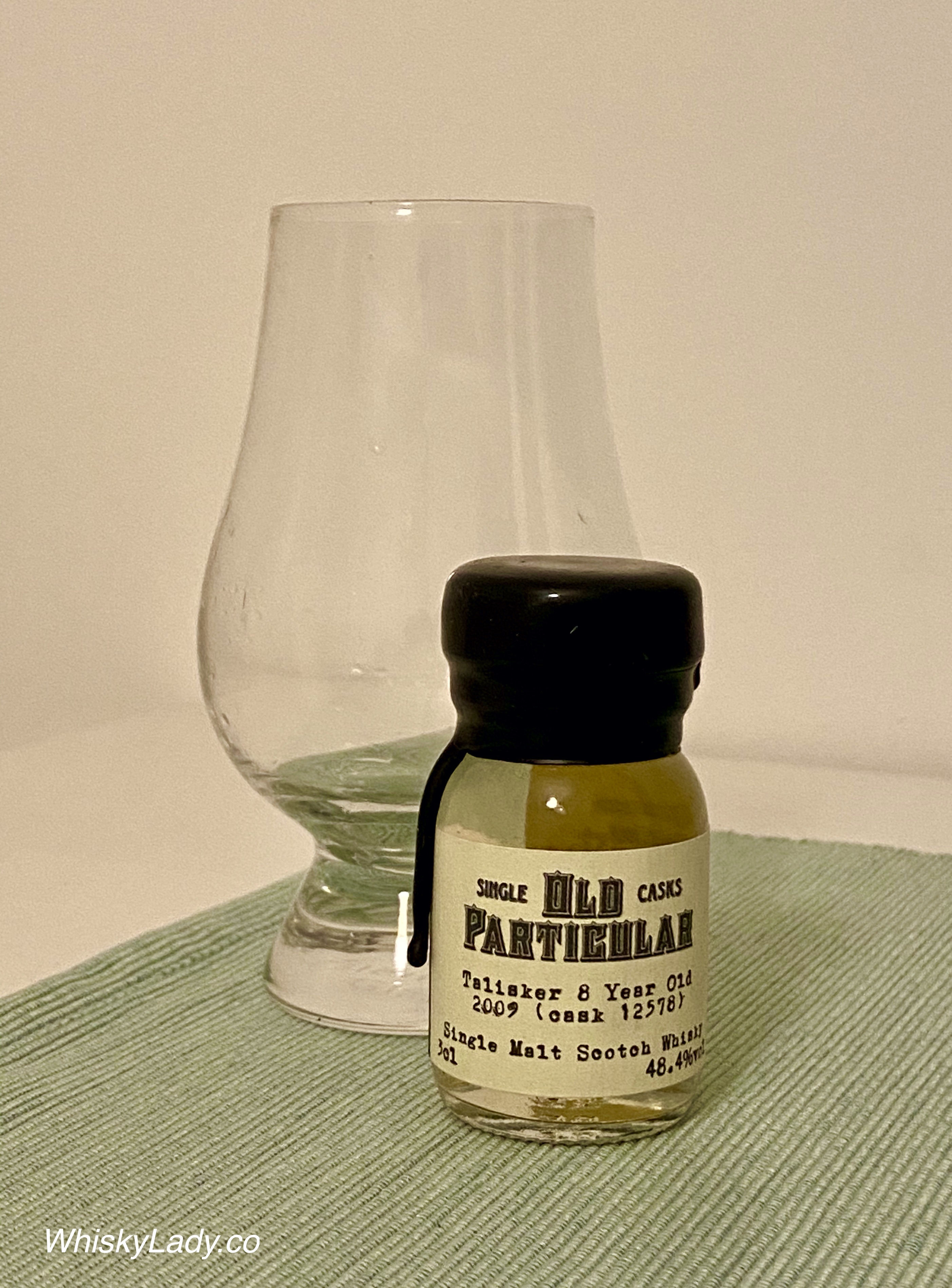
Talisker 8 year 2009 48.4% (Old Particular)

Last in my Old Particular trio is a complete shift in character to the Isle of Skye with the peaty Talisker. Though technically part of their “Highland” region bottles, it is also an “Island” distillery.

Talisker 8 Year Old 2009 (cask 12578) 48.4%

  • Nose – Mmmm smoked meats, juicy fruits with a bit of brine
  • Palate – A nice smokey burn, touch of ash, a dash of sugary sweet
  • Finish – Cinnamon, then a nice campfire finish

It has been awhile since I’ve had a Talisker… and I gotta admit it hit the spot. Peat and sweet, nothing complicated but well balanced and just… worked. In truth, it disappeared too soon – always a good sign!

As for tasting notes? Here is what the chaps over at Master of Malt had to say:

Part of Douglas Laing’s Old Particular series, this expression from Talisker was distilled in 2009 and bottled at 48.4% ABV, after 8 years of maturing in a refill hogshead. It is one of only 378 bottles produced. Of course, this whisky was bottled without colouring or chill-filtration..

  • Nose: Complex warming phenols alongside intense seaweed notes.
  • Palate: Both sweet and salty, maritime flavours are joined by slightly ashy notes and a touch of brown sugar.
  • Finish: Distinctly sooty on the finish, balancing by subtle sugar sweetness.

Would I agree? Overall yes!

And what about previous brushes with Talisker?

Don’t want to miss any posts? Why not follow Whisky Lady on:

Mortlach 10 year 2009 48.4% (Old Particular)

Next in my Old Particular trio is a Mortlach from their ‘regions’ series – from Speyside. I will admit it has been some time since I settled down with a Mortlach. I’ve had some quite lovely independent bottles (including a 37 year old!) and a rather disappointing official bottling – primarily due to its price. I was curious to see what this one from Douglas Laing delivered…

Mortlach 10 Year Old 2009 (cask 13061) 48.4%

  • Nose – Pears and orchard fruits, juicy and fruity, ripe sour cherries, lemon curd
  • Palate – A bit of chilli spice, dark fruits, reminded me a bit of cinnamon rolls, malty
  • Finish – Again back to a spice chaser, warming
  • Water – Don’t mind if I do! opens it up nicely, balanced it

In truth, I wish I had more than a small sample as it needed time and a splash of water to open up.

As for tasting notes? Here is what the folks over at Master of Malt had to say:

A single cask single malt from the Beast of Dufftown (AKA Mortlach), distilled back in March 2009 and left in a refill hogshead to mature. It was bottled 10 years later in March 2019 by Douglas Laing for the Old Particular series, with just 167 bottles produced at 48.4% ABV.

  • Nose: Strawberry laces, Portuguese tarts and cereal with milk.
  • Palate: Barley sugar and cinnamon butter, leading into syrup sponge and orange marmalade.
  • Finish: Toasty oak and more baking spice, with a hint of porridge.

And what about previous brushes with Mortlach?

Don’t want to miss any posts? Why not follow Whisky Lady on:

Jura 12 year (2006) 48.4% (Old Particular)

I found myself in the mood for something uncomplicated… a dram to ease into an evening of sampling… The obvious choice from the Old Particular trio was to start with the Jura. From Jura Island, the distillery style tends towards lighter whiskies intended to support a blend. However more recently, there has been subtle peat added to the equation.

Jura 12 Year Old 2006 (cask 12966) 48.4% – Old Particular (Douglas Laing)

  • Nose – Cereal, butter biscuits or lemon curd cookies – a bit of sour, yet some citrus and sweet
  • Palate – A bit more substance than anticipated, can see the wood influence with a hint of bitterness, a bit salty… like lightly salted nuts and raisins.. is that a hint of toast?
  • Finish – Light spice, that nutty bitterness continued

Overall it hit the spot for something not too sweet, straight forward and a way of kicking off a tasting trio.

As for tasting notes? Here is what the chaps over at Master of Malt had to say:

12 year old single malt from the Jura distillery, named after the island it resides on. This whisky was distilled in December 2006 and allowed to age in a refill hogshead for 12 years, then bottled in December 2018 by Douglas Laing for the Old Particular range. Only 357 bottles were produced.

  • Nose: Custard Cream biscuits, dried lemon and grapefruit peel, a hint of salted peanuts.
  • Palate: Soft oak and smoke appears up front, followed by citrus once again and sultanas.
  • Finish: Almond pastries, coriander and caramel.

Would I agree? More or less…

And what about previous brushes with Jura?

Don’t want to miss any posts? Why not follow Whisky Lady on:

Peaty persuasion – Laphroaig Four Oak 40%

So there I was, one fine evening early 2021 in our wee country home outside of Mumbai… during these days of lockdown, being able to spend time in a calm place where you can freely walk about outdoors, even have dinner with a neighbour, is such a special treat.

To then discover your neighbour also enjoys whiskies… well… that’s another level! I brought a few drops from an Arran flight, and he shared a recent purchase – Laphroaig Four Oak.

Hmmm… peat? The evening was a nippy 20’c, the breeze fragrant… why not?

And I am so glad that I did! Even better, back in Europe I had a sample to enjoy – bringing a lovely memory of a special evening.

Laphroaig Four Oak 40%

  • Nose – Smoky cinnamon, almond pastry, lightly fruity,
  • Palate – Tasty cinnamon spice, more smoke, vanilla cream, silky smooth
  • Finish – Sweet and long, tobacco leaf… ends on an ashy note

So…. what I like is that this is a kinder, gentler Laphroaig… young, fresh… silky smooth… not bad. Quite clear this was 40%… but works.

That evening in the country, as I kept sipping, I kept thinking how it had been such a long time since I enjoyed a cinnamon-smoky spice.

And back in Nurnberg?

Even more enjoyable…

What more do we know about the Laphroaig Four Oak?

Four different casks are selected by hand; ex-bourbon barrels. Small quarter casks, virgin American oak barrels and larger European Oak hogshead. Four Oak is an extraordinary fusion of flavours including sandalwood, pine, fir and willow. It’s the big malt from the shores of the big ocean.

This complex combination creates a golden, creamy peat-smoked Islay malt with warm, toasted vanilla notes.

  • Colour – Bright Gold.
  • Nose – Aromas of peat smoke with stewed fruit and warm, toasted vanilla.
  • Palate – Hints of sandalwood, pine, fir and willow, experience oak embers and seaweed with smooth buttercream.
  • Finish – Salted liquorice and peaty.

Here’s what more our Whisky Lady shared in her evening of peaty persuasion :

If you don’t want to miss a post, why not follow Whisky Lady on:

Flora and Fauna – Strathmill 12 year 43%

Last in our Whisky Ladies European Chapter comes a Strathmill, part of Diageo’s Flora and Fauna range. To the best of my knowledge, this would be my 2nd brush with Strathmill – the earlier being a 21 year mini bottled by That Boutique-y Whisky Company.

What did we think of their official bottling?

Strathmill

Strathmill 12 year 43%

  • Nose – Toffee, meadows, over ripe fruits, figs, dried apricot, fresh pudina (mint), coriander, anis seed, perhaps even onion seed like nigela or ajwain. There was something a bit salty, nutty, fruit leather
  • Palate – Not as sweet as anticipated from the aromas, spicier than expected, an oaky woodiness… then flat…
  • Finish – Was there?

We puzzled a bit with this one. Our initial impression was that it was a bit too watered down. However what it really needed was time. As we sat debating, trying to discern more… it took on more and more substance, revealing some chocolate, even a leather and spice… a nice fruitiness came forward and we found to our surprise it was not at all ‘dull’ anymore! Far from it… instead there were delicate but discernible dimensions worth waiting for… and even a nice light chocolate buttery finish. Where was that hiding initially?

I dug out the notes from my earlier experience with the Strathmill 21 year and it rang true this time as well!

“Don’t be tempted to dismiss this whisky as a lightweight… As we continued to sip, it vacillated between cheerful and a deeper character…”

What do the folks at Diageo have to say?

A smooth, easy-drinking all-rounder with a good balance of sweet and dry notes and a medium-long finish. This 12-year-old single malt whisky is surprisingly rich and sherried with notes of cooked fruits, spices, and chocolate. Serving Suggestion: Strathmill works best served in a traditional whisky glass, neat or with a little water

  • Appearance – Pale gold.
  • Body – Smooth, with a medium body.
  • Nose – Light prickle. A closed nose at full strength. A hint of ‘Café Noir’ biscuits. With water, solvent, sweet and minty at first. Light and creamy, becoming darker. Chocolate-chip, mint ice cream, then Toblerone. Roasted peanuts and their skins. Remains pleasantly clean. Dried parsley and moss.
  • Palate – Sweet start. Some acidity.
  • Finish – A medium-length, dry finish. Chocolaty aftertaste.

In our first Flora & Fauna evening, we also sampled:

With more to come…

If you don’t want to miss a post, why not follow Whisky Lady on:

Additionally, there are the two ‘off-shoots’ with: