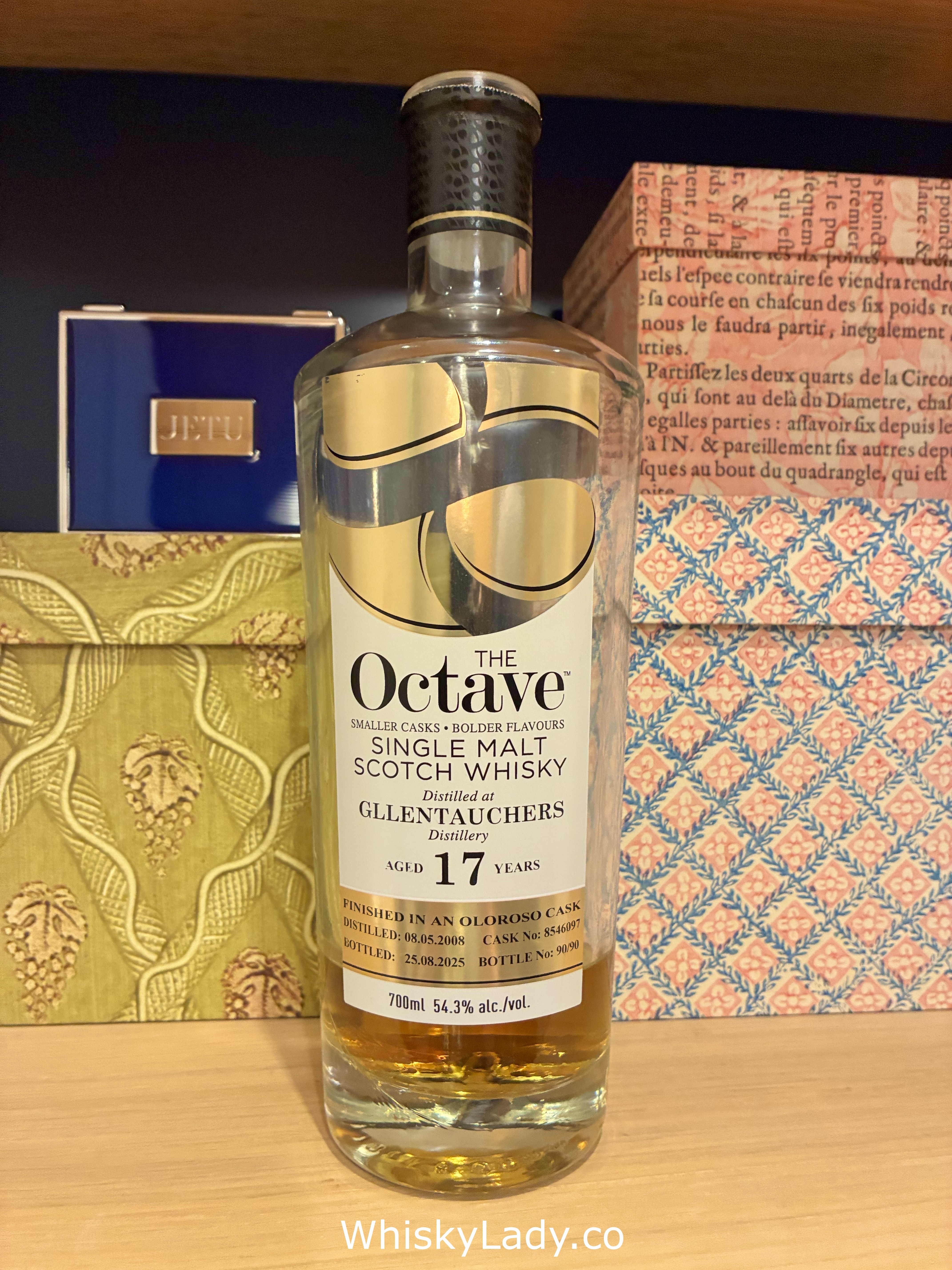
Duncan Taylor – The Octave: Glentauchers 17 year 54.3%

The concept behind Duncan Taylor’s The Octave collection is simple. Take something that is already good, transfer it into smaller Octave casks, mature it for more time. The aim? Amp up the aromas and flavours through a higher whisky to wood contact, triggering a bolder, more intense version.

So what did we find with this Glentaucheers?

Glentauchers 17 Year Old (8 May 2008 / 25 Aug 2025) Sherry cask 8546097 54.3% (Duncan Taylor – The Octave) ~90 GBP

  • Nose – How delightful! Cake, salty caramel, lots of rich fruity base notes, heavy mocha, ripe dark cherries, chocolate, and cream like a black forest cake, more coffee, toffee – delicious!
  • Palate – Very full, loads going on. There is an intensity with dark fruits, chocolate, old wood, malty, luscious fruits, and over-ripe nectarines. The dusting of pepper just adds another element – like a rich chilli chocolate ice cream
  • Finish – A big finish, treacle sweet
  • Water – Wow! Intense exotic fruits, durian to peach, then warmed pineapple

What a delight! We absolutely adored this expression. The extra “oomph!” from the Octave cask finish added complexity in a big, bold, beautiful way. Whilst we have no idea what it was like before the re-casking, here is what the folks at Duncan Taylor have to say :

Before Octivation

Apple strudel, creamy, raisins, custard creams, gooseberries.

Interested in catching more? Why not follow Whisky Lady on:

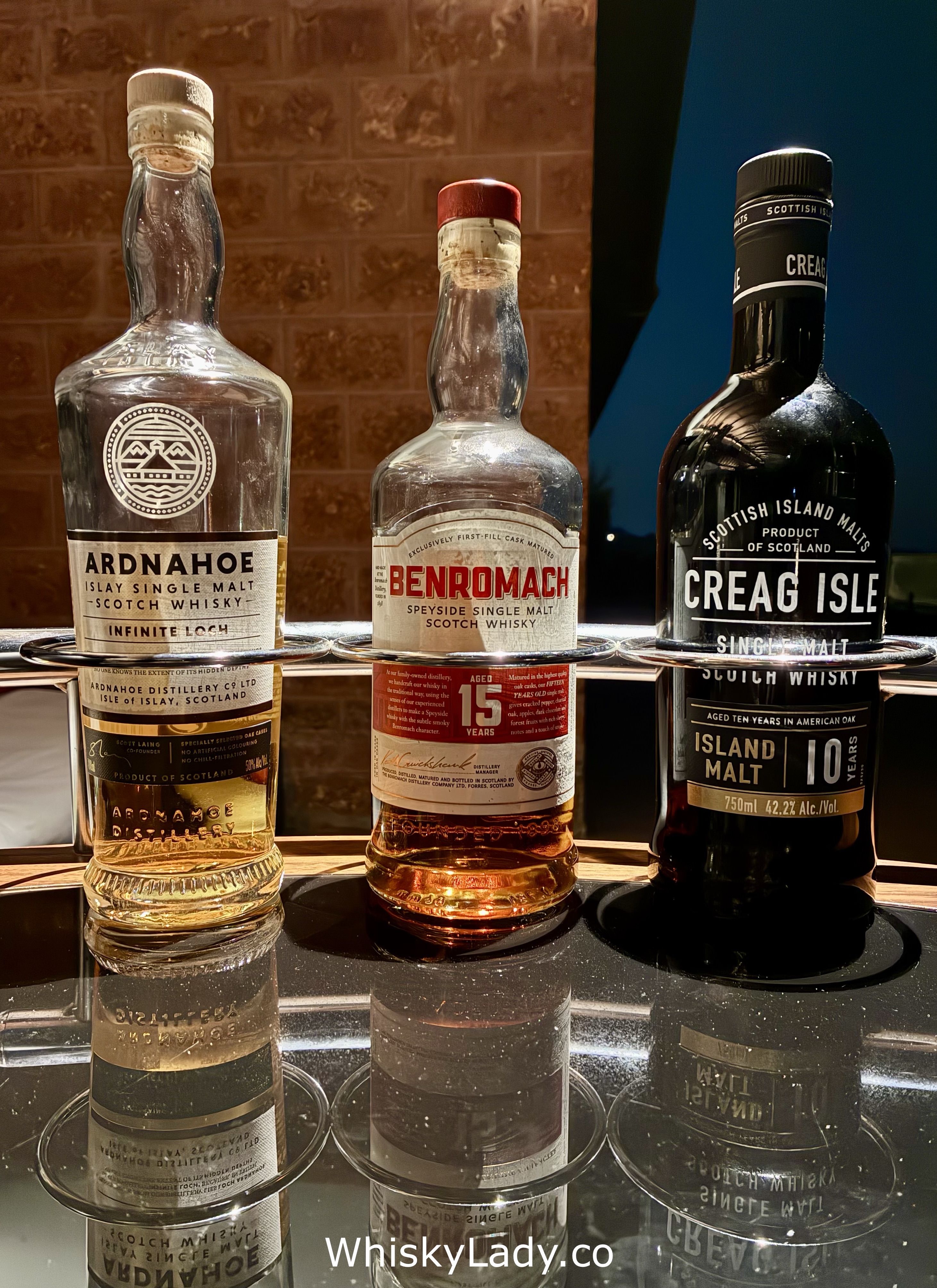
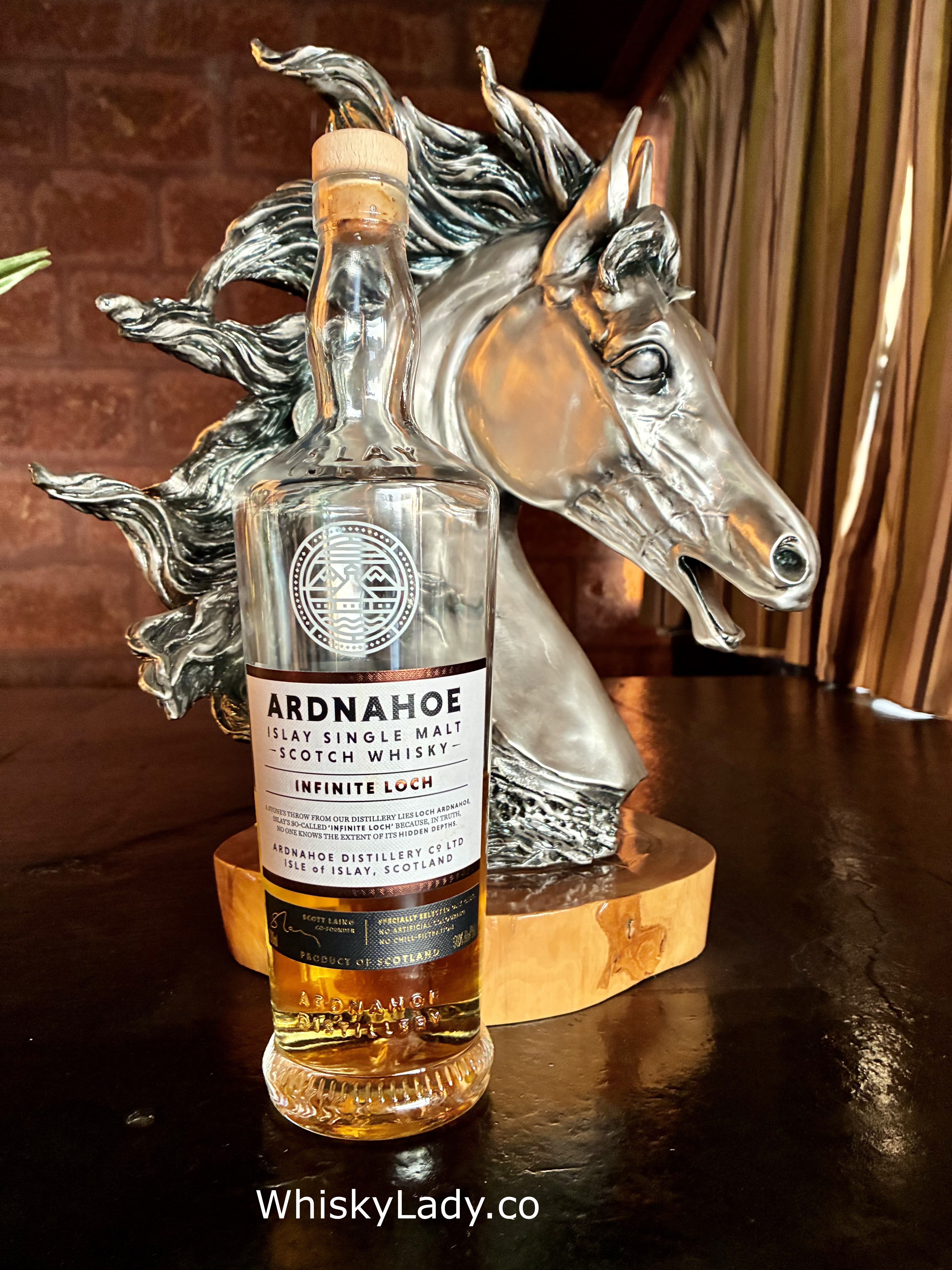
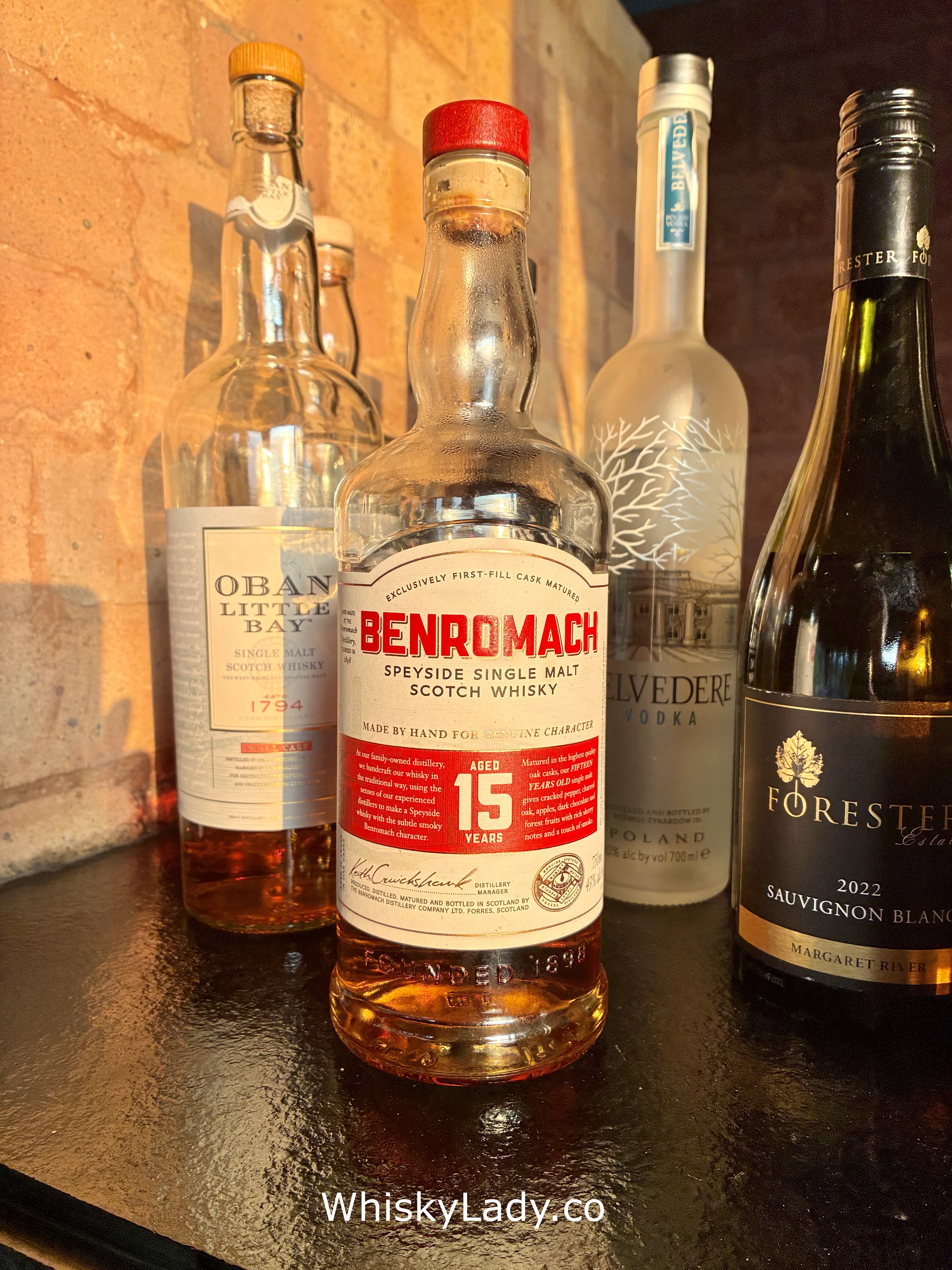
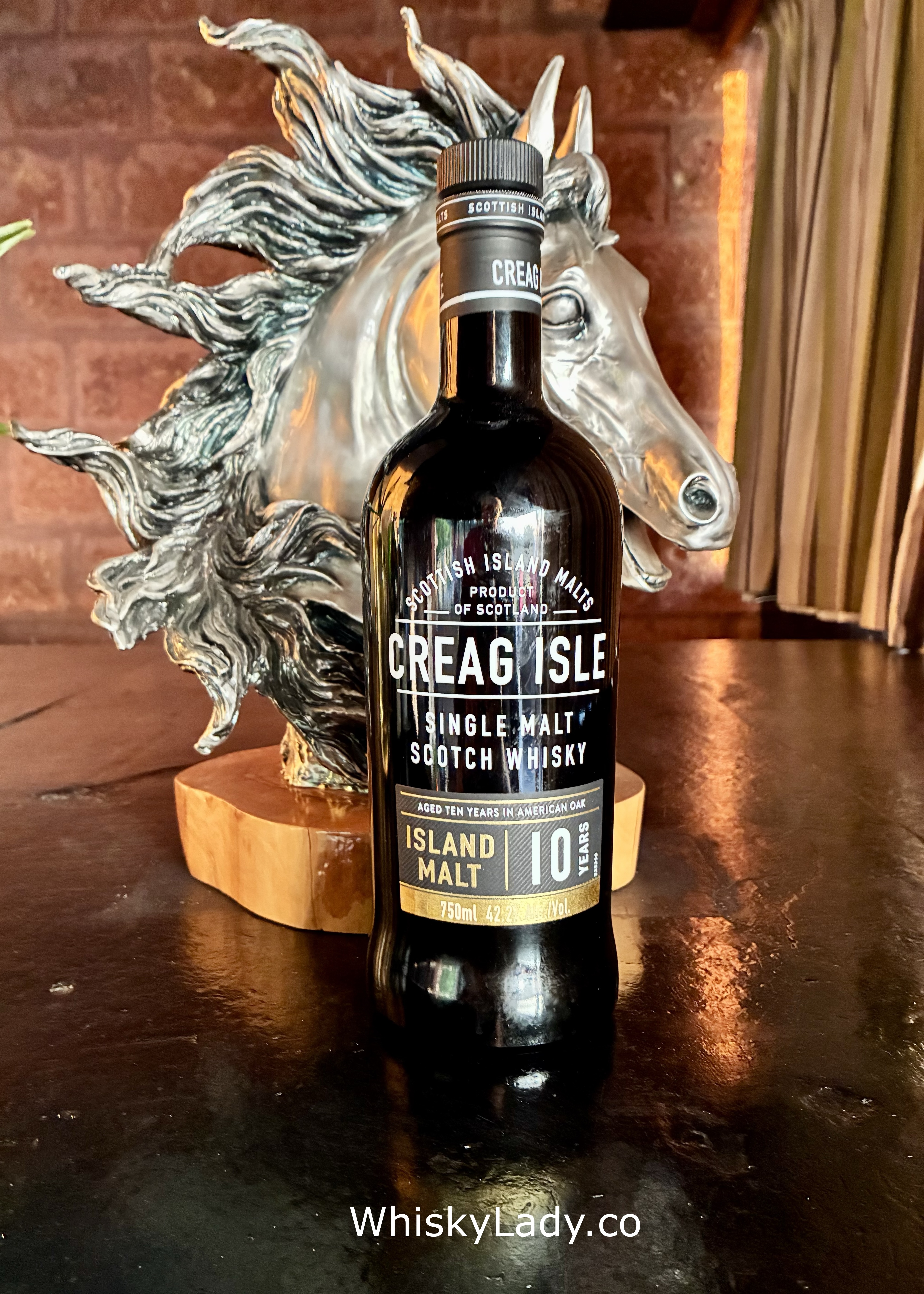
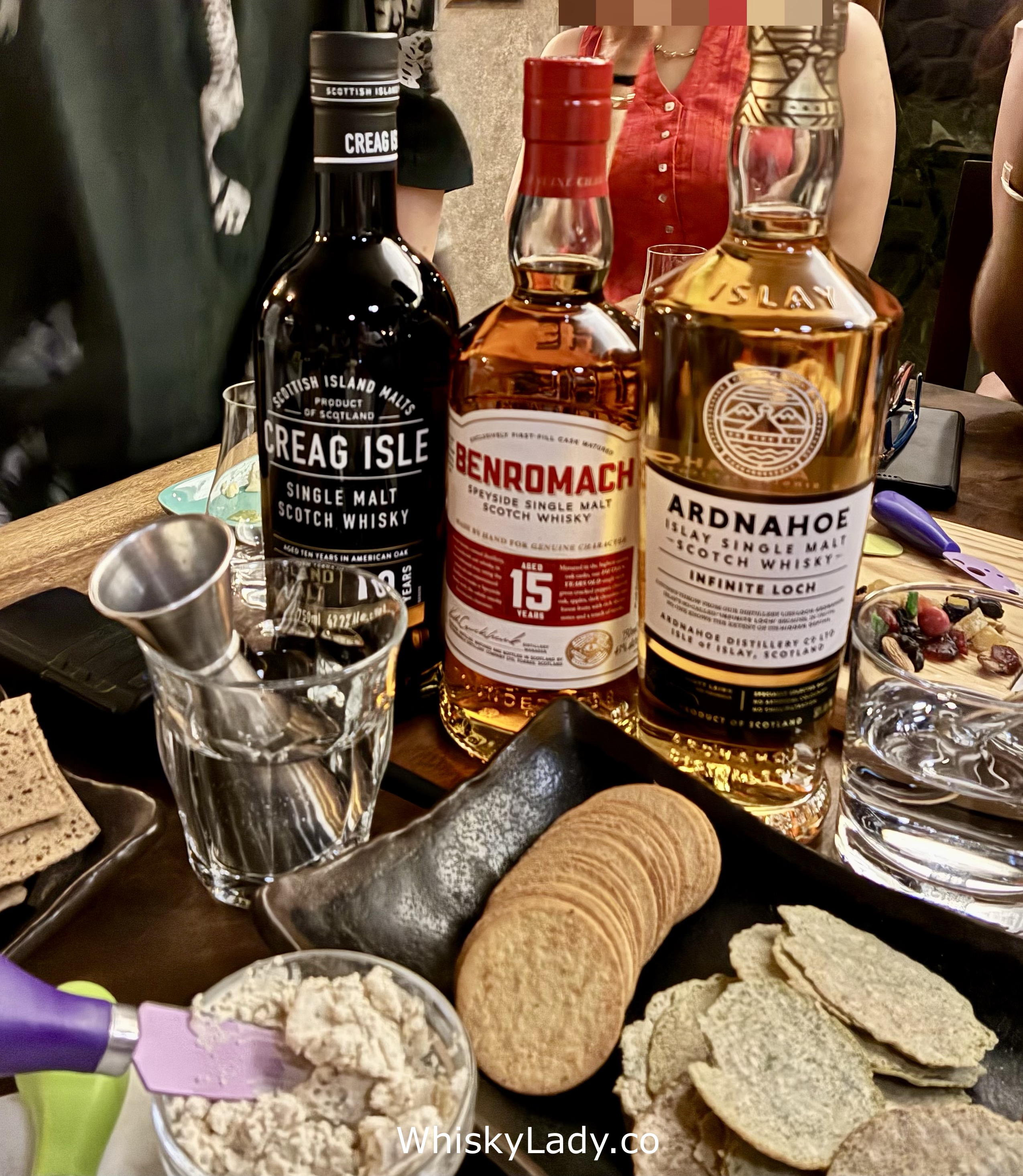
Whisky Ladies ABCs – Ardnahoe, Benromach, Creag Isle

Our Whisky Ladies sessions are curated by our members. The theme, the order, everything is up to our monthly host. The only “rule” is to make every effort to avoid repeats! It could be a vertical progression from one distillery, a regional or country theme, something more fanciful or practical, tying the whiskies together.

For our (hopefully!) annual weekend retreat, our host took a delightfully simple approach – the alphabet! And selected whiskies starting with A, B, and C!

  • A = Ardnahoe “Infinite Loch” Islay Single Malt 50% £55
  • B = Benromach 15-year 43% £73
  • C = Creag Isle 10-year Island Malt 42.2% (Hunter Laing) ~£50

It was a counterintuitive tasting order. Normally, we begin with the milder drams, progressing to bolder, more powerful flavours and finishing with peat. We took the opposite approach here – and it worked wonderfully!

A is for Ardnahoe 

I was first introduced to their whisky range in 2024 at the London Whisky Show. Backed by Hunter Laing, Ardnahoe became Islay’s 9th distillery in 2016 with distillation starting in 2018.

Ardnahoe “Infinite Loch” Islay Single Malt 50%

  • Aroma – Loads of peat! Leather and bacon, fruity – particularly baked pineapple, spicy, marmalade with generous orange peel… Spiced pears, cinnamon, star anise, menthol
  • Palate – Super peppery at first, also very active – full of smoke, yet also quite fruity and summery, the mint was joined by fresh cucumber, then shifted into a gentle milk chocolate
  • Finish – Ginger, cinnamon, cloves, burnt sweet spices

As we swirled the whisky in our glasses, we inhaled the sweet, smoky aromas, joined by sea salt too. It grew on us more and more – a sipping dram to settle down with for a desultory evening.

In front of us was an indulgent cheeseboard with bitter marmalade jam and apple-gin jelly. We found a sharp cheese with bitter marmalade jam made a brilliant contrasting pairing with the Ardnahoe, enhancing the whisky’s sweetness. Superb!

Their official tasting notes share:

Ardnahoe Infinite Loch has been matured in a combination of ex-Bourbon and ex-Oloroso sherry casks, and is bottled with no artificial colouring and no chill-filtration.

Sea-spray, Islay peat and dark chocolate on the nose. Menthol, fresh fruits and bonfire notes on the palate lead into a smoky, zesty finish.

Would we agree? Yes indeed!


B is for Benromach

Up next was a familiar standard – the Benromach 15 year!

Benromach 15 year 43%

  • Aroma – Sweet molasses, dark milk chocolate, honey, raisins, Christmas plum cakes, ginger, pine, sweetened fruits, opening up a bourbon vanilla candle, then clove-stuck orange, salted caramel, spiced rum, mint
  • Palate – Spiced rum ball, warming, creamy, full-bodied yet smooth, malty, cocoa, coffee mocha… as it opened further in the glass – chocolate-covered salty caramels or malty salted peanuts, a touch of toast, a hint of gentle peat perhaps?
  • Finish – Slightly bitter, fruitcake

When we set it aside, it continued to mellow in the glass. The Benromach was the most classic dram of the evening, one for the traditionalists vs those in the mood for something more experimental or peatier.


C is for Creag Isle

I wasn’t familiar with Creag Isle… turns out it is a private independent label from the Hunter Laing stable. Whilst they typically focus on Islay whiskies (rumoured to often be from Caol Ila), the particular expression we tried was specifically identified as an “Island” single malt – which technically isn’t an official Scottish whisky region – with no further details!

Creag Isle 10 year Island Malt 42.2% (Hunter Laing)

  • Nose – How interesting! A distinctly Indian garam masala, coastal salt, and sand, dried fish, slowly sweetening over time
  • Palate – Funky yet interesting. It initially had an almost fizzy quality. There was peat behind the bitter. Curiously approachable for something so distinctive. At the same time, there was a delicate and light touch too. Quite different – yet it worked!
  • Finish – Very sweet finish, cinnamon smoke close… over time took on a bitter walnut quality too

One person shared that this dram was like kissing someone who had been puffing away on a cigar! As strange as our initial impressions may seem on reading them now, it was surprisingly compelling, drawing us back to continue to sniff, swish, and appreciate.

I’m already looking forward to next year’s Whisky Ladies of Mumbai retreat!

If you don’t want to miss a post, why not follow Whisky Lady on:

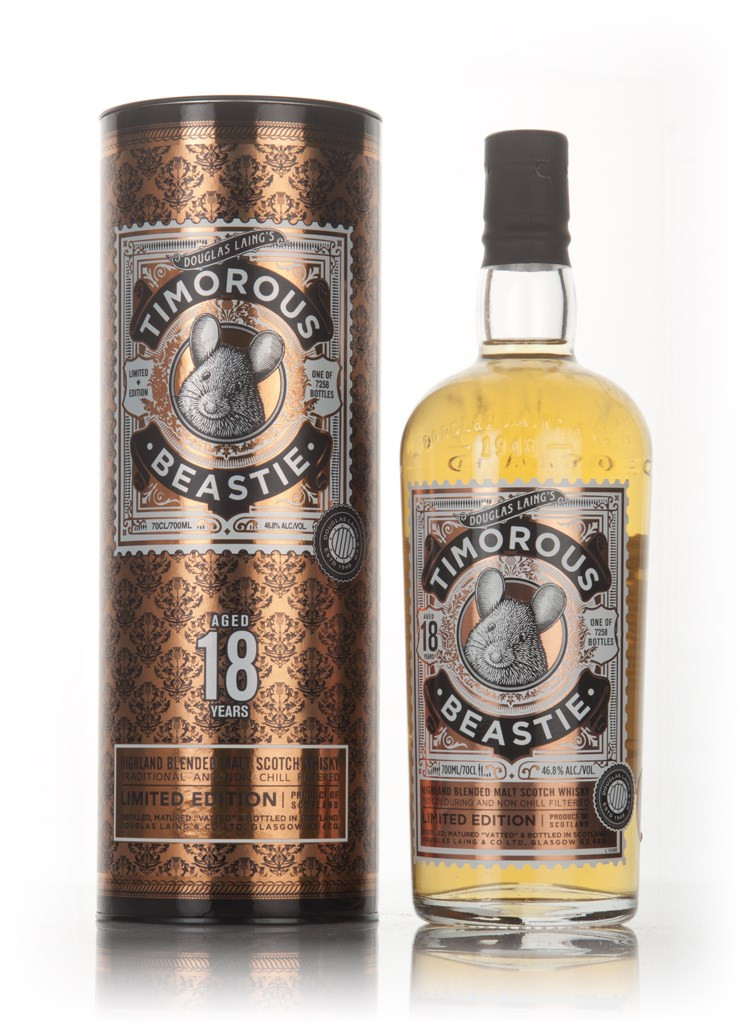
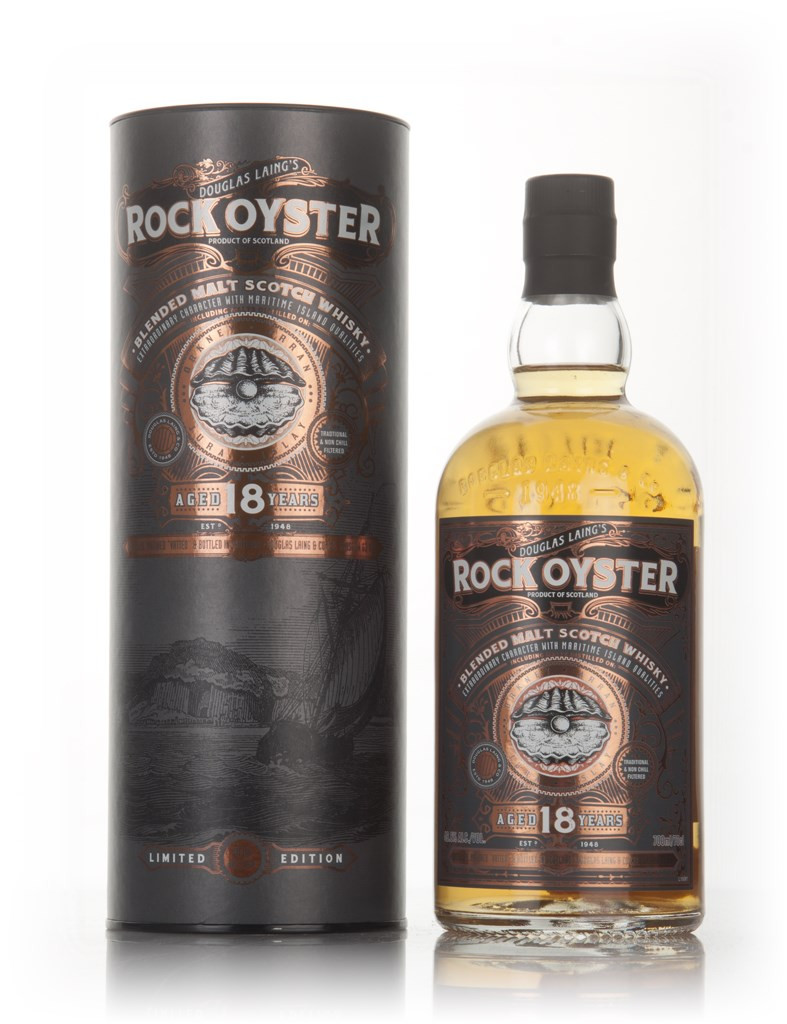
Battle of the Blends – 18 years Timourous Beastie vs Rock Oyster

It was a quiet Sunday late afternoon before Mumbai’s Mahindra Blues Festival. My tasting companion and I were interested in just a light taste or two before we caught the evening’s entertainment.

I thought it would be fun to try side by side a couple of Douglas Laing blends – both 18 year years, both limited edition expressions.

My tasting companion was skeptical – he wasn’t so impressed with the NAS options. So what did we think of the 18 year olds?

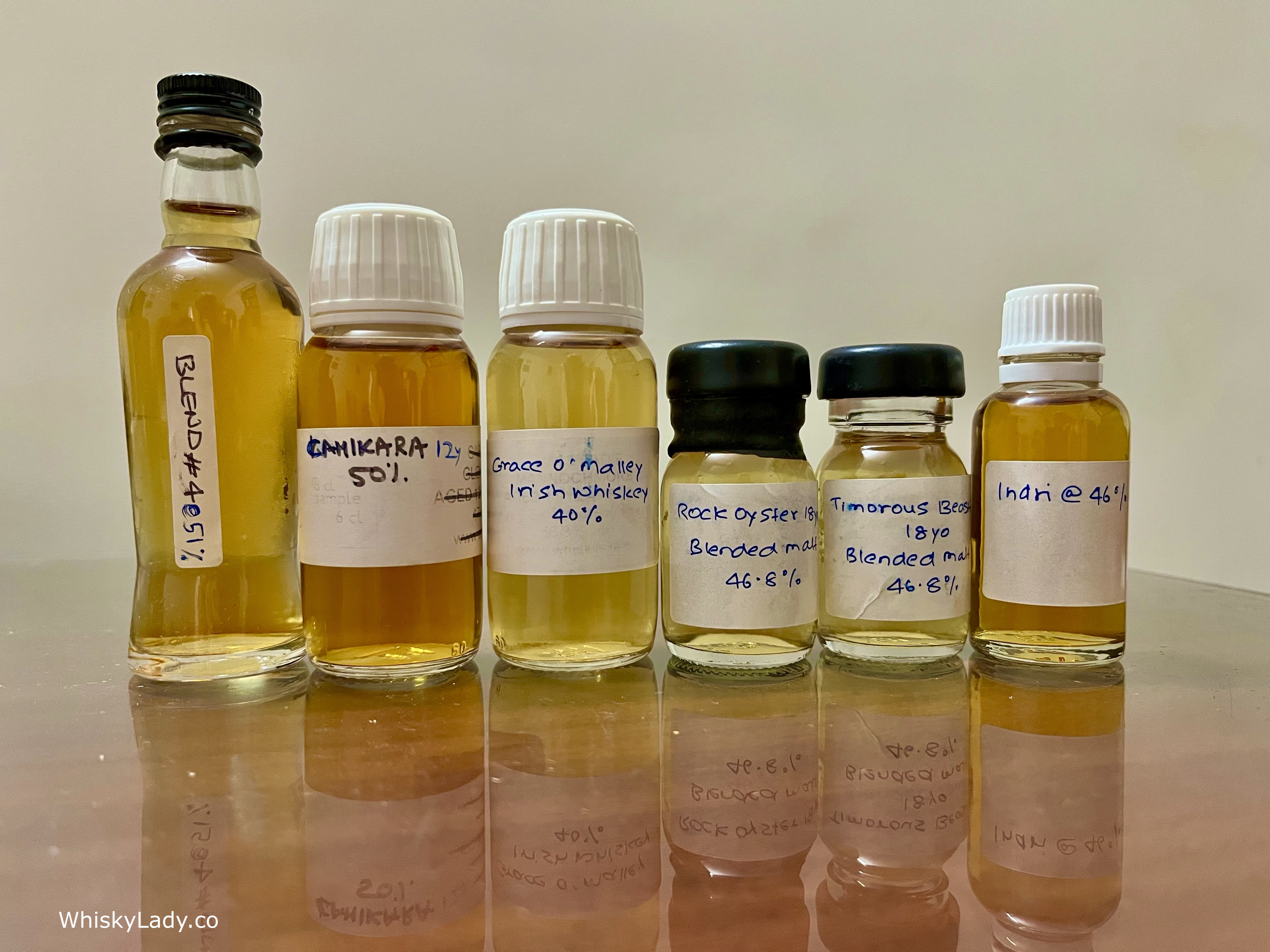
Timorous Beastie 18 year Blended Malt 46.8%

  • Nose – Big! Lots of cereals with hay and barley. A sweet lemon curd, honey, settling into lemon pie with a hint of white pepper, vanilla, caramel biscuits
  • Palate – Spicy, yet balances out, red macintosh applies, which then shifts into strawberries and cream
  • Finish – A touch bitter
  • Water – Wonderful! brought out a Tutti Fruitti sweetness with a chocolaty close

The Timorous Beastie is a limited edition malt made with Highland whiskies with the youngest 18 years.

Next up, we shifted to the Islands….

Rock Oyster 18 year Blended Malt 46.8%

  • Nose – It began with a lovely lemon sherbert, joined by a saline, mineral, heavier undertones – like a heavy rye sourdough, then sweet capsicum, candied lemon rind, vanilla ice cream
  • Palate – Vegitative peat, miineralic, lovely mouthfeel
  • Finish – A proper finish, long and strong – like a Highland Park 18 year – sweet peat with subtle saline
  • Revisit – After some time, we revisited the whisky and found it had shifted into cotton candy with a lovely minerality, having both depth and character

Douglas Laing’s Rock Oyster Island blended malt from the islands – Arran, Jura, Islay and Orkney.

These miniatures were shared by the fabulous Whisky Flu – his blog is a must-read for spirits – often going deep into the process of making malty (or other) magic!

Related blends from Douglas Laing previously sampled:

If you don’t want to miss a post, why not follow Whisky Lady on:

That Boutique-y Whisky Co – Mixed Malts (Part 2)

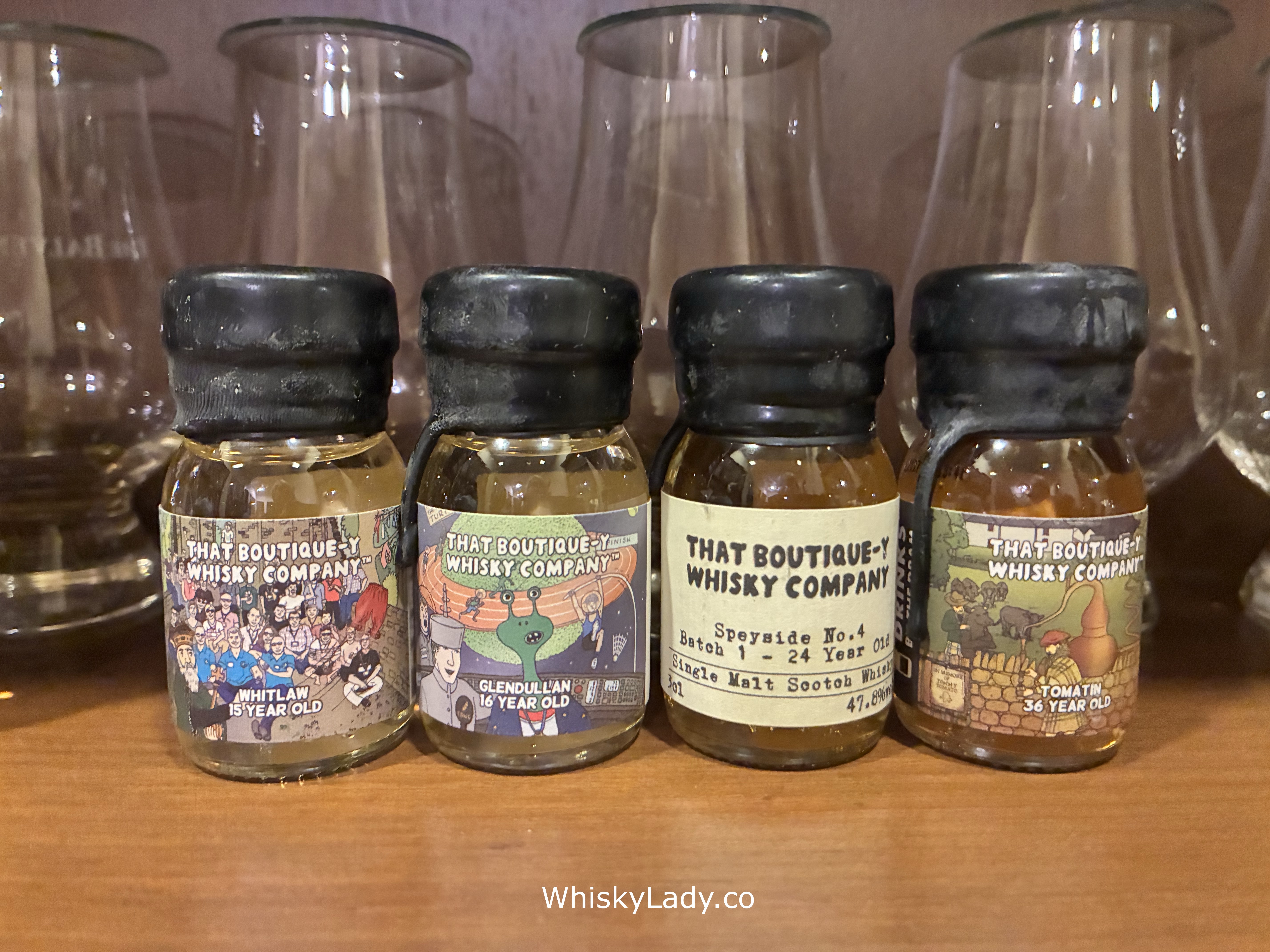
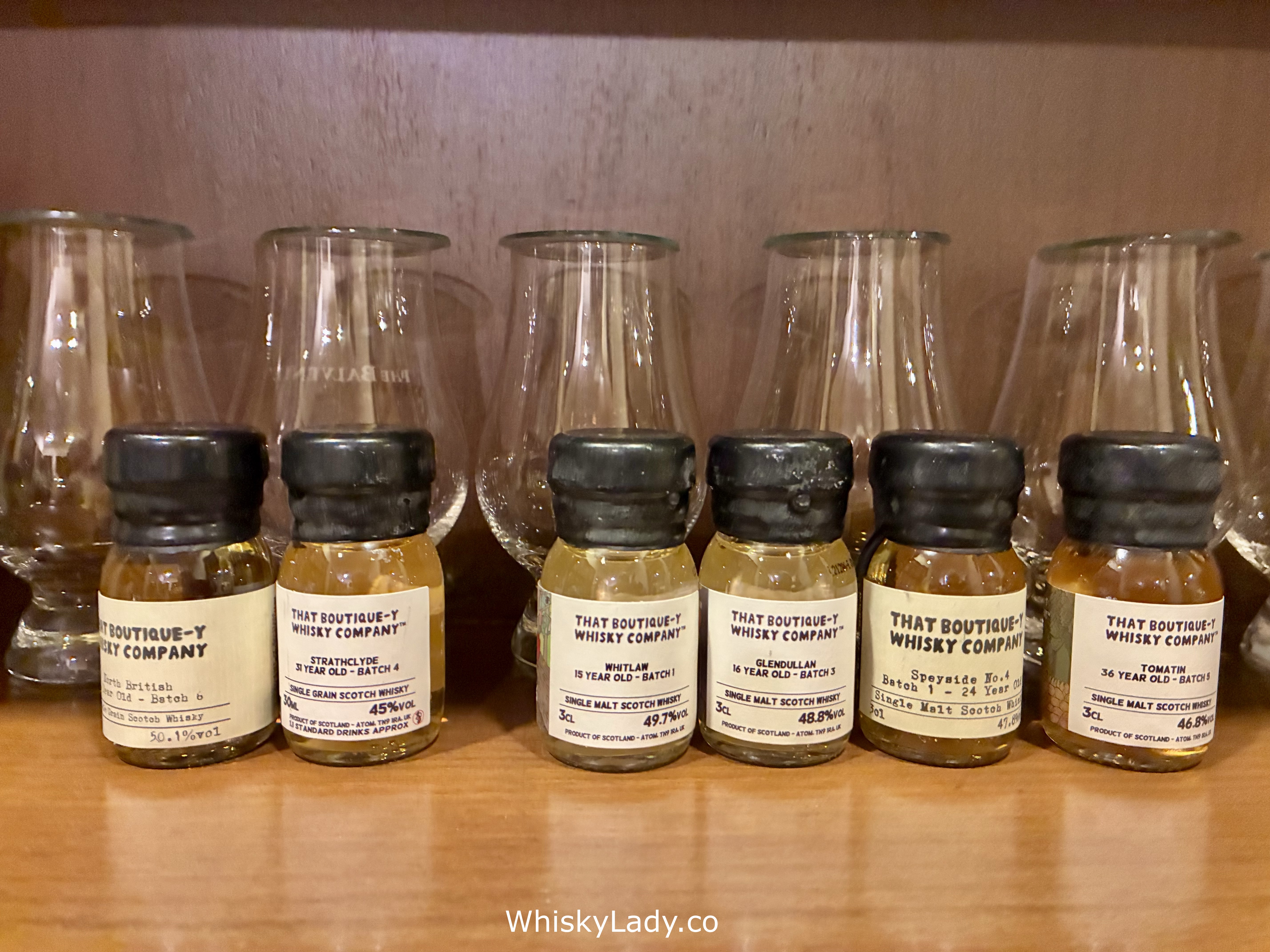
Our Bombay Malt & Cigar evening began with a pair of Lowland grains from North British and Strathclyde. However, we were keen to dive into a mix of malts:

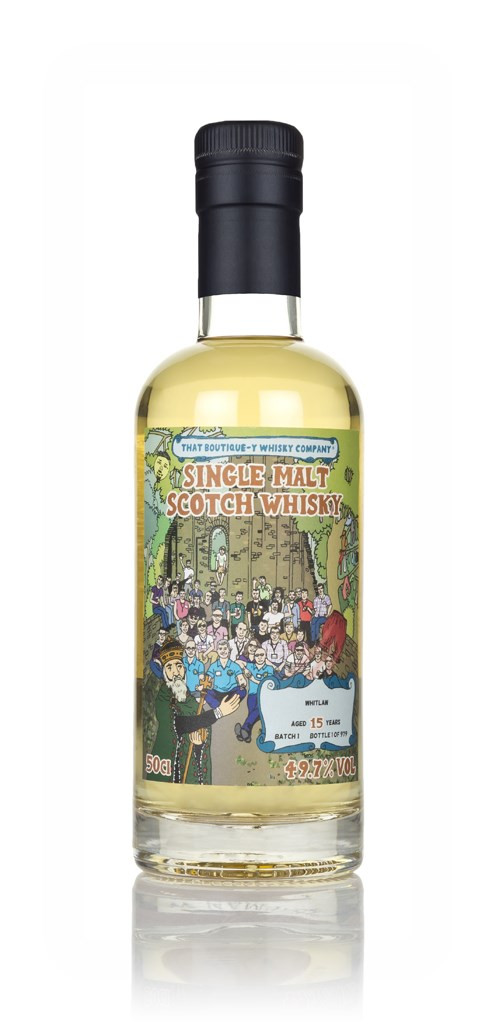
  • Whitlaw 15 Year Batch #1 49.7% (possibly Highland Park) ~£83
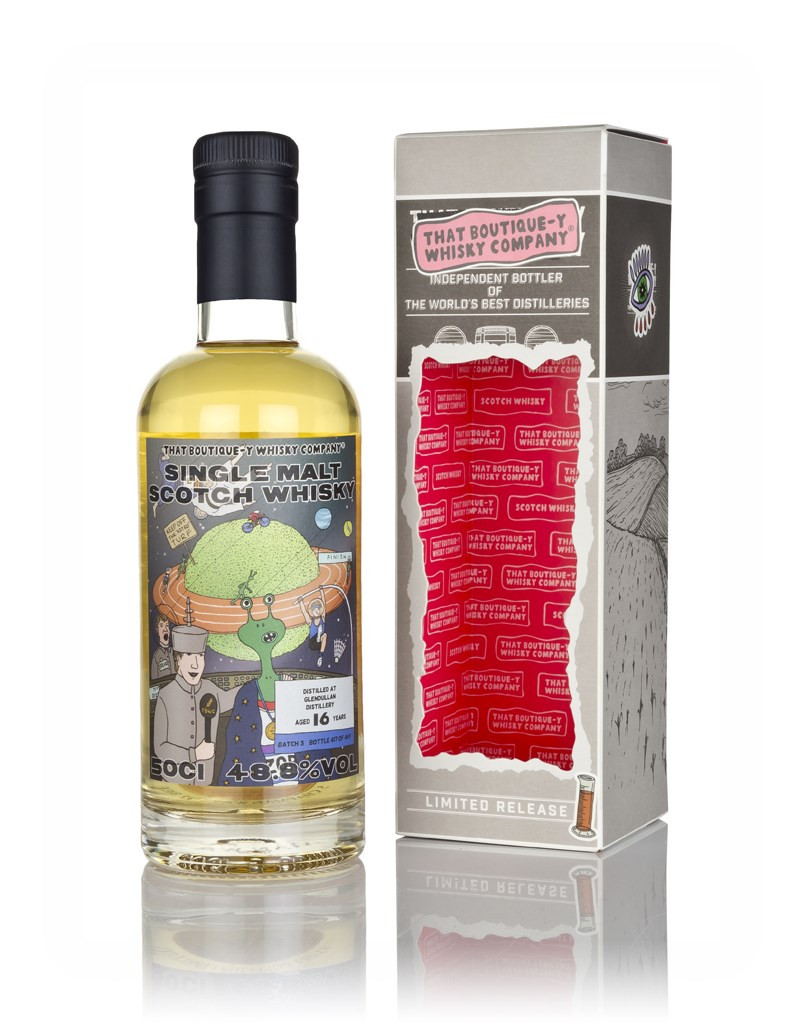
  • Glendullan 16 Year Batch #3 48.8% ~£83
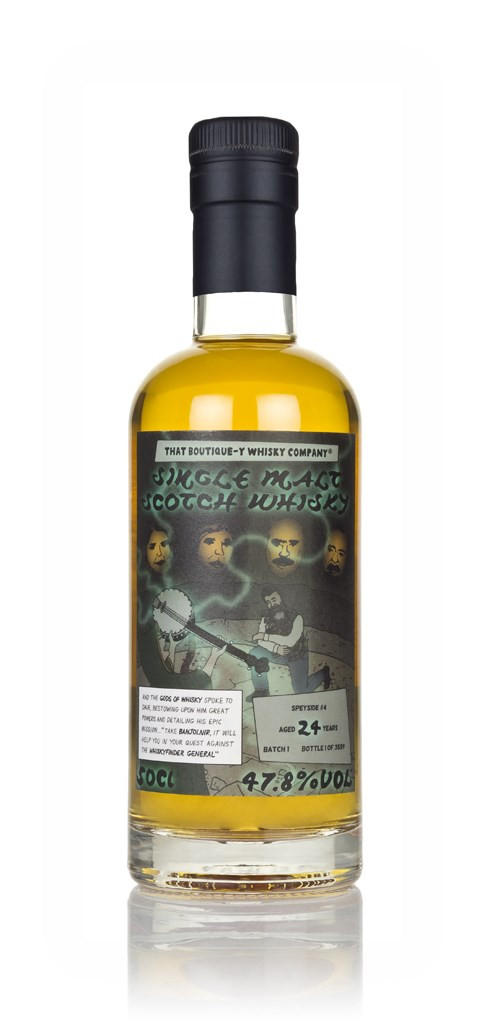
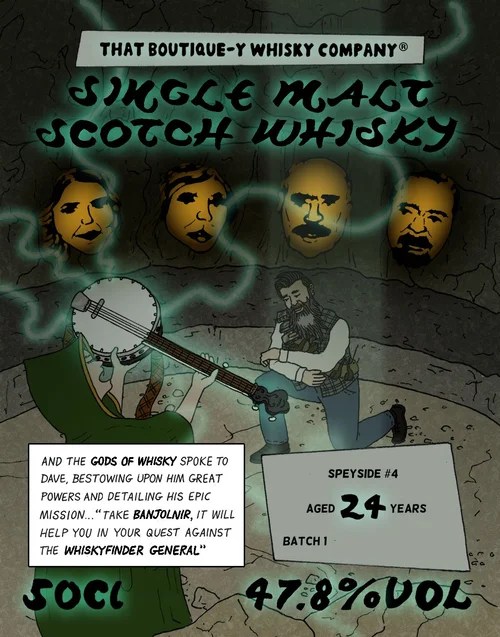
  • Speyside #4 24 Year Batch #1 47.8% ~£80
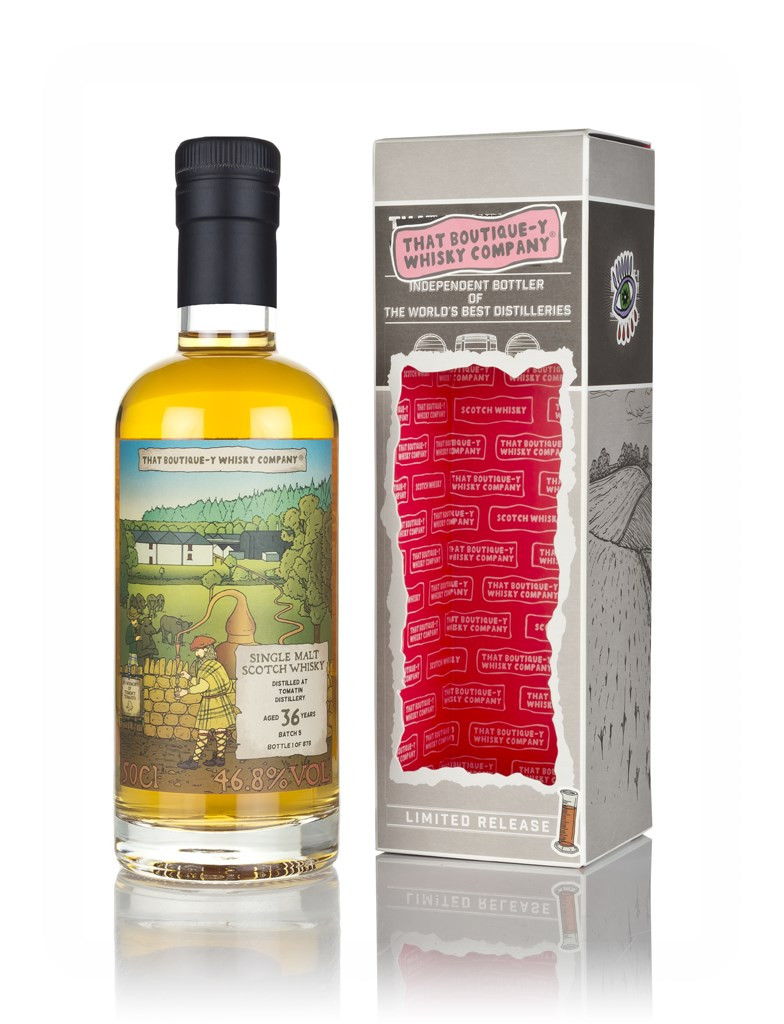
  • Tomatin 36 Year Batch #5 46.8% ~£252

Our tasting went from Islands to Highlands to Speyside too – a nice mix of malts in wee packages!


There are industry “open secrets” – like Whitlaw is code for Highland Park.

Whitlaw 15 year Batch #1 49.7% 979 bottles

  • Nose – It began quite yheasty – almost into the baby puke territory! Then some sweet spices, a hint of iodine, light salene, sea breeze, old citrus wood polish, fresh peeled mosambi (sweet lime), a hint of nuts and baked fruit pie
  • Palate – Well-rounded with a lovely interplay between sweet spices of cinnamon and cardamom with smoke, then honey, contrasting with Brittany’s salted butter
  • Finish – Peppery, sweet, long-lasting peat – frankly, it was incredibly long and lingering!

There was an island seaside quality to this dram that mixed and mingled with dessert. The peat was barely discernible on the nose (aside from the iodine), more like a smoke accent on the palate, then clearly came through in the finish.

Overall, we found this was quite a respectable dram.


Next up was Glendullan – a Speyside brand better known as The Singleton in North America. The distillery style is often described as “fresh” or grassy with a lighter, crisp profile. What did we find?

Glendullan 16 Year Batch #3 48.8% 469 bottles

  • Nose – Loads of fermented fruits, caramel, vanilla, a herbal hint too?
  • Palate – Sugar syrup, dates, a little bit of sweet spices too
  • Finish – Star anise

Whilst not unpleasant, there was nothing that really stood out here. One could call it delicate or nuanced, yet with the overall line-up, it paled in comparison.


From one Speyside to another, we geared up for the next in our malty quartet. For most, this was the “hit” of the evening that totally rewarded! Why?

Speyside #4 24 Year Batch #1 47.8% 3,549 bottles

  • Nose – Well, hello sherry! We were plunged into an old forest, aged wood, sweet persimmon, candy floss, and custard apples, roasted almonds, pureed fruit compote and cream
  • Palate – Wonderful! Spice and wood, brilliant balance, wonderful mouthfeel – a pleasure just rolling it around!
  • Finish – Long and thick

Don’t get me wrong – I like a good ex-bourbon cask. However, there is just something about a classic sherry that gets us. And to have it be both beautiful and a proper, mature dram? We were enchanted!

What do the chats at TBWC have to say?

  • N: Honeyed oak and baking spices. Lots of cereal notes with fresh juicy apple and a subtle caramel aroma.
  • P: The apple really comes through on the palate, followed by warming spices, honeysuckle, a nutty oiliness and more of those cereal notes.

Now, if only we had sampled this back when the bottle was available. At ~£80 it was a brilliant buy!


From Speyside, we moved to the Highlands with the oldest expression of the evening – a venerable 36 years from Tomatin distillery.

Tomatin 36 Year Batch #5 46.8% 878 bottles

  • Nose – Heady – almost headache-inducing – then drops quickly into something much more accessible. Caramel, mystery fruits (more on the tropical side than citrus or orchard), floral, with a funk behind it all
  • Palate – Huge hit of sweet, spice beneath the sweet, resinous, more fruit, firm influence of long oak aging
  • Finish – Spicier than anticipated at first – cinnamon, star anise soaked in sugar, long yet light

Overall, it was a brilliant progression – from aged grains to a mix of malts. My one change would be to begin with the Glendullan, then progress to the Tomatin, Whitlaw, and close with the Speyside.

And if you just haven’t had enough Whisky calendar mini experiences? Explore with us!

You can find even more Whisky bits ‘n bobs on:

That Boutique-y Whisky Co – Aged Grains (Part 1)

Sometimes all you need is a little bit!

A year or so ago, not one but two That Boutique-y Whisky Company Advent Calendars were purchased – for the express purpose of evenings when there are only 3-4 of us tasting. Rather than opening a full 700 ml bottle, our merry Bombay Malt & Cigar lads would turn to these minis!

I missed most of these evenings – some were apparently fabulous, one a bit “meh”, yet overall I’m a huge fan of exploring through such small 30 ml samples!

We began with a pair of grains:

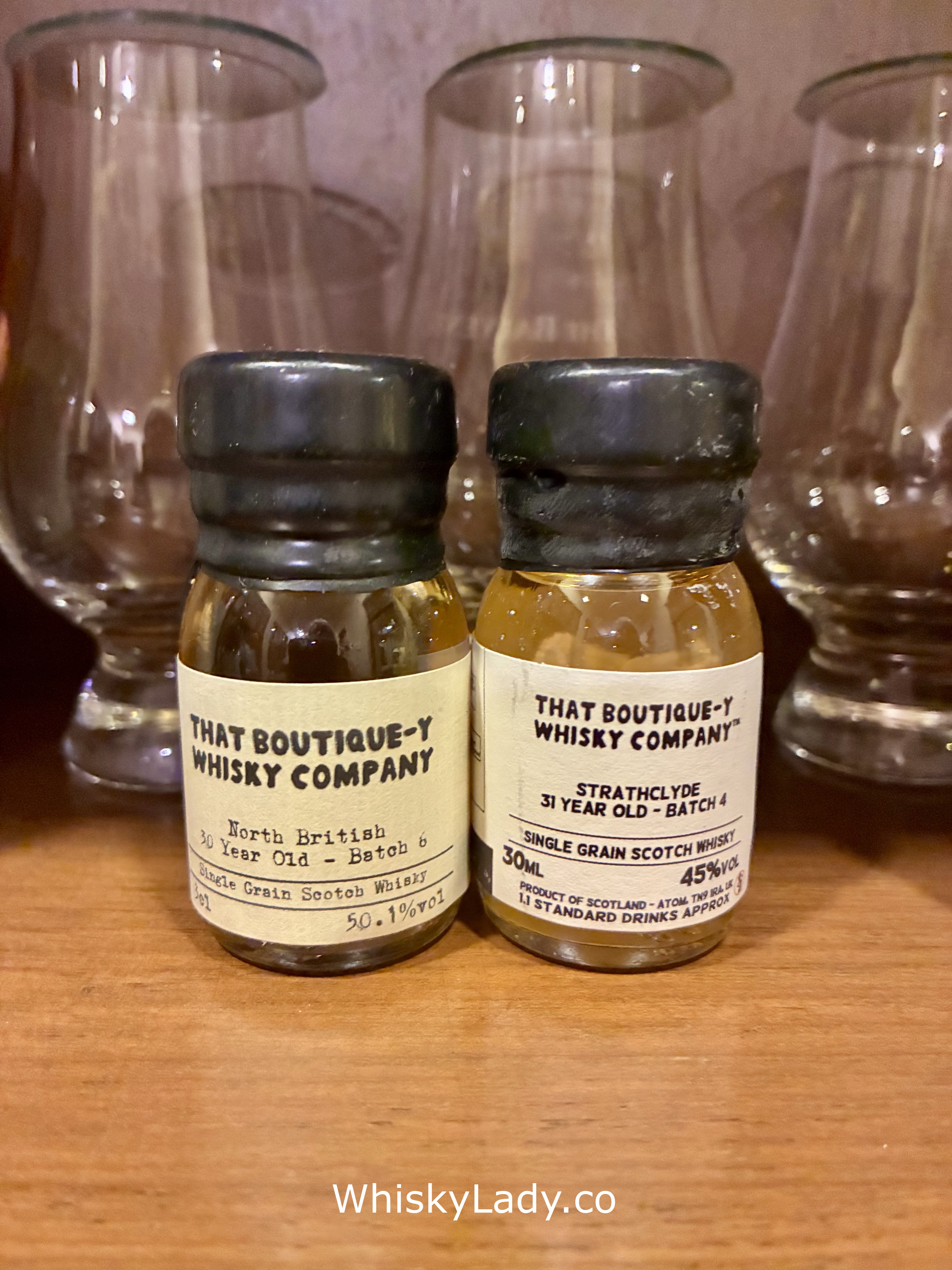
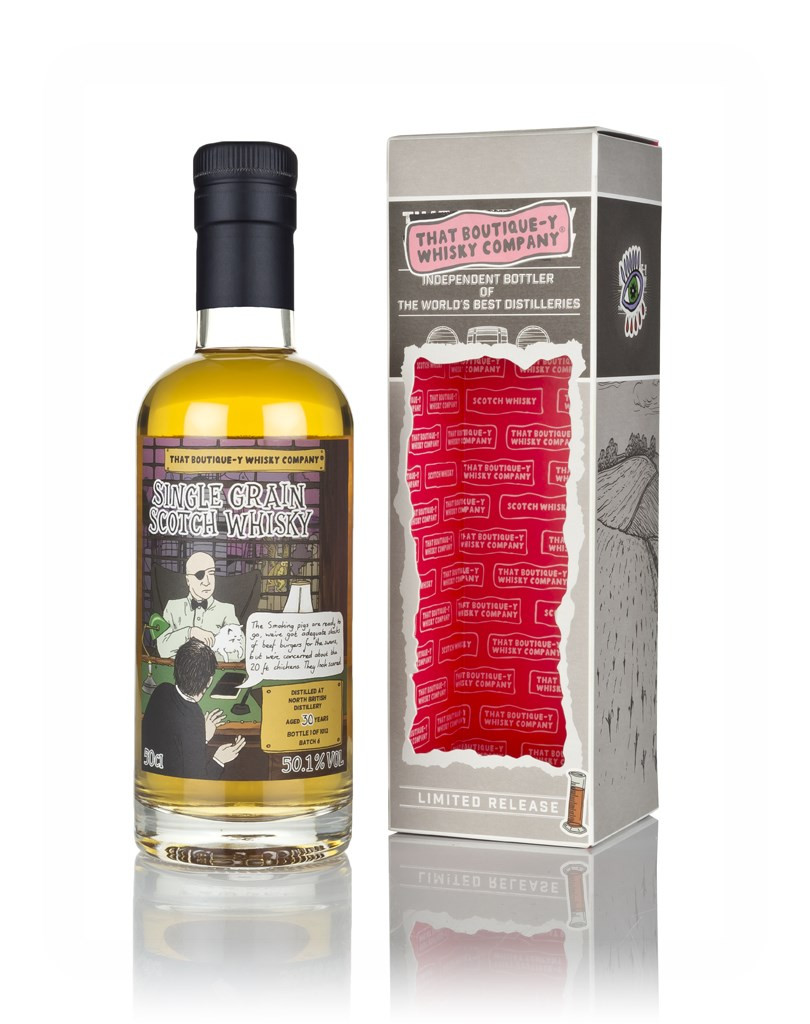
  1. North British 30 Year Batch #6 50.1% ~GBP 70
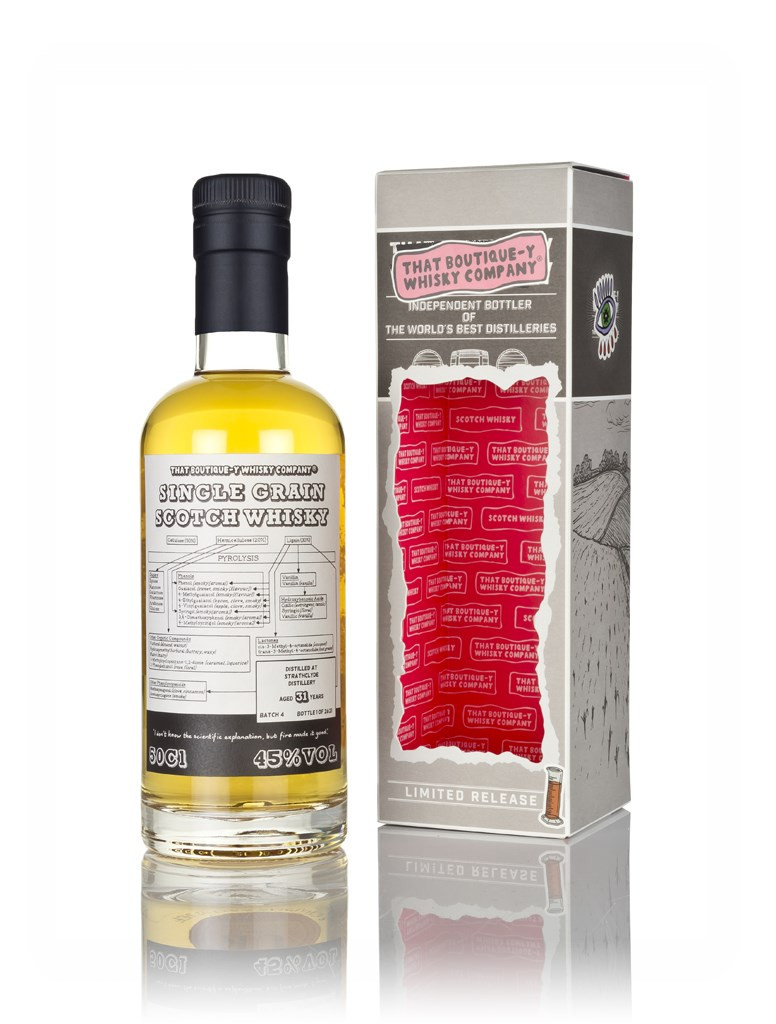
  2. Strathclyde 31 Year Batch #4 45% ~GBP 70

Then moved on to a mix of malts (in Part 2):

Let’s start with the grains, shall we?

We began our grain journey in the Lowlands – more specifically, Edinburgh’s North British distillery.

North British 30 Year Batch #6 50.1%

  • Nose – Very floral – think white flowers mixed with gulabi (rose). Then warmed into a buttery, flaky pastry, joined by marzipan, with a hint of citrus too!
  • Palate – Caramel or toffee, a decent mouthfeel, mostly sugar water, yet with a hint of something slightly bitter with a kick
  • Finish – Sweet
  • Water – Helps

Yowza! Going from 0% to 50+% alcohol was a shock – a reminder that starting with a calibration dram really makes a difference! This is why adding water to this grain helped improve our experience.

As the minis were from last year’s calendar, the expressions are no longer available on TBWC website, so sharing here what the chaps at Master of Malt had to say

  • Nose – Banana foam sweets, tablet fudge and dried fruit, with Christmas cake spice and a hint of lime peel.
  • Palate – Creamy vanilla, yellow fruit and cinnamon, with touches of horseradish underneath.
  • Finish – Orange chocolate and a hint of nutmeg.

Whilst we didn’t find everything the chaps did, the horseradish was not a bad way to describe the bitter kick peaking underneath the sweet!


We then moved on to the next Lowlands grain with Strathclyde – considered Glasgow’s most successful grain distillery and the backbone of Ballantine’s.

Strathclyde 31 Year Batch 4 45% 

  • Nose – Much more vegetative than the North British, fresh green grass and moist moss, sweet, hard, fruity candies
  • Palate – A lovely citrusy sweetness – reminiscent of lemon drop candies, a light honey drizzle, some gentle cereals
  • Finish – Quite nice, closing with a hint of bitterness and pepper
  • Revisit – Softly sweet, interesting, and overall quite lovely

This would be the kind of grain one shouldn’t dismiss – give it some time in the glass, some careful contemplation, and it will gently reward. Of the two grains, the Strathclyde was for us the clear winner!

Again, let’s see what the chaps at Master of Malt have to say 

  • Nose – Initially super light and tropical, with lots of pineapple and banana, a hint of vanilla ice cream and a drizzle of honey develops with a flint-y mineral backdrop.
  • Palate – Somewhat oily, with more floral honey, cereal notes, drying oak spice and hints of candied citrus peel alongside vanilla pod.
  • Finish – A creamy finish of banana milkshake, with lingering notes of white pepper spice and butterscotch sweetness.

Curious about other Strathclyde experiences?

Up next in our That Boutque-y Whisky Company Advent Calendar:

  • Whitlaw 15 Year Batch #1 49.7%
  • Glendullan 16 Year Batch #3 48.8%
  • Speyside #4 24 Year Batch #1 47.8% 
  • Tomatin 36 Year Batch #5 46.8%

As for other calendar mini experiences? Just check out:

You can find even more Whisky bits ‘n bobs on:

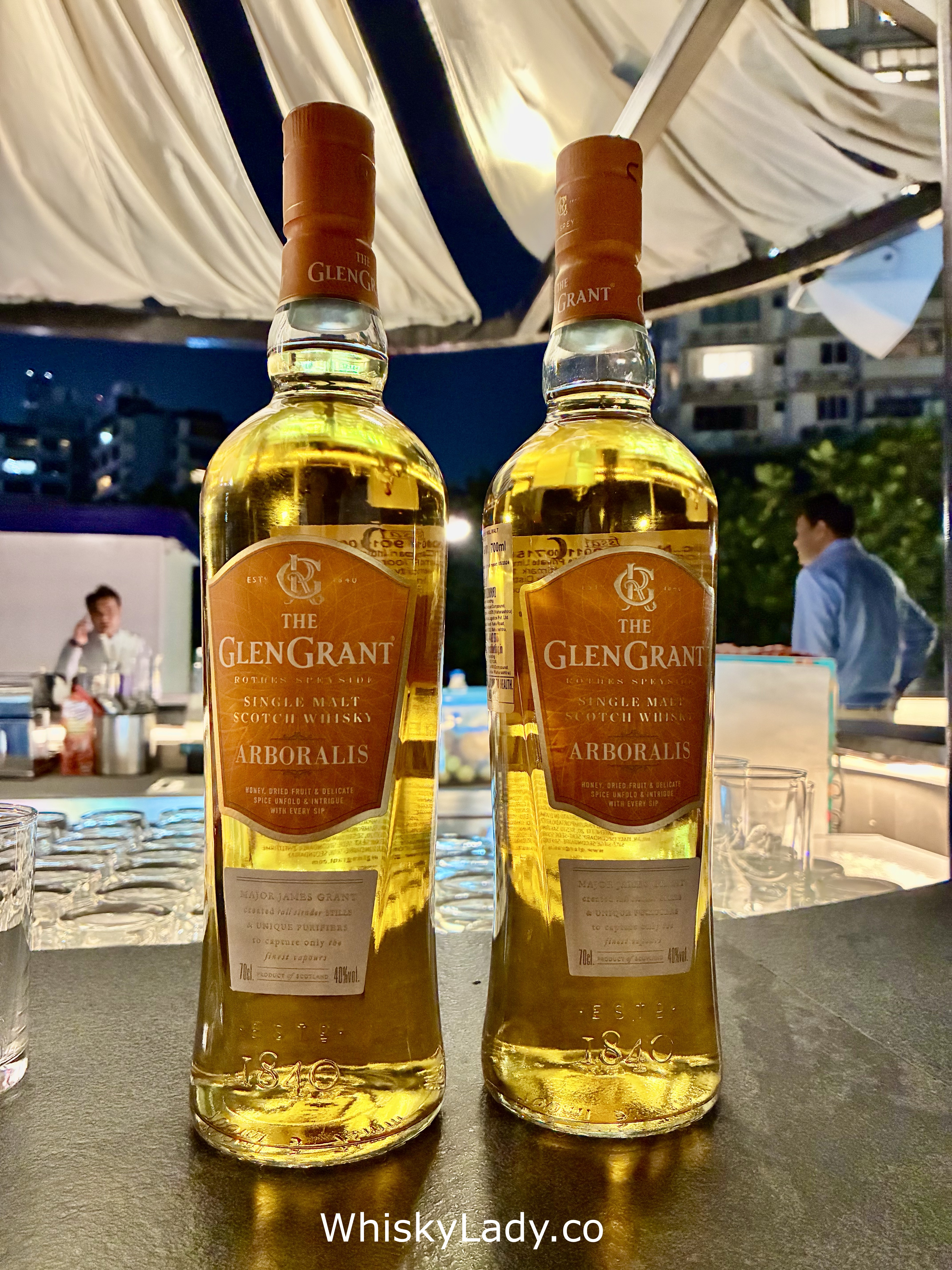
Glen Grant Arboralis in Mumbai

It was a bit of a dichotomy:  A whisky being launched in India to attract a younger crowd was the focus of an evening entertaining folks in their 50s and 60s! And yet, it was a lovely setting at Mumbai’s Breech Candy Club – even if its Arabian Sea view is now interrupted by highways and highrises.

The young lass introducing the whisky was clearly more familiar with Campari than single malt whisky, however, she made a valiant effort. Meghna explained that Arboralis was aged a minimum of 5-6 years, created to be youthful and accessible. What wasn’t said, yet was clearly key, is affordability, with a 750 ml bottle retailing for Rs 3,750 in Mumbai. (For those scratching their heads about the amount – currently this is Eur 35 / USD 40.)

What did we think?

Glen Grant Arboralis 40%

  • Nose: Fresh, fruity, floral, vanilla, light nuttiness, effervescent yet sweet
  • Palate: Young, lots of pepper, bitter leaves – tobacco?
  • Finish: Black pepper

Overall, we found it rather straightforward and inoffensive. Whilst the greeting is friendly with a fruity flavour, there isn’t much on the palate, and the finish dashes off.

To be honest, it was a bit disappointing. I wondered how it compares with the even more affordable Glen Grant The Major’s Reserve 40%?

What more do we know? Glen Grant Arboralis is aged in ex-Bourbon and Spanish Sherry oak casks. With their official tasting notes sharing:

  • Colour: Bright Gold
  • Aroma: Floral and fruity, dried raisins, honeysuckle, lemon citrus
  • Taste: Oak, butterscotch, dried fruits, and light spice
  • Finish: Long with malty vanilla, pear, and hints of citrus

Whilst we didn’t fundamentally disagree with their tasting notes, we certainly didn’t find the finish long. And it certainly didn’t linger long enough to discern pear and citrus!

In fairness, we were not the target audience. Amongst us was a former Brand Ambassador for venerable Scottish whisky brands, connaisseurs, and collectors. Our silver hair was out of synch with the desired market.

And yet, we couldn’t complain about the company, the nibbles, the cigars, the pleasure of being outdoors for a pleasant evening in Mumbai!

Let’s face it. We are spoiled. At London’s 2025 Whisky Show, we were treated to such a remarkable range of whiskies that this experience fell short. Rather than grouch, I’ll leave you instead with a cheeky teaser of what could have been a fabulous evening!

Check out the Glen Grant Whisky Flight – Part 1

Which was followed by more mature expressions in the Glen Grant Whisky Flight – Part 2

Interested in catching more? Why not follow Whisky Lady on:

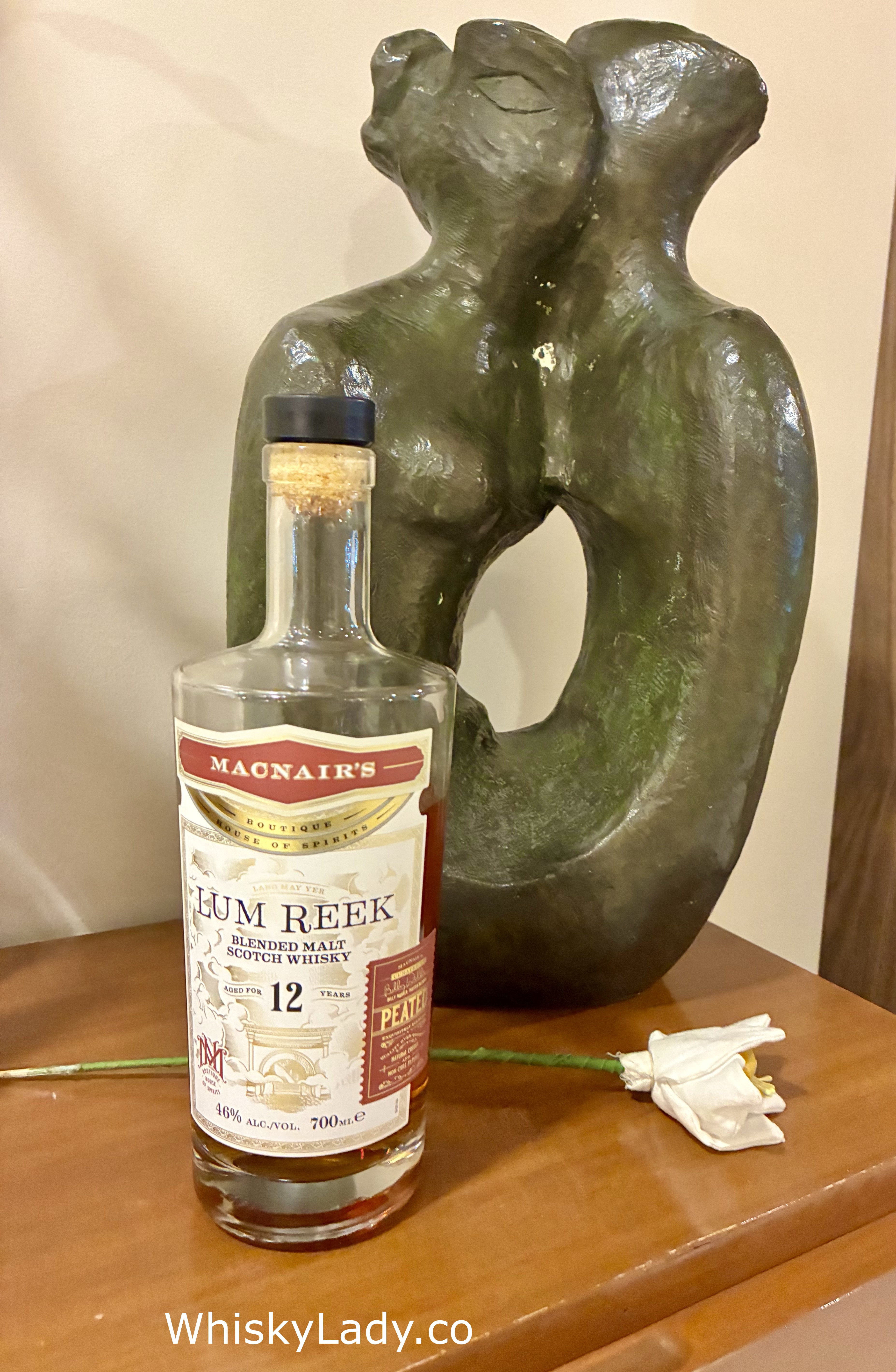
MacNair’s Lum Reek Peated Blend 46%

Peated whisky and hot climates do not always mix. There is something about a brisk, stormy, cold night or wintry weather that prompts one to gravitate towards a smoky dram.

And whilst February in India tends toward a pleasant 26 – 29’c, much of the year it is much warmer, so habits are formed for the norm, not the exception. It took moving to Germany for me to truly rediscover why I used to occasionally enjoy a peaty whisky!

In our Whisky Ladies of Mumbai group, we have a few affirmed “Peaty Ladies”, and this blend produced a few more converts – at least for this style of peat!

For those less familiar, MacNair’s Boutique House of Spirits is a blending and bottling company. It was founded by Harvey MacNair in 1857 as a Glasgow-based blending house. Now part of Pernod Ricard, it has benefited from a close collaboration with Master Blender Billy Walker, with Lum Reek a core expression.

And why Lum Reek?

Lang may yer lum reek. The old Scottish saying literally meaning ‘long may your chimney smoke’, is a traditional way to wish someone a long, healthy and prosperous life

The warm sentiment resonated – even though our climate differs. On to the dram, what did we think?

MacNair’s Lum Reek 12 year peated blended malt 46%

  • Nose – Subtle yet unmistakable smoke, full bacon sweetness – a happy peat! Think honey-glazed ribs, grilled pineapple, generous bacon jam, a tropical wild honey… As it evolved, we found a hint of black pepper, some raw mango, then a sweet and savory banana fritter drizzled with honey, vanilla ice cream, sherry-soaked sponge cake – delicious!
  • Palate – “It’s yum!” was an exclamation! A delicious spice, sweet peat, a gorgeous full-bodied dark berry, ginger chocolate, luscious, smooth, and frankly a bit voluptuous
  • Finish – A really good finish – lingering with a subtle sweet peat, roasted and lightly salted caramelize nuts, mocha
  • Revisit – With more time in the glass, we returned to find a delicious butterscotch with soft smoke… still delicious!

There was little doubt – this was the clear evening winner!

As for the official tasting notes? Here’s what the folks at MacNair’s have to say:

  • Nose: Sweet peat reek, butterscotch, warming mocha, and gentle nutmeg
  • Taste: Lashings of heather honey, rich toffee, and sweet spices, all with undertones of peat

This is a blended malt with no grain. As it was purchased at the GlenAllachie distillery, it seemed pretty obvious that the Speyside could very well be GlenAllachie. BenRiach was also mentioned. This was partly confirmed by their official blend description – with no mention of the other distilleries involved:

MacNair’s Lum Reek 12-year-old combines Single Malts from Islay and Speyside – two of the most renowned whisky producing regions in Scotland.  The recipe, created by industry veteran and Master Distiller/Blender of the Year, Billy Walker, includes both peated and unpeated whiskies, including aged GlenAllachie single malt.

The small batch expression was matured at The GlenAllachie Distillery in a combination of first fill Bourbon, Pedro Ximénez and red wine casks until the whisky reached its optimum. The consequential bronze spirit, offered without added colouring or chill-filtration, reveals sophisticated notes of sweet peat reek, warming mocha, Scottish heather, and butterscotch.

What prompted the discussion was the Islay element. First thought was Caol Ila; however, we at least considered other options. It was certainly not Ardbeg or Laphroaig. It was unlikely to be Bruichladdich or Kilchoman or Bunnahabhain… Perhaps Lagavulin… One suggested Bowmore, yet we kept coming back to Caol Ila for its balanced sweet peat. I’m curious if our speculation is right?

Bottom line, it is a fine malt blend, and we were most grateful that our host shared this bottle from her Scottish Whisky Trail!

If you don’t want to miss a post, why not follow Whisky Lady on:

Berry Bros and Rudd Sherry Cask Matured 45.2%

Memory is a funny thing. We recall a feeling and impression, as much as sight, sound, and smell. With whisky tasting, tracing a particular aroma evokes associations, influenced by our environment and prompts from fellow tasters.

Our gracious host shared her Whisky Trail experiences from 1.5 years ago and explained that this was the only bottle they hadn’t experienced before buying. It came recommended from a well-known Edinburgh whisky store, so hopes were high.

I also had overall positive impressions of a decent dram – having experienced their Sherry Blend 55.8% (2023) and the Sherry Blended Malt 44.2% (2022). I fully admit, I simply assumed I knew what we would be experiencing. Naughty girl!

  • First, I missed a critical element – this was a Single Malt, not Blend!
  • Second, the abv was different.
  • Third, Germany and India are very different tasting environments – this DOES have an impact!

Duly put in my place, what did we discover?

Berry Bros & Rudd Single Malt Sherry Cask Matured 45.2%

  • Nose – Started off promising – though a bit shy, had some nice sherry elements of plums, cherries, then cardamon, green capsicum, fresh tobacco leaves, vanilla, buttery sponge cake, becoming sweeter the more it opened. It then shifted, revealing walnuts and tinned pineapple
  • Palate – Lots of dried fruit to start, spicy oak, Big Red cinnamon chewing gum, raisins, nutmeg, oily
  • Finish – Very dry, as in “makes you thirsty!” kinda dry
  • Rivisit – Almost butterscotch

Reading the notes I jotted down, one would think – oh this must be delightful! Yet between the surface descriptions was something that just didn’t come together. Instead of a balanced blend, we had something a bit off-kilter. Whilst hard to pinpoint exactly what was wrong, it just simply collectively wasn’t altogether right!

Here are the official tasting notes from the label:

Full, deep and brooding, this wonderfully rich Sherry cask single malt exudes flavours of sweet dried fruits, warming baking spice and decadent Sherry wood.

Would we agree? Not entirely. Our overall impression was – underwhelming. I heard a remark of “old lady whisky”… now I’m not exactly young, however, isn’t this a disservice to discerning women of a “certain age!”

I was reminded of some Blair Athol’s – whiskies that should work but sometimes simply don’t even though all the elements are there.

I’d be curious what it will be like after further oxidation in the bottle or time in the glass, might that result in a different experience?

What did we try in our Whisky Lady’s Scottish Whisky Trail trio?

If you don’t want to miss a post, why not follow Whisky Lady on:

Royal Lochnagar 12 year 40%

Our whisky host shared how they were touring other sites and practically stumbled upon Royal Lochanagar. They simply had to make a short detour for a distillery tour!

And why not? There is a royal precedent to touring this distillery! Neighbouring Balmoral Castle, Queen Victoria and Prince Albert were invited for a whisky tour in 1848. Post this experience, the Prince issued a royal warrant! Which was continued by King Edward VII and King George V.

Today, Royal Lochangar is the smallest whisky distillery in the Diageo stable, with a reputation for being a bit of a conundrum. Why? The two stills and worm tubs would tend to lend themselves to a ‘heavy’ style, but instead, great efforts are made to produce a ‘light’ new make spirit.

Bought on site for ~£50, the 12 year is part of their core range. What did we think?

Royal Lochnagar 12 year 40%

  • Nose – Incredibly sweet at first, a rich rumtopf full of soaked juicy fruits, lots of plums, cherries… then it shifted, revealing fresh grass with the heavy fruity aromas fading, instead we found a growing carmalized onion – almost like a sweet bacon jam, a bit sweet and salty, then oak, vanilla, marmalade with pronounced orange rind, even some apple cider vinegar or turpentine, and a shandy beer/sprite mix!
  • Finish – Woody, salty black licorice (a Nordic lakris style), some white pepper, a bit earthy, umami, sweet roasted vegetables, betel leaf, apples
  • Revisit – Astringent, dry

Many of our Whisky Ladies thought this expression might be much more interesting at 46% rather than 40%. It seemed a bit, well, too watered down.

Overall, we found it was a fairly easy-drinking dram. However, whilst it was relatively innocuous, there was nothing truly exceptional either.

Interestingly, they’ve kept many similar elements in their current official tasting notes vs those shared nearly a decade ago – right down to the turpentine!

  • Nose – A relatively closed nose. Planed wood, light toffee, boat varnish. Linseed oil behind, even putty, and later a lychee-like acidity. With water, the acidity comes up (acid drops), and the nose sweetens. Still a pleasant fresh woodiness or leatheriness, the varnish now supported by artists turpentine. Warm sand. After a while, coffee dregs with brown sugar. Not an obvious nose, however.
  • Body – Medium-bodied with a smooth mouthfeel.
  • Palate – This delicate malt offers fruits, planed wood, and light toffee. The palate is sweet before gaining in acidity.
  • Finish – Dry; medium-length, with an attractive lingering sandalwood aftertaste. Sharp and well-balanced.

Full disclosure, I had previously sampled this expression ~ 9 years earlier. We concluded it was a sharp varnish until it settled down and became more approachable. This time, I didn’t find the sandalwood aftertaste; the impression remained of something ordinary rather than extraordinary.

What else did we sample that evening?

If you don’t want to miss a post, why not follow Whisky Lady on:

Whisky Ladies Scottish Whisky Trail: Royal Lochnagar, Berry Bros + Rudd Sherry, Lum Reek

Patience is a virtue. And in this case, with our February 2026 Whisky Ladies session, it required 1.5 years of patience from both our host and her spouse! Each whisky was carefully selected from their Scottish Whisky trail. Then waited and waited and waited to be first opened for the ladies,  before our hosts could enjoy at their leisure!

We were introduced to the following:

From Royal warrant to an undisclosed single malt to a blend, it was a good reminder: never assume a previous experience will be the same in a different environment, a different decade, and a slightly different expression!

For many of us who find the heat of Mumbai and peat incompatible, it could simply be the style of peat one is trying! This MacNair blend converted more than a few to peat!

What is wonderful about tasting in a diverse group is that we have a range of reactions to the whiskies sampled. This particular evening was surprisingly unanimous and quite clear in our ranking: Lum Reek was the winner by far! Followed by Royal Lochnagar with Berry Bros & Rudd’s Sherry Cask lagging in last place…

As to why this was the case? You will simply need to click on the whisky links to read detailed tasting notes!

If you don’t want to miss a post, why not follow Whisky Lady on: