Auchentoshan 12 year, Three Wood and 18 year

For those new to their whisky journey, miniatures are a great way to get introduced to popular brands with well-known expressions. However once you venture a bit beyond the standard fare, there aren’t too many miniatures screaming out “pick me!” Chances are you’ve already had the pleasure (or displeasure) of sampling already.
Auchentoshan Trio (Whisky Lady)

Auchentoshan Trio (Whisky Lady)

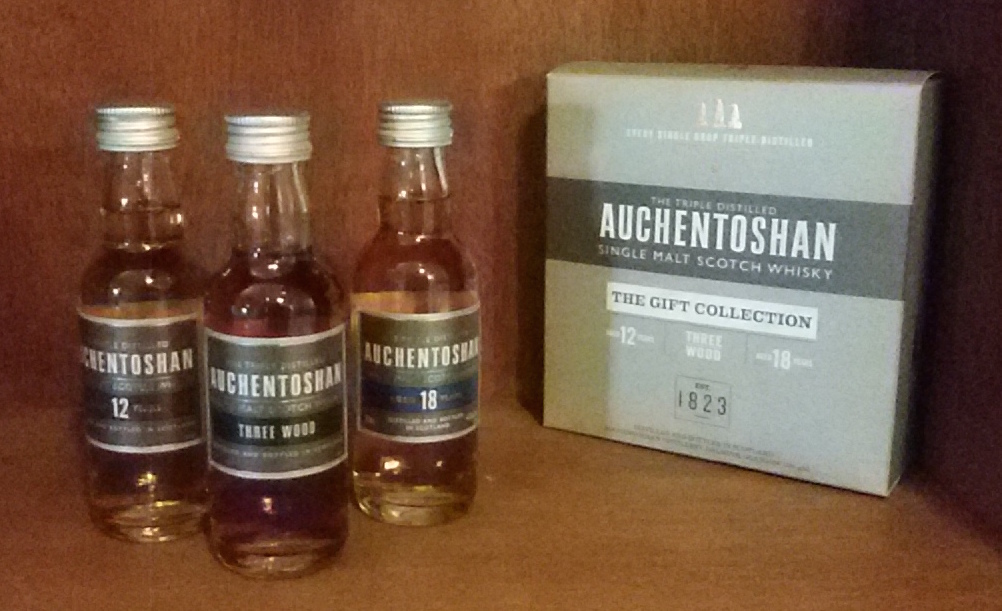
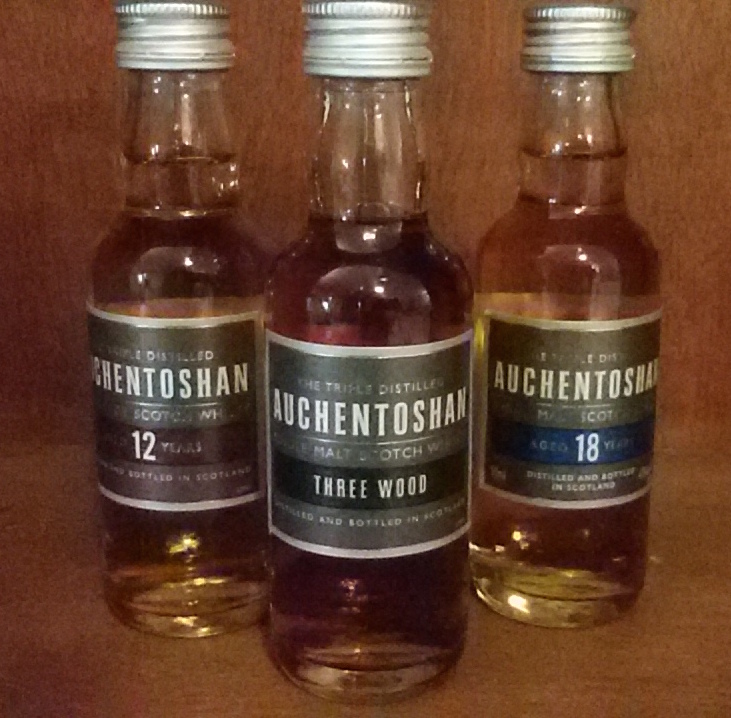
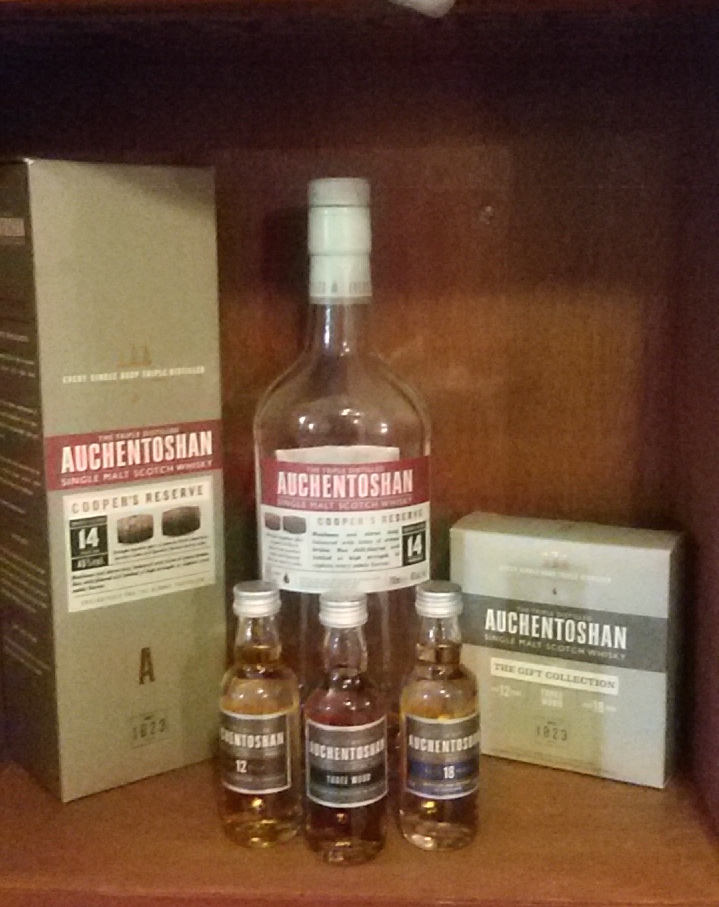
As I’ve not really explored much Auchentoshan, when a trio of miniatures came with a bottle of Auchentoshan’s Cooper Reserve 14 year, decided this was a duty-free deal I had waited for.

I didn’t have super high expectations as I’ve had “hit and miss” experiences with Auchentoshan. I enjoyed a couple cask strength whiskies I tried years ago at a now defunct whisky bar in Singapore – guided by their ever helpful staff – and I honestly don’t recall any details. Anything I’ve tried since hasn’t measured up – the perils of starting with the ‘good’ stuff!

That said, I’m always game to challenge my opinion and ‘free’ miniatures are the right price-point. After dragging the dregs of the Auchentoshan Cooper Reserve 14 year out of the whisky cabinet last weekend, decided this weekend was high time to give the wee ones a go!

So invited a friend to pop by and we dove into our tasting journey… Being May in Mumbai meant, as my companion nailed it with her comment “Holy *@*! It is hot. May sweet whisky stop the sweat!!” We also had on hand a mini platter of pita, gouda cheese and olives. Turns out the best part of the whiskies was actually the pairing.

Auchentoshan 12 year (Whisky Lady)

Auchentoshan 12 year (Whisky Lady)

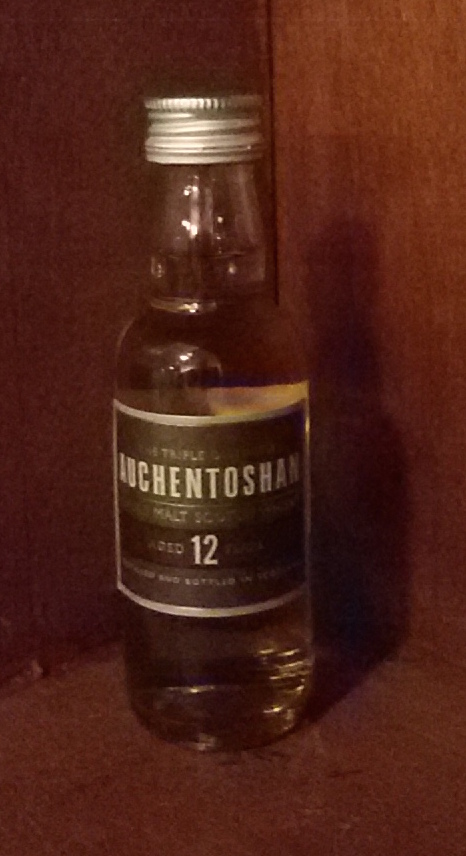
Auchentoshan 12 year 40%

  • Nose – Medicinal, then honey, vanilla, some subtle grass, with a little patience and persistence a bit of woodsiness, stronger vanilla when warmed
  • Taste – Woodsy and generally light, rather frivolous, bland. Think cucumber juice.
  • Finish – Dry, light and not particularly interesting
  • Comments“The kind of whisky people think women want to drink.” “It is like the wine cooler of whiskies.”
  • Overall & pairing – The old biddie of whiskies… like the Harvard Boston Club of whiskies… Works as an accompaniment not the focal point. Pairs quite well with cheese such a gouda.
Auchentoshan Three Wood (Whisky Lady)

Auchentoshan Three Wood (Whisky Lady)

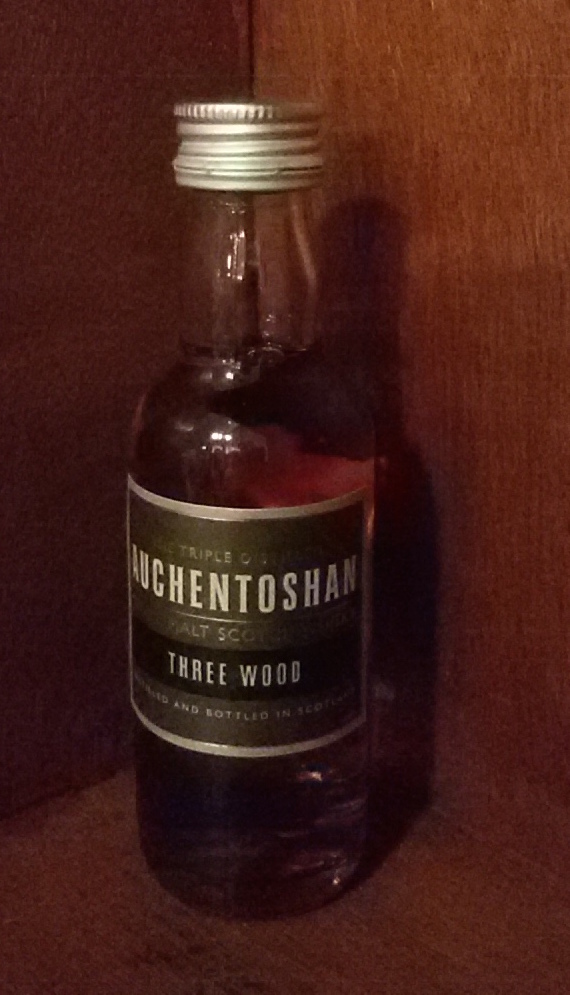
Auchentoshan Three Wood 43%

  • Nose – Raisins, nuts, nutmeg and cloves, like a brandy soaked Christmas fruitcake. As it aired plums joined the mix. Treacle and honey. After sipping, the nose took on pine quality with a flash of mint.
  • Taste – Woody! I daresay yes… three woods? Cinnamon and bitterness on the palate.
  • Finish – Lightly spice, then a dash of bitter.
  • Overall & Pairing – Finally a speck of character! However it is a bit like having Christmas in May – interesting but not the real deal. Again much better paired with light nibbles – especially cheese.
Auchentoshan 18 year (Whisky Lady)

Auchentoshan 18 year (Whisky Lady)

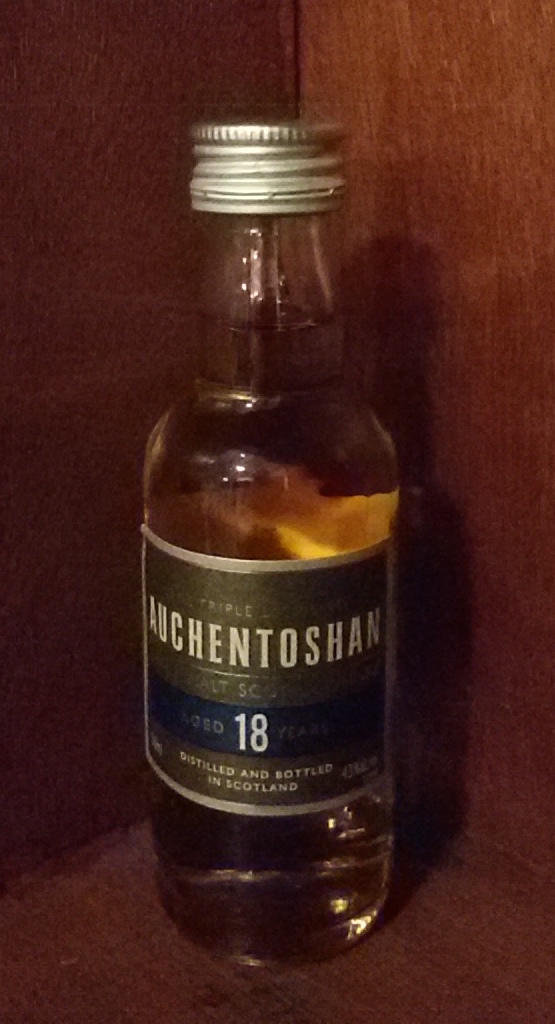
Auchentoshan 18 year

  • Nose – Honey notes with heather and sage, as it breathes apples and pears join the mix, vanilla like the 12 year
  • Taste – Superficially woodsy, not fruity. After a nice break and some pita with cheese, faint walnut element
  • Finish – Slow to start with an odd spicy kick after a bit
  • Overall – While often 18 years is often a great ‘age’ for Scottish whiskies, in this case well… ok… nothing specifically wrong but also nothing distinctly right either

We found all of them went better with a little cheese. We also let all three air and found the 12 year simply became more sweetly bland with time, 18 year didn’t alter much and the Three Wood kept doing its little Christmas in summer routine.

So what’s the verdict on the trio? If you want an easy drinking whisky where the focus is on something else, heck one of these might do. If I had to pick, I found the Three Wood the most interesting whereas my friend thought the 12 year would do when your expectation was a ‘background’ whisky.

Would either of us be tempted to dash out and buy a bottle of these? Nope.

AUchentoshan Trio (Whisky Lady)

Auchentoshan Trio (Whisky Lady)

In closing, we also polished off the last drops of the Cooper’s Reserve 14 year just to see how all four expressions compared. I don’t mean to sound uncharitable, but the Cooper’s Reserve decidedly had the most character. Which given my overall opinion of it solo, isn’t saying much.

Auchentoshan Collection (Whisky Lady)

Auchentoshan Collection (Whisky Lady)

You can also find Whisky Lady in India on:

Deanston Virgin Oak NAS 46.3%

Our May 2015 tasting session featured whiskies from three countries – USA, Scotland and Ireland. We found the quality and appeal of this trio extreme from ‘disaster – do yourself a favour and don’t buy!’ (Hudson) to ‘decent but disappointing’ (Deanston) and utter ‘delight’ with “More! Please sir may I have some more!’ (Teeling)

The Scottish whisky was one sampled previously and earlier a favourite of our host. As always, we tasted blind so would not be influenced by anything other than the immediate whisky experience.

Deanston NAS 46.3% (Whisky Lady)

Deanston NAS 46.3% (Whisky Lady)

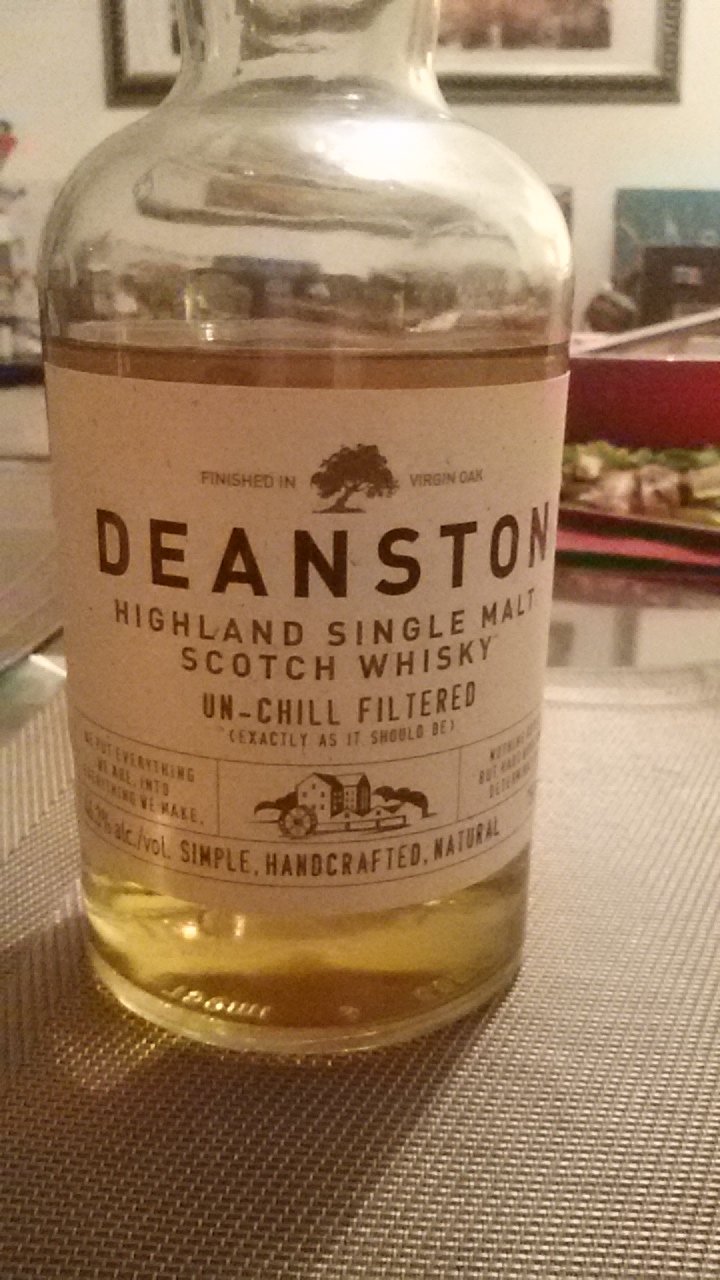
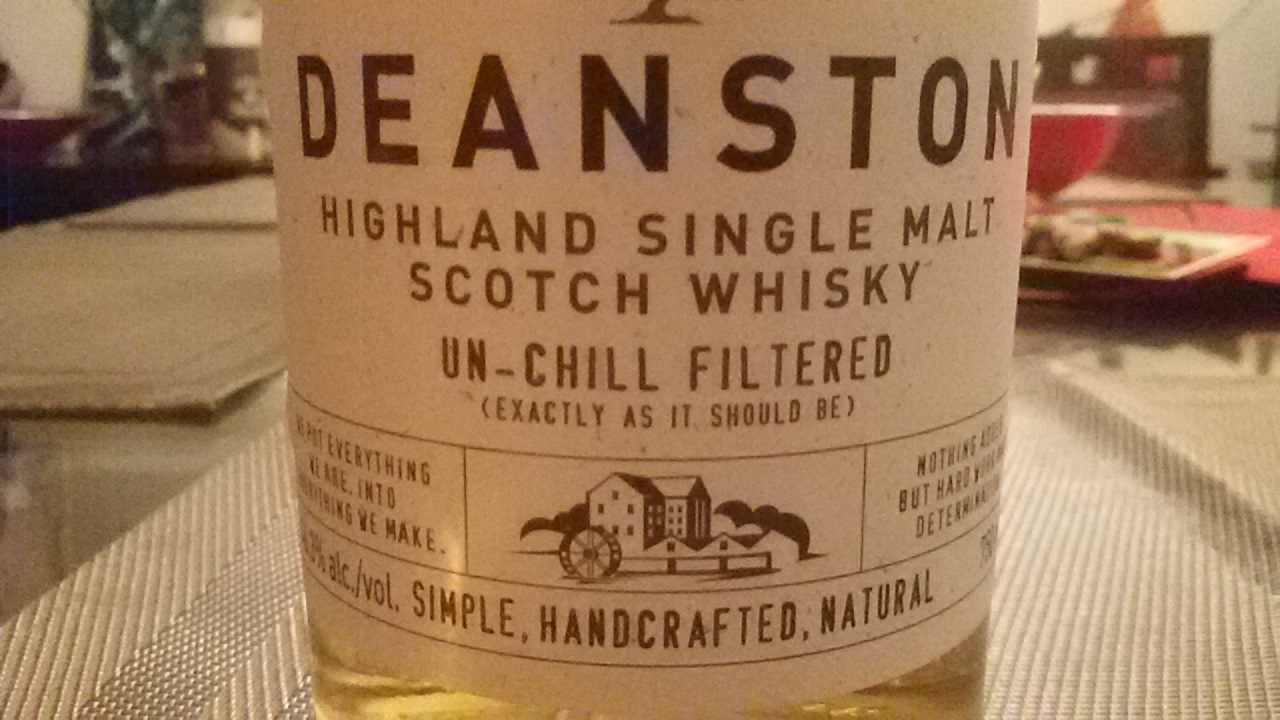
Deanston Virgin Oak NAS 46.3% 
  • Colour – Light straw
  • Nose – Initially quite fruity with lime and vanilla, as it warms up, has a french lemony sweet aftershave kind of quality  – think Brut! The overall sense even before the 1st sip is that of a young, fresh, delicate whisky. After the 1st sip, whiff of crunchy green apples, nutmeg, strong honey
  • Taste – A fizzy tingly on the tongue, warm yet alas narry a hint of complexity, most found it a bit bland
  • Finish – Limited and sweet
  • Water – Nope! Don’t go there. Even diluting with only a few drops makes it simply too weak and waters down the light nose
  • Immediate reactions “OK but… maybe a good whisky for people who don’t drink whisky.” Ouch! Honestly, while there was nothing wrong with the whisky, it just somehow didn’t quite strike a strong chord. A few more descriptions bandied about were “bland” and “insipid.”
With more time to breath…
  • I used the lacklustre initial impression as an opportunity to see how it would fare after oxidating for 20 – 30 mins or so. Unlike the Nikka Takesturu 17 year or Chichibu French Oak Cask, I strongly suspected the Deanston would not improve with more time to breathe
  • Sure enough, a half hour later found the nose had dramatically changed to a pronounced sour curd – not in a pleasant way – with none of the initial fruity citrus sweet
  • On the palate? Remained decent but yes… bland

Our host shared:

“I first bought Deanston 10 years ago and it was excellent! Then my next bottle was about five years ago and it was so so. This one? (sigh)… Disappointing” 
I was curious about how this compared with our previous Deanston experiences, so I dug out our sampling records:
  • Deanston 46.3% in April 2012 – I missed this tasting session but another member noted how “We liked the bitter chocolate”
  • Deanston 12 year in June 2013 – For this one, we found “Nuanced nose with over ripe fruit, sweet and spicy on the palate, lovely finish with a hint of spice that slowly dissipated. Delightful!”

The label provides no indication of the year the whisky was bottled, so it is difficult to say whether the whisky or our tastes have changed so dramatically over the years. The only detail it does share is that it is finished in virgin oak casks and is un-chill filtered. I suspect the virgin oak element was what didn’t meet our collective palate.

Deanston up close... (Whisky Lady)

Deanston up close… (Whisky Lady)

In fairness, this isn’t such a bad dram… Unfortunately it just isn’t one that stands out. I’m a firm believer that whisky preferences are highly personal and it all depends on what appeals to your palate. Even though it clearly wasn’t the favourite of the evening, it was one whisky we could pinpoint as ‘Deanston’ even before the reveal. Which means something somewhere has registered as being distinctly ‘Deanston.’  Perhaps in a different mood, setting or a different set of expectations, it would shine more.
What others say:

You can also find Whisky Lady in India on:

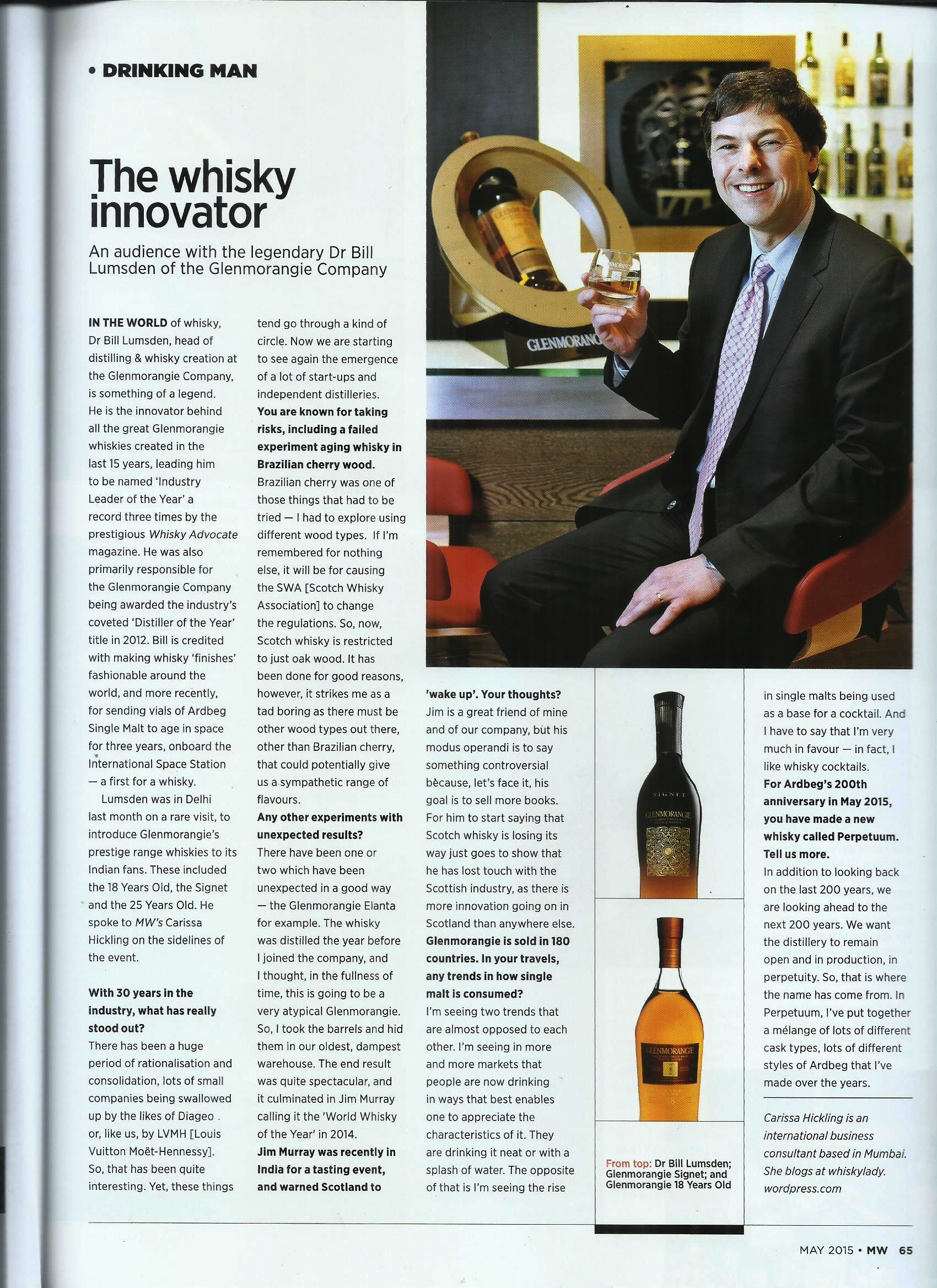
MW Interview with Dr Bill Lumsden

It is finally out!! Last month I had the pleasure of interviewing for Man’s World the one and only Dr Bill Lumsden, Director of Distilling, Whisky Creation and Whisky Stock for The Glenmorangie Company in Delhi. There is a certain delicious irony about a “Whisky Lady” invading a “Man’s World.”

We had a one-on-one and covered oodles of topics. The published interview touched on:

  • 30 year perspective on the industry
  • Taking risks with wood and inadvertently taking on the Scotch Whisky Association
  • Experiments with unexpected results such as the Elanta
  • Jim Murray‘s comments on Scottish whisky needing to ‘wake-up‘ to the threat of world whiskies
  • Trends in how whisky is consumed
  • Ardbeg’s 200th year celebration whisky Perpetuum

A rather unreadable scanned version is here…

2015-05-MW-Bill Lumsden interview Carissa Hickling

For those in India – go pick up a copy of the May 2015 Man’s World!

For those not in India – patience. Perhaps one of these days the interview will be released online

Man's World May 2015 Cover

For a glimpse of the whisky and food pairing at The Oberoi, Delhi check out Glenmorangie Evening.

I’m also planning blog versions of a few gems different from the MW interview. So stay tuned!!

Psst – Full interview now available here!

Related posts:

Auchentoshan Cooper’s Reserve 14 year

I spotted this duty-free release a few years ago with its bonus of three miniature expressions and thought – why not!?

Auchentoshan is sometimes called a ‘breakfast’ whisky as it is light and sweet. They are also known for ‘triple distilling‘ which Auchentoshan claims is responsible for their ‘gentle complex flavours.’

Now… perhaps as a tasting group we lack the ability to discern such subtle quality… however the reason we’ve barely explored expressions from this Lowland distillery is generally individual samplings have been disappointing.

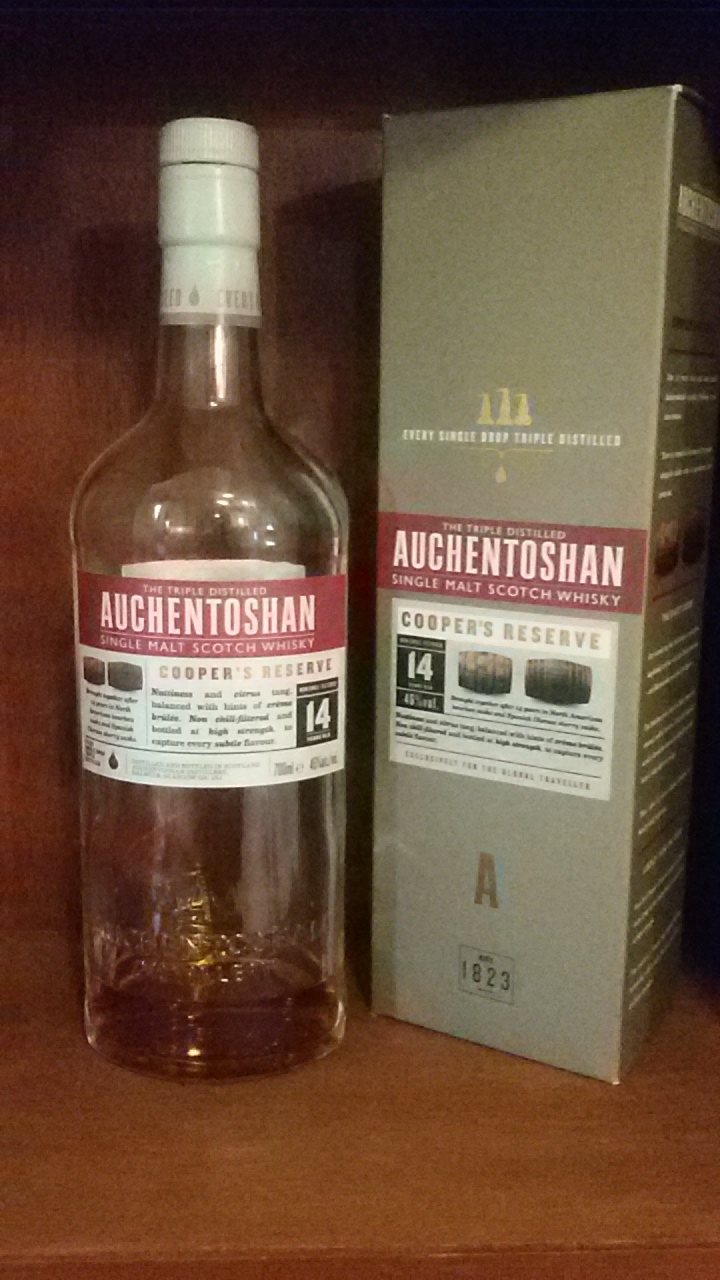
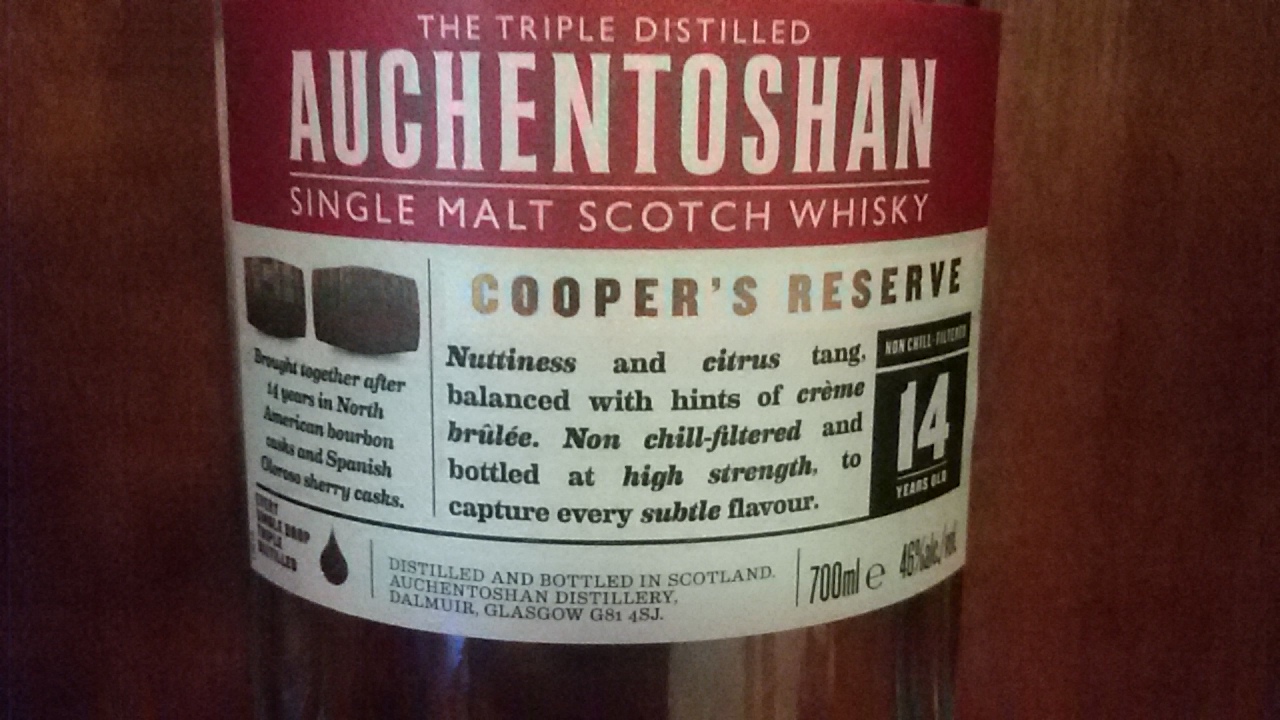
This particular one, the Auchentoshan Cooper’s Reserve 14 year was matured in American bourbon casks then Spanish Oloroso sherry casks.

Auchentoshan Cooper's Reserve 14 year (Whisky Lady)

Auchentoshan Cooper’s Reserve 14 year (Whisky Lady)

We first sampled it in September 2013, and given our lacklustre impression of the distillery, when the whisky was revealed, most were pleasantly surprised… Here’s what we had to say then:

Bright amber in colour, a delightful banana, caramel and pear on the nose. Dry yet still sweet on the palate, very smooth with a spicy finish that lingers with a hint of dried fruit. Add water and the peat peaks out both in the nose and palate. Pronounced quite lovely and definitely one to enjoy.

With the unveiling, more than one taster shared their mixed experience with Auchentoshan – having a few ‘duds’ and some ‘delights’ this one at least was in the positive category.

Post this, I must admit, I tried it a few times but wasn’t overly attracted to its character. It then was left  neglected at the back of the whisky cabinet, occasionally trotted out for social evenings.

When I was recently re-organising the whisky cabinet, decided it was time to re-sample – keeping in mind this particular bottle is in a far from optimal condition! I also saved just enough for one last dram to compare alongside the miniatures which have yet to be opened… (further indication haven’t been inspired!)

Auchentoshan Cooper’s Reserve 14 year 46%

  • Colour – Amber
  • Nose – Immediate stamp of both casks – bourbon and sherry, raisins, orange with something else swirling about – pear?, toffee sweet but also sharp. As it continued to breathe – chopped almost rancid nuts, dampening the citrus, shifting into a sour almost olive-like quality
  • Taste – Nutty, musty, citrus tart, with a chewy bitter oaky element
  • Finish – Bitter oak, old walnuts, warm
  • Water – Adding a dash brightens it up considerably – clean, crisp sweet nose with a wisp of woodiness, spice for a second that mellows into woodsy sparkly sweetness and finishes with a mildly bitter burn
Auchentoshan Cooper's Reserve 14 year (Whisky Lady)

Auchentoshan Cooper’s Reserve 14 year (Whisky Lady)

Do I like it?

Hmm… the very fact there isn’t an instant ‘yum’ tells you something. What I found is I couldn’t quite get past the slightly unpleasant nuttiness in this whisky. Perhaps entirely my fault as the bottle sat open too long, but old rancid walnuts isn’t my ‘nuttiness note’ of choice!

Overall it is a clean straight forward whisky without the depth and complexity that I find interesting.

Will this make me into an Auchentoshan convert? No… however will see if there is one gem in those cute little miniatures – the 12 year, three wood and 18 year. When I get around to trying…

PS – I did try the miniatures in May 2015… see the notes here.

Auchentoshan Collection (Whisky Lady)

Auchentoshan collection (Whisky Lady)

What others are saying:

You can also find Whisky Lady in India on:

Glenmorangie Evening with Dr Bill Lumsden

After the disappointing Jim Murray Amrut experience, what a joy to join the Glenmorangie event in Delhi at the Oberoi with Dr Bill Lumsden – Director Distilling, Whisky Creation and Whisky Stock. Bill’s irreverent humour, insights and knowledge alone was a draw…. throw in a couple good drams, quality food and great company – we have a winner!

The evening had three parts:

  • Sociable ‘cocktails’ (aka Glenmorangie’s The Original 10 year) with canapé
  • Formal 4 course dinner paired with Glenmorangie’s 10 year, 18 year, 25 year and Signet expressions
  • Poolside free-pour party

Pre-dinner networking

Never doubt the lure of free booze in India and the growing popularity of single malts!

The ballroom foyer set the tone with a long Glenmorangie bar, ever-present waiters dropping generous drams of whisky into empty hands, rounds of hors d’oeuvre so we didn’t perish until the main event…

Desultory conversations, multiple introductions revealed a mixed crowd of folks from around India – mostly Mumbai, Delhi with a smattering from Bangalore and beyond. It was also a mélange of industry professionals, passionate whisky aficionados, journalists and ‘men about town’. Aside from women involved with the event, the female quotient was decidedly rare.

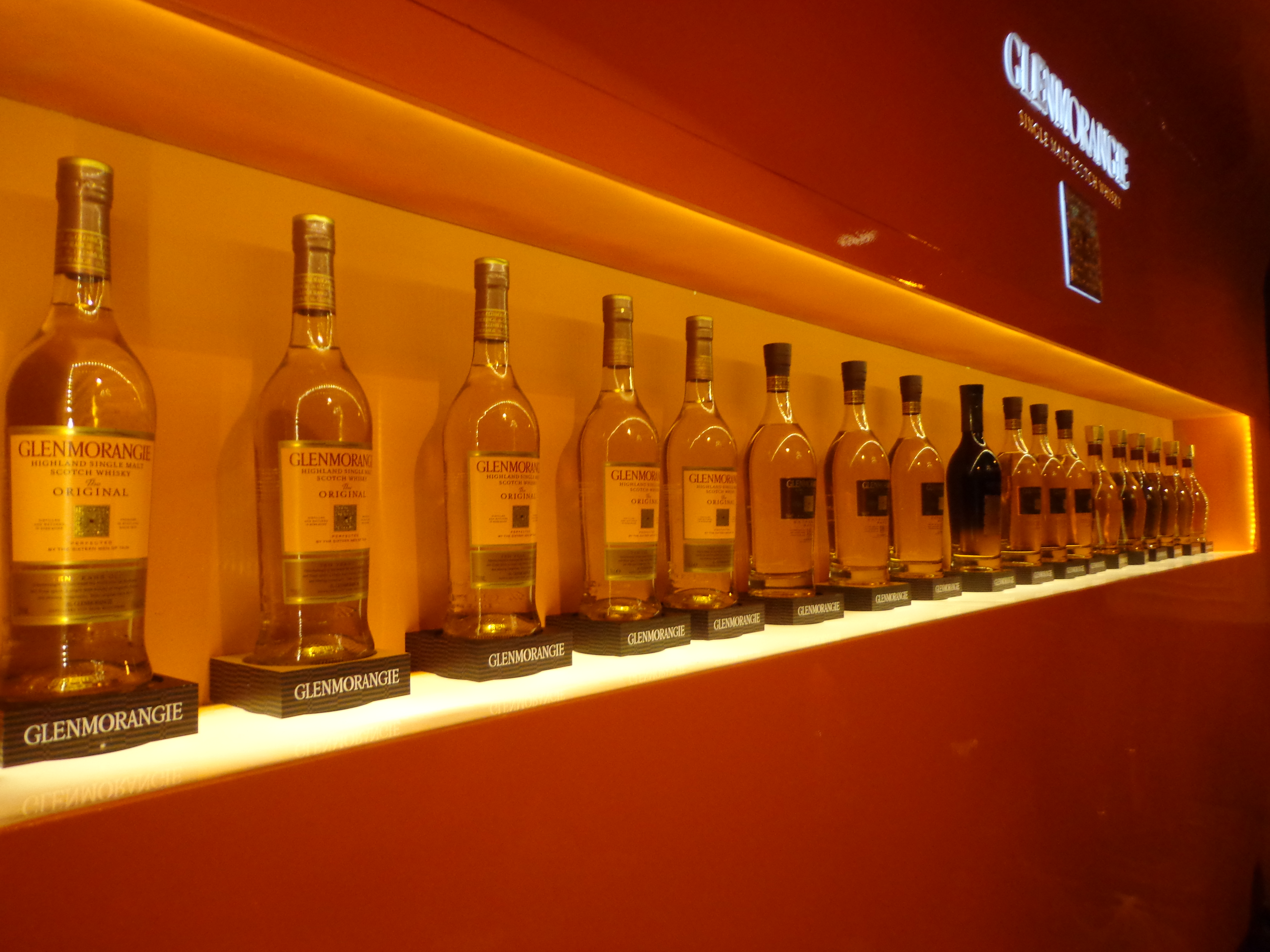
Glenmorangie evening at The Oberoi, Delhi

Glenmorangie evening at The Oberoi, Delhi

Dinning delight

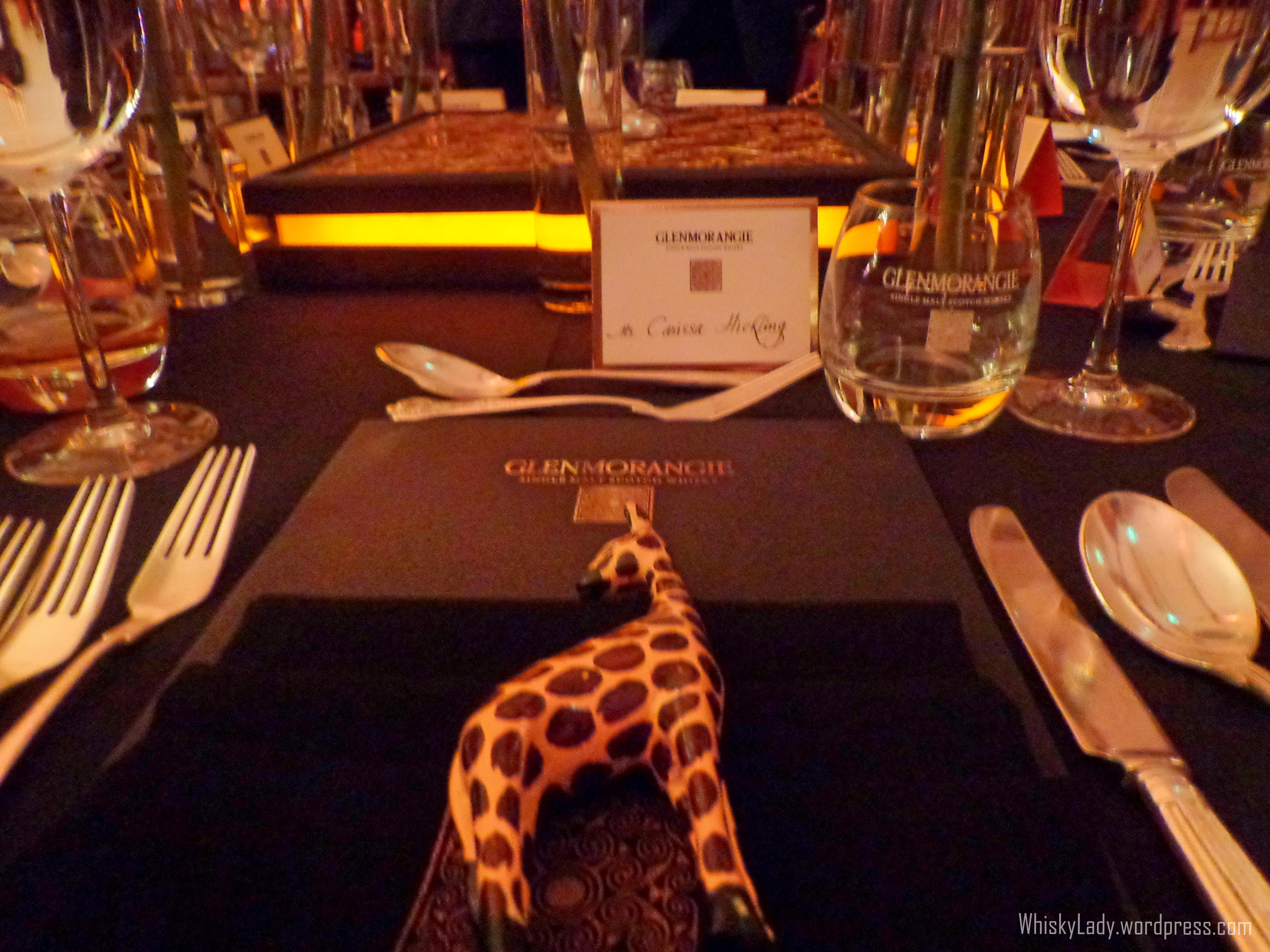
From the warm glow of the Glenmorangie centrepeice to the ornamental trademark giraffe gift for each guest, someone somewhere had fussed over the details. And why a giraffe you ask? Glenmorangie has adopted a giraffe as their stills have long copper necks and stand the same height as a fully grown adult giraffe!

Warning… what follows may make you hungry!
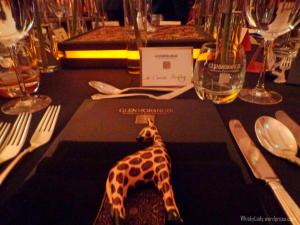
Setting the stage for a Glenmorangie food and whisky pairing

Setting the stage for a Glenmorangie food and whisky pairing

1st Course with Glenmorangie 10 year

Introducing the Glenmorangie The Original 10 year, Bill shared that he is often asked “Which is your favourite Glenmorangie whisky?” To which he joked it is like being asked “Which do you prefer – your son or your daughter?” However he did admit the Original is the whisky he drinks most often – either neat or in a cocktail.

The Glenmorangie staple whisky was paired with:

  • Grilled Peruvian asparagus and warm goat cheese salad, roast baby beetroot in honey mustard dressing
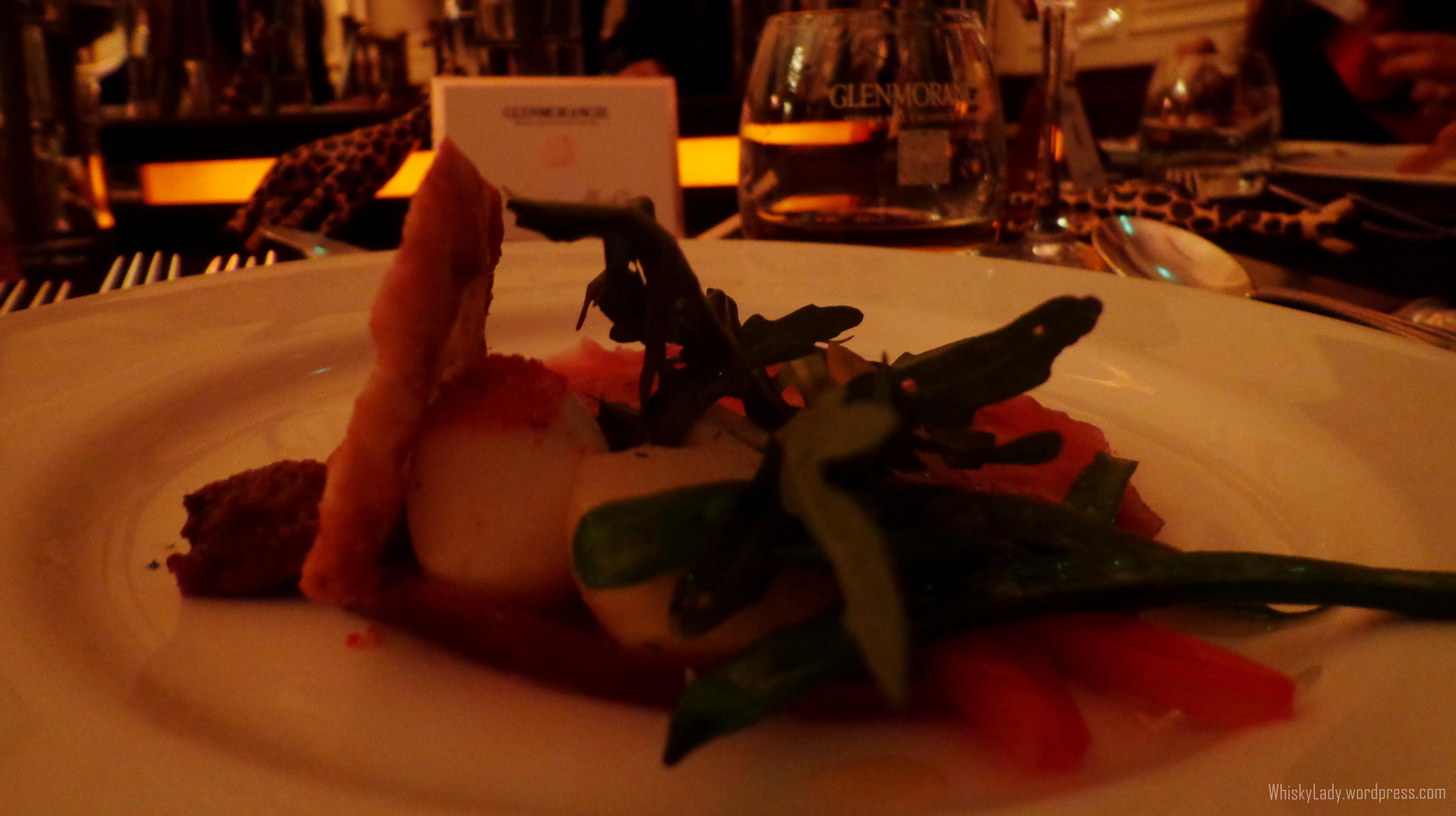
  • Yellow fin tuna carpaccio ‘Nicoise’ citrus emulsion, egg, kalamata olive tapenade, french beans

I opted for the tuna and while the citrus and whisky wasn’t a completely successful combination, the olive gave the dish and whisky a nice ‘punch’.

st course with Glenmorangie 10 year 'The Original'

1st course with Glenmorangie 10 year ‘The Original’

2nd Course with Glenmorangie 18 year

Bill then introduced the 18 year as the ‘Big Brother’ of The Original. He shared that the whisky spends 15 years in American Oak then finishes for 3 years in Olorosso Sherry casks and called it his “Channel No 5 of malt whisky.”

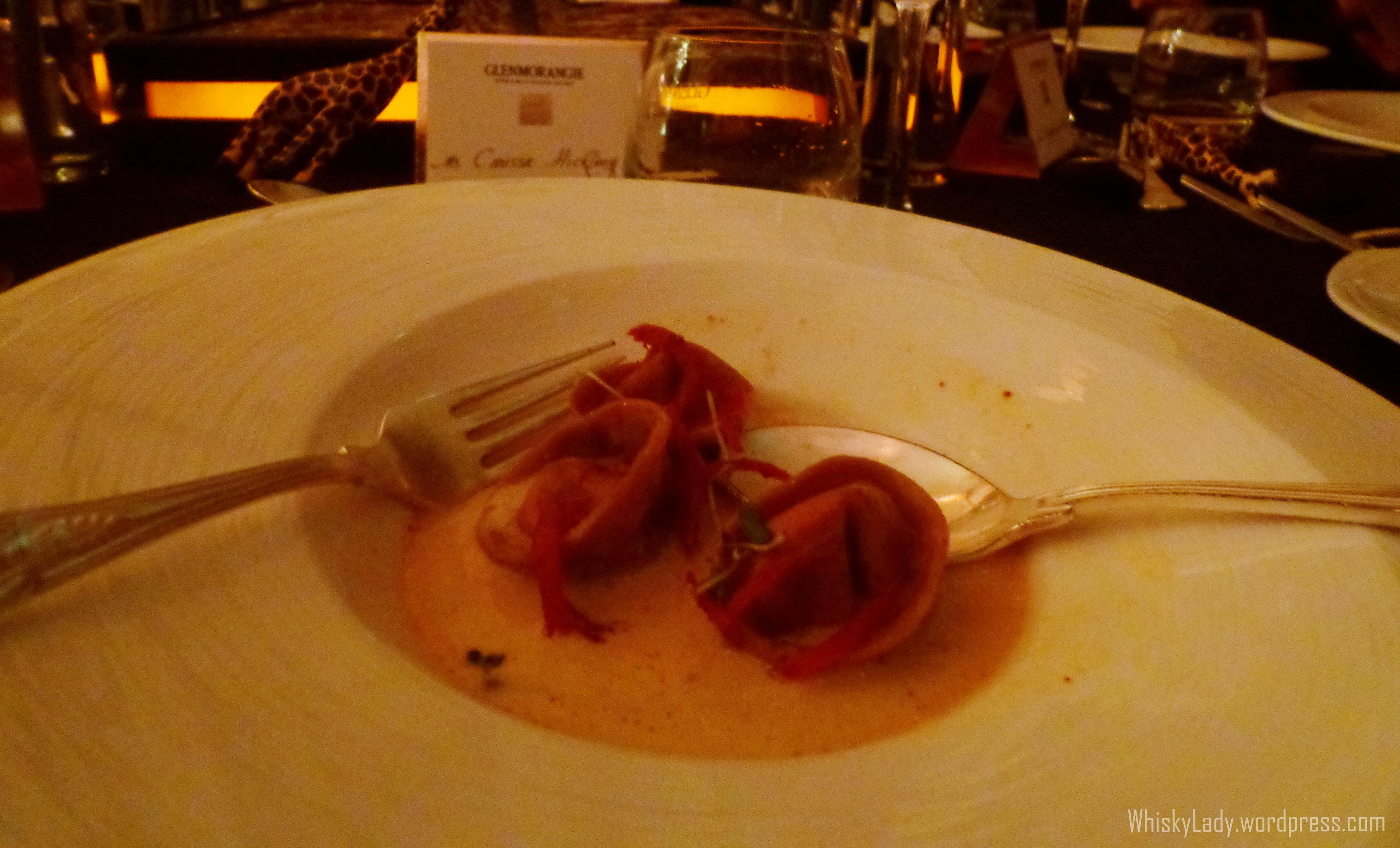
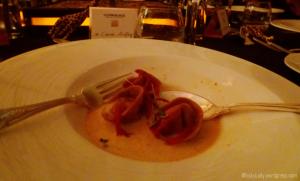
The whisky had a delightful nose with fruit, raisins, sweet mint and walnuts, balanced palate with a superb finish. It was paired with Parmesan cheese tortelli Himalayan morel consommé saffron cream.

Perfection! A pairing that enhanced both in a delightful dance of flavours – the whisky heightened the parmesan and cream whereas the tortelli added a chocolate dimension to the whisky. In short – delicious!
2nd course with Glenmorangie 18 year

2nd course with Glenmorangie 18 year

3rd Course with Glenmorangie 25 year 

By this point in the evening, Bill simply had to intervene to prevent the waiters from providing ice. There was no way the Glenmorangie 25 year would be served on the rocks!

While he admitted he is always tinkering with the recipe, was delighted with the recognition the 25 year received in 2012. Bill also suggested this is one whisky to enjoy with a cigar.

To go with the Glenmorangie 25 year, there were three options:

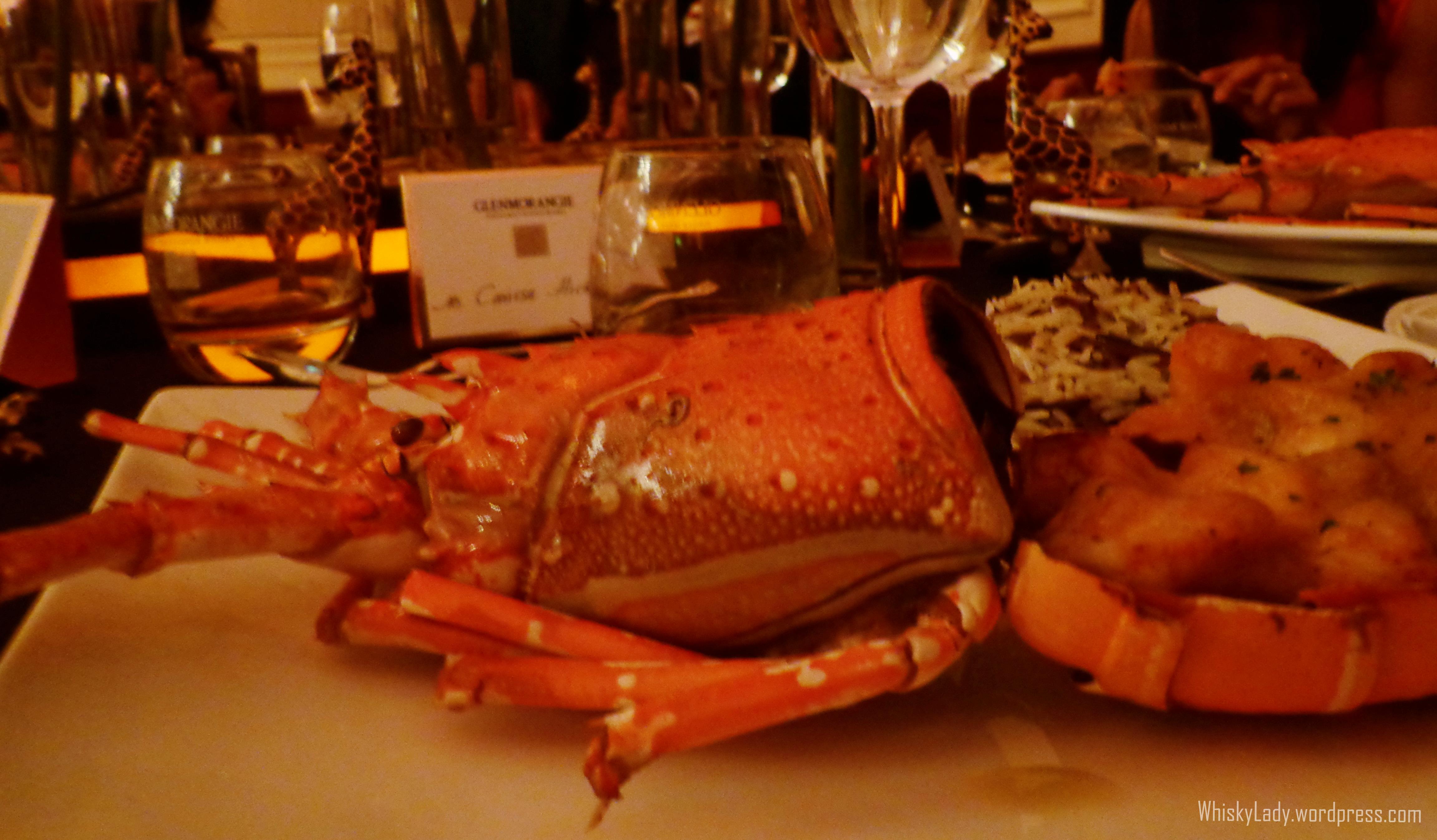
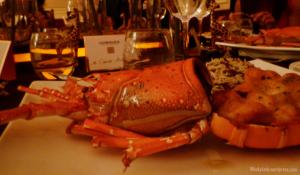
  • Lobster – Braised Cochin lobster with country cream, forest mushrooms, wild rice and ‘Glenmorangie Signet’ infusion
  • Lamb – New Zealand lamb chops with gratin potatoes, artichoke cream, micro greens with Port wine sauce
  • Vegetarians – For the vegetarians, there was artichoke, pok choy and zucchini ‘fritto misto’ with a lemon and rosemary potato cream, bell pepper coulis.

The 25 year has such a full-bodied robust whisky bursting with character that it required entrees with equal personality and pizzazz.

I tried the lobster and found myself wondering if cracked black-pepper would have enhanced the combination. From others around me, clearly the lamb was a complimentary pairing. While a vegetarian was just happy it wasn’t a typical pasta, not sure the pairing scored top marks.
3rd course with Glenmorangie 18 year

3rd course with Glenmorangie 25 year

4th Course with Glenmorangie Signet

For the last course, Bill reversed his ‘no ice’ stance and encouraged sampling the Signet chilled. The waiters enthusiastically defaulted to serving in this way.

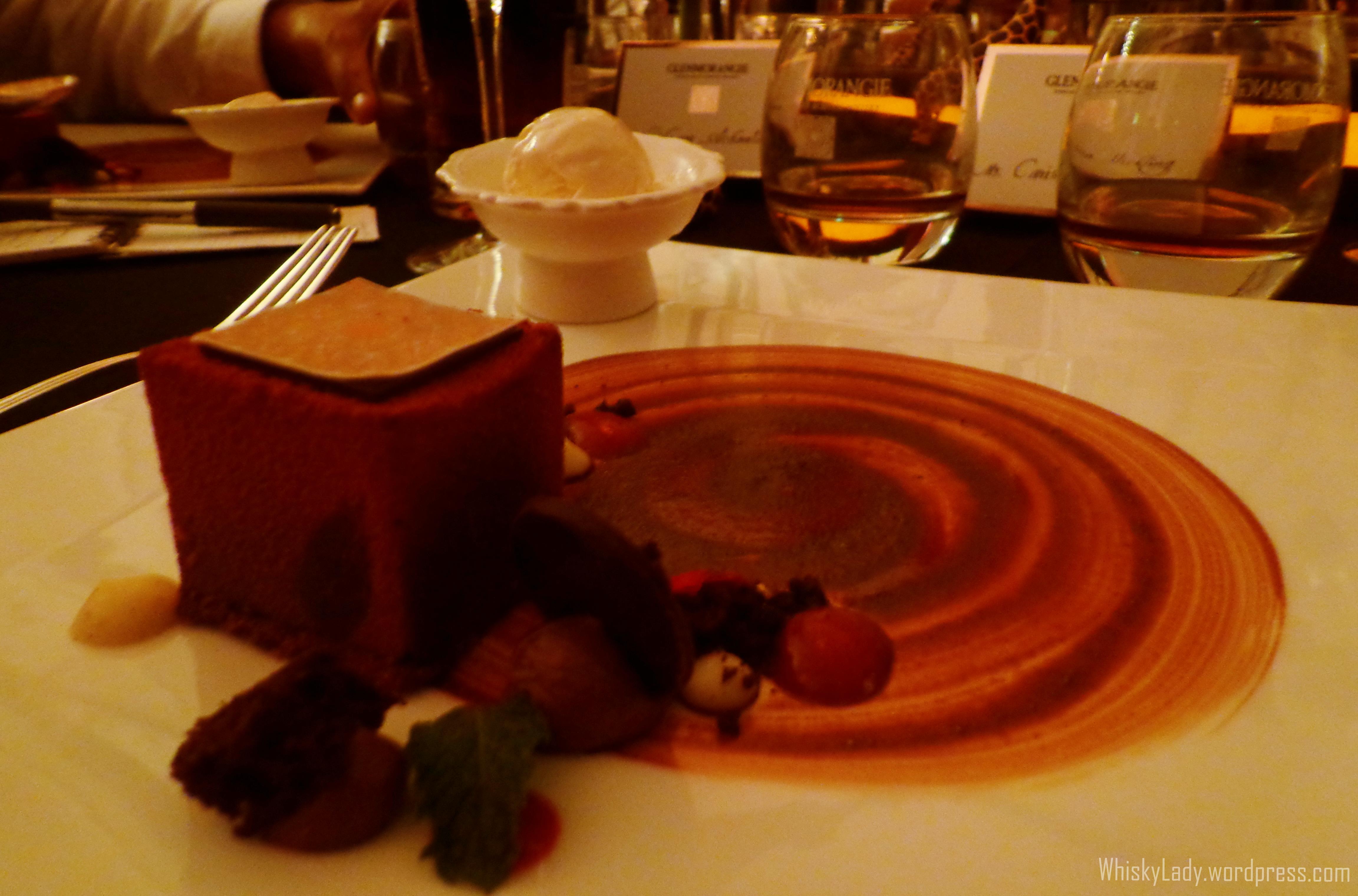
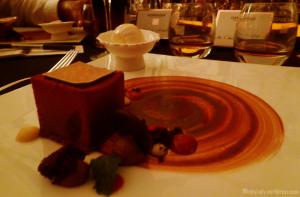
Desert was a slow cooked Valhrona chocolate torte with a mocha sand, raspberry coulis and a side of minted vanilla ice cream. Signet had a liqueur like quality, like tiramisu, cinnamon, cloves, creamy like sweet butter, smooth with a chocolate coffee. As a combination – the minted ice cream was a refreshing contrast to the rich coffee smoothness of the Signet with the mocha sand adding a deeper note to the torte and whisky both. There was more than one moan of sheer unadulterated delight.
4th course with Glenmorangie Signet

4th course with Glenmorangie Signet

Post-dinner impressions

Informal polls on whisky preferences had surprising results. In most cases, gentlemen preferred the 10 or 18 year. One could argue that palates were pre-tuned to the 10 year as it was available in generous pours during the ‘cocktail’ hour. Additionally, the 18 year pairing was simply superb – one of the best I have sampled til date.

Whereas for me, it was a toss-up between the coffee complexity of the Signet and the depth and personality of the 25 year. The benefit of the poolside party was an opportunity to try both on their own and, more importantly for the Signet, without ice!

However, even with the chance to sample further, it is not the optimal way to form an understanding of a whisky’s character. Rather than ‘tasting notes’, I gained instead the memory of a thoroughly enjoyable evening, where the company and conversations were engaging with a rare opportunity to meet the innovator behind Glenmorangie and Ardbeg creations.

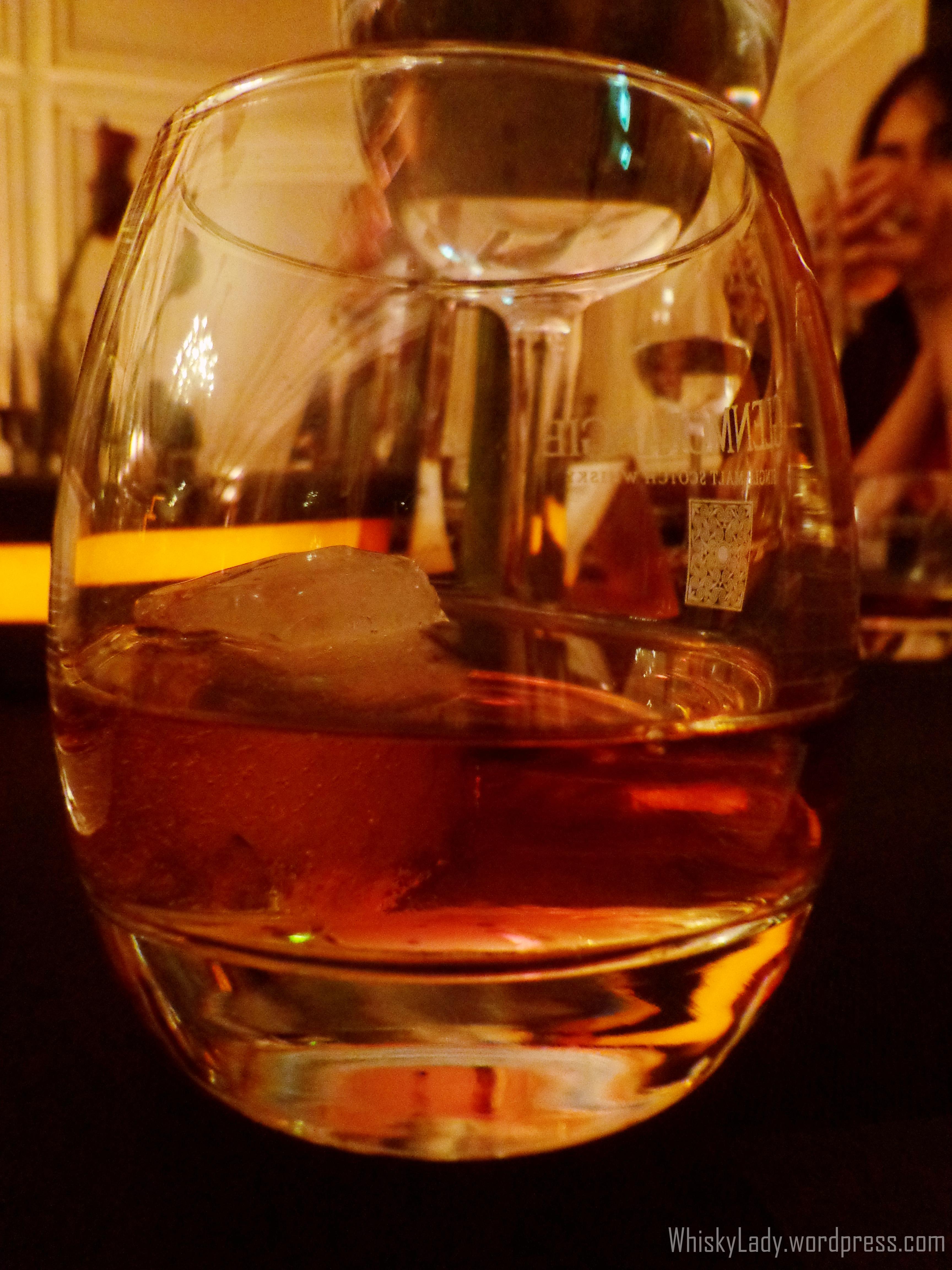
Glenmorangie Signet on ice

Glenmorangie Signet on ice

Though each whisky was appreciated… I wish I could have snagged the open 25 year and Signet for solo sampling or a quiet tasting evening at home with a very small set of friends to focus primarily on the whisky. I’m also partial to sipping from Glencairn or tulip glasses and not the Glenmorangie rounded tumblers.

However, if the goal of the evening was to whet the appetite for further interest in trying again – clearly they succeeded!

PS I was fortunate to interview Dr Bill Lumsden one-on-one for Man’s World magazine!

You can also find Whisky Lady in India on:

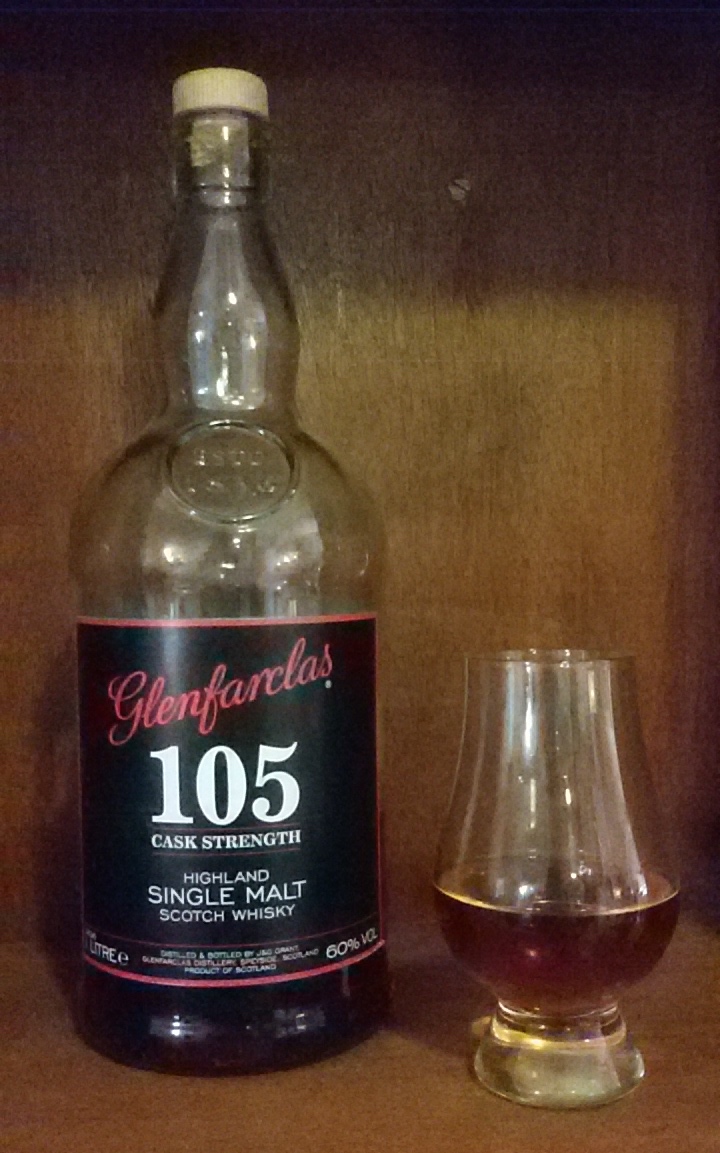
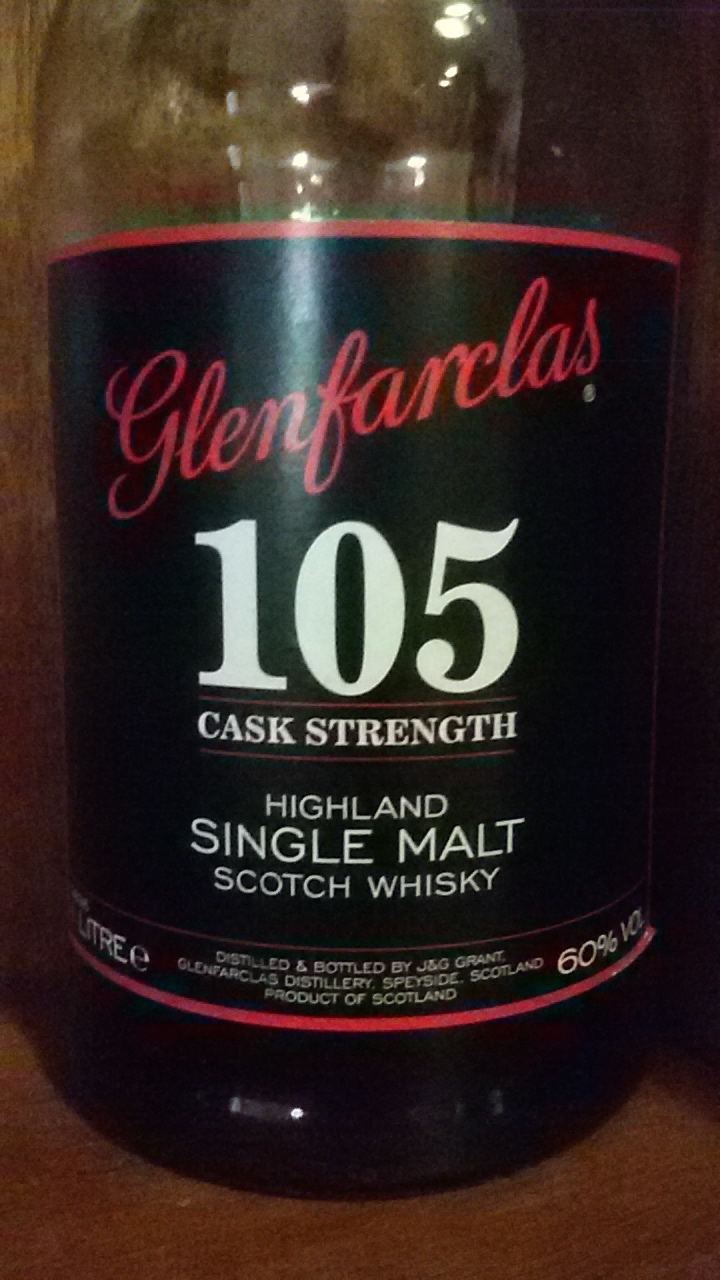
Glenfarclas 105 Cask Strength NAS 60%

Let there be no mistake – cask strength whiskies can pack a wallop! And this one is no exception.

Originally sampled as part of a Glenfarclas evening held in November 2011, I later purchased a bottle which made its rounds in various social evenings.

Clearly a Grant family favourite, George Grant (Glenfarclas Brand Ambassador & 6th generation Grant) regaled us with the tale of how it was his grandfather’s whisky of choice. With great affection, he spoke of delivering each Monday a few bottles as a weekly ‘quota’ to his grandfather to imbibe and share… only to discover years later his father did the same – just on Thursday! Wily coot or not, his grandfather certainly enjoyed his whisky with his mates – apparently without any namby pamby watering down.

Glenfarclas 105 (Whisky Lady)

Glenfarclas 105 (Whisky Lady)

Glenfarclas 105 Cask Strength NAS 60%

  • Colour – Dark amber
  • Nose – Remember that wallop? You get it right in the nose… then dry sherry notes, apples, raisins, honey, fruitcake. As it airs further, medicinal elements become increasingly pronounced.
  • Palate – Without pretence, this is a solid, strong, full flavoured woody whisky balancing fruit and peat. A bit of burnt toast. Medicinal – think cherry cough syrup!
  • Finish – Forceful. Again that medicinal quality with an unmistakable element of sulphur.
  • Add water – Like many cask strength whiskies, it opens up with water. Just a drop or two can add a harsh zing to this aggressive whisky. It opens up better with a small ‘dollop’ or ‘dash’ than ‘drop’.
  • Overall – The quintessential sherry bomb with attitude.
Glenfarclas 105 up close (Whisky Lady)

Glenfarclas 105 close-up (Whisky Lady)

Here is the thing though… if I compare the various cask strength whiskies in my cabinet currently, the Glenfarclas 105 is clearly the most straight-forward no-nonsense Speyside dram of the lot.

It is one you won’t worry about leaving in the back of your whisky cabinet. When you pull it out again, you may find it has mellowed a tad from when 1st opened – which isn’t a bad thing!

It is reasonably priced and so far – what you see is what you get without surprises.

Me…? I rather appreciate a good surprise or two and a little nuance peaking out beyond the boldness… even in my cask strength whiskies.

If you will forgive the gender bias, I’m tempted characterise Glenfarclas 105 as a “drinking man’s” whisky – the kind to knock back a few pegs with mates on a chilly eve, the kind when in the mood for a straight-up in-your-face whisky without fuss, the kind to toast tall tales and come back for more.

I have a funny feeling this is exactly how George’s grandfather enjoyed his 105!

Related post:

What others say:

GlenDronach 18 year Allardice 46%

Sometimes you just want a little indulgence! And why not?

A few months ago we sampled the GlenDronach 21 year Parliament… it was sherry berry desert in a bottle without being cloyingly sweet.

So naturally when given a chance to sample the GlenDronach 18 year Allardice, who could resist?

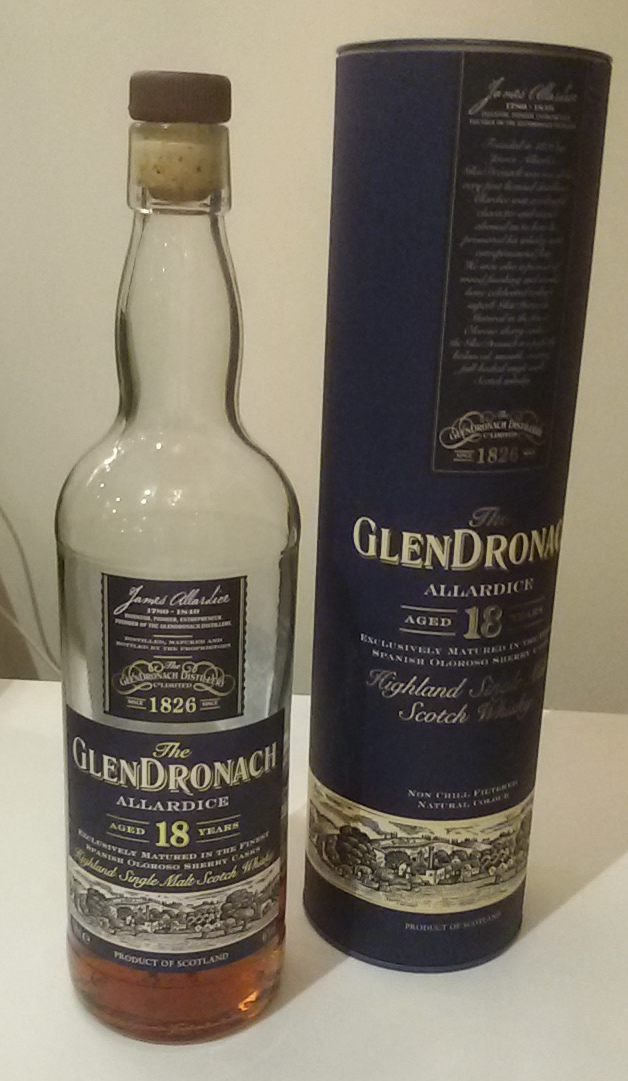
GlenDronach 18 year (Whisky Lady)

GlenDronach Allardice 18 year (Whisky Lady)

GlenDronach 18 year Allardice 46%

  • Colour – Bright copper
  • Nose – Fudge, berries, bread pudding with sherry soaked raisins… oh my!
  • Taste – Stewed fruits, then dries out into a woody allspice and nutmeg, after a bit more found a curl of chocolate smoke… above all, it is clearly unmistakably sherry!!
  • Finish – Complex and long… delicious yet a bit dry

Much like the GlenDronach Parliament, it is bursting with sherry character. However did it fully meet the ‘indulgent’ desire? Hmm…

Either I’ve become a rather picky lady over the years or… this was an example where there were absolutely delightful elements, completely on the right track in so many ways yet didn’t quite whisk me away to that divine whisky heaven! Nearly but not quite!

Don’t get me wrong – this is an excellent whisky and, in fairness, it was sampled as a ‘after thought’ so did not have exclusive attention. Which is exactly why I prefer to try a whisky more than once in different settings to confirm impressions.

I would certainly try it again – ideally next to the 21 year Parliament. My memory of the Parliament is that if you want something a bit indulgent? That’s your whisky from the GlenDronach stable!

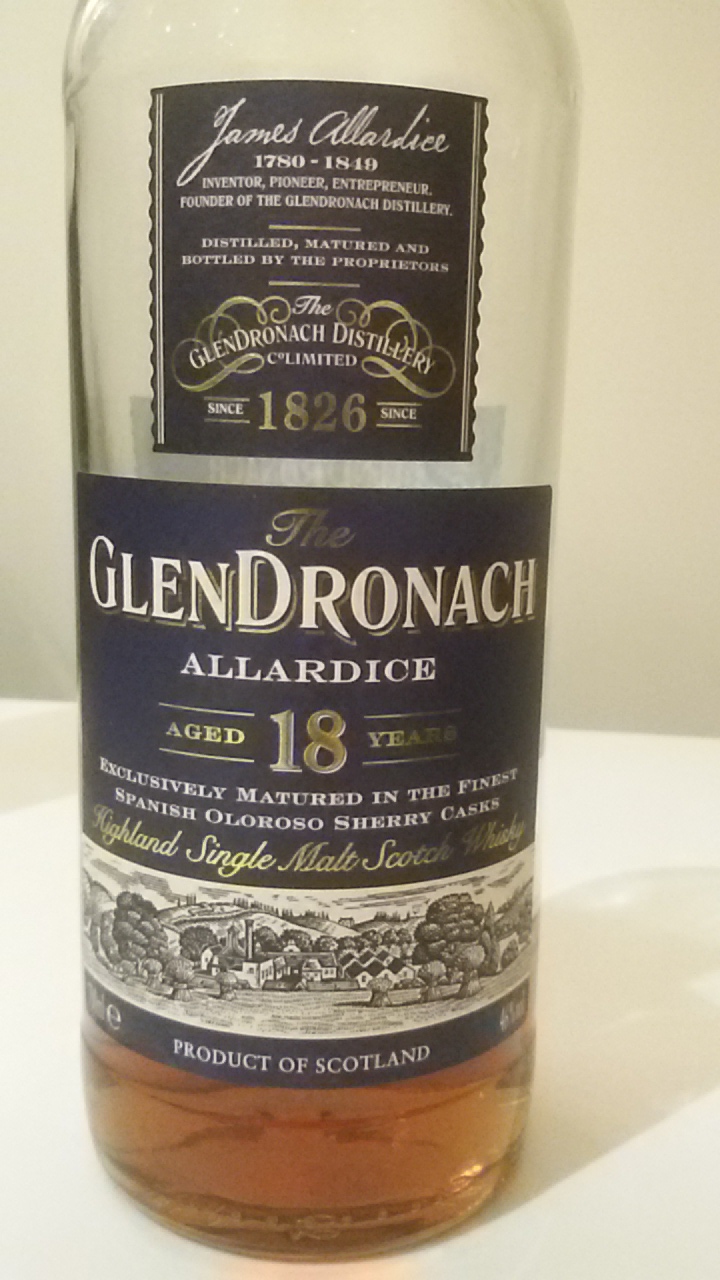
GlenDronach up close (Whisky Lady)

GlenDronach Allardice up close (Whisky Lady)

A bit more info:

  • “Allardice” is apparently named after James Allardes (referred to as Allardice) who led the investors that founded GlenDronach distillery in 1826
  • It was the second distillery to apply for a license to produce whisky in Scotland under the Excise Act of 1823
  • One of their ‘hallmarks’ is to mature their whiskies only in sherry casks. (yeah I mentioned that before with the 21 but it bears repeating!)

What others say:

You can also find Whisky Lady in India on:
Ardbeg Uigeadail 54.2%

When Jim Murray was influencing us to guess an Islay when sampling blind the Amrut Peated, the closest I could think was perhaps an Ardbeg expression.

So when I found myself a few days later in slightly peaty mood, decided to go for a ‘real’ Ardbeg.

Of the Ardbeg stable, the Uigeadail has become a ‘classic’. A bottle of it also just happens to find its home in my cabinet… So why not revisit?

Ardbeg (Whisky Lady)

Ardbeg Uigeadail (Whisky Lady)

Ardbeg Uigeadail NAS 54.2%

What did I find?

  • Colour – Light gold
  • Nose – Hello peat! With a dash of espresso, then a delightful curl of maple syrup, underneath a whiff of iodine, then liquorice
  • Taste – Peaty dancing around a camp fire! A bit of tar, like chewing the end of a cigar, an odd almost flat cola flavour, raisins…
  • Finish – Smoky, dry, rubber… then elements of dried apricot
  • Water – Cranks up the spice… then mellows out with the peaty smoke enveloping, chased by sherry sweetness. Doesn’t harm but doesn’t really enhance.
  • Ice – I threw in a mini cube (gasp!) Not something I’m inclined to try with most whiskies – however we have now entered into the post Holi ‘warm’ season so decided to risk. And? Let’s just say it doesn’t do wonders for the nose however it brightened and lightened up the whisky. Can’t say it works for me. Maybe I’m just too stuck on the ‘no ice’ adage.

What was my conclusion after the revisit?

Well.. I can understand why Uigeadail has its fan club. It is also priced reasonably. What it pulls off best is bringing a chewy peatiness without clobbering you over the head with it.

Personally, I prefer it best neat and it has been nice to have around for those times when the peaty mood strikes!

Ardbeg (Whisky Lady)

Ardbeg Uigeadail (Whisky Lady)

Related posts:

You can also find Whisky Lady in India on:
The Mumbai Amrut Jim Murray Experience

We came, we sniffed, we spat and were decidedly NOT conquered!

Over 150 folks showed up at Mumbai’s Taj Mahal Hotel Crystal Ballroom for a whisky tasting with whisky guru Jim Murray on 10 March 2015.

The invitation card said to arrive at 7:15pm as the tasting would begin sharp at 7:30. The doors were tightly shut until the appointed hour as the staff poured out 6 samples of whiskies in tulip glasses for each attendee.

Amrut

And then we experienced classic IST (Indian stretchable time) as those who reached on time, waited and waited and then la la di la la waited some more until 8:45pm when one of the ‘special guests’ meandered in…

Then the ‘show’ started. And it was a show… carefully curated to show off Amrut whiskies.

Beginning with a tribute to Jamshedji Tata on his 175th Birth Anniversary, the Amrut founder took us through Amrut highlights over the last decade before introducing Jim Murray.

After some crowd warming chit-chat, Jim began with lessons in how to nose through pointing out what NOT to do (push full snout into the glass), regaling us with tales and anecdotes while we warmed our glasses nestled next to our bodies.

Tasting steps according to Jim Murray:

  1. Lift cover off glass and take the first fresh whiff – dabbing against an imaginary moustache both right then left nostril
  2. Cup glass with both hands to seal the whisky in and warm it against your body for approx. 5 – 10 mins
  3. Hold covered glass away from body, lift hand to let alcohol evaporate while drawing close to then nose again
  4. Take a tiny sip to rinse mouth – the ‘mouth wash’ step – and spit
  5. Then a few seconds later take another whiff right and left nostril followed immediately by a large sip – the 1st taste – roll it around in your mouth, chin up, opening and closing your mouth like a fish, then spit it out
  6. ‘Listen’ to the whisky to ‘hear’ what it tells you about its character
  7. After a few minutes, take a 2nd taste… again whiff, sip, tilt head back, open and close fish style, then spit out or… perhaps… if so inclined… swallow
  8. Again ‘listen’ to what the whisky ‘says’
  9. Repeat steps 2, 3, 7 and 8 as required…

We were discouraged from discussing our impressions at the table, to reduce influencing each other, as part of the ‘lesson’ was to discover how the whisky ‘speaks individually.’ What this means is the notes that follow are the impressions of the two members of our whisky tasting club who jotted down our thoughts.

Sample setting

Sample setting before tasting…

I’ve kept the labels as per the place mat however notes in the tasting order.

And here come a BIG caveat – in fairness to all the whiskies – they were poured from 6:30pm so by the time we sampled, two to three hours had elapsed…

Whisky 1 – Glenmorangie 10 year

  • Nose – Initially very mild perfume (fruit) then nothing! Very light, slightly floral, perhaps hidden peat and apricot, dry. Post warming slightly sweeter, still very soft, remained exceedingly light
  • Taste – Dry ash, bitter, mildly briny, like weak (not very good) coffee,  slightly rancid undertone
  • Finish – Dry oak, short
  • Impression – Insipid

Whisky 2 – Amrut Single Malt

  • Nose – More character than the 1st, overripe fruit, dirty socks, sweet, very little peat
  • Taste – Oily, fruit gone slightly bad, with the 2ndtasting coaxed out a little chocolate after extra ‘warming’
  • Finish – Medium short, nothing to write home about
  • Impression – Weak and not terribly interesting

Experience – The first two were ‘revealed’ after we sampled both. We were challenged to identify which was Scottish vs Indian which lead to positively contrast the entry-level Amrut Single Malt against the mass produced entry-level Glenmorangie. While I’m not trying to defend Glenmorangie, I should note the sample was so small it could easily be misleading – the Amrut pour size was far more generous. While Jim extolled the virtues of Amrut vs Glenmorangie, neither were terribly noteworthy.

Whisky 3 – Jim Beam White Label 4 Year

  • Nose – Varnish, ash, an agave / almost tequila quality
  • Taste – Paan betel leaf sweet, a bit minty, dry, not quite leather, slight spice, after oxidizing even sweeter
  • Finish – Not exceptional
  • Impression – No body, no character

Experience – Universally this was noted as ‘different’ than the others tried but not particularly good. Two lone souls identified it as a bourbon. Jim asked one if he was a bourbon fan – the retort was ‘No!’ (and turned out to be a distributor so at least he knows his business!).

Whisky 6 – Amrut Peated

  • Nose – Peaty, smoky sweet, little citrus after warming
  • Taste – Spice, chewy, leather, not peaty on the palate. After further warming and again tasting, bit of coffee, still quite sweet, smooth, no longer spicy
  • Finish – Medium long, tinge of bitter cacao
  • Impression – Most interesting of the evening (which wasn’t saying much), also the most generous pour

Experience – Jim was clearly trying to get us to guess this was an Islay and shared insight into the art (and follies) of adding peat to whiskies – so why not to an Indian whisky? Certainly no objection from this corner!

Whisky 4 – Talisker 10 year (tried after Whisky 6)

  • Nose – Slight smoke, hint of blue cheese, light sweet… in short quite bland
  • Taste – Dry, spice, off-balance, toothpaste? ‘weird whisky’
  • Finish – Jim shared how the ‘weird taste’ lingers
  • Impression – Jim was definitely steering the audience to discover something ‘off’ with this whisky

Experience – Here is where Jim really got after the Scots for their laziness and neglect of their craft – justifying adding caramel vs what Jim would like to see – a ban on caramel! Also castigated Scottish distilleries in general for their methods of cleaning and re-using casks. Shared how Talisker may have been the 1st distillery he visited, however Indian distilleries are now taking much more care with the craft of making single malt.

Whisky 5 – Amrut Fusion

  • Nose – Sweet, varnish, smoke, tannin from oak, clean, mild peat
  • Taste – Oily, mocha, smoke, sugar, oaky
  • Finish – Medium long
  • Impression – Jim shared how ‘well balanced’ the whisky is with its different elements

Experience – Jim extolled the use of quality wood however (not sure if others caught this) did later admit an ‘inconsistency’ with this whisky. Which remains my ‘beef’ with Fusion – either quality control issues at the distillery or massive incompetence and neglect in storage before it makes it to our table. Even after our blind sampling a couple of years ago when we went ‘Yuck!’, I’ve had very mixed experiences with Amrut Fusion ranging from ‘passable’ to ‘no way’ to ‘tolerable’ to ‘ok’ and back to ‘average at best.’

Evening close…

When Jim took a poll at the end of the evening, Amrut was preferred over non-Amrut whiskies, with more preferring the Peated than Fusion (though Fusion also had its fans). He also observed more women preferred the Peated than Fusion.

Jim finished his part of the evening by sharing how he believes India has two outstanding distilleries – Amrut and Paul John – that are way ahead of anything else.

While I certainly applaud his recognition of the efforts of both Indian distilleries and appreciate Mr Murray is an expert genuinely devoted to the world of whisky, not sure the evening truly achieved either the stated objective of ‘education’ or unstated but understood aim of promoting Amrut.

Jim Murray is certainly entertaining and his enthusiasm and love of whisky undisputed, however his slightly bombastic claim of rampant independence was belied by obviously steering the evening in one direction.

And while he repeatedly said how he will keep Amrut ‘on their toes’ if he sees quality slip, the question really is – where does Amrut aspire to be?

If it is truly wants to out-class Scottish whiskies yet with a distinctly Indian character, then why fear including at least one ‘aspirational’ whisky in the sampling to show what true quality single malt craftsmanship is about? Better question, if Amrut is producing cask strength whiskies, why not showcase at least one of those which may have proven more interesting?

The only answer seems to be that clearly this event was targeted primarily at novices to whisky.

For those more familiar with single malts, one could hear various versions of the following remark:

“Have you ever had so many bad/mediocre/below average whiskies in a single eve?”

For me, even the ‘best’ of the lot – Amrut Peated – didn’t stand the test when revisited later in the evening without being juxtaposed next to Jim Beam!

If anything, the evening did a disservice to Amrut, dumbing down what could have been a more interesting debate with a renowned authority on the world of whiskies and, more specifically, where one Indian distillery is forging ground.

Not a complete waste of an evening but I for one was highly grateful to make copious use of the spittoon!

View of the Gateway of India from Taj Mahal Hotel

View of the Gateway of India from Taj Mahal Hotel (Whisky Lady)

You can also find Whisky Lady in India on:
Ledaig 1997 46% (Gordon + MacPhail)

The more I explore the offerings from the independent bottler Gordon & MacPhail, the more I want to check out even more.

Ledaig is the peated line from Tobermoray distillery, the only distillery on the Isle of Mull. It was bottled for La Maison du Whisky and I picked it up during a rather enjoyable early evening in Singapore last year.

Ledaig (Whisky Lady)

Ledaig 1997 (Whisky Lady)

Ledaig 1997 Island Cask No 462 46% (Gordon & MacPhail)

  • Colour – Bright gold
  • Nose – Peat, smoke, tincture of iodine, orange, toasty warm, bold
  • Palate – After an initial punch of peat, hint of pepper, mellowed into a lovely elegant lady. The longer it aired the more notes discovered – fruit, more smoke, salty nuts, and more!
  • Finish – Sweet chewy finish, long and smoky, warm spice

This particular Ledaig was distilled in 1997, bottled in 2013 and is from cask no 462 with a total of 312 bottles.

We originally tasted this whisky as part of our monthly tasting sessions on 17 June 2014 together with Tyrconnel and Talisker Dark Storm.

It was definitely the whisky find of the evening. We had great fun with a guessing game of region, distillery… none came close until the hint was dropped that it is actually bottled by an independent company that specialises in bringing unique expressions and smaller distilleries whiskies to the world.

I revisited this whisky again last month… and enjoyed it even more. A delightful dance on the nose and palate. All the earlier flavours brightened and matured.

I added a dash of water and it ramped up the citrus, punched up the spice on the palate but dampened the smoke. Still lovely liquid gold but my vote is to go for it neat.

Definitely a very special dram – one to savour!

What other’s are saying about related whiskies:

You can also find Whisky Lady in India on: