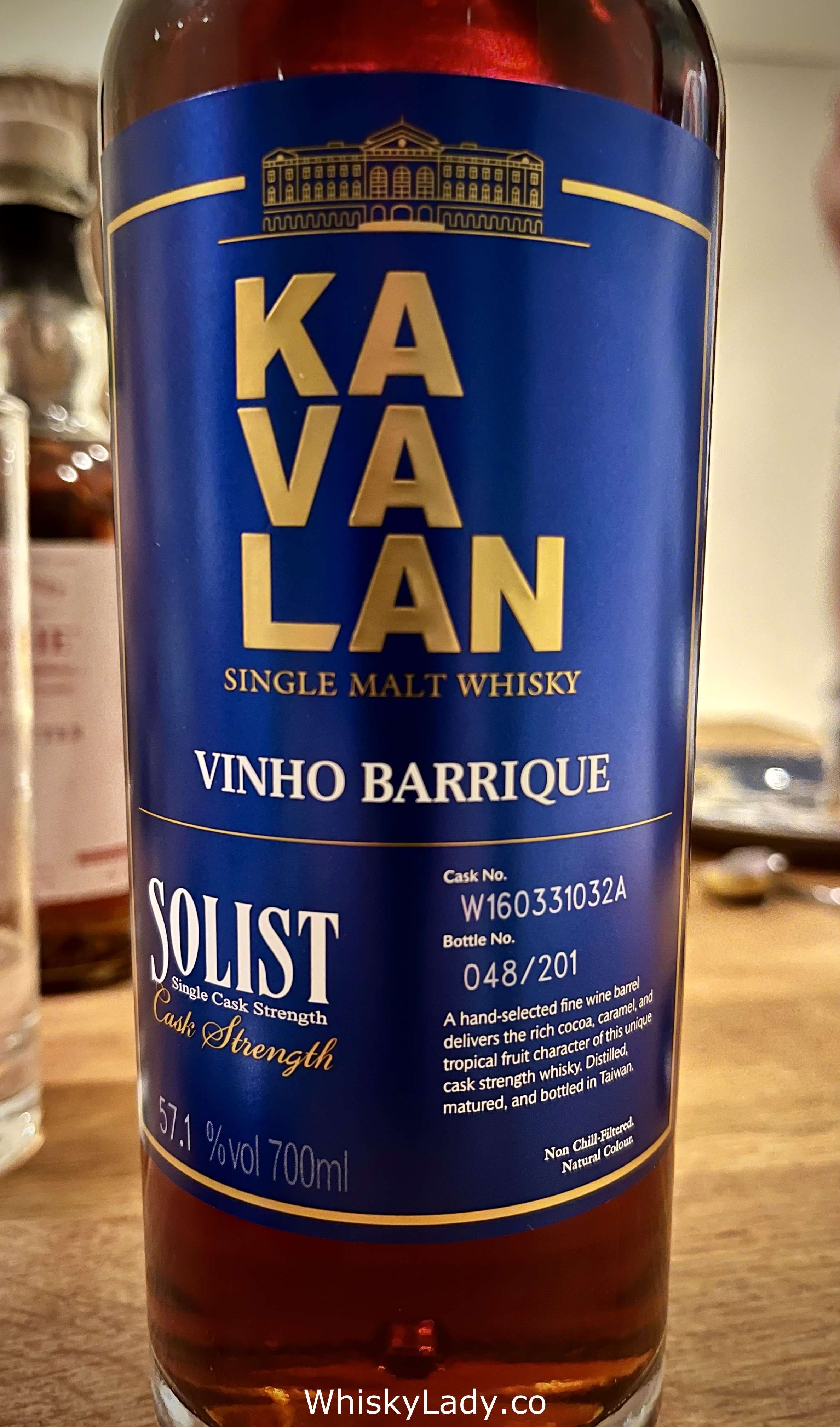
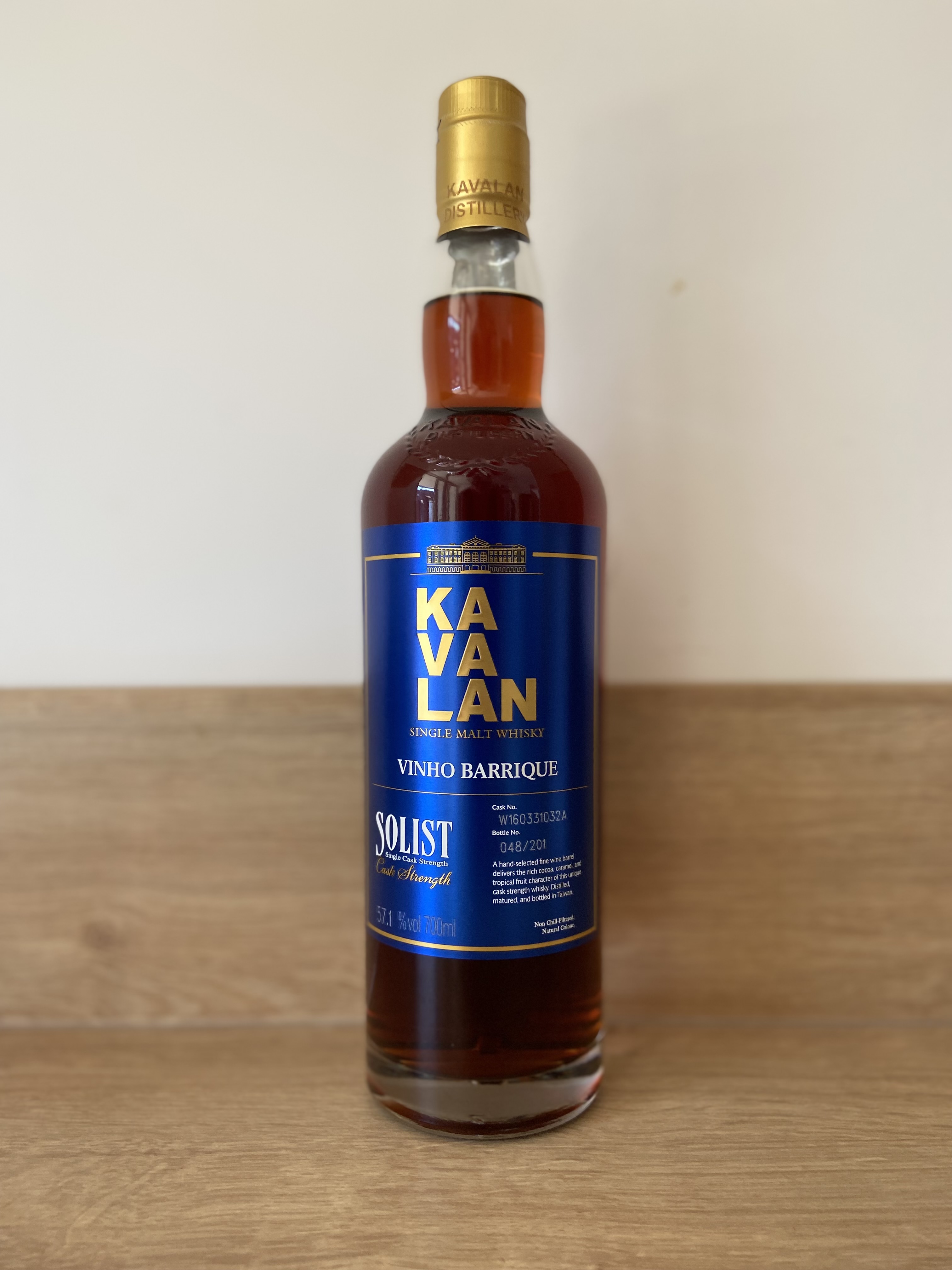
Kavalan Solist Vinho Barrique 57.1%

Behind the remarkable rise of Kavalan was Ian Chang – known for his kindness, exacting attention, and incredible nose. After 15 years of bringing awards and recognition to Kavalan, Ian moved on in 2020. Rumour had it that there were pressures to more aggressively capitalize on their success, speeding things up in a way that may compromise quality. Be that as it may, Ian Chang has moved on to Japan to Komoro Distillery, part of Karuizawa Distillers.

Bottom line, this particular expression from Kavalan is part of their heydey period, shortly after the Vinho Barrique expression won awards for its intense aromas and flavours. This particular expression was a well-traveled whisky – from Taiwan to Germany to UK… opened in October 2023 in London. Then a small sample made its way back to Germany, then further on to India where I settled down to consider it one fine evening at the close of 2023.

Kavalan Solist Vinho Barrique (2016) W160331032A 57.1% Bottle 048 of 201

  • Colour – What a stunning deep ruby
  • Nose – Oh my! What a luscious aroma, mahogany wood, dusty black pepper, overripe melon, tart cherries and chocolate, stewed plums
  • Palate – Equally powerful on the palate! Like chewing on cherry wood, dates, nutty caramel, sweet spices, intense
  • Finish – Dry, with plenty of red wine tannins, something a tinge soapy
  • Water – Opens up with the nose shifting from intense dry fruits to juicy plums, ripe figs, caramelized walnuts and then on the palate, shifts to ripe kiwis, berries and red grapes

Talk about intense! Big and bold. No mistaking this is one full-bodied voluptuous whisky with a lot going on. Heavy, commanding attention. Even after the glass was empty, the aromas swirled around. Berries and vanilla and wood. Quite something!

What do the folks at Kavalan have to say about this expression?

Vinho is fully matured in used American oak wine barrels that have been toasted and recharred in a way that brings out fruity vanilla notes from the wood into the whisky overlaid on a delicate background of complex fruitiness.
It has a complex and multi-dimensional background of pepper, spice, dates and other fruits, such as ripe melon and mango together with kiwi and a delicate blend of bursting citrus fruits.

As for the official tasting notes, here you go:

  • Nose – A rich fusion of vanilla and caramelized sugars with dark chocolate on top. Ripe melon and mango together with kiwi and a delicate blend of citrus fruits burst. Pepper is also present in the background waiting to be noticed.
  • Palate – The taste ends with clean and complex flavours embodying all that is best in the finest malt whiskies enjoying a long aftertaste.
  • Tasting – We suggest drinking Kavalan Solist Vinho Barrique Single Cask neat.

Would I agree? Yes…though personally, I preferred it with a bit of water.

Curious about other Kavalan experiences? There have been more than a few over the years – mostly from the period of 2008 – 2016 when I tended to come across Kavalan more readily via whisky shows or complements of Malt Maniac Krishna Nakula:

If you don’t want to miss a post, why not follow Whisky Lady on:

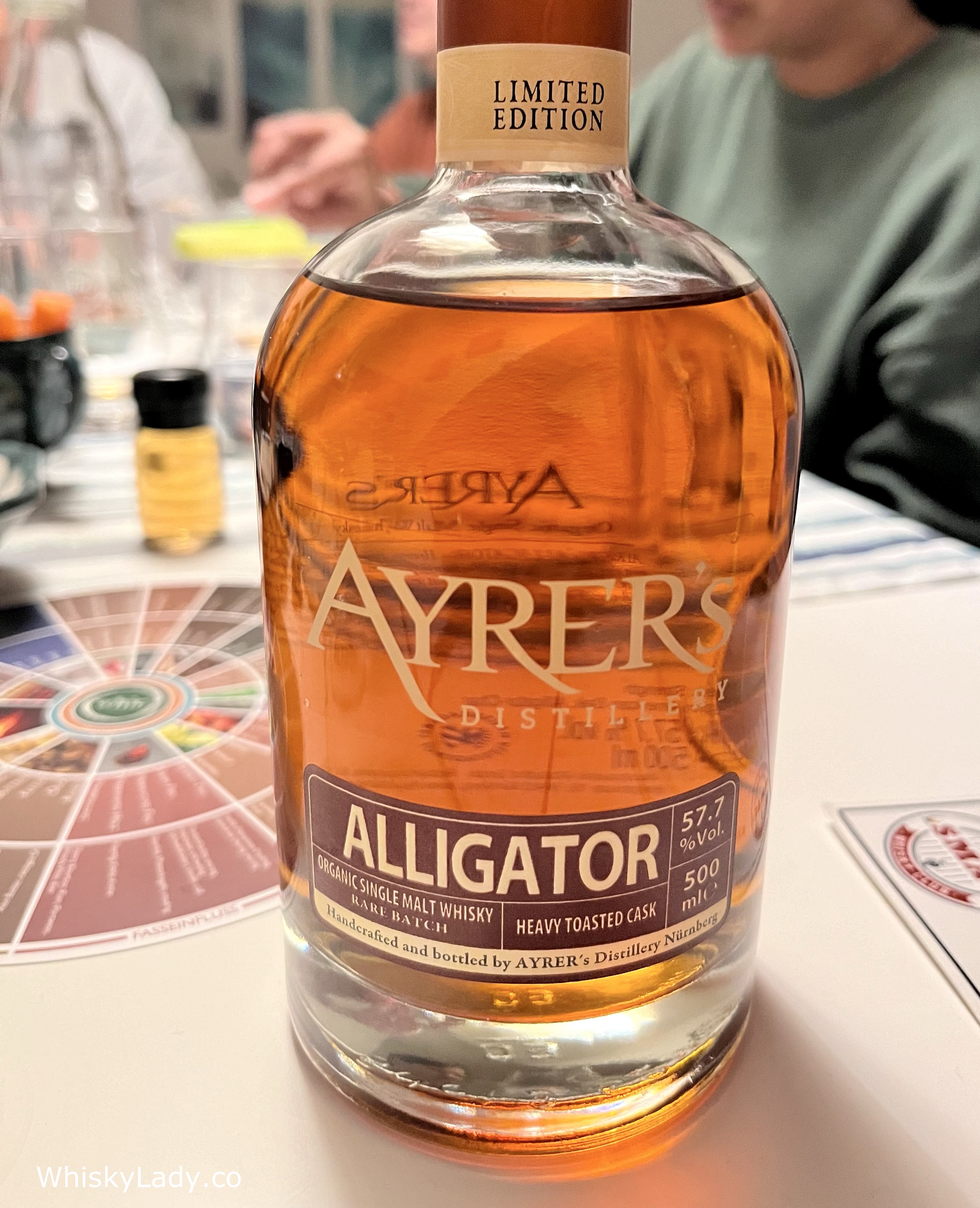
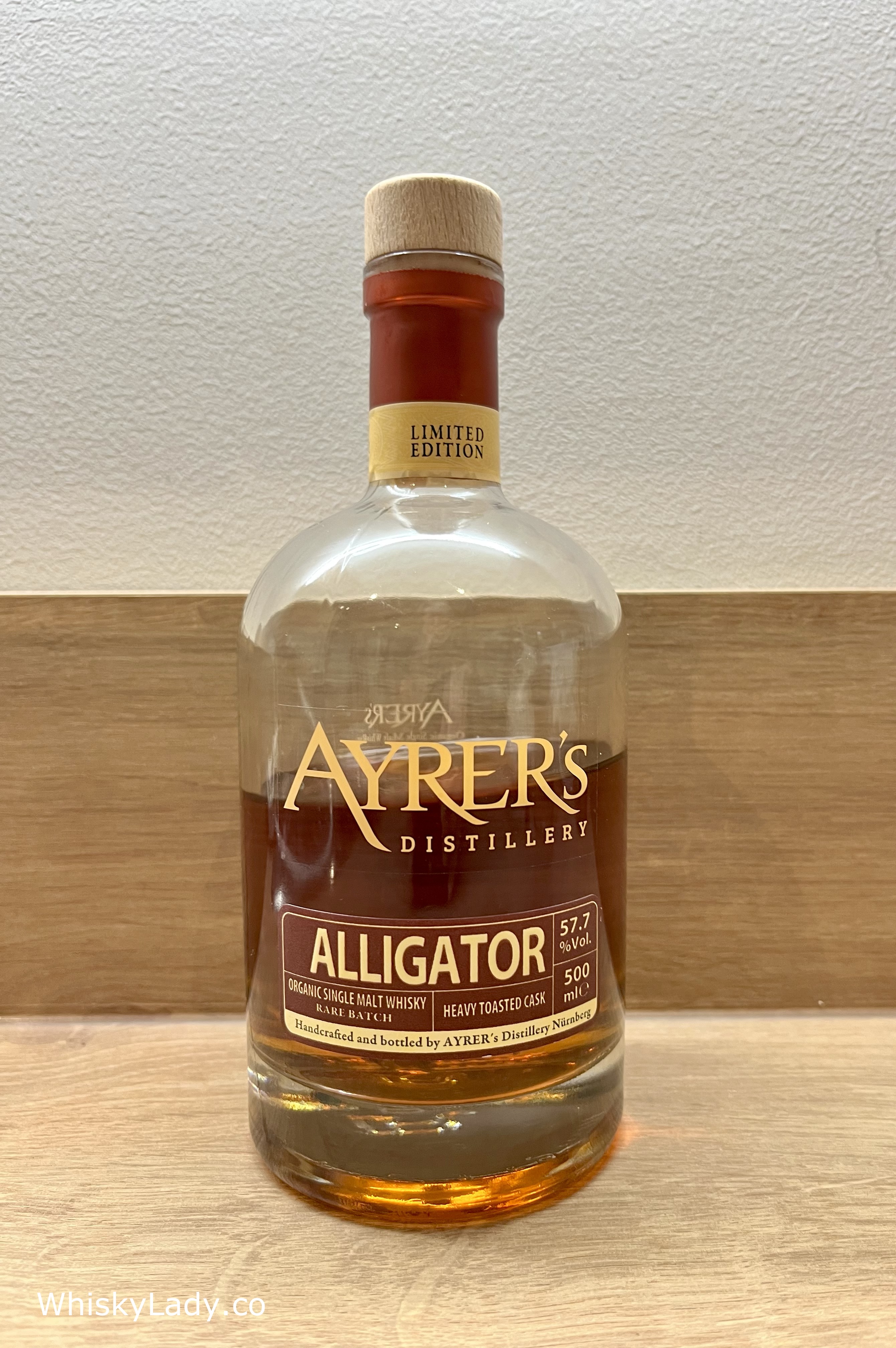
Germany’s Ayer’s Alligator 57.7%

Sometimes you skip what is sitting in your own backyard. Monuments missed, landmarks overlooked, vistas unseen… Having lived in Nurnberg for over four years, much of what tourists do remains undone. And that includes a whisky tour of Altstadthof Brewery and Distillery where our local small-batch whisky Ayer’s is produced. I have certainly had the beer from there. And more than one wine-tasting event. Even a tour of the underground tunnels. But unbelievably have yet to make it for one of their whisky tours or samplings, despite being a mere 15-minute walk from my home. For shame!

So when we decided to close the year with an exploration of continental European whiskies, it seemed the perfect opportunity to check out what is practically in our backyard! A fellow member steered towards their cask strength expression – specifically with an Alligator char. Alli-what you may ask?

First off is understanding why it is important to char the oak barrel. The concept is simple – charring opens up the wood – making it easier for the spirit to extract flavours. There are different char levels with alligator being one of the highest, so-called as the wood takes on the texture of alligator hide.

So enough theory, what about practice?

Ayer’s Alligator (2017 / 2022) 57.7%

  • Colour – Dark copper, edging on amber
  • Nose – Young, fresh and sweet, honey, tobacco, cotton candy
  • Palate – Began a bit fruity with pear, then shifted into toast with butter, something that is almost akin to peat without actually being peaty
  • Finish – Satisfying
  • Water – Makes it even more accessible

We were overall quite pleased with this one! After the unique Fary Lochan, we feared the Ayer’s might pale by comparison, whereas it held its own. We thought it might be a bit bold or harsh, instead, it was smooth and easy to enjoy. A happy surprise!

With this experience, I am reminded that it is past time to check out this wee distillery, sooner rather than later once back in Deutschland in the New Year.

What else did we explore that evening from the European continent?

Don’t want to miss a post? You can follow Whisky Lady in Germany and India on:

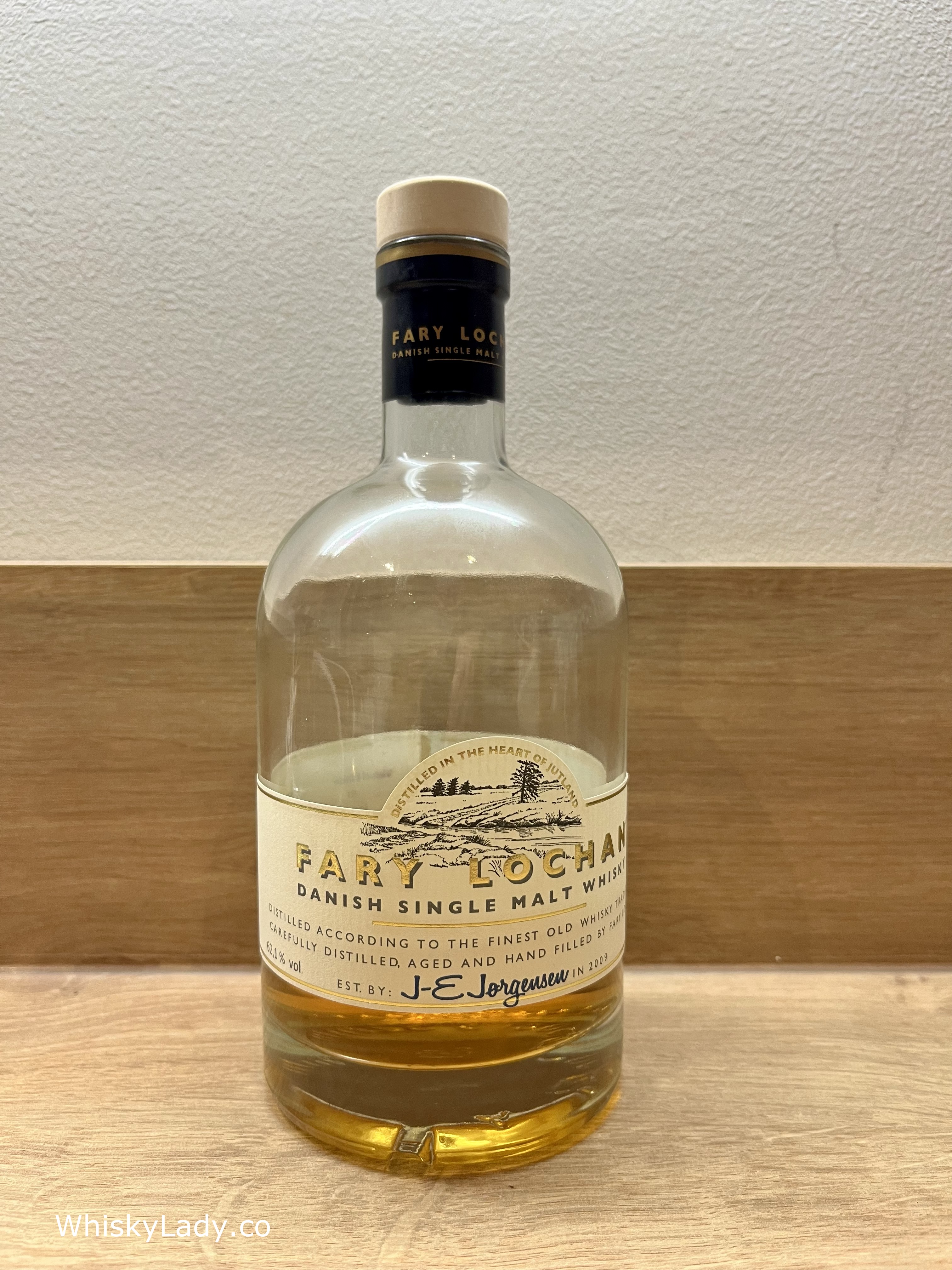
Denmark’s Fary Lochan 6 year Moscatel Finish 62.1%

Dram discoveries are the hallmark of any good whisky festival! In this case at the London Whisky Show with That Boutique-y Whisky Company with Dainish distillery Fary Lochan. In the midst of hundreds, this one stuck with me as something unique, something worth exploring further.

So when I spotted this bottle on sale for Eur 94 from Whic.de., I jumped at the chance to try more! I kept it waiting for just the right opportunity… which came in the form of our International Nurnberg whisky tasting group’s December session – in celebration of continental European whiskies.

One new member was keen to try something Nordic. Perhaps from Finland where he lived for some time. I immediately thought of recommending Teerenpeli, then remembered the Fary Lochan and offered it as an option…. which was immediately accepted.

The whisky was a complete hit! Which alas also means the night will be remembered for something quite singular for our group – nearly draining a full bottle! Granted it was 500ml not the standard 700ml. Additionally, as it was such a unique dram, there were a couple of sample bottles poured for further consideration (including me!) at a later date. However, it prompted thinking about how we organize our evenings and some different possibilities in the future, in hopes that next time around we just might be kinder to our collective contributors.

What makes this whisky unique is how its light smoke comes from nettles – inspired by nettle-smoked cheese from Funen. Producing very small batches, variation is to be expected. So what we try today may not be what we find in future.

So… how did we describe our experience? (aside from nearly draining the bottle!)

Fary Lochan 6 year (8 Feb 2016 / 10 Feb 2022) Moscatel Finish, Batch #05 62.1% Bottle 231 of 288

  • Nose – Quite a different aroma – cheese, herbal, wet leaves in the forest, earthy then became fruitier as it opened up – from tropical to orchard, joined by some bourbon vanilla
  • Palate – Coats the palate, fig marmalade, hot chocolate, waxy, some pepper, complex with many different elements interwoven
  • Finish – What a finish! Long, more of that earthy element joined by chocolate and tobacco
  • Water – While not necessary, it opens it up revealing wild honey, the hint of fruits found without water blossomed with… from citrus to orchard to tropical and back. Simply delicious on the palate

It was really very good. There was something distinctly different, a bit tricky to pinpoint exactly and describe. Just that the more time we spent with it in the glass, the more we enjoyed it. This isn’t simple or straightforward. It isn’t classical or traditionally complex. And yet it has something unique that draws you in…

What more do we know? It was first aged in 1st Fill ex-Bourbon barrels for 3 years and 3 months and then finished for 2 years and 9 months in Moscatel Sherry, producing a mere 288 bottles. Bottled at cask strength, you might think it would be powerful and pack a punch. Instead, its singular character sings through clearly yet isn’t punchy or overwhelming. At 6 years, some whiskies come across as young and a bit harsh, others easily pull it off. Clearly, we found that the Fary Lochan fits the 2nd category where 6 years was a perfect age for this expression to be bottled.

Now I am EVEN more excited to try these Fary Lochan samples thanks to Tobi from BarleyMania, joined by a 30ml of this expression.

What about other whiskies sampled from Denmark?

Don’t want to miss a post? You can follow Whisky Lady in India on:

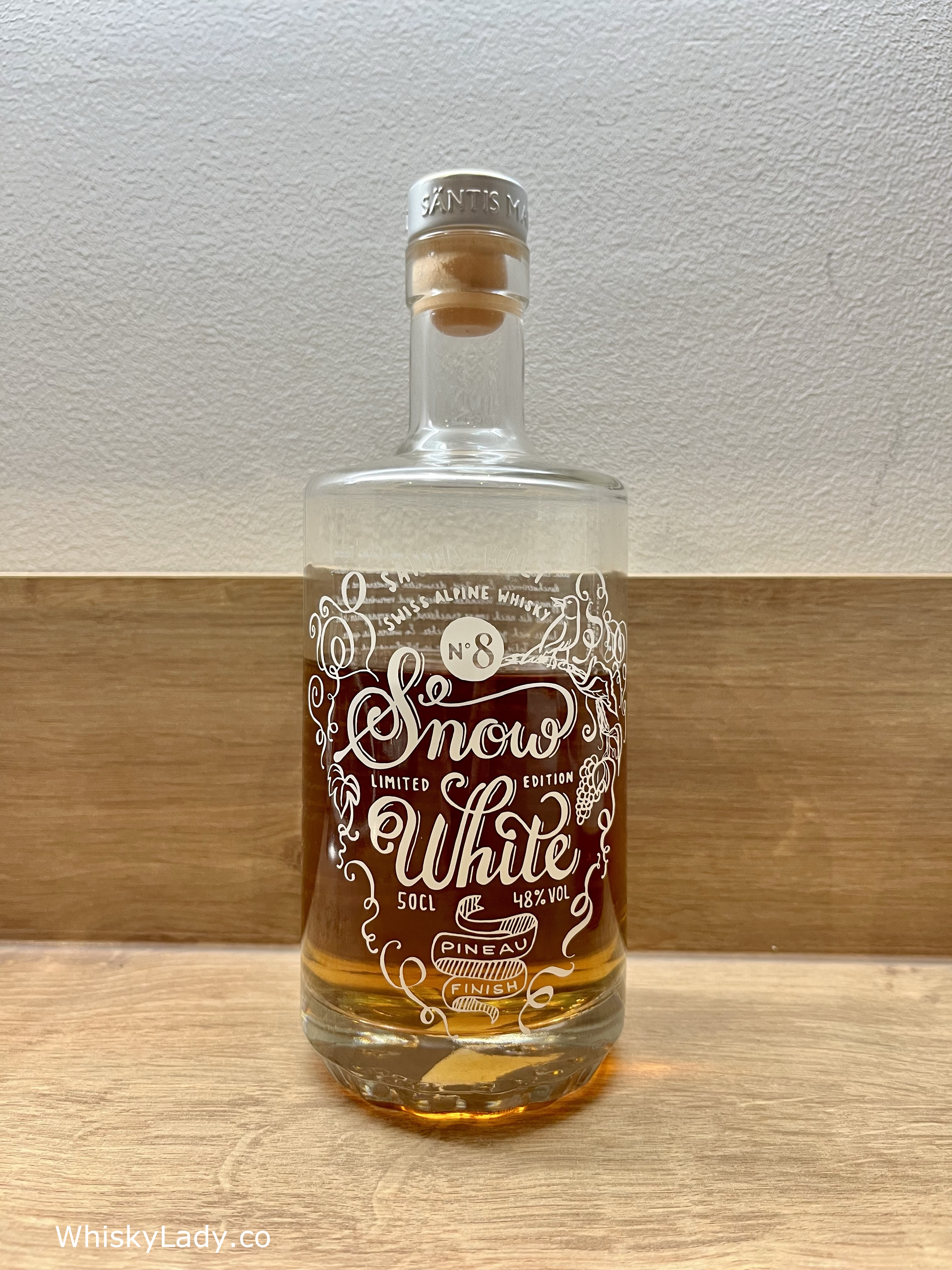
Switzerland’s Säntis 6 year Snow White No 8 Pineau 48%

Switzerland is known for many things – gorgeous mountains and lakes, chocolate and cheese, watches and banking… but whisky? That isn’t exactly the first thing you think of… in fact, just 25 years ago it wasn’t even legal! However, like many parts of the world, Switzerland is now very much in the whisky-making game.

My first brush was the Old Bear from Langatun Distillery – courtesy of a recommendation from the good folks at The Whisky Exchange in London. It was smoky and certainly left an impression.

Next up was a random selection from a spirits shop in Munich on a trip, before there was even a possibility of moving to Germany. In this case, it was the surprisingly accessible Forty-Three Swiss Highland Single Malt Whisky.

Fast forward a few years and I found myself living in Nurnberg, Germany. And three years ago, in December 2020, there was a mini from Säntis in an Advent Kalendar I tackled as a pre-Christmas project.  In this case, it was the Säntis Malt Himmelberg Edition 43%. I have to admit, it didn’t exactly impress. Why? In part because it reminded me of drinking a Radler – a sweet lemony beer – more than whisky!

So when a Säntis was recommended for our European whisky session in December 2023, I decided to keep an open mind. I have learned one should not judge a distillery solely based on one experience alone.

What did we think?

Säntis No. 8 Snow White 6-year Pineau 48%

  • Nose – At first it was just a hit of alcohol, then sweetened into candy, a bit nutty, plum skins, curiously it reminded me more of schnapps than whisky!
  • Palate – A bit aggressive and prickly, past the pepper were wine tannins, shifting from plum skin to grape, very dry and a mixed red fruit jam (the kind that doesn’t have a distinguishable type of berry or fruit), lemon-lime soda (or dare I say? Radler!), maybe joined by some cherry?
  • Finish – It was like it was impersonating a sherry finish but wasn’t quite able to pull it off, some generic cola

We really didn’t mean to be uncharitable, however descriptions like “headache-inducing” and “one flavour blob” were bantered about. We generally agreed that the nose outperformed the palate and finish. And if anything, it had a schnapps-like quality – depending on your opinion of schnapps, this could be a good or not-so-good thing.

Our discussion turned to the many distilleries around Germany and Switzerland that started off brewing beer or distilling schnapps, and then veered into the whisky business. Using stills meant more for distilling fruit than malted barley mash does lead to some curious results. I confessed how my original impression of German whiskies was direct to the point of being a bit harsh, lacking nuance and complexity. Until I discovered St Kilian and Aureum and a few notable others, which both show a different, much more interesting range and style.

But back to the Säntis, our whisky contributor shared the story of the Lochar distillery’s Swiss “whisky trek“…. starting with one inn, there are now some 26 barrels found at different hiking locations around Switzerland. Each barrel is slightly different, thanks to the differing maturing conditions such as altitude or barrels.

She found the boxed set with two nosing glasses – available online for around Eur 72. What more do we know? It was initially aged for 5.5 years in small beer barrels of the Appenzeller Brewery Locher before being finished for 8 months in ex-Pineau des Charentes casks from France.

It was a bit of a disappointment, however, we then thought to put it into context. If we spent a day trekking in the alps, the crisp cool air, coming in from such exertions, would this do the trick? Perhaps. And context is everything! So let us be more charitable and go back to the glorious views, cheese fondus, and chocolate… In my case, a memory of a couple of days in Weggis earlier this summer, including a boat trip on Lake Lucerne for a fabulous meal with great company.

What else did we explore in our European evening?

Don’t want to miss a post? You can follow Whisky Lady in India on:

Closing the year with a continental European exploration…

We held our last Nurnberg International Whisky evening mid December. It was an exploration of continental European whiskies and more from France, Switzerland, Denmark, Germany, and Portugal. We went well beyond our three-bottle focus however it made for a proper year-end close to an evolving tasting group.

So what did we explore?

So let’s begin at the beginning… from our 1st session, we were introduced to the concept of a calibration dram. In this case, I thought the Bellevoye would be a nice way to set the stage for our evening. Their whiskies are approachable and generally have an easy-drinking style – a perfect way to “whet the appetite” for delights to come. As each bottle had a slightly different approach, I gave everyone the option to choose which best matched their mood and inclination. The reactions to the different options –  Blue (French Oak)White (Sauternes) or Red (Grand Cru) were so positive that a couple of folks did a tasting within a tasting – sampling all three!

We then moved on to the Whisky “Main Course”… and for that, you will simply have to check out the separate tasting notes. Suffice it to say, the Fary Lochan was a singular and memorable whisky, the Ayer’s surprised us by being far more enjoyable and interesting than expected, and the Säntis? Well, it was a bit of a disappointment, however, that goes with the territory when exploring whiskies! It is also a good example of a certain direct style of whisky that works for some.

In between, a mystery bottle was circulated. It was completely unlabelled with no clue provided. We sniffed it. Sipped it. Considered it. Whilst nothing remarkable, we gave it due attention discovering beneath the plastic and diesel was a dark cherry, mowed grass, wood polish, and then sweet cotton candy. On the palate, it was easy to drink, perhaps a hint of tobacco but nothing else really stood out. The reveal? Not a whisky at all. Instead, Arc Royal VS Cognac 40%, which is available for a mere Eur 20 at any Aldi. Our contributor pulled out a printout of wildly different tasting notes – from those that completely trashed the Cognac to those that were exceedingly kind. In our case? We were somewhere in between, but generally positive.

We closed with a merry round of nibbles and a few additional splashes of this and that… including a Madeira from Marques Campoalto. Increasingly we are seeing whisky finished in ex-Madeira casks. The Welsh Penderyn was an early adopter of using Madeira cask finish for a core expression, however, the Irish also joined this bandwagon with Tyrconnell, with the Scots also part of this trend – such as Loch Lomond’s Inchmurrin Madeira and many more. This is exactly why one member brought a bottle along – to show how the original fortified wine smells and tastes to help us better understand how this contributes to the final Whisky product with a Madeira finish.

As a kind of “desert”, we closed with a Beerenweine honey whisky liqueur – the kind of liqueur that you can get at local Medieval fairs all over Germany. In fact, I brought a bottle of their herbal schnapps – called Druids Fire – back to Winnipeg for a bit of fun.

As this company also makes mead, talk turned to the local honeyed mead available at the Medieval pub near the castle, how some folk’s palates tend towards sweet and others not (in case you wondered, I am generally in the not category). This is why when I did try a wee sample, I was reminded why I prefer my whisky unadulterated and not overly sweet!

Overall it was an evening that crossed the line from careful consideration of three focus whiskies to something social, making for a marvelous evening and a brilliant way to close the year.

If you are in the Nurnberg, Germany area and interested in learning more about our Nurnberg Whisky Explorers activities, check us out on Meetup: https://www.meetup.com/nurnberg-whisky-explorers/

Don’t want to miss a post? You can follow Whisky Lady in Germany & India on:

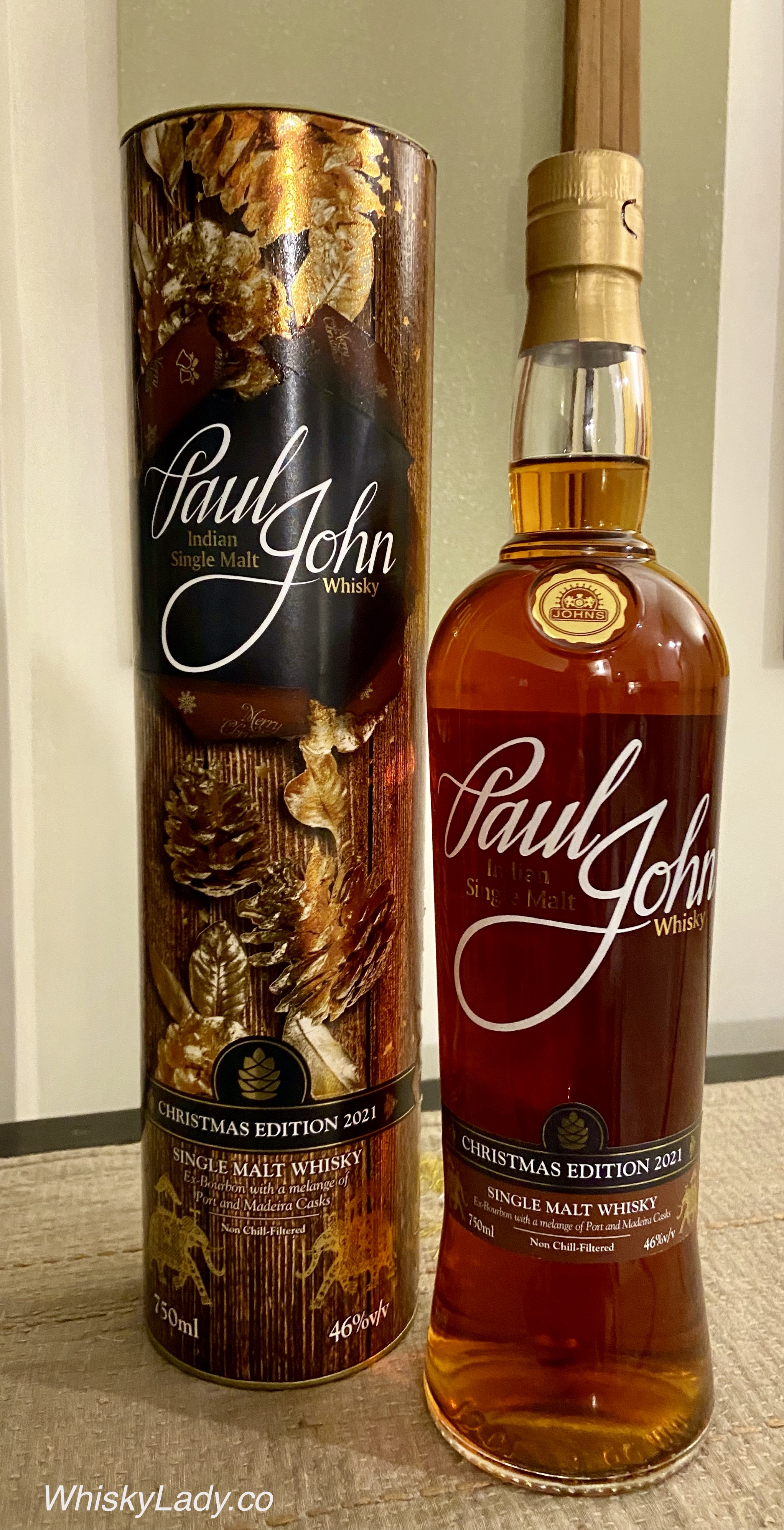
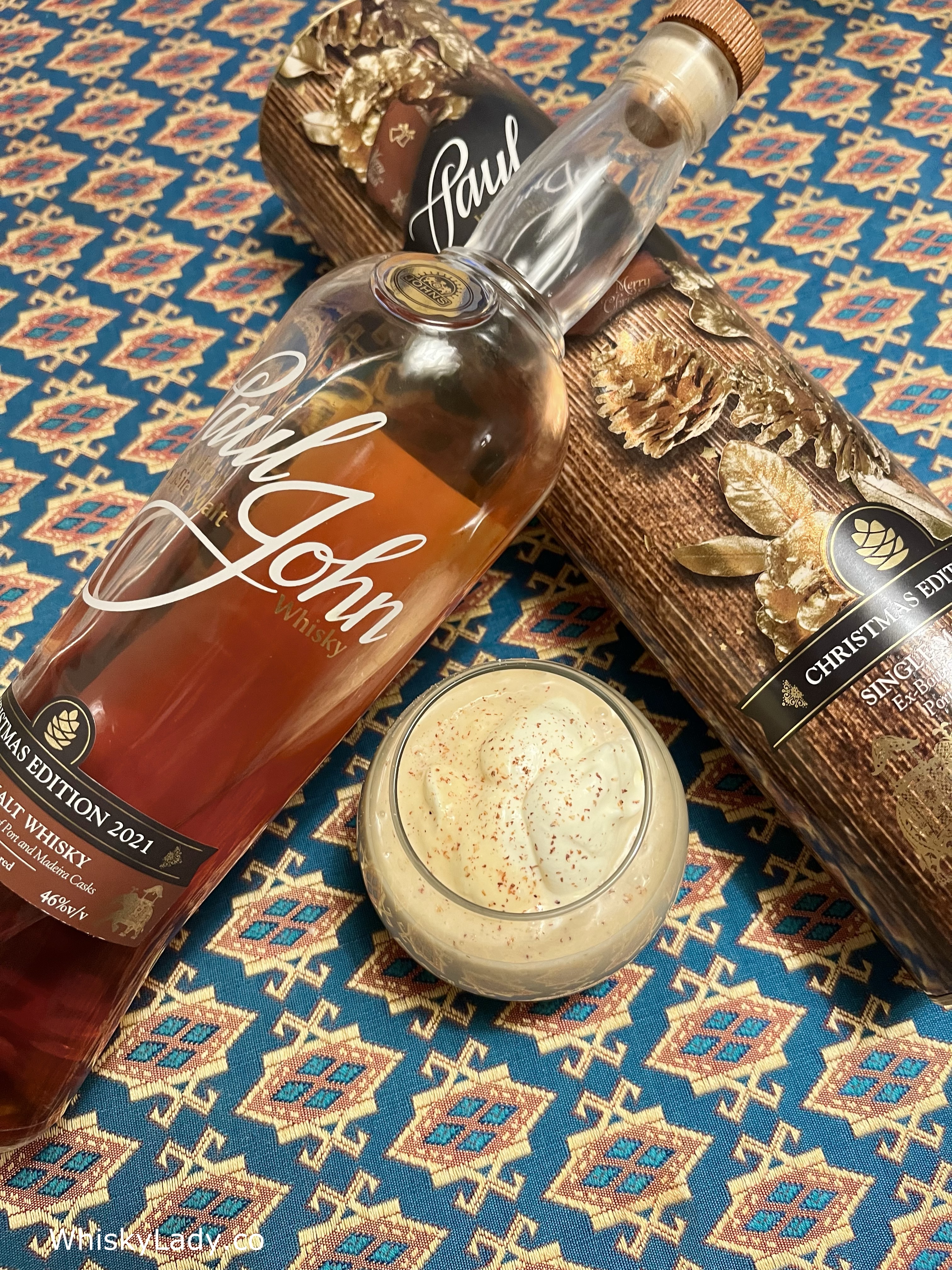
Paul John’s Christmas treat (2021 edition)

I last tried Paul John’s Christmas editions at their distillery in Goa! It was August 2019 and a few Whisky Ladies of Mumbai got together to spend a special weekend together – with our primary mission to spend time at Paul John! We were impressed with the 2018 and 2019 editions. Originally these special seasonal celebration expressions could only be purchased in Goa, however, now living in Europe I’ve seen a couple pop up here and there!

This particular 2021 edition is one I managed to acquire in India, then brought it to Germany to share in a special Diwali celebration. I have a been a bit slow preparing tasting notes, however found myself on Christmas eve, back home in Mumbai, listening to the birds, looking out at the palm trees, contemplating the mix of Indian and western traditions that are part of any Anglo-Indian home. It seemed fitting to brush off my notes and share them today.

Paul John Christmas Edition 2021 46%

  • Nose – What a nose! Port, sour cherry, juicy berries, pepper, koffee candy
  • Palate – Silky smooth and full of flavours, dried fruits, some ginger, caramel, the coffee shifts into mocha, a sweet peat smoke, it is robust and rewarding
  • Finish – Lingers

Overall this whisky was pronounced as “really very good!” You could really tell the influence of all three casks – ex-bourbon, Port wine and Madeira barrels. Particularly on the nose the Port and Madeira shone through, yet there is something about the palate that brings all three dimensions together.

There is nothing shy about it – it is bursting with aromas and flavours, and generous in its approach. I found less of the tropical fruits I tend to associate with Paul John however the longer the whisky lingered in the glass, the more elements emerged. This is not a lightweight whisky and it deserves time to open up. Thankfully it remains at home, so I will have plenty of opportunities to come back and explore further.

One evening later that wintery month, I had a sudden hankering for egg nog. Not the store-bought variant but a rich, indulgent homemade egg nog, one that would be generously laced with whisky rather than rum. I just so happened to have all the ingredients except vanilla extract… so set about making a mini-batch – just enough for one person. As I considered which whisky to use, my thoughts were drawn back to the rich full flavours of this Paul John. I pulled out the bottle, splashed a few drops in a glass neat and knew this was EXACTLY what I wanted to pull off a truly exceptional egg nog.

What do the folks at Paul John have to say?

With tawny tints and aromas of malt-tinged caramel, a rare dash of coconut, and sweet berries balanced against dry raisins, Paul John Christmas Edition 2021 is crafted from malts finished in Ex-Bourbon and a melange of Port and Madeira casks. Entice the palate with creamy flavours of delicate spice and butterscotch riding on a light smoked-laced barley that lead to a long finish of alluring spices, light peat and a flavourful cocoa.

The 4th release of the limited Christmas Edition series from the award-winning Paul John Indian Single Malt, this expression bespeaks the joys of Christmas.

  • Colours: Tawny.
  • Nose: Caramel, orange marmalade, berries, malty, coconut and dry raisins.
  • Taste: Creamy, spicy, light smoke, butterscotch and barley.
  • Finish: Rather long and warming notes with Cocoa, light peat and spices.
  • Balances: An exotic and multi-faceted peated malt with deep, creamy flavours and a rich finish.

I bought this via The Drammers Mumbai group for INR 5,500 in December 2021. It later made its way to Europe to be tasted during a special Diwali evening in Nurnberg with our International Whisky Tasting group where we also sampled:

And now? Time to get into the seasonal spirit! Paul John Christmas Edition 2021

If you don’t want to miss a post, why not follow Whisky Lady on:

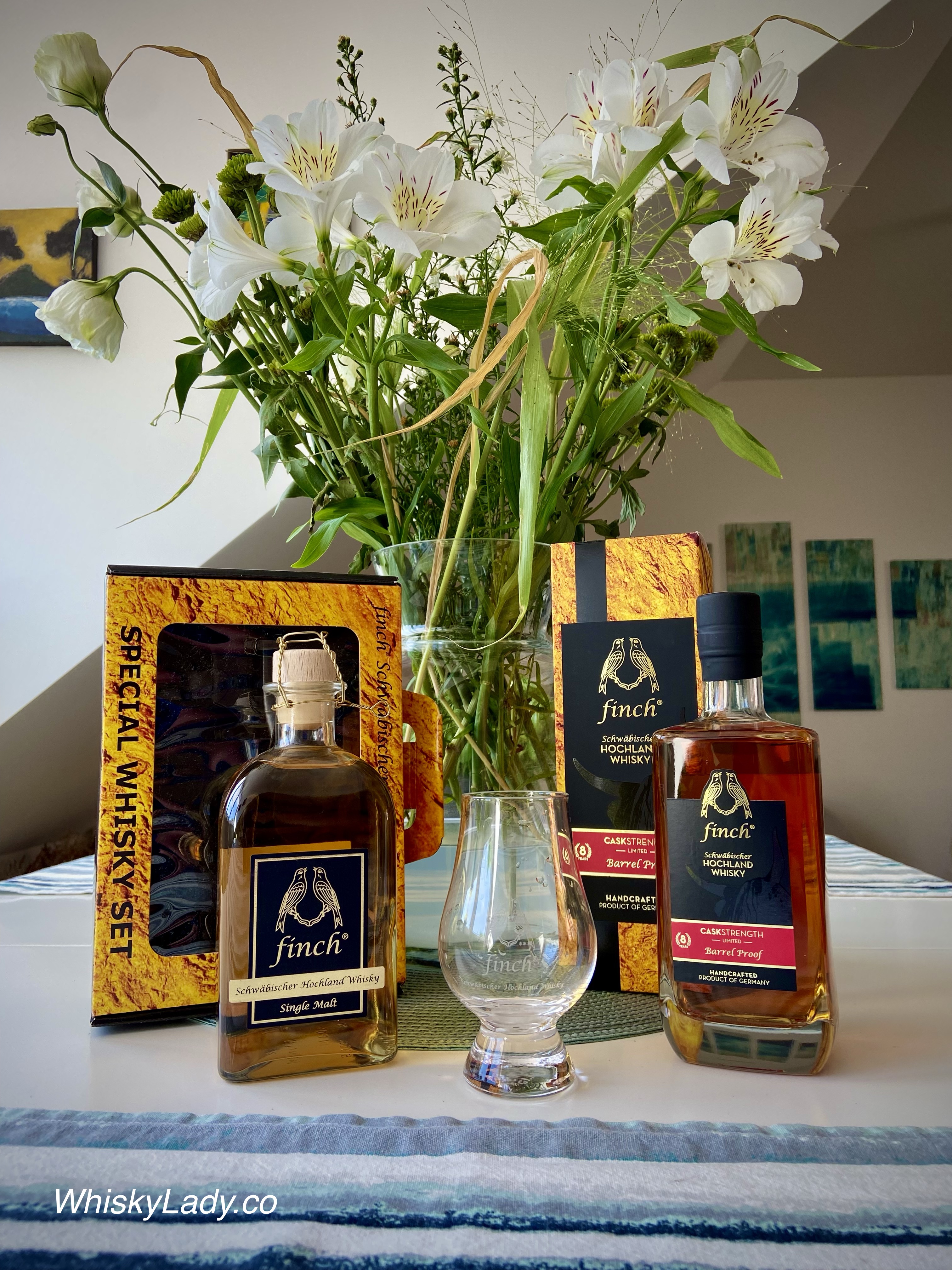
Finch Schwabian Whisky – An Exploration of 8 Expressions

Welcome to the Schwabian Alps! My explorations of German distilleries continue with Finch distillery… For those not familiar, the Schwabian Apls are found to the east of the Black Forrest, north of the Bavarian Alps, the Swabian Alps (Schwäbische Alb in German) are sometimes overlooked.

“Ulm, where the Danube swiftly flows, forms the boundary in the south, while the Neckar runs past half-timbered towns, limestone crags, beech woods, juniper-cloaked heaths, hilltop ducal castles, and robber-knight ruins further north.” (Lonely Planet)

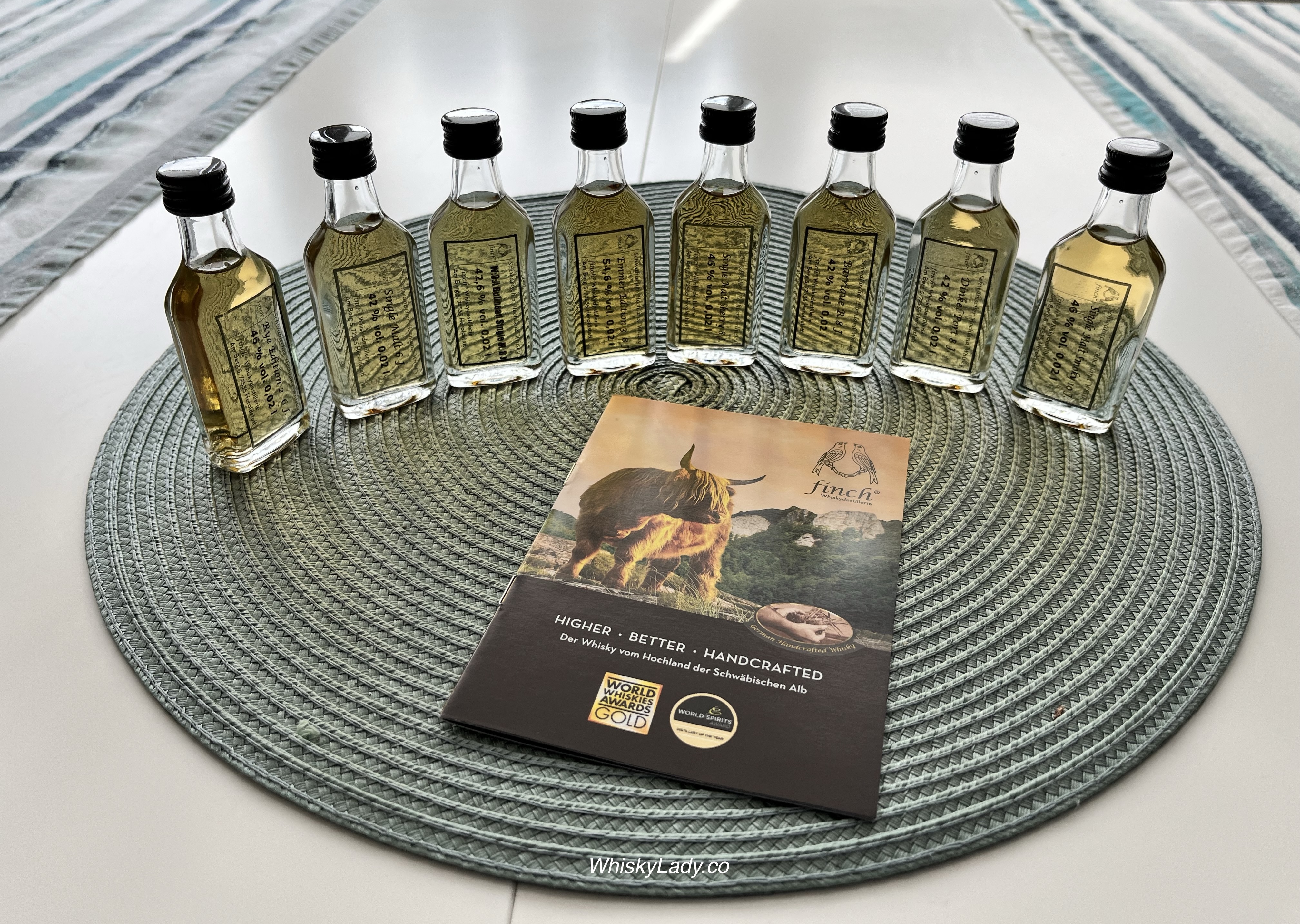
As for Finch distillery, like several continental European distilleries, there is quite a lot of experimentation with various grains and casks. And what better way to explore these possibilities than with a set of miniatures – from barley to a variety of relatively obscure kinds of wheat to rye. As for casks? A mix of red wine, port, sherry and American Oak. 

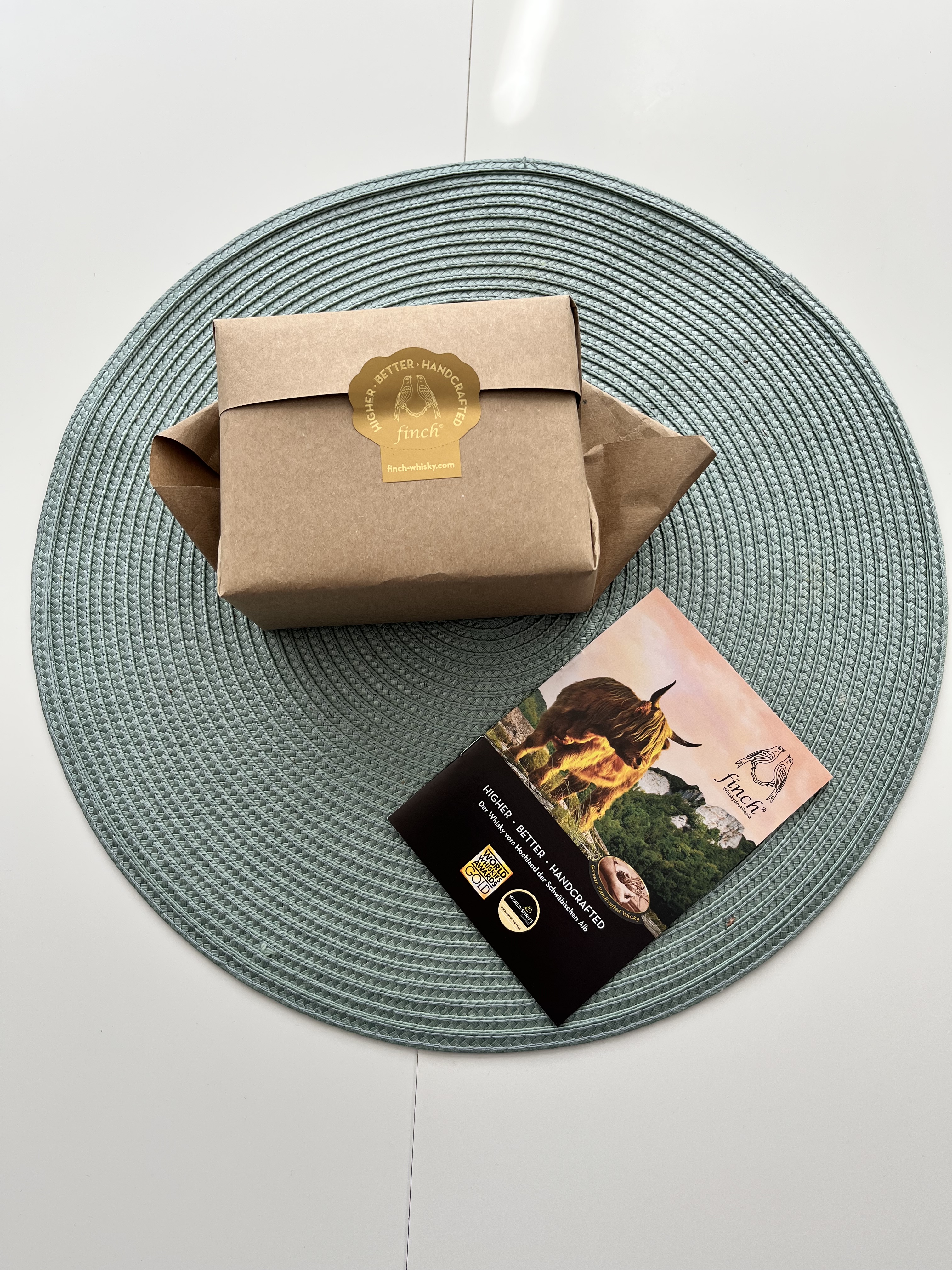
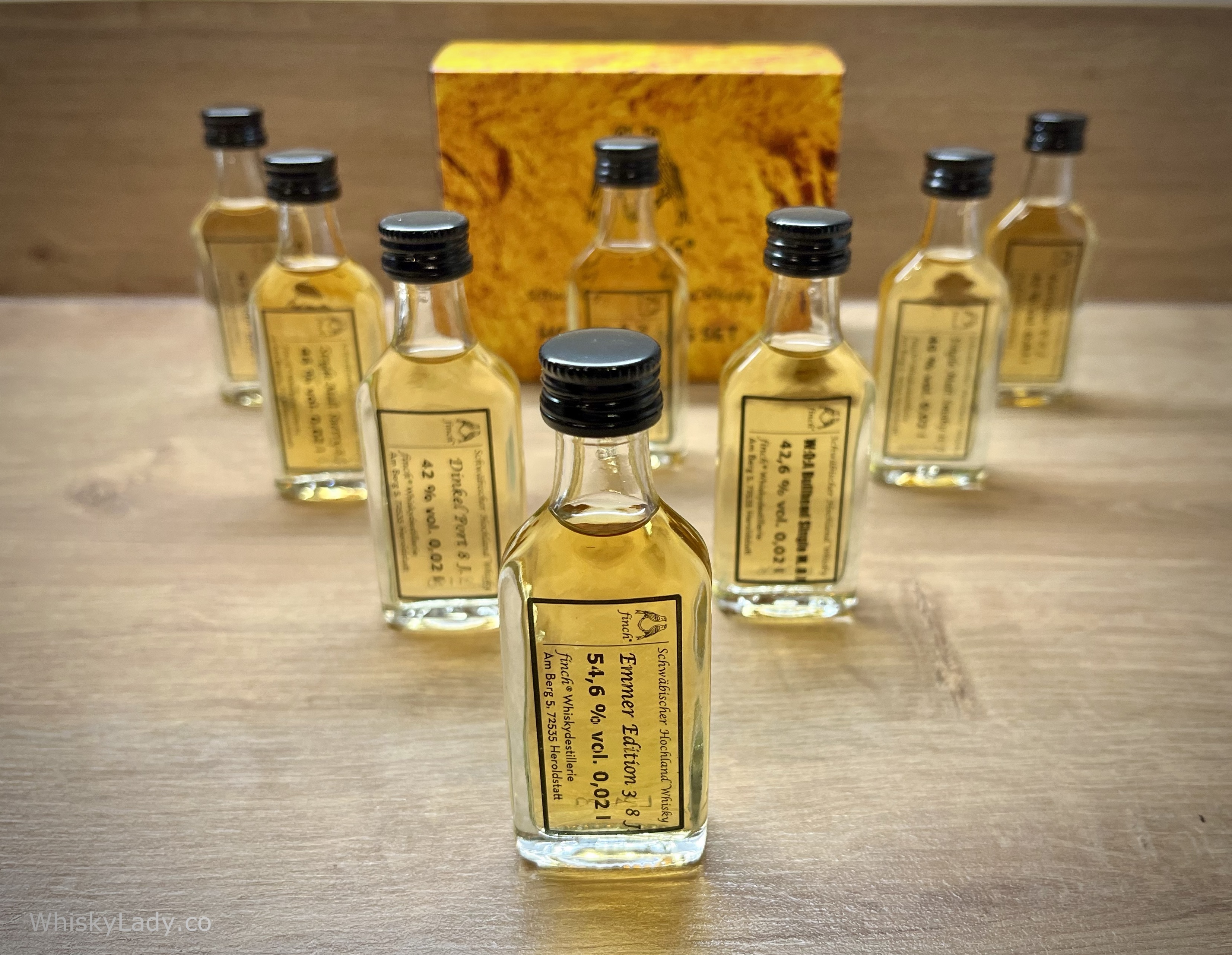
In this case, the set was a compact gift-wrapped treat! 

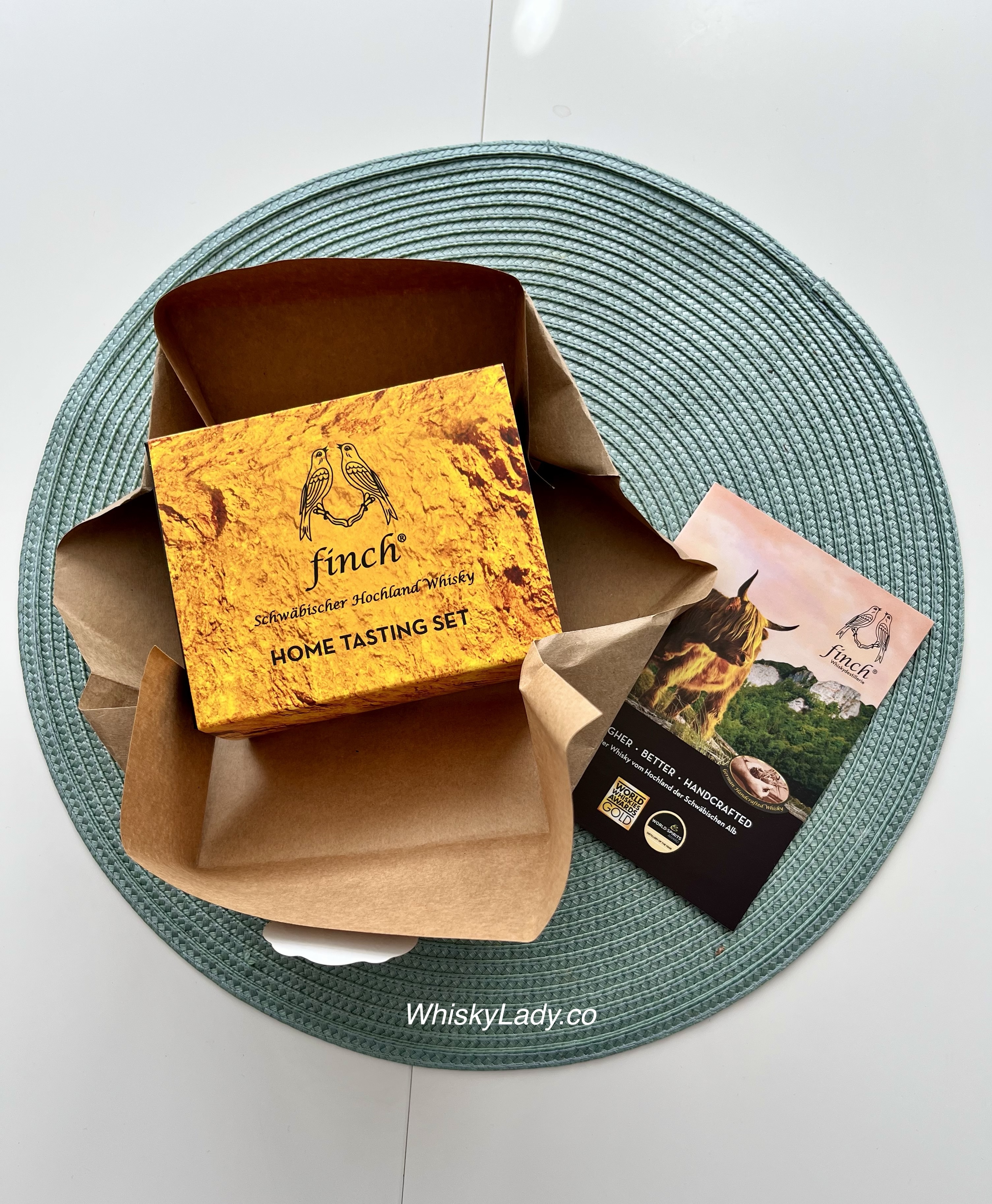
Fun to open…

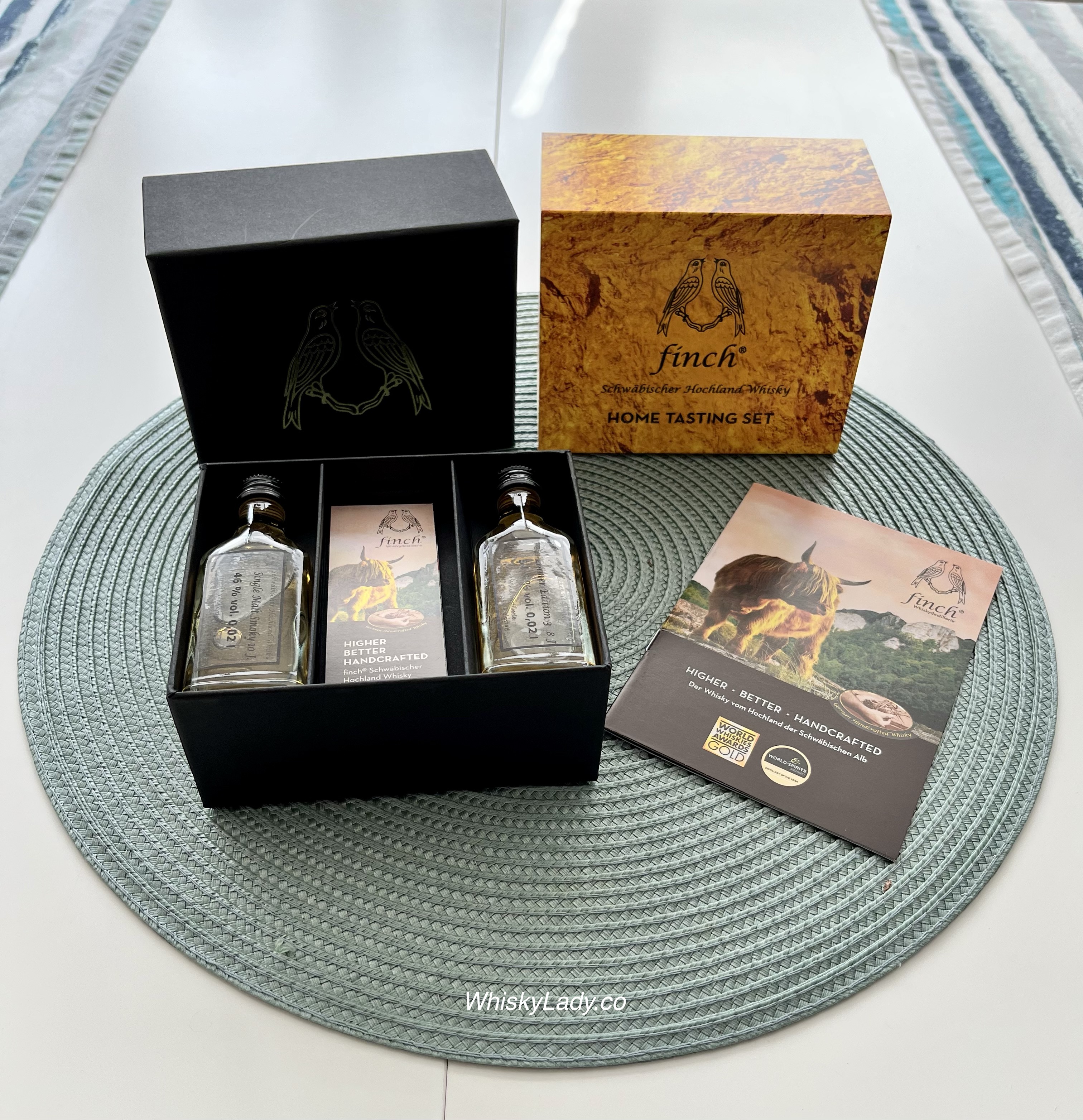
Even more fun to explore…

So what is contained in this Finch octet tasting set?

  • Finch Fine Selection 6 year Single Malt 42%
  • Finch Cask Strength 8 year Emmer Edition 3, 54.6% 
  • Finch Special Grain 8 year Spelt Port 42% 
  • Finch Distillers Choice 8 year Barrique Cask 42%
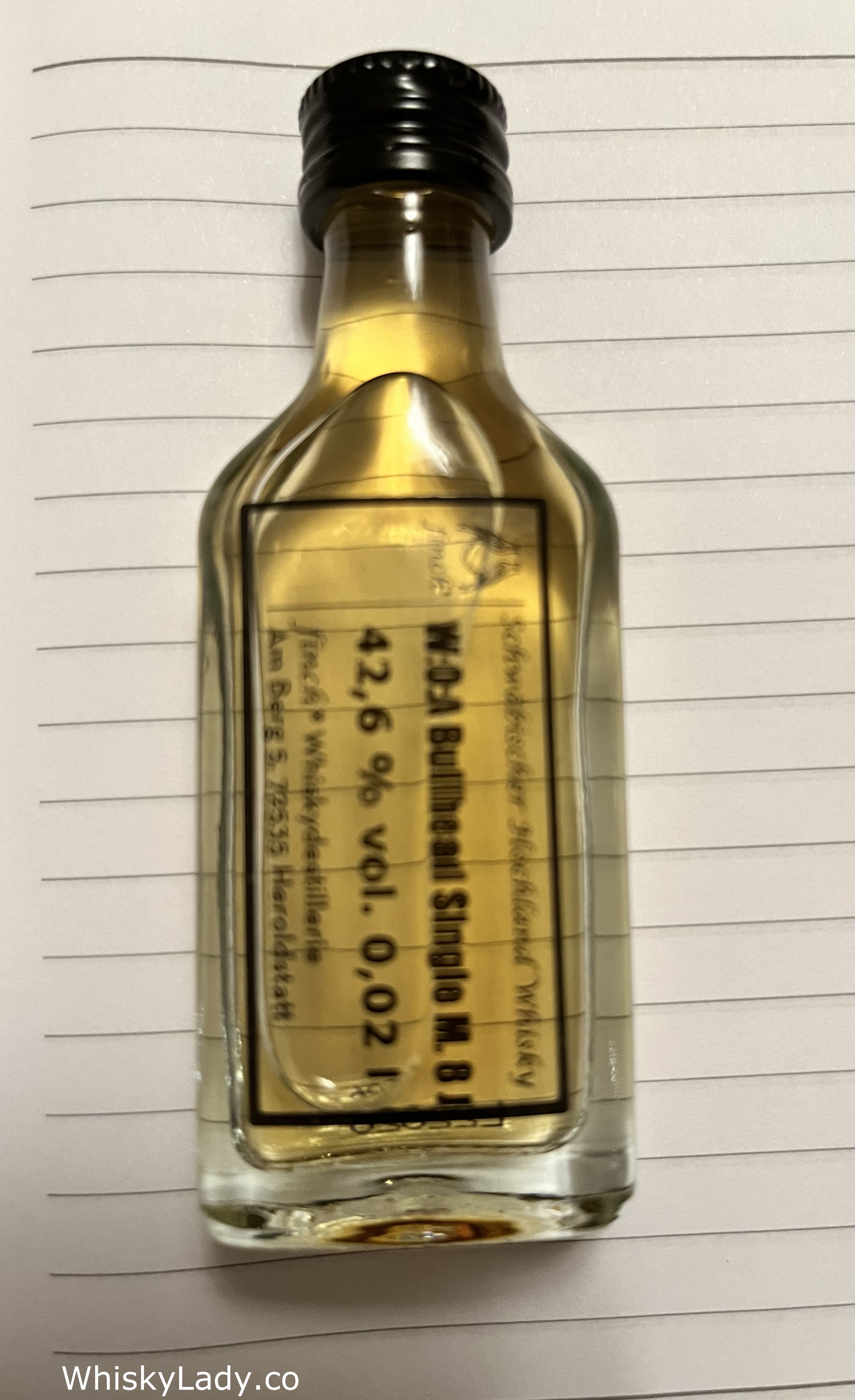
  • Finch Special Edition 8 year WOA Bullhead Single Malt 46% 
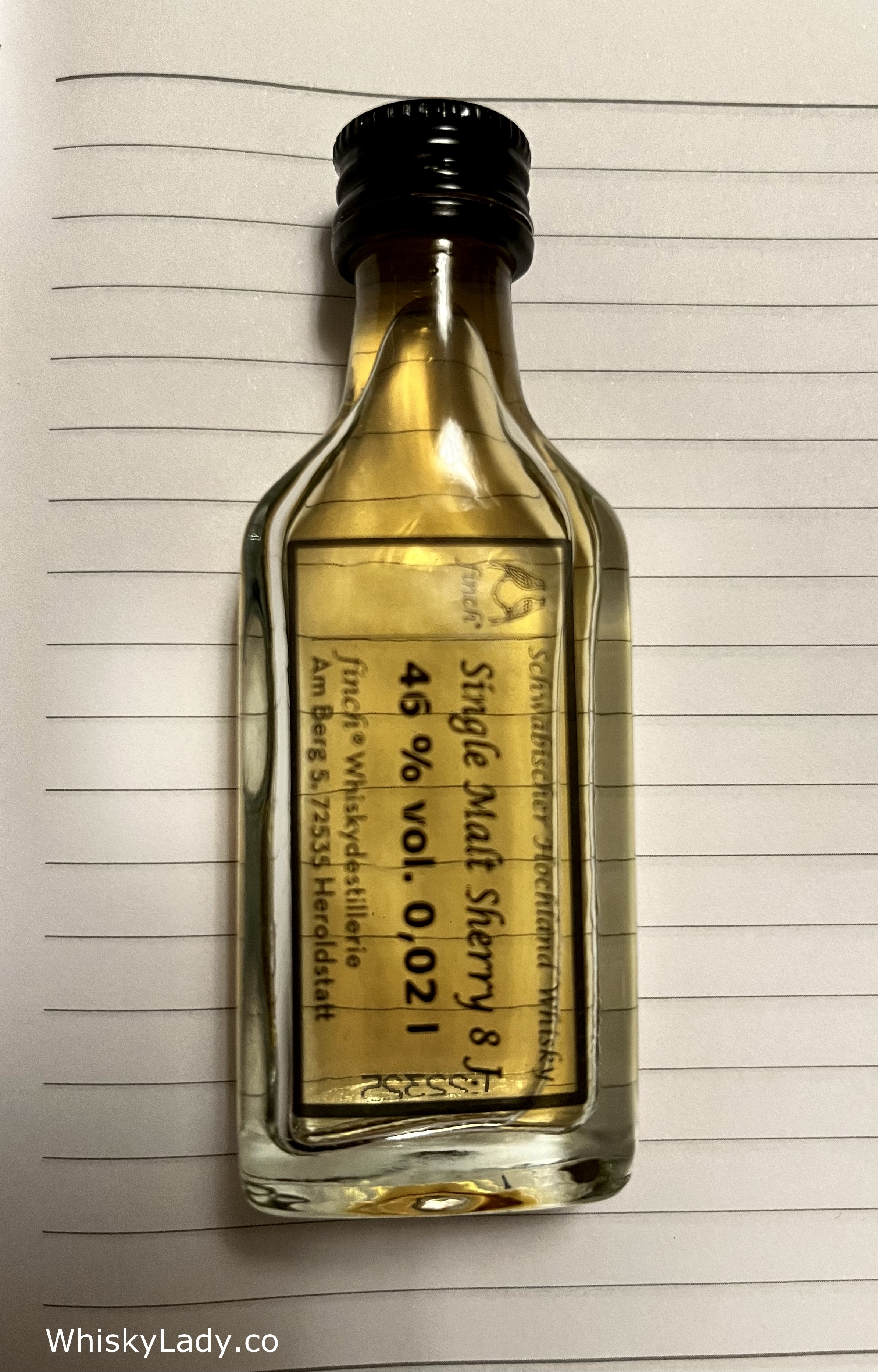
  • Finch Distillers Choice 8 year Single Malt Sherry Cask 46% 
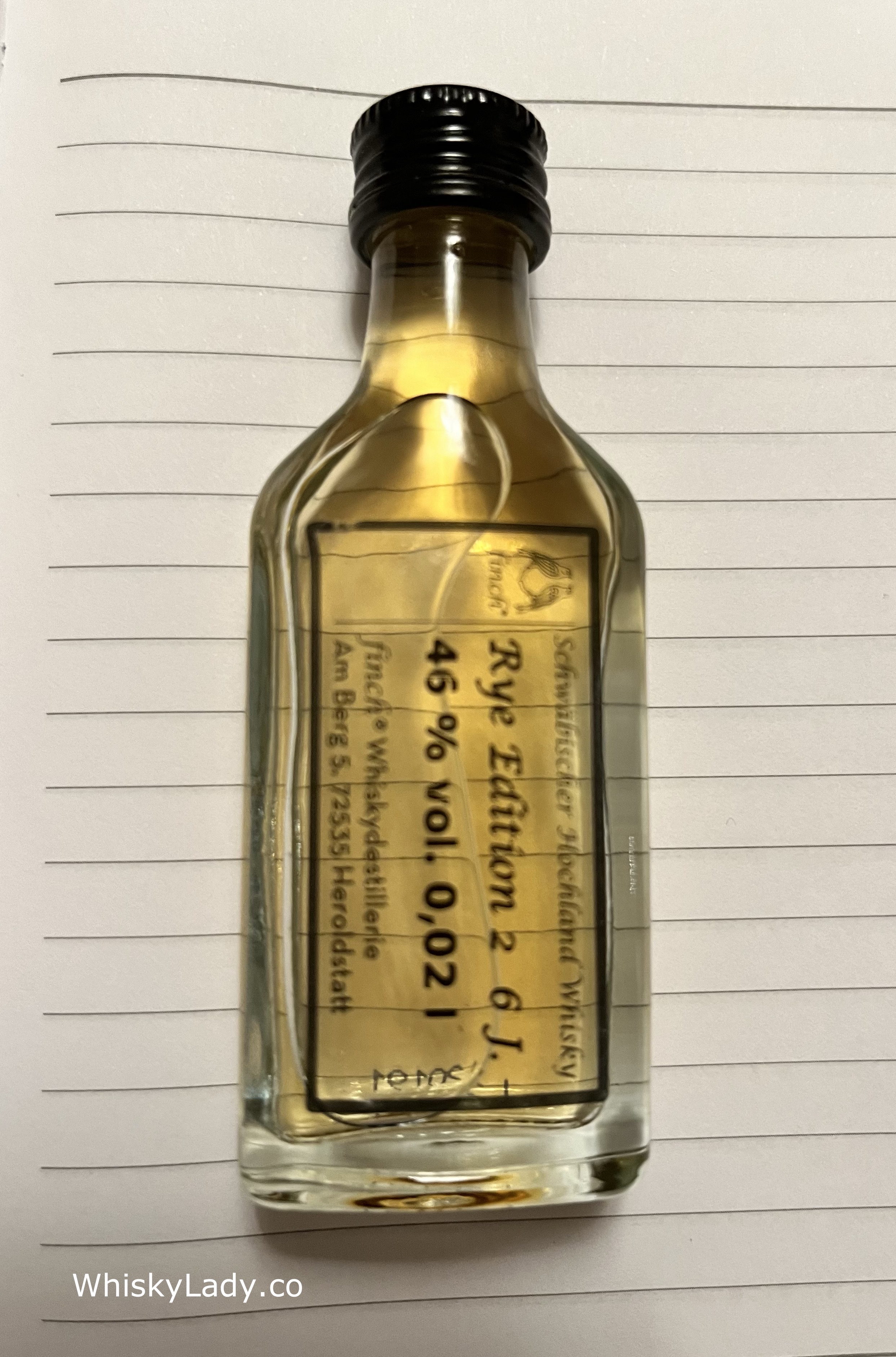
  • Finch Special Grain 6 year Rye Edition 46%
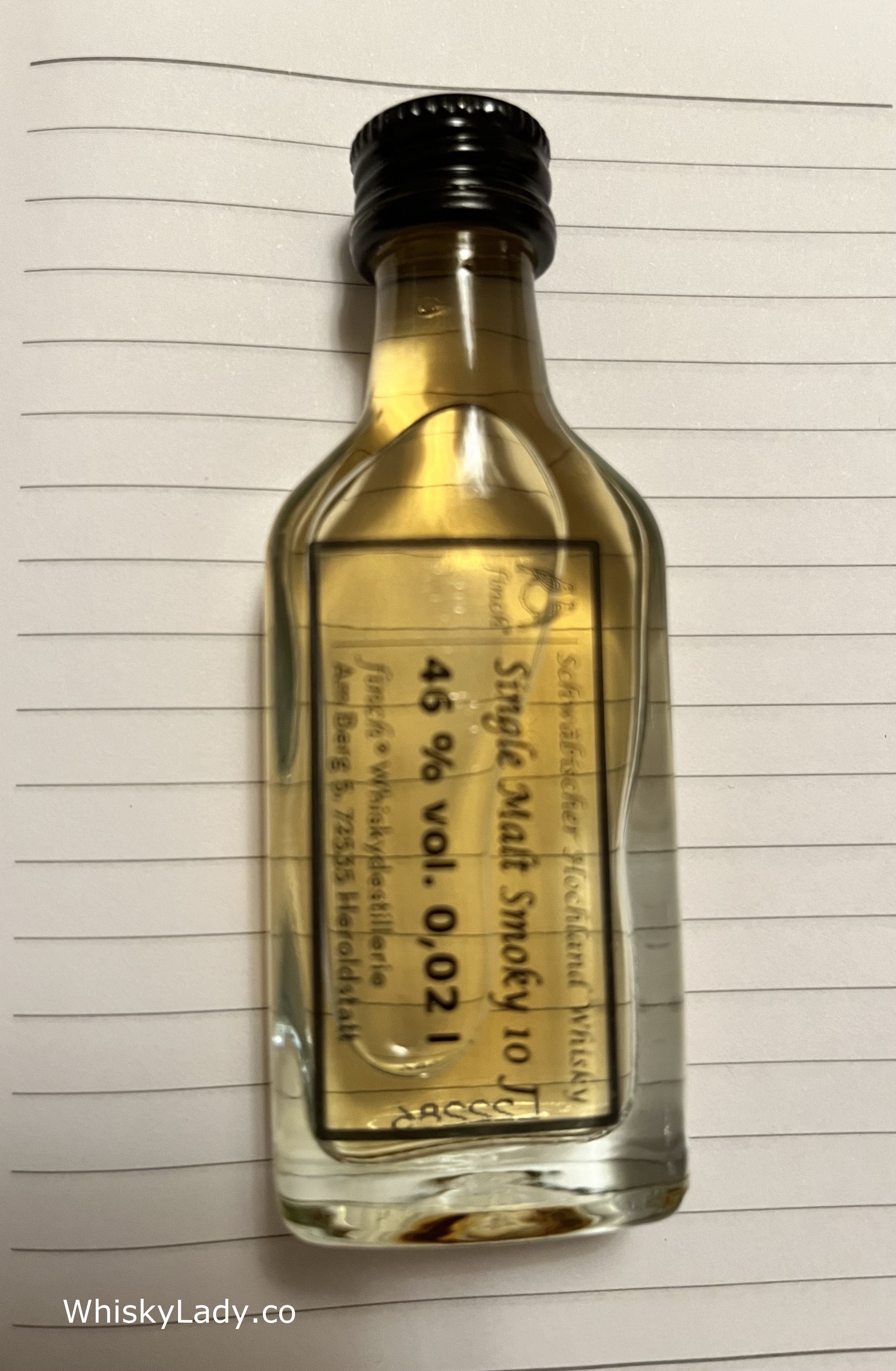
  • Finch Distillers Choice 10 year Single Malt Smoky 46%

So now… on to the most fun part – tasting!

Where to start? We initially opened the 1st listed on the guide – the Emmer Edition 3 Cask Strength – however, we realised immediately the folly of this approach and switched instead to the Finch Single Malt. 

Finch Fine Selection 6 year Single Malt 42% (est. Eur 40 for 500ml)

The folks at Finch share that the barley for this Single Malt comes from their own cultivation, matured in a combination of ex-bourbon and wine casks.

  • Nose – Initially quite fruity, then rubber took over – as in really quite rubbery – like childhood-flavoured erasers. As it settled in the glass, the aroma became sweeter with cereals. Over time it also shifted into roasted barley with honey, some green apples or green grapes
  • Palate – The first sip was a bit brash, full of hay sweetness, waxy chocolate, more of the cereals
  • Finish – Reminded us more of a simple single grain than single malt – there for but a moment and then disappeared

Overall this wasn’t the best beginning. It was compared with a breakfast cereal – Smacks – made of puffed wheat and honey. Whilst nothing was “off”, we just weren’t yet excited. 


Finch Cask Strength 8 year Emmer Edition 3, Re Wine Barrels 54.6% (est. Eur 59 for 500ml)

Next up, we returned to the cask strength we initially cracked open. Rather than barley, this whisky uses a grain – black emmer – from the Finch farm on the plateau of the Swabian Alb. What is Emmer you may ask? Otherwise known as Triticum decoction is a plant species from the wheat genus. It is one of the oldest cultivated grains, yet hardly grown today. This type of wheat with long-awned, usually two-flowered spikelets is hardly grown in Europe today – if it is, it is essentially black emmer.

  • Nose – Initially very shy, then spirity, slowly opening into marzipan, caramel, biscuits, hint of red wine or raisins
  • Palate – Started like a sour calvados, then from tart apples to pears, giving way to clear red wine influence
  • Finish – Light
  • Revisit – What a lovely perfume, silky smooth on the palate, closing with a light spice finish

Could clearly tell this is a grain rather than a single malt, yet we enjoyed it much more than the 6 year Single Malt expression. Whilst it came across as young, once the nose opened up, it was quite inviting…


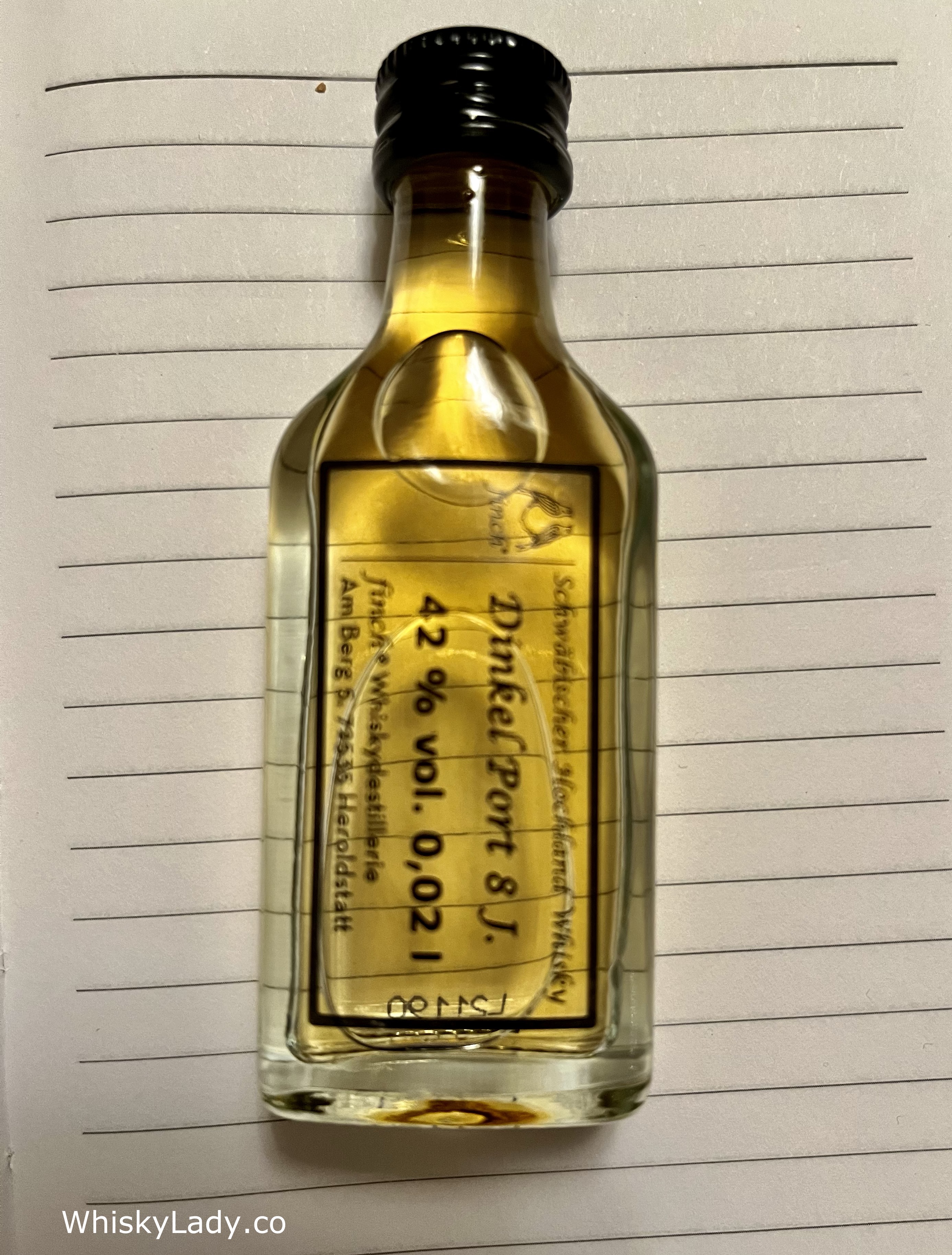
Finch 8 year Dinkel Port 42% (est. Eur 49 for 500ml)

This expression uses another lesser-known grain for whiskies – spelt – this time, combined with an ex-Port cask.

  • Nose – The first whiff was very promising. Light yet very sweet. It was a bit like cotton candy or the powder on a marshmallow.
  • Palate – Sparkling grape juice, sweet spices, smooth and surprisingly light for a port-matured whisky.
  • Finish – Honey and raisins

Our overall impression was that it makes a nice starter whisky. The aromas were appealing and the palate enjoyable.


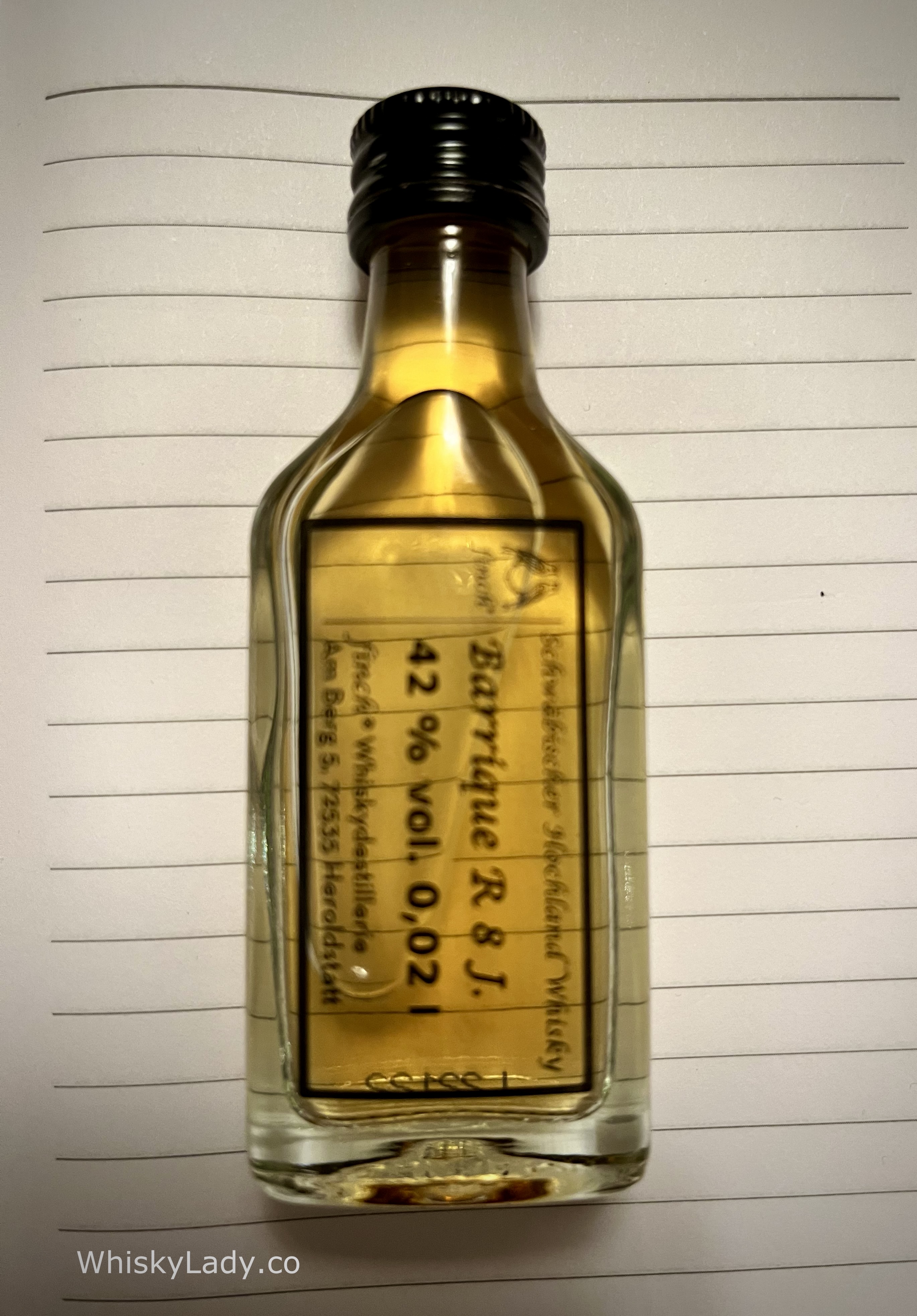
Finch Distillers Choice 8 year Red Wine Barrique Cask 42% (est. Eur 49 for 500ml)

We now shifted into “weizen und gersten”, in other words – wheat and barley, matured in a Red Wine Barrique.

  • Nose – Oh nice! Juicy red berries. black forest cake
  • Palate – Very light, sweet, red cherries and a touch of chocolate
  • Finish – Light

Again, like the others, it comes across as young and spirity. Then once it settles in, quite pleasant. What we would consider an ‘entry-level’ whisky – an interesting way to introduce folks new to whisky. Whilst not complex, it has enough interesting going on to engage.


Finch Special Edition 8 year W.O.A. Bullhead Single Malt 46% (est. Eur 49 for 500ml)

For those not familiar, W.O.A. is Wacken Open Air – a massive heavy metal music festival in northern Germany. This particular expression was made for this festival – matured in three casks: American oak, Port and red wine.

  • Nose – Wood, honey, bourbon-like, lots of vanilla, fruity and sweet, pleasant
  • Palate – Hmm.. a bit peculiar and confused. It had a bit of a grain or bourbon bite with wine. There were different elements – each on their own interesting yet somehow didn’t come together harmoniously.
  • Finish – Unremarkable

Our discussion centered around the festival and the conclusion this could be a great festival drinking whisky. On its own, in a festival setting, the combination of elements would just join the cacophony of pounding Heavy Metal music. But in comparison with the other Finch whiskies sampled that cool late November evening? Alas, it fell a bit short.


Finch Distillers Choice 8 year Single Malt Sherry Cask 46%  (est. Eur 59 for 500ml)

Next up was a shift into a more classically styled single malt. No rare grains or cask experimentations here. Just barley, and an ex-sherry cask – back to the basics.

  • Nose – Our first impression was – this is no heavy sherry, yet still unmistakable. Raisins, creamy sweet spices, cracked black peppercorn
  • Palate – Thick and creamy, sweet with more of those raisins and spice, 
  • Finish – Spicy yet still light

This one simply goes down exceedingly easily. A solid package. For one of us – it was the clear favourite of the evening!


Finch Special Grain 6 year Rye 2nd Edition 46% (est. Eur 49 for 500ml)

We then decided to shift into Rye, again from Schwabian rye, matured fully in red wine barrels.

  • Nose – Yup! This is definitely rye, yet also soft and sweet. Almond paste, marzipan 
  • Palate – Sweet nuts – like pecans, quite atypical
  • Finish – One of the few Finch finishes that stays – spirity, dry 

Rye but not a typical rye. Also quite different from the other Finch whiskies.  Perhaps this is the influence of the red wine cask?


Finch Distillers Choice 10 year Single Malt Smoky 46% (est. Eur 49 for 500ml)

We closed with the peaty expression. They share it is a combination of their local barley and oak smoked malt, then matured in wine barrels plus Islay barrels. 

  • Nose – Ashy, like cold coal, smoke…. after some time we could finally detect a few additional elements – a bit of caramel nuts, speck
  • Palate – Hmm… the tasting notes say marshmallows, but for us it was only the black ash of a burnt marshmallow. Burnt honey nut, burnt toast with a little bit of honey, very  dry, granite stone
  • Finish – The ash remains, with a hint of caramel

This was a total departure from all the others. The only consistency was that it also came across as youngish despite being matured for 10 years. Also, whilst ash was the single predominant feature, it wasn’t the forceful hit of a Smokehead, instead it was light ash. For us though, ash is ash and not our favoured type of peaty whisky.

Finch isn’t Scottish, it isn’t trying to be. Instead they are celebrating what is available locally for a range of experiments – some more appealing than others for us. The single malt and smoky were not our whisky style, however the Sherry, the Emmer and Dinkel Port stood out. Even the Rye, with its lighter touch, was interesting.

These aren’t the only Finch whiskies in my Germany Whisky Cabinet! I also have the following pair, ready and waiting for the right opportunity!

  • Finch 5-year Single Malt Sherry 42%
  • Finch 8-year “Barrel Proof” ex-Red wine, Bourbon, and Port Cask 54%

Curious to know more? Why not follow Whisky Lady on:

Whisky Show 2023 – Indri’s Diwali Special Edition

What is truly fabulous about London’s Whisky Show 2023 is the sheer range of whisky exhibitors. And this year, there was not one but three stands from India with Amrut, Rampur, and Indri.

For those not familiar, Surrinder Kumar was previously the genius behind much of Amrut’s success and now is bringing his keen nose and ideas to Picaddily as an advisor Master Blender and Distiller for their Indri whisky brand.

As much of the stock at Picadilly Distillers was laid well in advance of Surrinder’s involvement, the art here is picking just the right casks and combinations to bottle now or see the potential to move in a different direction by re-casking in a different barrel. 

Whilst we were late into our tasting day and very nearly “done”, Surrinder shared that the Indri Diwali Collector’s Edition 2023 is really very special and not to be missed! I’m very glad he insisted as it was indeed worth sampling and in some ways, I was reminded a bit of the remarkable Amrut Port Pipe Peated special release for The Vault Biennale in 2019

Indri Peated PX Diwali Collector’s Edition 2023 60.5%

Whilst I didn’t take detailed notes, I captured the following: Full, robust with peat and sweet on the nose and a lovely juicy palate. Delicious!

Surrinder also shared how it brought together casks from the US (ex-bourbon), UK (ex-peated), and India.

Here is what they have to say:

Indri Diwali Collector’s Edition 2023 is a peated Indian single malt made with six-row barley, distilled in traditional copper pot stills crafted in India. Carefully matured in PX Sherry Casks for a significantly long time amidst the sub-tropical climate of North India, this unique expression entices you with a whiff of smoke and awakens your senses to a myriad of flavours such as candied dried fruits, toasted nuts, subtle spices, oak, bittersweet chocolate and more.

It was worth stopping, visiting and sipping at London’s Whisky Show 2023.

And if you don’t want to miss a post, why not follow Whisky Lady on:

That Boutique-y Whisky Co – Cinema Expressions

After exploring That Boutique-y Whisky Co’s new “core” range, a trip down under with their Australian “Return to Oz” range, we closed our explorations at London’s 2023 Whisky Show with their new Cinema expressions!

We didn’t get through them all, however, each was distinctive and worth sampling!

Here is what we tried:

  • Italy’s Puni 4 year old (2023) Batch 2 46.1% for GBP 75
  • Sweden’s Mackmyra 9 year old (2023) Batch 3 46.8% for GBP 100
  • Australia’s Corowa 4 year old (2023) Batch 2 46.8% for GBP 100
  • Scotland’s Aultmore 13 year old (2023) Batch 18, 50% for GBP 75

So where did we begin?

Puni 4 year old (2023) Batch 2 46.1%

My eye immediately spotted the Puni – it had been years since I sampled anything from this Italian distillery. Normally I’m meticulous about capturing some kind of impression – even if it is just a few words that trigger evoking some kind of memory weeks and sometimes months later when I take the time to write up what I found. In this case? Nothing! So you will just have to tolerate my sharing with the good folks at TBWC have this to say:

PUNI is the first Italian whisky distillery, located high in the Italian alps, in an environment well suited to growing cereal crops. The distillery takes its name from the local river, Puni. Their striking distillery design, a 13-metre tall red brick cube is unusual, as is the combination of three malted cereals in their mash bill recipe. This release uses their three malt mashbill, and has been matured in an ex-bourbon barrel and finished in a Pinot Noir Cask, which we’ve then finished in a Sherry cask, so this is a fruity little number

Recommended movie for watching while sipping this whisky: ‘The Good, Bad, and The Ugly

And their official tasting notes?

  • N: Malty, Digestive biscuits topped with blackcurrant jam. More sweet notes follow, with hints of wild strawberries and some nutty, woody spices.
  • P: The malty biscuit notes are followed by a fruity sweetness, nicely balanced with some woody spices.
  • F: A medium length finish with some chilli chocolate.

Mackmyra 9 year old “Duka Upp Til Fika” (2023) Batch 3 46.8%

Thanks to a lovely Swedish whisky-tasting companion, I’ve had the pleasure to explore quite a few Mackmyra’s over the years and even go on a tour of the distillery. Whilst they have a real range – largely split between their “Elegant” (aka without peat) and “smokey” styles, they have quite a range of experimentation. If you really pushed me to describe, I would default to calling it a “Ccandi” style – thinking of minimalist wood furniture, with clean lines, something fresh producing an overall quite pleasing effect.

Then to explain this time it would be with roasted green tea? Hmm…. either it will completely work or be a total disaster! My reaction? It is worth trying. There was subtle fruitiness, fresh cedar or pine on the nose yet also something a bit bitter. On the palate, it was harder to describe. Some herbal elements and something else that could not be captured by a mere sniff and swish. 

What more do they have to say?

Now this is something very interesting for the original ‘Nordics’ distillery; Mackmyra were founded in 1999 and have really led the way in the Nordic whisky scene. This is a 9 Year Old Swedish Single Malt that has spent time in a cask that has been seasoned with Hojicha Green Tea. Hojicha is a Japanese green tea that originated in Kyoto 100 years ago. Unlike traditional green teas, Hojicha is roasted after the leaves are steamed.

Recommended movie for watching while sipping this whisky: ‘The Seventh Seal

And TBWC official tasting notes:

  • N: Signature Mackmyra notes of banana and pear initially. This is quickly followed by an earthiness of petrichor and some fresh cedar notes.
  • P: Fresh and fruity. Light and nimble. A tropical fruit salad of papaya, not fully ripe banana and hints of coconut, vanilla, and caramel flavours, with some chilli spices.
  • F: As the spiciness fades some sweet, drying, herbal green tea notes come through.

Would I agree? Why certainly!

Corowa 4 year old (2023) Batch 2 46.8%

This was my first intro to Corowa distillery. Founded in 2010 in New South Wales, it is in the heart of prime Australian wine region! No surprise then that they chose to use local Australian wine casks to mature their whiskies. In this case – Muscat. 

My tasting notes are brief but clear! I found quite an organic “farm-like” quality to this whisky. Sweet yet also quite minerally. On the palate it was surprisingly smooth yet also came with a kick. Yes this sounds like a contradiction but that’s what I discovered! Bold fruity flavors and a lot more of that mineral element.

And what does TBWC have to say?

Our second cask from Australia’s Corowa distillery is a 4 Year Old Single Malt Whisky, that’s been matured in an ex-Muscat cask. Muscat vines have been cultivated in Australia for about 100 years. Several different types of Muscat grape are grown as wine grapes and several different wine styles have been developed ranging from crisp dry whites, to rich late harvest sweet wines and the unique and world renowned fortified Liqueur Muscats.

Recommended movie for watching while sipping this whisky: ‘Mad Max

As for their official tasting notes, here you go!

  • N: Bitter chocolate, molasses, Medjool dates, figs, with hints of white pepper, flint, and wild fennel
  • P: Big, bold, and fruity! Dried fruits; raisins figs, dates. Malt loaf, and a mineral spice with a hint of ginger too. This is really tasty!
  • F: Longer than I was expecting, with that mineral flinty spice and some bitter chocolate nibs…

Well, I would certainly concur with all the mineral references! From a fuzzy memory, the balance also seems to jibe with my experience. 

Aultmore 13 year old (2023) Batch 18, 50% 

Aultmore’s can be quite summery drams yet with substance – this was no exception! It was fruity and citrusy fresh, throw in some baked goods – simply delicious on the nose. Whereas on the palate, the sweetness was there but also yes – call it the power of suggestion – something a bit soapy too! Then a hint of bitter – again just enough to remind you this dram is not a complete lightweight!

What do they have to say?

Aultmore malt has always been revered by blenders as the perfect whisky to build up a blend. Our 14 Year Old has spent 11 years in a refill ex-bourbon cask until we got our hands on it, and Dr. Whisky had this re-racked into a first-fill bourbon in 2019 for reasons that can only be disclosed in the secrecy of ‘Bath Night.’

Recommended movie for watching while sipping this whisky: ‘Fight Club

And their tasting notes?

  • N: A soft oiliness; peanut oil perhaps? Panettone, macaroons, grist, digestive biscuits. Followed by some citrus notes; grapefruit and lime
  • P: Pilsner lager with a wedge of lime, summer grasses,a little green tea bitterness. I like this!
  • F: Medium length, chalky, grassy, with some pepper lingering.

Wow! And what fun! I love how they chose to not only introduce their new core range as a “constant” but to also have 3 distinct sessions throughout the day. Whilst we missed one, I figure catching 2 out of 3 isn’t bad! Can’t wait to see what these folks do next!

And if you don’t want to miss a post, why not follow Whisky Lady on:

That Boutique-y Whisky Co – Oz range

After exploring their new “core” range, next up in our That Boutique-y Whisky Co explorations at London’s 2023 Whisky Show, was a trip down under!

This was their 2nd collection, released at a time when there are a remarkable 318 Australian distilleries in operation – producing a range of spirits from whisky to gin, vodka, and rum. In their “Return to Oz” line-up, we managed to try:

  • The Gospel 3 year Rye Batch 1 58.6% 434 Bottles GBP 75
  • Launceston 5 year Single Malt Batch 1 62.5% 187 Bottles GBP 150
  • Limeburners 5 year Single Malt Batch 1 51.5% 434 Bottles GBP 145
  • Tria Prima 2 year Single Malt Spirit Batch 1 52.2% 232 Bottles GBP 140
  • Chief’s Son 5 year Single Malt Batch 1 52.1% 462 Bottles GBP 140
  • Fleurieu 3 year Batch 2 Single Malt 65% 428 Bottles GBP 145

Given this was a festival setting, we sniffed, swished, and spit our way through the collection, so my impressions are quite limited. Though it was good fun to have a wee saunter around these Australian drams… 

So… we began with one that Dave openly admitted is one of his festival drams (yes – that’s what’s in the glass in the pic)! 

The Gospel 3 year Rye Batch 1 58.6% 

The Gospel distillery from Melbourne produces a range of ryes – in this case, matured in an Australian red wine cask finish. We understand they use a mash bill of 51% Australian unmalted rye, and 49% malted barley, from the Murray Mallee region of South Australia.

What did we think? No question this was a rye and yet with a twist! Lots of juicy fruits, plum, red grape peel, with some spice and sweetness. As for the palate, more rye with dark fruits and some ground white pepper and sweet spices.

Launceston 5 year Single Malt Batch 1 62.5%

Based in Tasmanian, Launceston distillery is located in an airport Hangar which was built in 1932. Their focus is on local ingredients and production with local people. They produce a range from unpeated ex-bourbon to Tawny port finish, to Apera (Australian sherry), to rum, including some peat expressions too. As for this particular bottle? It was matured in an ex-Bourbon barrel.

Dave described it as the closest to a Scottish style. On the nose, it was a delicious dessert, generous and creamy with sweet spices. On the palate, it was beautiful – marvelously sweet, spicy, and robust – full and flavourful.

Limeburners 5 year Single Malt Batch 1 51.5%

Next up in our Oz journey was a shift to Western Australia with Limeburners Distillery. They share how their spirit is matured in second-fill American oak bourbon barrels, and then some expressions are further finished in Australian fortified wine barrels. They also have peated whiskies using locally sourced peat from the Valley of the Giants in nearby Walpole. In the same region, the parent company Great Southern Distilling has three distilleries – making gin, malt, grain, and rye whisky. We tried their single malt, matured in an ex-Pedro Ximenez Apera cask.

This one was very memorable. Call it the power of suggestion or something else, however, we began with key lime tart, then an exuberant red berry and raisins. The 1st sip was a powerhouse – rich, dark, spicy and bursting with flavours, including a bit of black forest cake! We kept the glass without rinsing for some time – what a delightful perfume sweetly floral with lime cordial! 

Tria Prima 2 year Single Malt Spirit Batch 1 52.2%

We then moved on to something completely different! Just like bourbon only requires only two years to be called whisky, so too does Australia consider two years sufficient to be known as whisky. Which is exactly how long this “spirit” from Tria Prima Distillery matured.

Turns out there is quite the TBWC connection. As the TBWC folks tell, this distillery was founded in 2017 by a fan – Paul Shand, and his wife Trang, with funds from Paul’s whisky collection – including TBWC bottles. So what did Paul do with his investment? In the case of this TBWC bottle, it was matured in an ex-Grant Burge (red wine) and 1st fill Tawny cask.

And what was the result? Something rather fun – fruiting, plummy, with a quite strong wine influence. Even on the palate, the Tawny port comes through loud and clear.

Chief’s Son 5 year Single Malt Batch 1 52.1%

What next? Chief’s Son was started near Melburn by spouses Stuart and Naomi McIntosh in 2016 after a trip to Scotland. Their approach is hand-made and small scale – as in an annual capacity of 5000 liters small! As for the expression bottled by TBWC, it was matured in an ex-Apera cask.

What did we find? Lots of big fruits and sherry influence, with some light peat. 

Fleurieu 3 year Batch 2 Single Malt 65%

Last in our tasting was Fleurieu Distillery from outside of Adelaide. Another family-owned distillery, Gareth & Angela Andrews were earlier brewers before turning their attention to whisky. Dave shared how their casks are named after family members rather than numbered.

It greeted us with a big bold peat on the nose – apparently, this was the distillery folks were inspired by a Caol Ila style peat. It was joined by a sea breeze and full flavours on the palate.

There was another expression on offer – Corowa 4 year Single Malt Batch 1 48.5% – however we found ourselves pausing and then passed.

What followed? After many explorations of other stalls, we simply had to return to TBWC for their “At The Movies” expressions!

And if you don’t want to miss a post, why not follow Whisky Lady on: