Switzerland’s Säntis 6 year Snow White No 8 Pineau 48%

Switzerland is known for many things – gorgeous mountains and lakes, chocolate and cheese, watches and banking… but whisky? That isn’t exactly the first thing you think of… in fact, just 25 years ago it wasn’t even legal! However, like many parts of the world, Switzerland is now very much in the whisky-making game.

My first brush was the Old Bear from Langatun Distillery – courtesy of a recommendation from the good folks at The Whisky Exchange in London. It was smoky and certainly left an impression.

Next up was a random selection from a spirits shop in Munich on a trip, before there was even a possibility of moving to Germany. In this case, it was the surprisingly accessible Forty-Three Swiss Highland Single Malt Whisky.

Fast forward a few years and I found myself living in Nurnberg, Germany. And three years ago, in December 2020, there was a mini from Säntis in an Advent Kalendar I tackled as a pre-Christmas project.  In this case, it was the Säntis Malt Himmelberg Edition 43%. I have to admit, it didn’t exactly impress. Why? In part because it reminded me of drinking a Radler – a sweet lemony beer – more than whisky!

So when a Säntis was recommended for our European whisky session in December 2023, I decided to keep an open mind. I have learned one should not judge a distillery solely based on one experience alone.

What did we think?

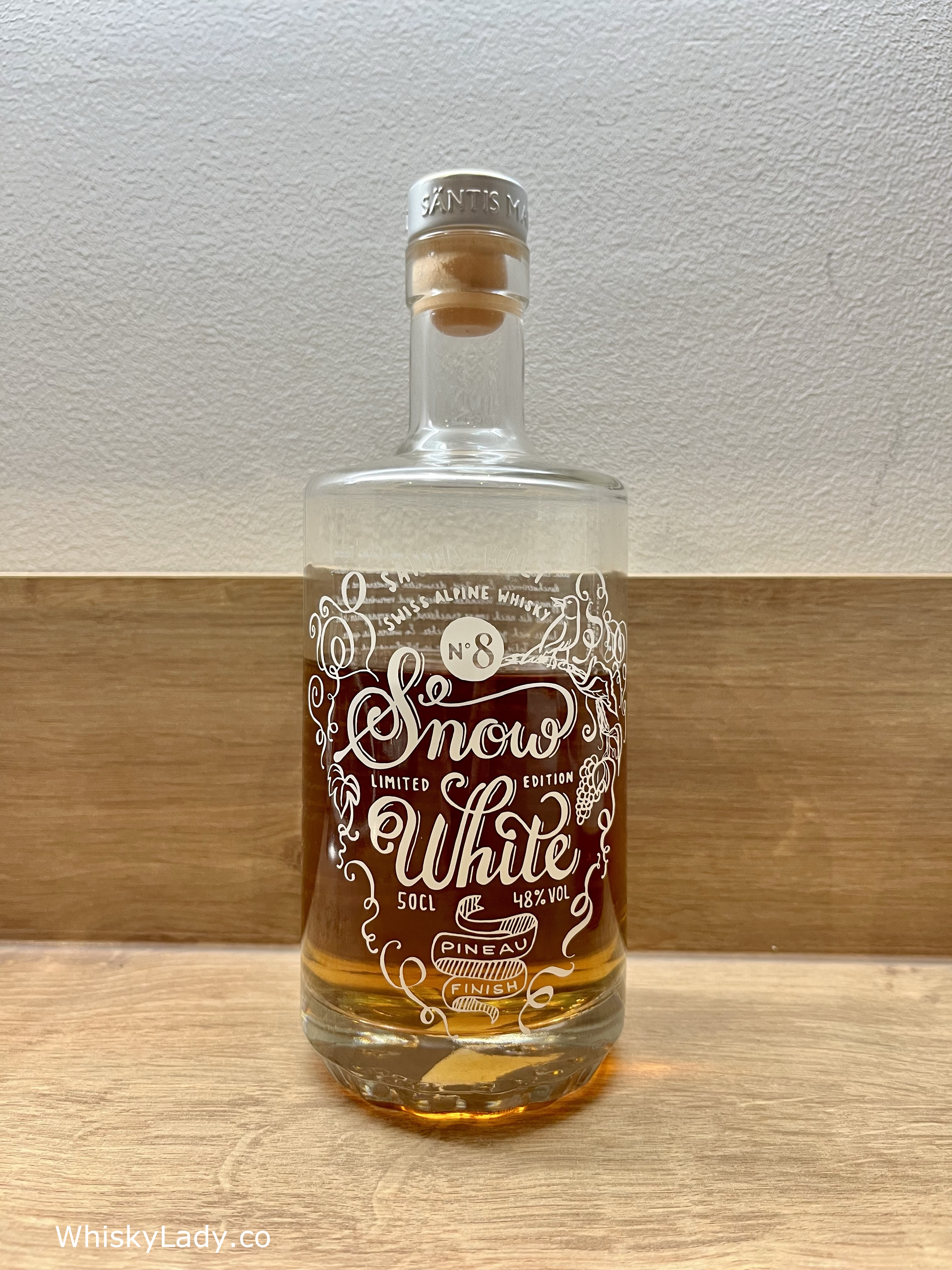
Säntis No. 8 Snow White 6-year Pineau 48%

  • Nose – At first it was just a hit of alcohol, then sweetened into candy, a bit nutty, plum skins, curiously it reminded me more of schnapps than whisky!
  • Palate – A bit aggressive and prickly, past the pepper were wine tannins, shifting from plum skin to grape, very dry and a mixed red fruit jam (the kind that doesn’t have a distinguishable type of berry or fruit), lemon-lime soda (or dare I say? Radler!), maybe joined by some cherry?
  • Finish – It was like it was impersonating a sherry finish but wasn’t quite able to pull it off, some generic cola

We really didn’t mean to be uncharitable, however descriptions like “headache-inducing” and “one flavour blob” were bantered about. We generally agreed that the nose outperformed the palate and finish. And if anything, it had a schnapps-like quality – depending on your opinion of schnapps, this could be a good or not-so-good thing.

Our discussion turned to the many distilleries around Germany and Switzerland that started off brewing beer or distilling schnapps, and then veered into the whisky business. Using stills meant more for distilling fruit than malted barley mash does lead to some curious results. I confessed how my original impression of German whiskies was direct to the point of being a bit harsh, lacking nuance and complexity. Until I discovered St Kilian and Aureum and a few notable others, which both show a different, much more interesting range and style.

But back to the Säntis, our whisky contributor shared the story of the Lochar distillery’s Swiss “whisky trek“…. starting with one inn, there are now some 26 barrels found at different hiking locations around Switzerland. Each barrel is slightly different, thanks to the differing maturing conditions such as altitude or barrels.

She found the boxed set with two nosing glasses – available online for around Eur 72. What more do we know? It was initially aged for 5.5 years in small beer barrels of the Appenzeller Brewery Locher before being finished for 8 months in ex-Pineau des Charentes casks from France.

It was a bit of a disappointment, however, we then thought to put it into context. If we spent a day trekking in the alps, the crisp cool air, coming in from such exertions, would this do the trick? Perhaps. And context is everything! So let us be more charitable and go back to the glorious views, cheese fondus, and chocolate… In my case, a memory of a couple of days in Weggis earlier this summer, including a boat trip on Lake Lucerne for a fabulous meal with great company.

What else did we explore in our European evening?

Don’t want to miss a post? You can follow Whisky Lady in India on:

Closing the year with a continental European exploration…

We held our last Nurnberg International Whisky evening mid December. It was an exploration of continental European whiskies and more from France, Switzerland, Denmark, Germany, and Portugal. We went well beyond our three-bottle focus however it made for a proper year-end close to an evolving tasting group.

So what did we explore?

So let’s begin at the beginning… from our 1st session, we were introduced to the concept of a calibration dram. In this case, I thought the Bellevoye would be a nice way to set the stage for our evening. Their whiskies are approachable and generally have an easy-drinking style – a perfect way to “whet the appetite” for delights to come. As each bottle had a slightly different approach, I gave everyone the option to choose which best matched their mood and inclination. The reactions to the different options –  Blue (French Oak)White (Sauternes) or Red (Grand Cru) were so positive that a couple of folks did a tasting within a tasting – sampling all three!

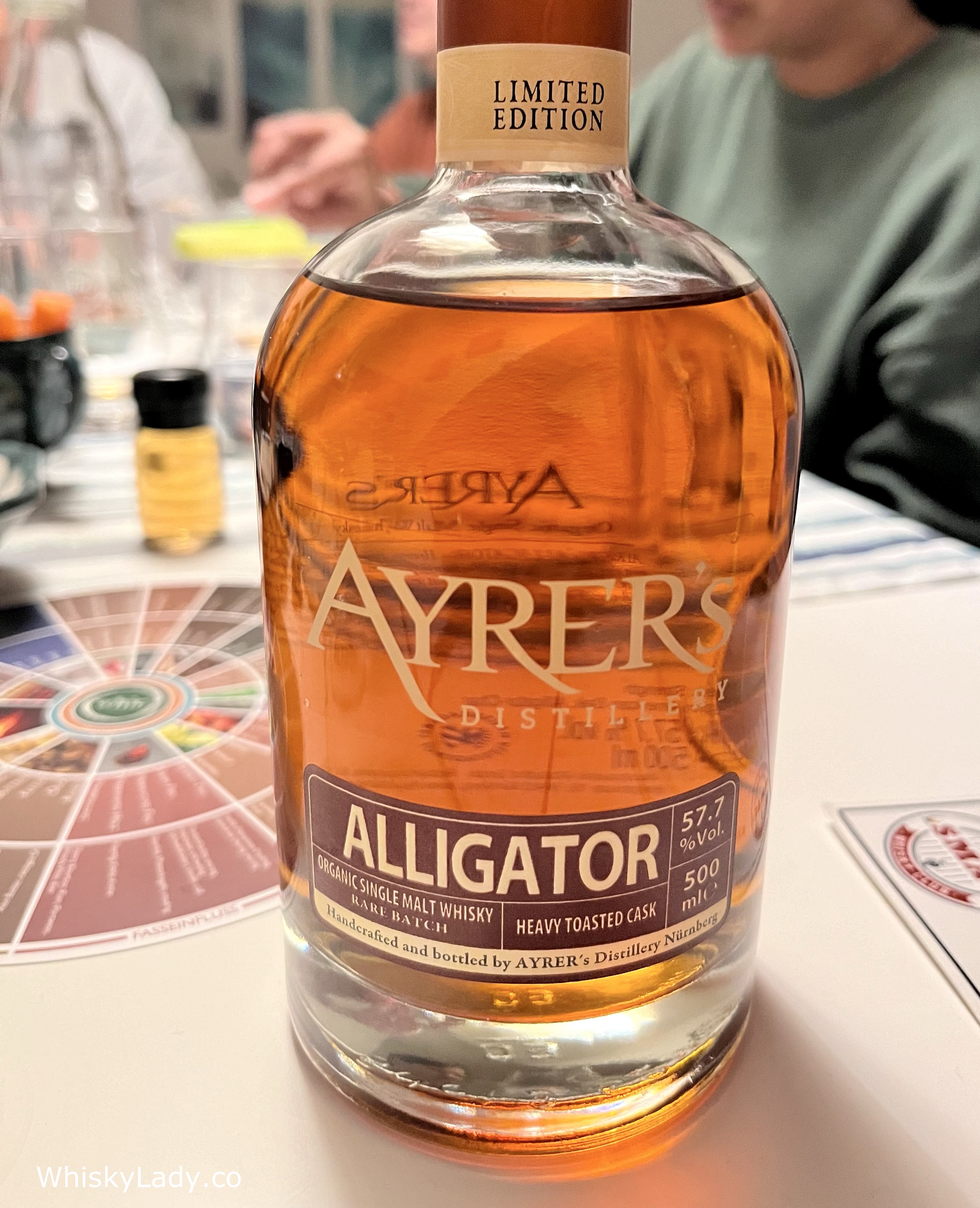
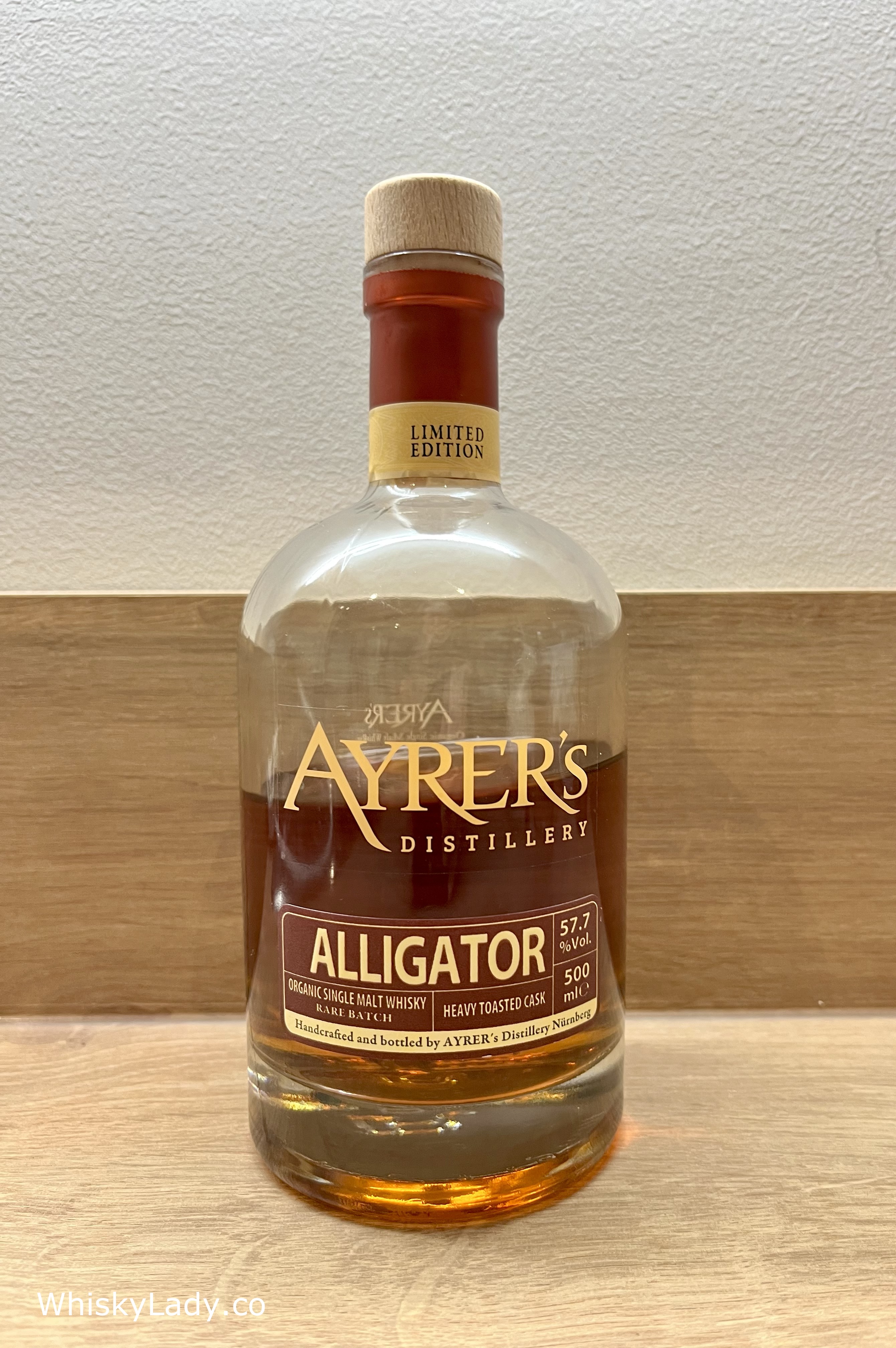
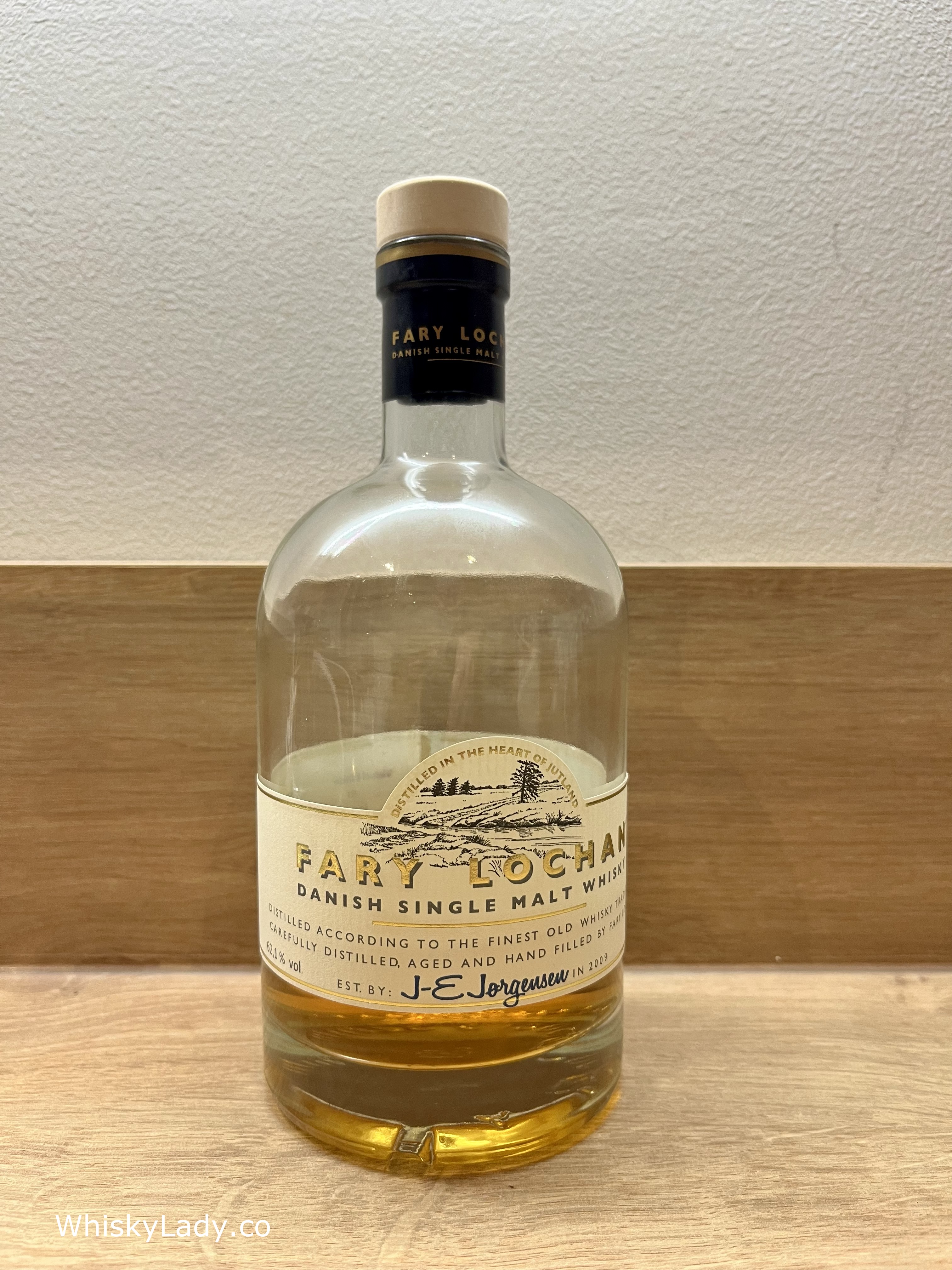
We then moved on to the Whisky “Main Course”… and for that, you will simply have to check out the separate tasting notes. Suffice it to say, the Fary Lochan was a singular and memorable whisky, the Ayer’s surprised us by being far more enjoyable and interesting than expected, and the Säntis? Well, it was a bit of a disappointment, however, that goes with the territory when exploring whiskies! It is also a good example of a certain direct style of whisky that works for some.

In between, a mystery bottle was circulated. It was completely unlabelled with no clue provided. We sniffed it. Sipped it. Considered it. Whilst nothing remarkable, we gave it due attention discovering beneath the plastic and diesel was a dark cherry, mowed grass, wood polish, and then sweet cotton candy. On the palate, it was easy to drink, perhaps a hint of tobacco but nothing else really stood out. The reveal? Not a whisky at all. Instead, Arc Royal VS Cognac 40%, which is available for a mere Eur 20 at any Aldi. Our contributor pulled out a printout of wildly different tasting notes – from those that completely trashed the Cognac to those that were exceedingly kind. In our case? We were somewhere in between, but generally positive.

We closed with a merry round of nibbles and a few additional splashes of this and that… including a Madeira from Marques Campoalto. Increasingly we are seeing whisky finished in ex-Madeira casks. The Welsh Penderyn was an early adopter of using Madeira cask finish for a core expression, however, the Irish also joined this bandwagon with Tyrconnell, with the Scots also part of this trend – such as Loch Lomond’s Inchmurrin Madeira and many more. This is exactly why one member brought a bottle along – to show how the original fortified wine smells and tastes to help us better understand how this contributes to the final Whisky product with a Madeira finish.

As a kind of “desert”, we closed with a Beerenweine honey whisky liqueur – the kind of liqueur that you can get at local Medieval fairs all over Germany. In fact, I brought a bottle of their herbal schnapps – called Druids Fire – back to Winnipeg for a bit of fun.

As this company also makes mead, talk turned to the local honeyed mead available at the Medieval pub near the castle, how some folk’s palates tend towards sweet and others not (in case you wondered, I am generally in the not category). This is why when I did try a wee sample, I was reminded why I prefer my whisky unadulterated and not overly sweet!

Overall it was an evening that crossed the line from careful consideration of three focus whiskies to something social, making for a marvelous evening and a brilliant way to close the year.

If you are in the Nurnberg, Germany area and interested in learning more about our Nurnberg Whisky Explorers activities, check us out on Meetup: https://www.meetup.com/nurnberg-whisky-explorers/

Don’t want to miss a post? You can follow Whisky Lady in Germany & India on:

Finch Schwabian Whisky – An Exploration of 8 Expressions

Welcome to the Schwabian Alps! My explorations of German distilleries continue with Finch distillery… For those not familiar, the Schwabian Apls are found to the east of the Black Forrest, north of the Bavarian Alps, the Swabian Alps (Schwäbische Alb in German) are sometimes overlooked.

“Ulm, where the Danube swiftly flows, forms the boundary in the south, while the Neckar runs past half-timbered towns, limestone crags, beech woods, juniper-cloaked heaths, hilltop ducal castles, and robber-knight ruins further north.” (Lonely Planet)

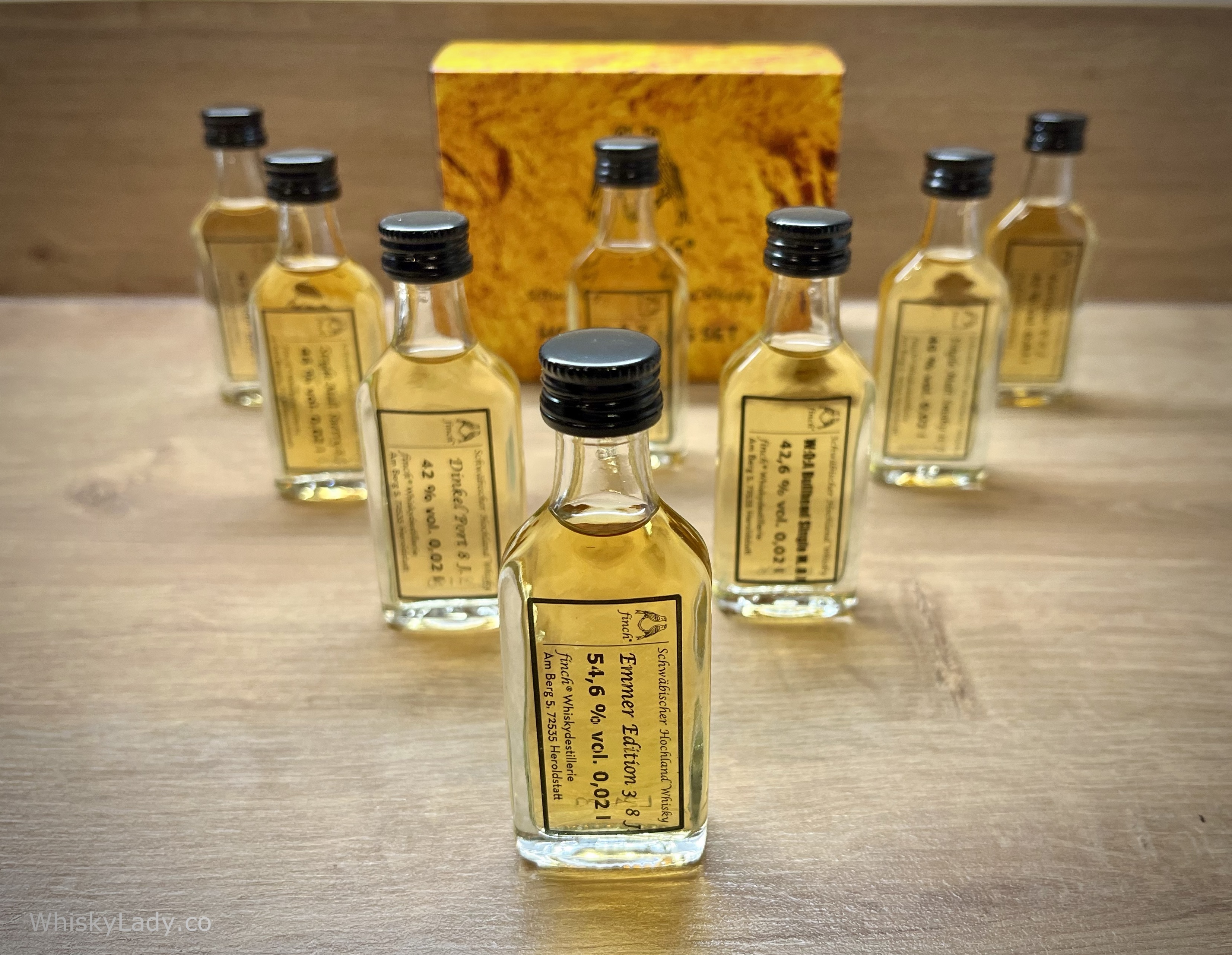
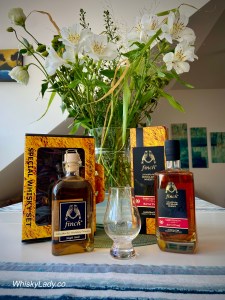
As for Finch distillery, like several continental European distilleries, there is quite a lot of experimentation with various grains and casks. And what better way to explore these possibilities than with a set of miniatures – from barley to a variety of relatively obscure kinds of wheat to rye. As for casks? A mix of red wine, port, sherry and American Oak. 

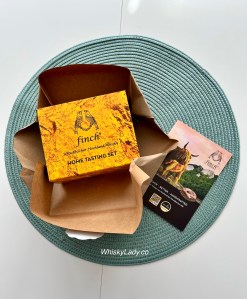
In this case, the set was a compact gift-wrapped treat! 
Fun to open…

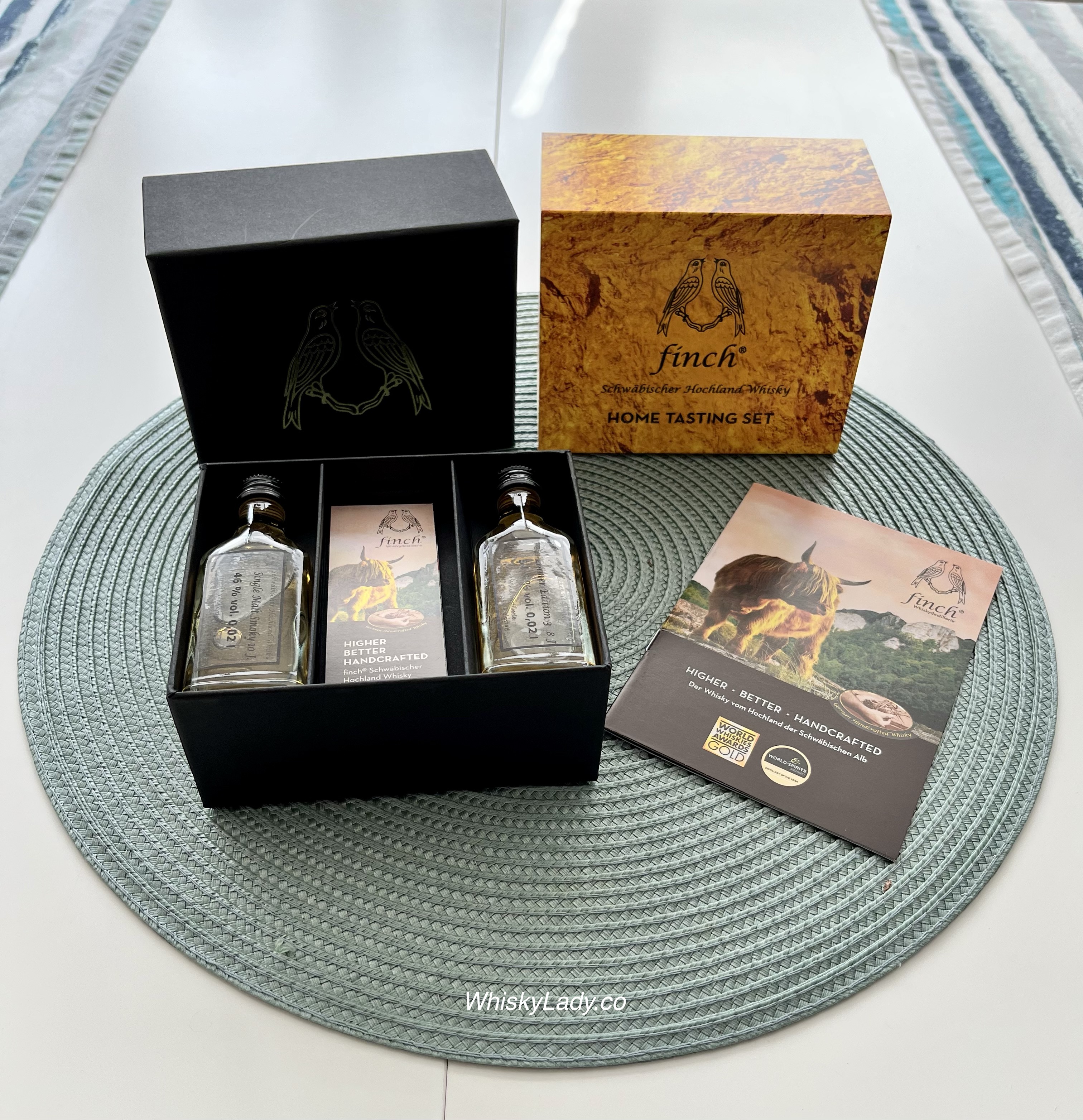
Even more fun to explore…
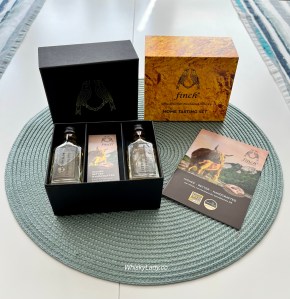
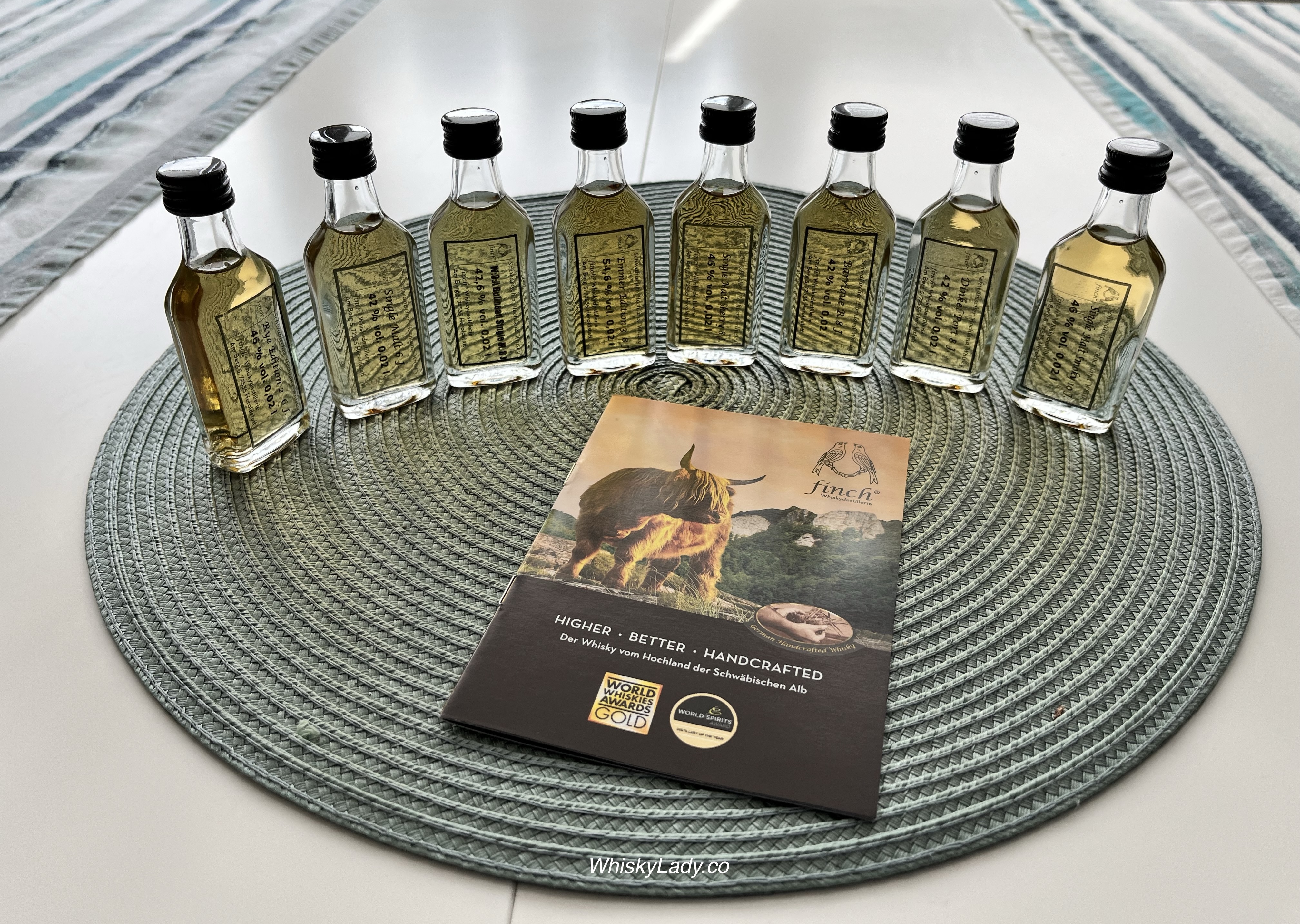
So what is contained in this Finch octet tasting set?

  • Finch Fine Selection 6 year Single Malt 42%
  • Finch Cask Strength 8 year Emmer Edition 3, 54.6% 
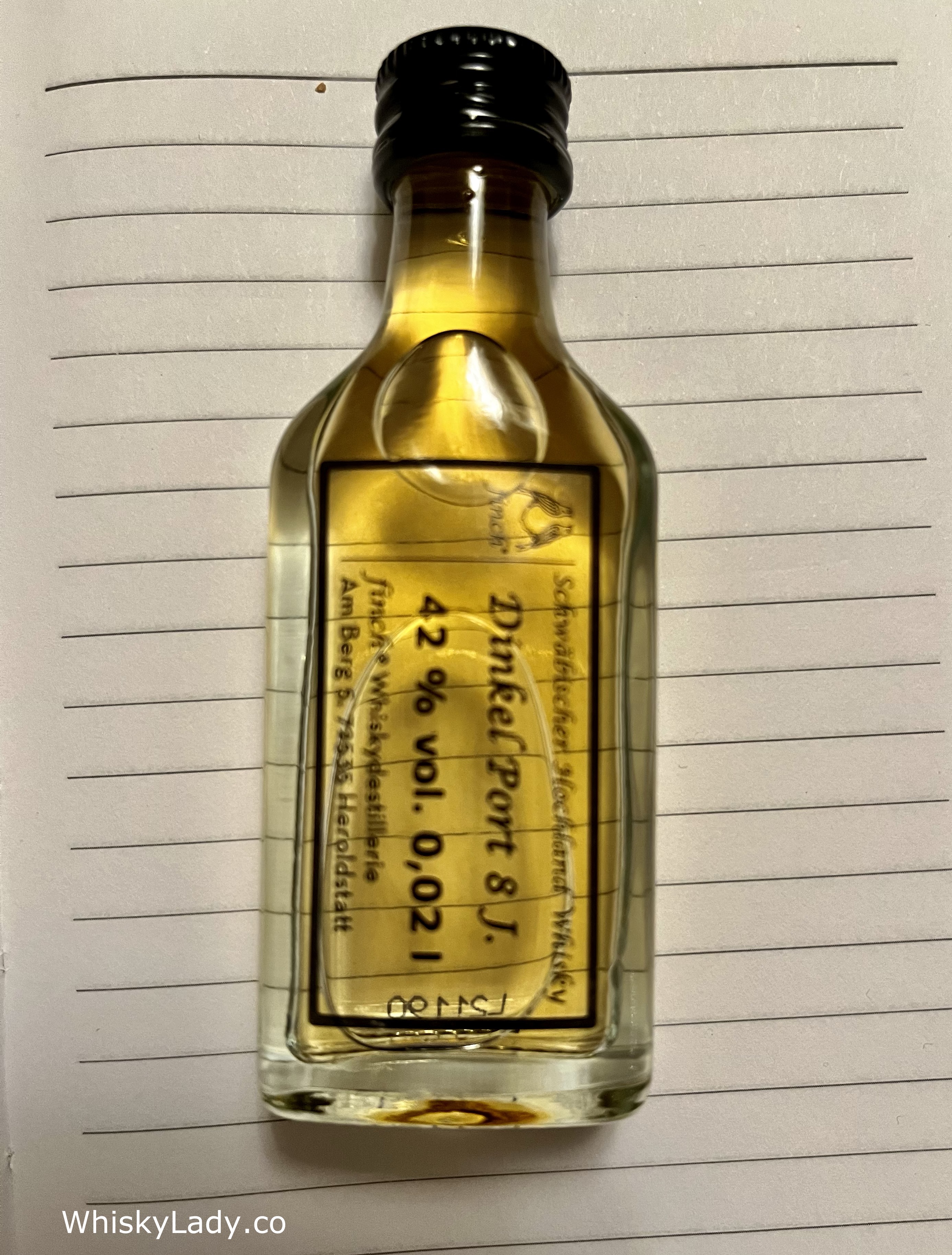
  • Finch Special Grain 8 year Spelt Port 42% 
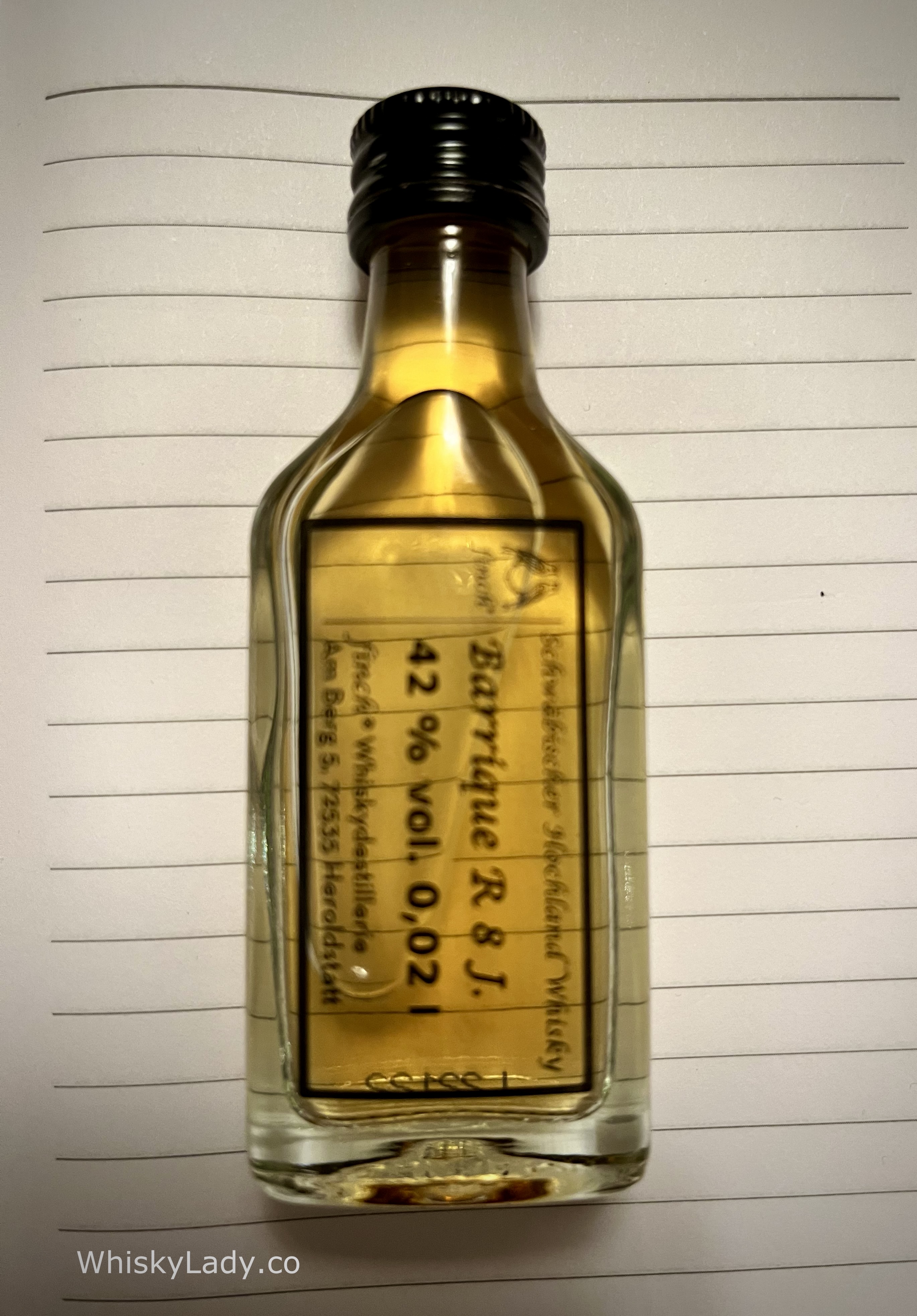
  • Finch Distillers Choice 8 year Barrique Cask 42%
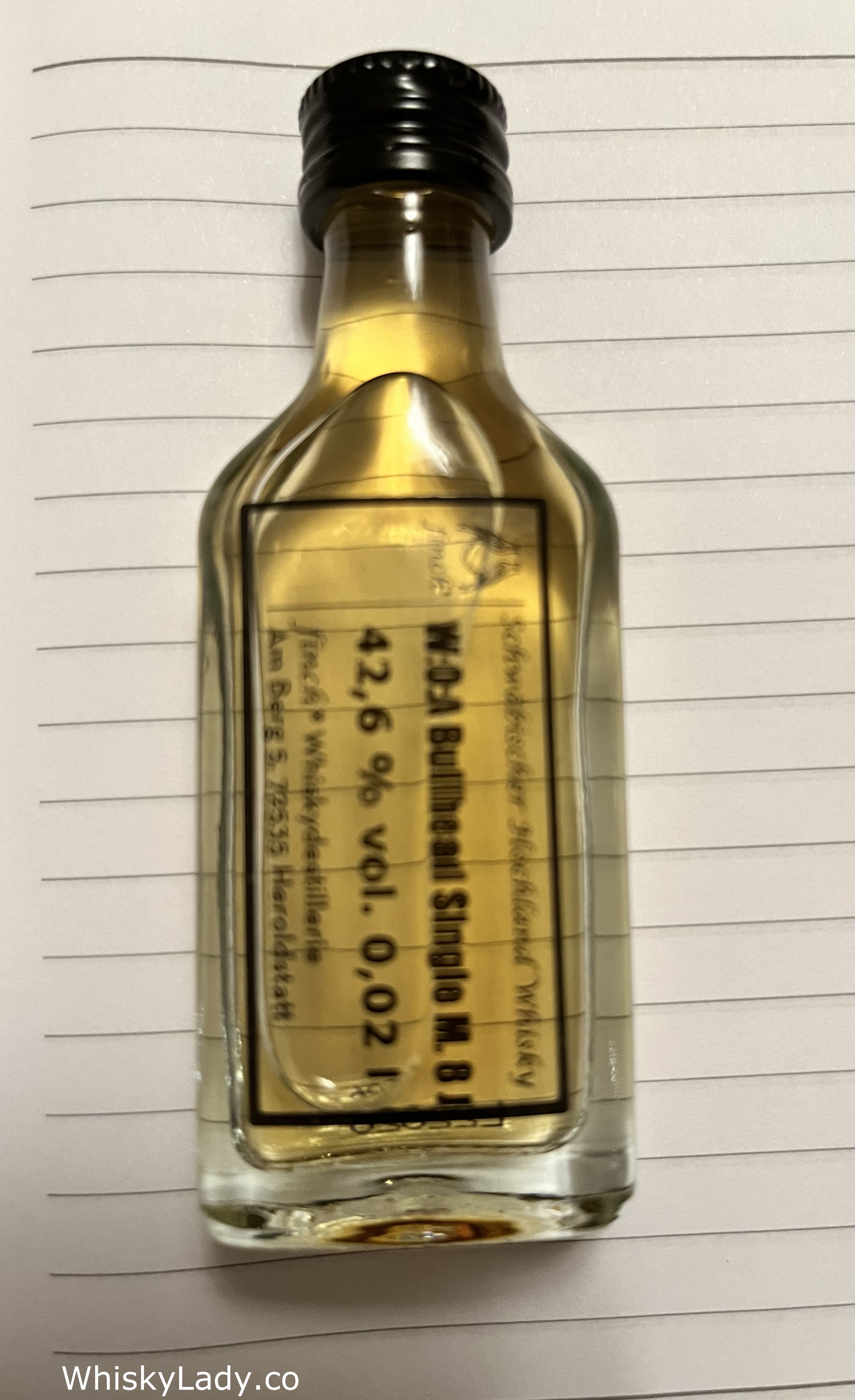
  • Finch Special Edition 8 year WOA Bullhead Single Malt 46% 
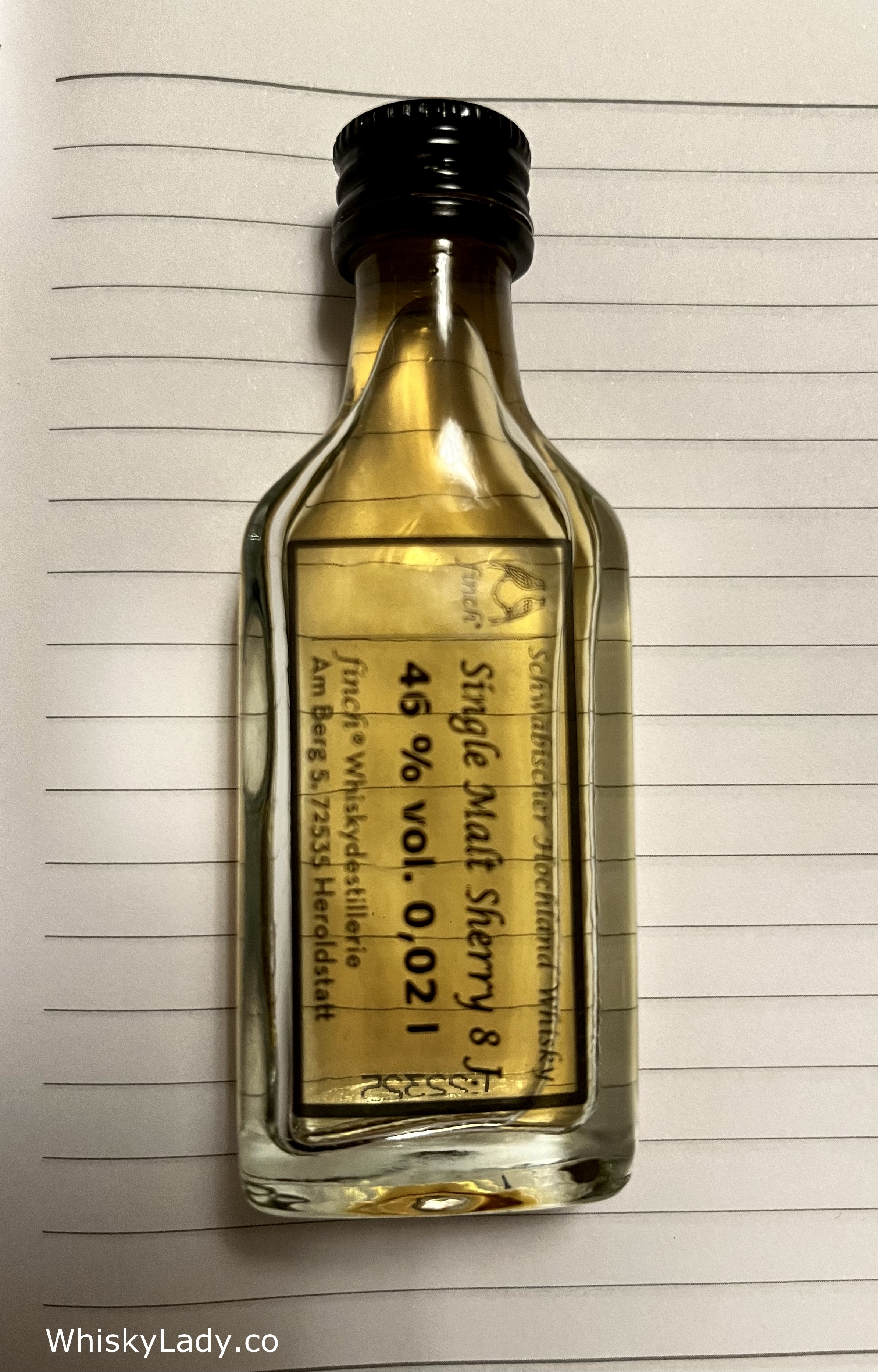
  • Finch Distillers Choice 8 year Single Malt Sherry Cask 46% 
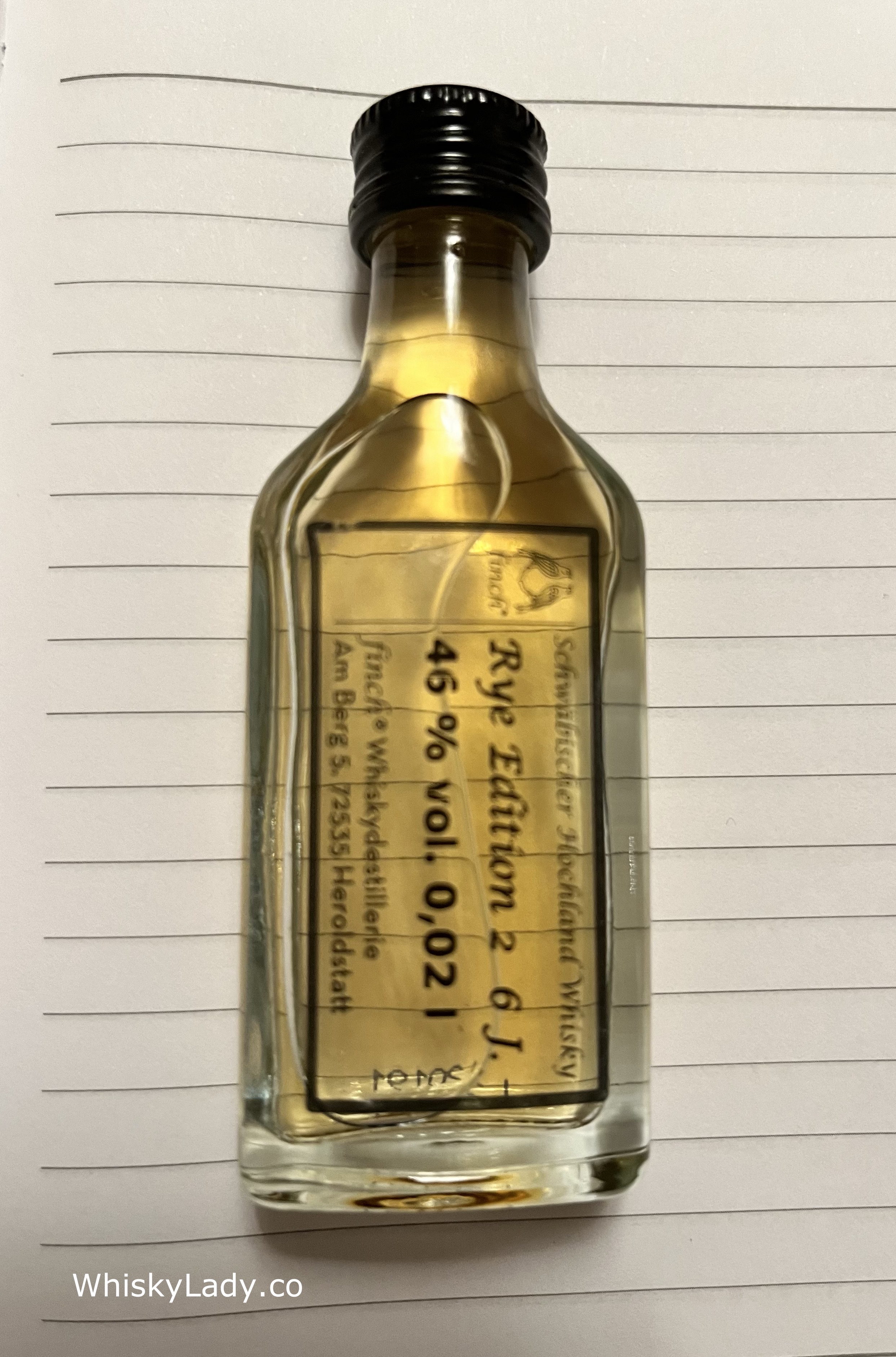
  • Finch Special Grain 6 year Rye Edition 46%
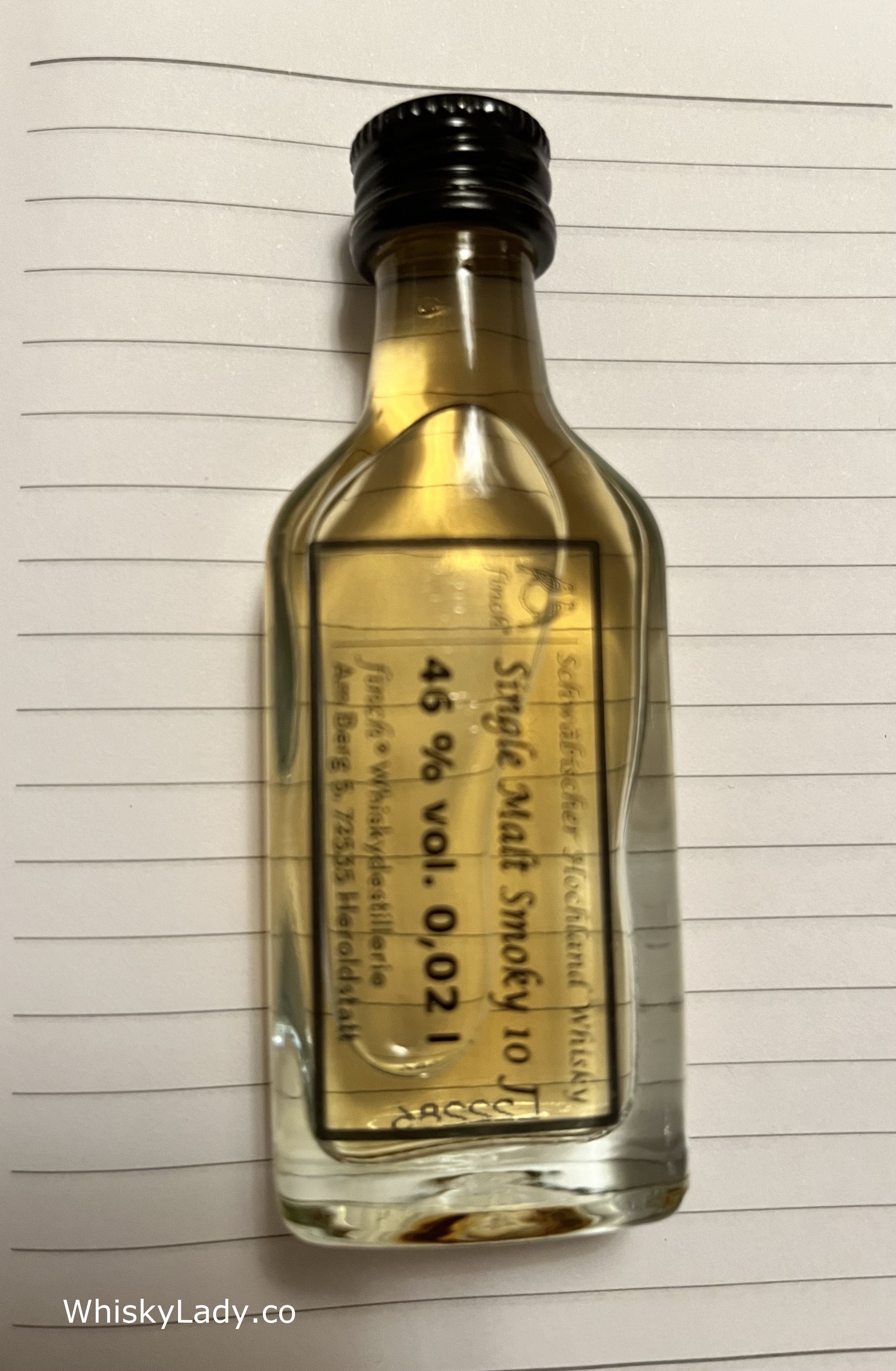
  • Finch Distillers Choice 10 year Single Malt Smoky 46%

So now… on to the most fun part – tasting!

Where to start? We initially opened the 1st listed on the guide – the Emmer Edition 3 Cask Strength – however, we realised immediately the folly of this approach and switched instead to the Finch Single Malt. 

Finch Fine Selection 6 year Single Malt 42% (est. Eur 40 for 500ml)

The folks at Finch share that the barley for this Single Malt comes from their own cultivation, matured in a combination of ex-bourbon and wine casks.

  • Nose – Initially quite fruity, then rubber took over – as in really quite rubbery – like childhood-flavoured erasers. As it settled in the glass, the aroma became sweeter with cereals. Over time it also shifted into roasted barley with honey, some green apples or green grapes
  • Palate – The first sip was a bit brash, full of hay sweetness, waxy chocolate, more of the cereals
  • Finish – Reminded us more of a simple single grain than single malt – there for but a moment and then disappeared

Overall this wasn’t the best beginning. It was compared with a breakfast cereal – Smacks – made of puffed wheat and honey. Whilst nothing was “off”, we just weren’t yet excited. 
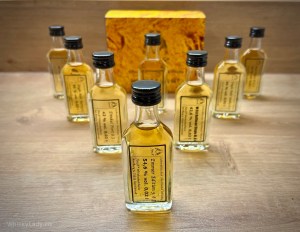

Finch Cask Strength 8 year Emmer Edition 3, Re Wine Barrels 54.6% (est. Eur 59 for 500ml)

Next up, we returned to the cask strength we initially cracked open. Rather than barley, this whisky uses a grain – black emmer – from the Finch farm on the plateau of the Swabian Alb. What is Emmer you may ask? Otherwise known as Triticum decoction is a plant species from the wheat genus. It is one of the oldest cultivated grains, yet hardly grown today. This type of wheat with long-awned, usually two-flowered spikelets is hardly grown in Europe today – if it is, it is essentially black emmer.

  • Nose – Initially very shy, then spirity, slowly opening into marzipan, caramel, biscuits, hint of red wine or raisins
  • Palate – Started like a sour calvados, then from tart apples to pears, giving way to clear red wine influence
  • Finish – Light
  • Revisit – What a lovely perfume, silky smooth on the palate, closing with a light spice finish

Could clearly tell this is a grain rather than a single malt, yet we enjoyed it much more than the 6 year Single Malt expression. Whilst it came across as young, once the nose opened up, it was quite inviting…
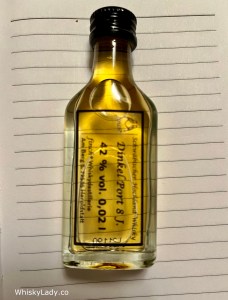

Finch 8 year Dinkel Port 42% (est. Eur 49 for 500ml)

This expression uses another lesser-known grain for whiskies – spelt – this time, combined with an ex-Port cask.

  • Nose – The first whiff was very promising. Light yet very sweet. It was a bit like cotton candy or the powder on a marshmallow.
  • Palate – Sparkling grape juice, sweet spices, smooth and surprisingly light for a port-matured whisky.
  • Finish – Honey and raisins

Our overall impression was that it makes a nice starter whisky. The aromas were appealing and the palate enjoyable.
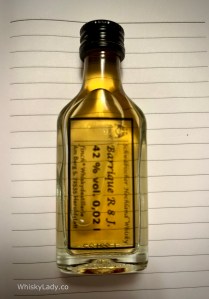

Finch Distillers Choice 8 year Red Wine Barrique Cask 42% (est. Eur 49 for 500ml)

We now shifted into “weizen und gersten”, in other words – wheat and barley, matured in a Red Wine Barrique.

  • Nose – Oh nice! Juicy red berries. black forest cake
  • Palate – Very light, sweet, red cherries and a touch of chocolate
  • Finish – Light

Again, like the others, it comes across as young and spirity. Then once it settles in, quite pleasant. What we would consider an ‘entry-level’ whisky – an interesting way to introduce folks new to whisky. Whilst not complex, it has enough interesting going on to engage.
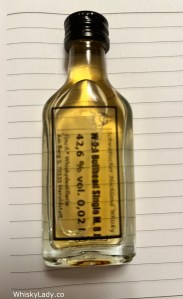

Finch Special Edition 8 year W.O.A. Bullhead Single Malt 46% (est. Eur 49 for 500ml)

For those not familiar, W.O.A. is Wacken Open Air – a massive heavy metal music festival in northern Germany. This particular expression was made for this festival – matured in three casks: American oak, Port and red wine.

  • Nose – Wood, honey, bourbon-like, lots of vanilla, fruity and sweet, pleasant
  • Palate – Hmm.. a bit peculiar and confused. It had a bit of a grain or bourbon bite with wine. There were different elements – each on their own interesting yet somehow didn’t come together harmoniously.
  • Finish – Unremarkable

Our discussion centered around the festival and the conclusion this could be a great festival drinking whisky. On its own, in a festival setting, the combination of elements would just join the cacophony of pounding Heavy Metal music. But in comparison with the other Finch whiskies sampled that cool late November evening? Alas, it fell a bit short.
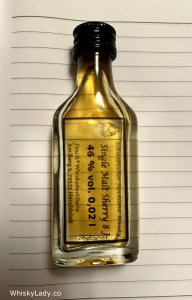

Finch Distillers Choice 8 year Single Malt Sherry Cask 46%  (est. Eur 59 for 500ml)

Next up was a shift into a more classically styled single malt. No rare grains or cask experimentations here. Just barley, and an ex-sherry cask – back to the basics.

  • Nose – Our first impression was – this is no heavy sherry, yet still unmistakable. Raisins, creamy sweet spices, cracked black peppercorn
  • Palate – Thick and creamy, sweet with more of those raisins and spice, 
  • Finish – Spicy yet still light

This one simply goes down exceedingly easily. A solid package. For one of us – it was the clear favourite of the evening!
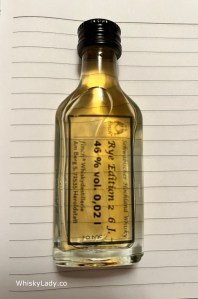

Finch Special Grain 6 year Rye 2nd Edition 46% (est. Eur 49 for 500ml)

We then decided to shift into Rye, again from Schwabian rye, matured fully in red wine barrels.

  • Nose – Yup! This is definitely rye, yet also soft and sweet. Almond paste, marzipan 
  • Palate – Sweet nuts – like pecans, quite atypical
  • Finish – One of the few Finch finishes that stays – spirity, dry 

Rye but not a typical rye. Also quite different from the other Finch whiskies.  Perhaps this is the influence of the red wine cask?
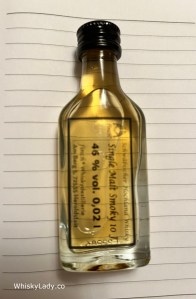

Finch Distillers Choice 10 year Single Malt Smoky 46% (est. Eur 49 for 500ml)

We closed with the peaty expression. They share it is a combination of their local barley and oak smoked malt, then matured in wine barrels plus Islay barrels. 

  • Nose – Ashy, like cold coal, smoke…. after some time we could finally detect a few additional elements – a bit of caramel nuts, speck
  • Palate – Hmm… the tasting notes say marshmallows, but for us it was only the black ash of a burnt marshmallow. Burnt honey nut, burnt toast with a little bit of honey, very  dry, granite stone
  • Finish – The ash remains, with a hint of caramel

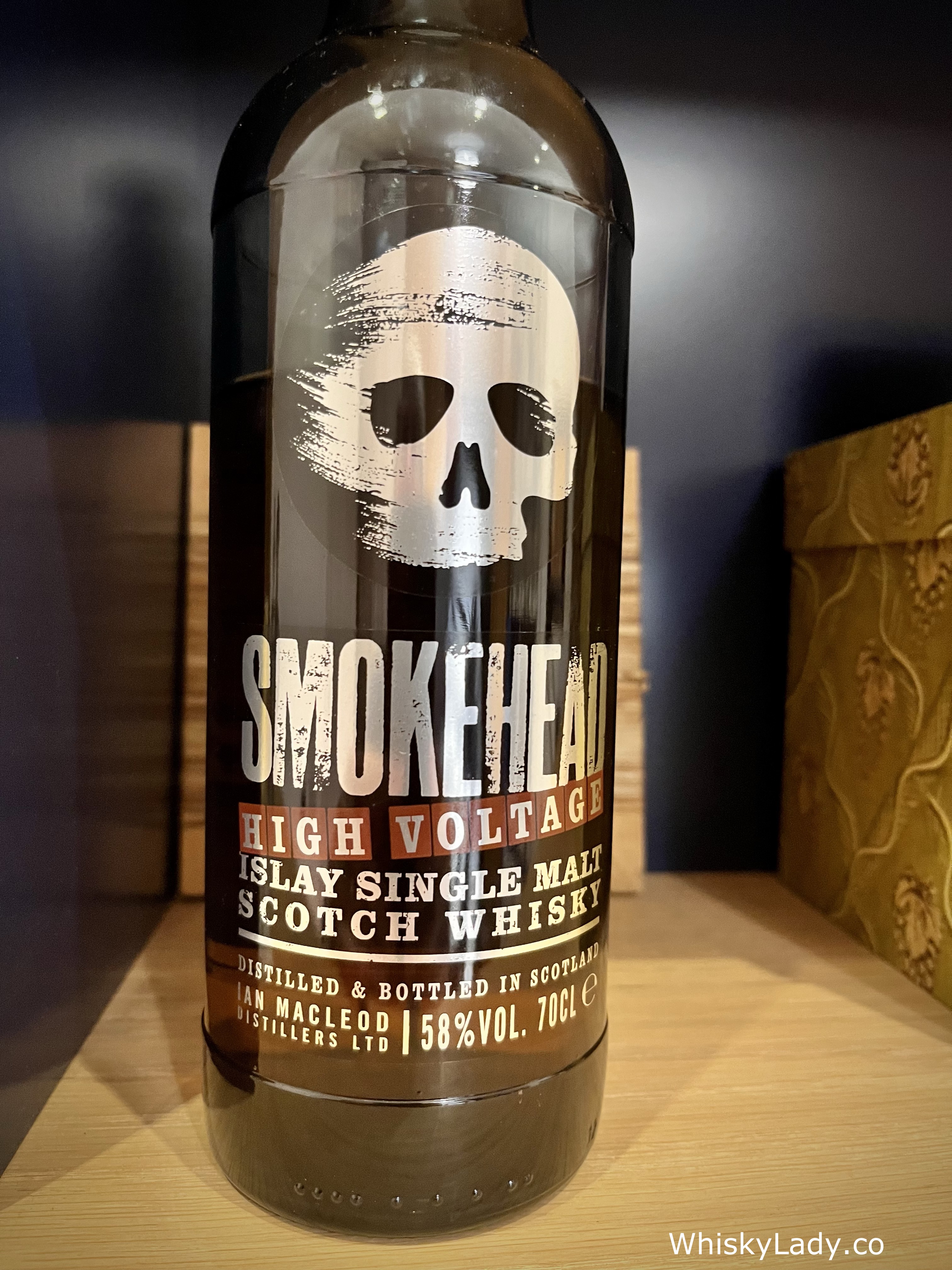
This was a total departure from all the others. The only consistency was that it also came across as youngish despite being matured for 10 years. Also, whilst ash was the single predominant feature, it wasn’t the forceful hit of a Smokehead, instead it was light ash. For us though, ash is ash and not our favoured type of peaty whisky.

Finch isn’t Scottish, it isn’t trying to be. Instead they are celebrating what is available locally for a range of experiments – some more appealing than others for us. The single malt and smoky were not our whisky style, however the Sherry, the Emmer and Dinkel Port stood out. Even the Rye, with its lighter touch, was interesting.

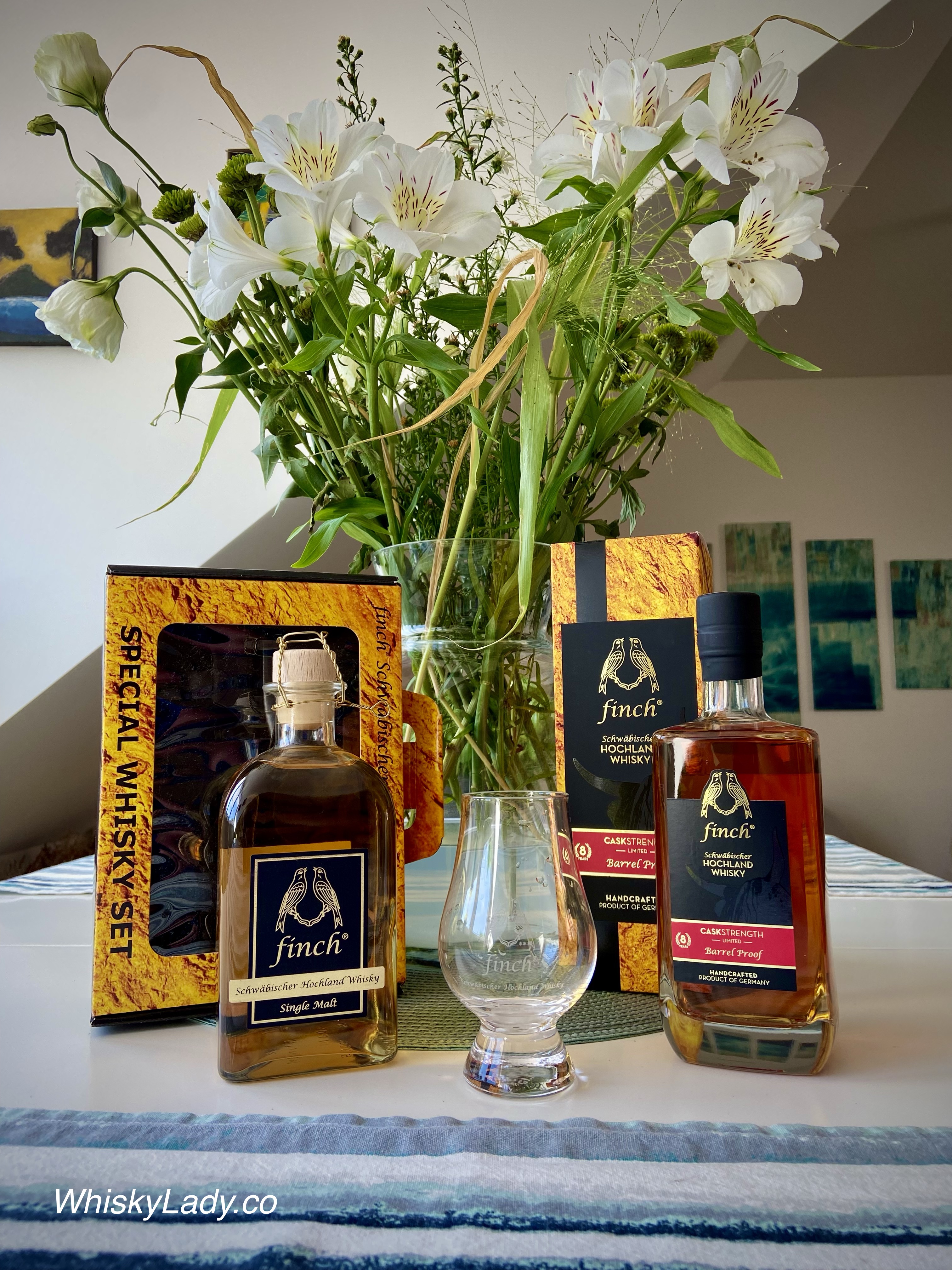
These aren’t the only Finch whiskies in my Germany Whisky Cabinet! I also have the following pair, ready and waiting for the right opportunity!

  • Finch 5-year Single Malt Sherry 42%
  • Finch 8-year “Barrel Proof” ex-Red wine, Bourbon, and Port Cask 54%
Curious to know more? Why not follow Whisky Lady on:

On the Peatier side of life! Aisla Bay, Ardbeg, Octomore

Sometimes a gal just has to enjoy a wee bit of peat in a dram along with the crisp cool fall breeze, a last-of-the-season outdoor barbecue, and brilliant good company. Or at least this lass does!
After exploring a trio of Islay drams from Bunnahabhain earlier in the evening, it was time to switch to a different kind of peat trio: Aisla Bay, Ardbeg and Bruichladdich’s Octomore. 

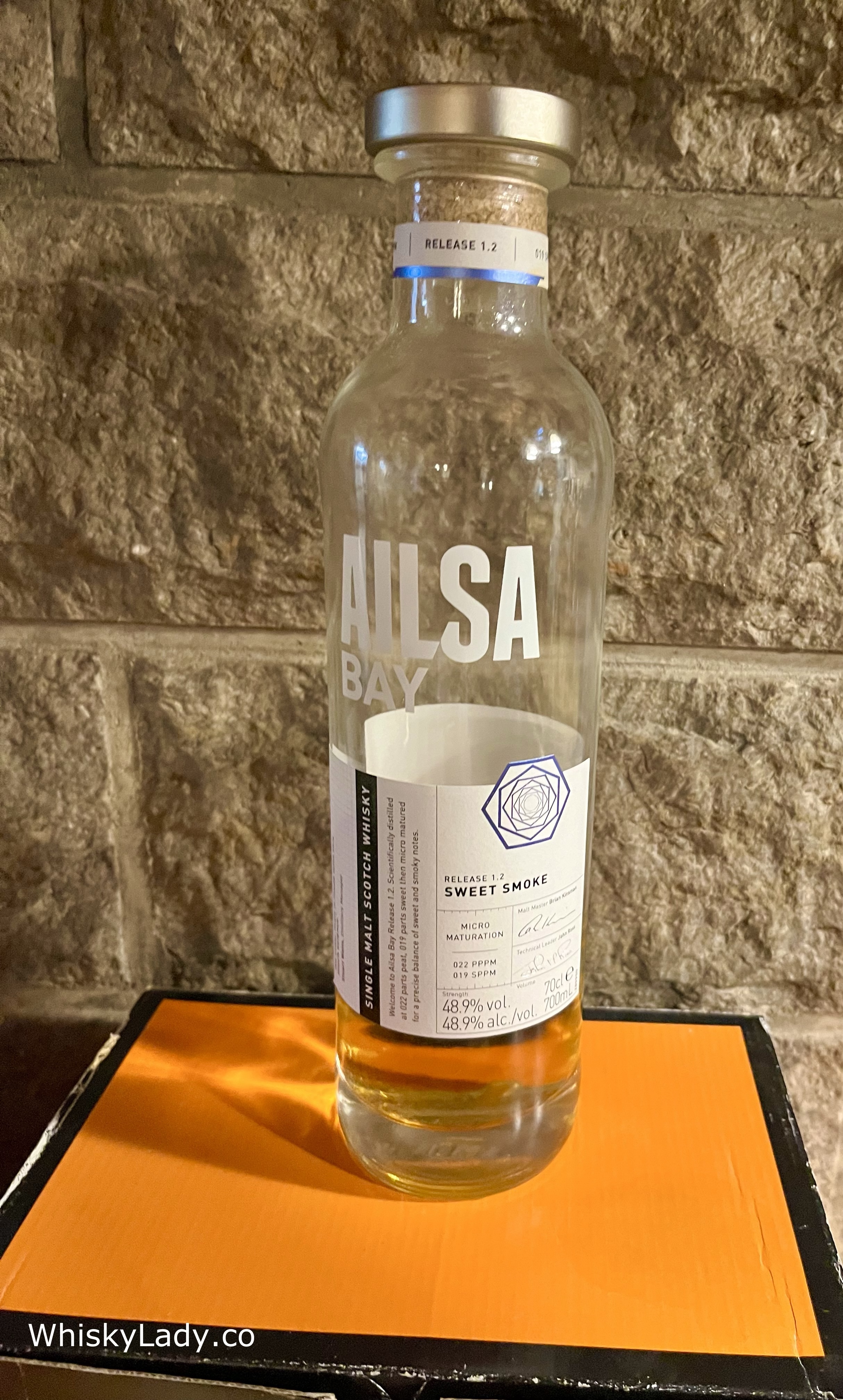
Aisla Bay Release 1.2 “Sweet & Smoke” 48.9%

This was certainly a perfectly named expression – it was indeed both sweet with smoke. They list it as having 22 PPM and 19 SPPM (aka Sweet). It was most enjoyable and a lovely way to ease into a peatier range of whiskies. Rather nice to see how this newer Lowland distillery is evolving. I last tried an Aisla Bay in 2017 where the peat levels were a touch lower and the sweet much lower. With this expression, they seem to have got the balance between just right.

Ardbeg BizarreBQ PX 50.9%

We then moved on to a “proper” peaty distillery. Ardbeg is known for big bold peaty aromas and flavours. In this case it, PX casks were used and really amped up the rich sweet flavours like slathering on a sweet & spicy BBQ sauce!

The nose greeted us with PX aromas, vanilla and toffee with the smoke peaking out from underneath. However with the first sip, there was no question this was an Ardbeg! Here we found the bold peat flavours with a dash of PX – the exact reverse of the nose! And the finish too was all Ardbeg – stays long and shifts from peat back to sweet – really quite a nice lip smacking finish. 

This was one delicious dram – and yes it has the marketing gimmick and some folks were not impressed by the goofy approach, I was happy to be reminded that Ardbeg does produce some fine Islay fare!

Octomore Ten Year%

Now… moving on to the big daddy of peaty whiskies – Bruichladdich’s Octomore! The remarkable thing about Octomore is how they manage to make a potent peaty 208 ppm somehow be so drinkable. This one was no exception! It had been a few years since I’d enjoyed an Octomore, and I will admit to taking scant tasting notes beyond: surprisingly fresh on the nose and simply “yum!” on the palate.

Can I just say, wow? What a fabulous weekend of whiskies with the Schottland Forum folks.

Curious about related tasting experiences with Ailsa Bay, Ardbeg and Octmore? Check out the following:

Alisa Bay 48.9%

Bruichladdich at Whisky Live Singapore 2016, Peat Progression Evening and a special focus on Octomore:

An interview with Bill Lumsden about Ardbeg and some expressions sampled over the years:

And if you don’t want to miss a post, why not follow Whisky Lady on:

A walk on the Islay side… with a trio of Bunnahabhains

I’ve had a mixed relationship with peat. Once it was something I really enjoyed, then, largely in the heat of India, I found it less and less appealing. With the move to Europe, I then rediscovered in cooler climates just how perfect a good peaty dram can be!

This is why I knew my 2nd day at the Schottland Whisky Forum weekend getaway in October would close with an exploration of Islay drams.

Now, before you assume Islay automatically equals peat, let me remind you that both Bunnahabhain and Bruichladdich have ranges that do not use (much) peat. In fact, the bottle I brought was from Islay – a special Chorlton peaty release from Bunnahabhain. Spotting a few other Bunna’s, I decided that is exactly where my Islay journey should begin!

Bunn

When given a choice, I often like to start with a distillery’s Official Bottling (OB) before moving into special Independent Bottlers, especially cask strength options. 

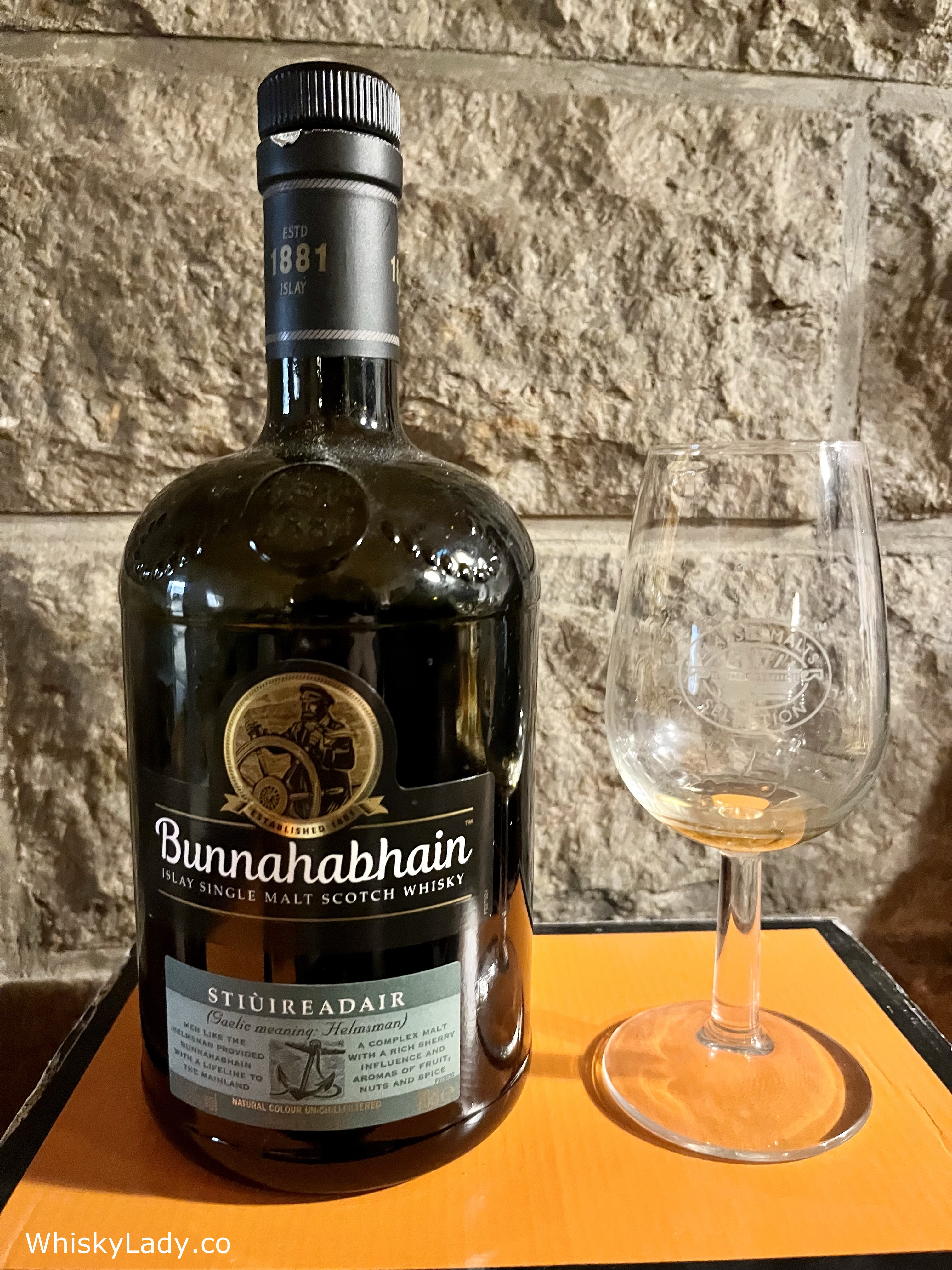
Bunnahabhain Stiùireadair 46.3%

  • Nose – Clear sherry influence, yet not overwhelming. Joined by some maritime saline, then vanilla, spice, and fruits
  • Palate – Juicy dark fruits, some mocha, nuts, salty caramel
  • Finish – Spicy with dried fruits

Overall I quite enjoyed this. Like many of the milder and gentler Bunna’s this one did not have any major peat element. It was simply a lovely lightly sherry dram with a briney coastal tinge. 

The folks at Bunna share that Stiùireadair; pronounced ‘stew-rahdur’ means ‘helmsman’ in Scots Gaelic. It was matured in first and second fill sherry casks with spirits of varying ages and warehouse locations. 

I then moved on to a Signatory… 

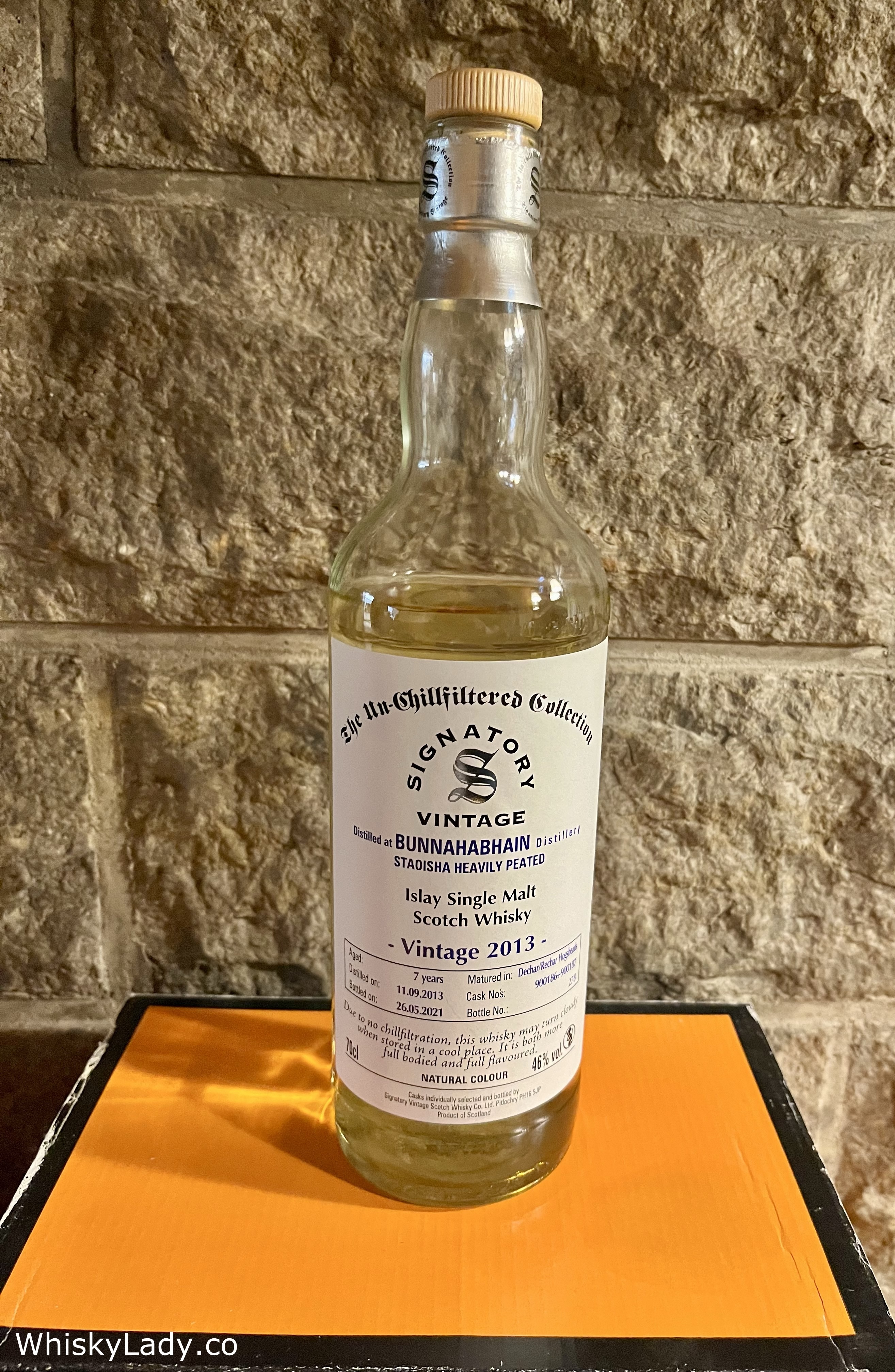
Bunnahabhain / Staoisha 7 year (11 Sep 2013 / 26 May 2021) Dechar / Rechar Hogsheads 900186 + 900187 46% bottle 278 (Signatory)

  • Nose – Quite sweet, some citrus then peat, fresh with a subtle maritime sea spray and white pepper. The more it aired, the more pronounced the peat element was… interesting
  • Palate – Sweet peat with smoked meats, some oak
  • Finish – A nice cinnamon sweet peat finish

Bringing this down to 46% was perfect for this expression. It was full of character without being too forceful or harsh. It was also rather well received by my tasting companions.

Saving what I hoped would be the best for last, we switched gears to the cask-strength Staoisha from Chorlton… Just in case you didn’t figure it out from the earlier Signatory which uses BOTH names, Staoisha signals it is a heavily peated Bunnahabhain. Something we are starting to see more and more of – which isn’t such a bad thing.

Staoisha 8 year (2021) 59.9% (Chorlton)

  • Nose – Red delicious apple skins, sweetgrass
  • Palate – Dry, ashy yet for all its strength, it wasn’t overpowering
  • Finish – Pink peppercorns

I knew it would pack a punch – and that it did! My companions were not impressed – found it a bit too ashy for their taste. I knew I would have a chance to revisit it, so was happy to move on to the next dram and bring the bottle home for further consideration.

Overall what this reminded me is to NOT dismiss Bunnahabhain. Increasingly I’ve heard from more whisky adventurers that there are things going on at Bunna that belies its previous “granny” reputation. In fact, our Whisky Ladies in Mumbai recently spent an evening devoted just to Bunnahabhain!

And if you don’t want to miss a post, why not follow Whisky Lady on:

Whisky Show 2023 – Indri’s Diwali Special Edition

What is truly fabulous about London’s Whisky Show 2023 is the sheer range of whisky exhibitors. And this year, there was not one but three stands from India with Amrut, Rampur, and Indri.

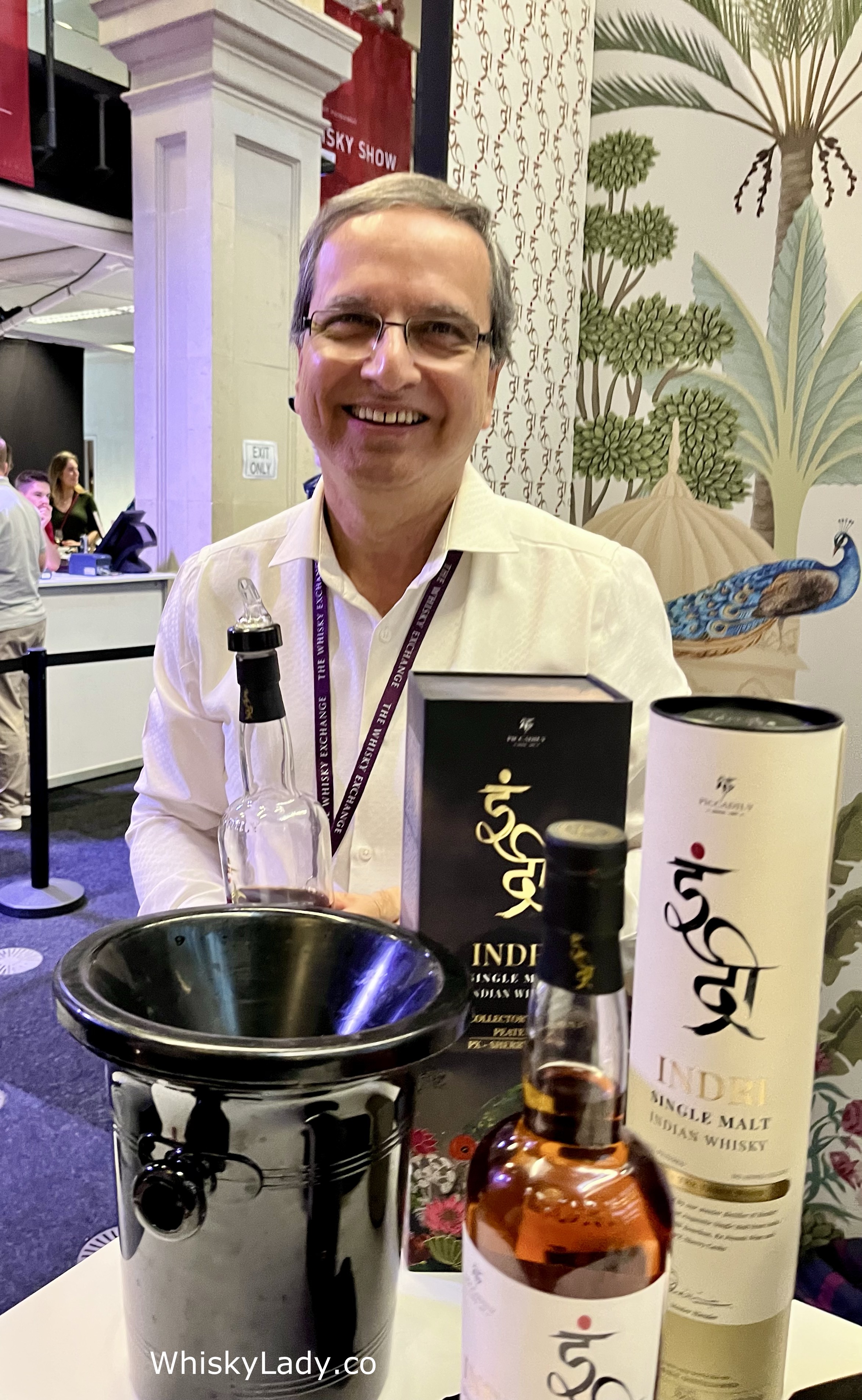
For those not familiar, Surrinder Kumar was previously the genius behind much of Amrut’s success and now is bringing his keen nose and ideas to Picaddily as an advisor Master Blender and Distiller for their Indri whisky brand.

As much of the stock at Picadilly Distillers was laid well in advance of Surrinder’s involvement, the art here is picking just the right casks and combinations to bottle now or see the potential to move in a different direction by re-casking in a different barrel. 

Whilst we were late into our tasting day and very nearly “done”, Surrinder shared that the Indri Diwali Collector’s Edition 2023 is really very special and not to be missed! I’m very glad he insisted as it was indeed worth sampling and in some ways, I was reminded a bit of the remarkable Amrut Port Pipe Peated special release for The Vault Biennale in 2019

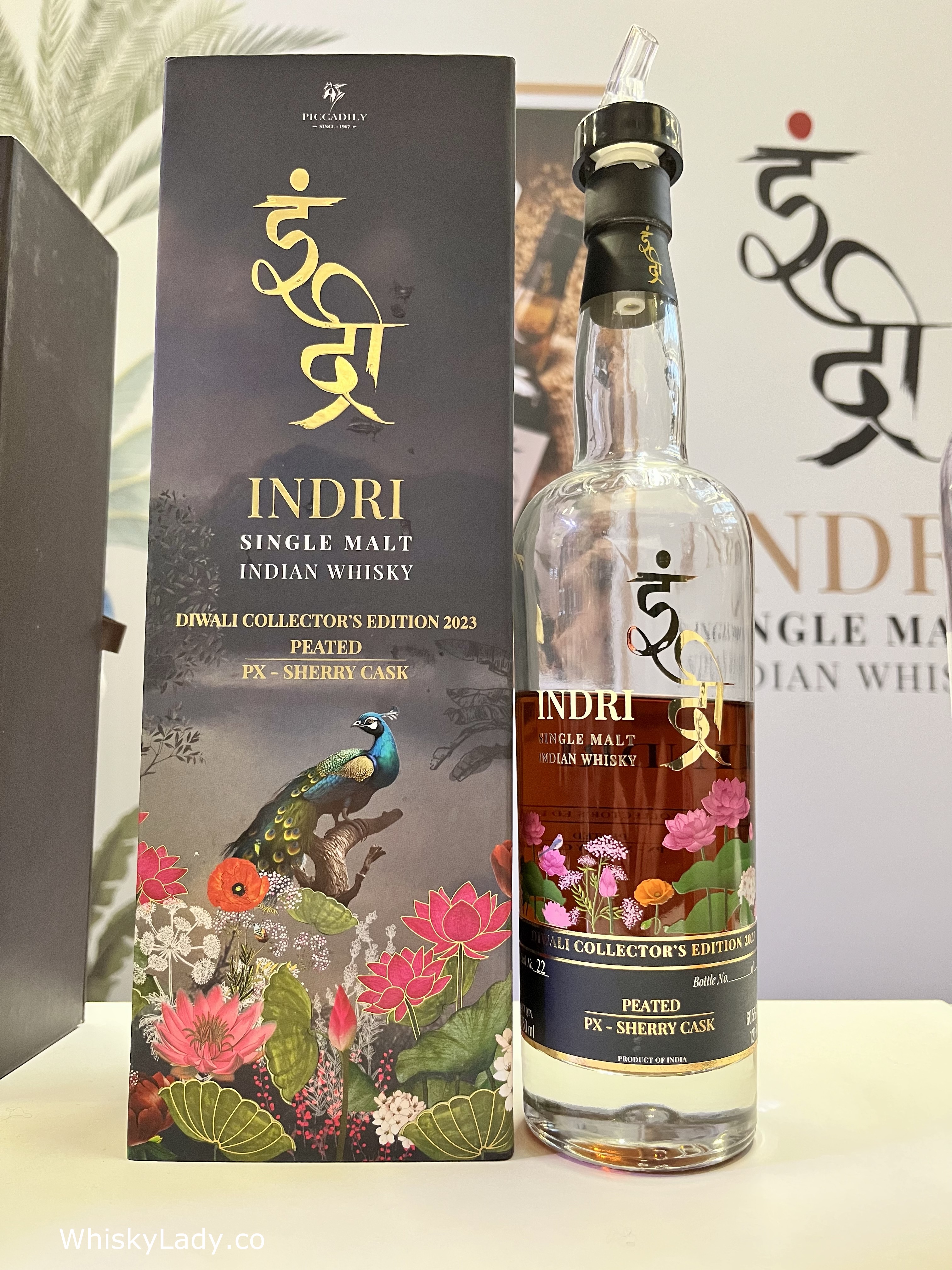
Indri Peated PX Diwali Collector’s Edition 2023 60.5%

Whilst I didn’t take detailed notes, I captured the following: Full, robust with peat and sweet on the nose and a lovely juicy palate. Delicious!

Surrinder also shared how it brought together casks from the US (ex-bourbon), UK (ex-peated), and India.

Here is what they have to say:

Indri Diwali Collector’s Edition 2023 is a peated Indian single malt made with six-row barley, distilled in traditional copper pot stills crafted in India. Carefully matured in PX Sherry Casks for a significantly long time amidst the sub-tropical climate of North India, this unique expression entices you with a whiff of smoke and awakens your senses to a myriad of flavours such as candied dried fruits, toasted nuts, subtle spices, oak, bittersweet chocolate and more.

It was worth stopping, visiting and sipping at London’s Whisky Show 2023.

And if you don’t want to miss a post, why not follow Whisky Lady on:

The Whisky Exchange Exclusives at London’s Whisky Show 2023

The Whisky Exchange are the folks behind London’s Whisky Show 2023. So how could we wander out the doors without sampling at least a pair of whiskies bottled exclusively for them? It would be sacrilege, right?

However what to pick from a plethora of options? We decided to contrast young with old, unfamiliar with familiar, affordable with aspirational!

Let’s start with the newbie… Dalmunach from Speyside. Dalmun whaat you may say? You can be forgiven for not instantly recognizing this new distillery founded by Chivas Brothers (aka Pernod Ricard). Built in 2014 by the River Spey on the site of the demolished Imperial Distillery, it is not even 10 years old! Which, as we know, in Scottish whisky terms is barely a toddler! Interestingly, Douglas Cruickshank led this build, and, having previously worked at the Imperial Distillery, tried to preserve some elements of Imperial’s design features. How that translates into the whisky experience is yet to be fully understood.

Dalmunach 6 year old “The Wulver Edition” 60% for ~GBP60

So what about this young upstart dram? I’ve got “yum” written all over! Peaches and cream, mocha and butter biscuits, some orchard perfume on the nose. And for the palate? More depth than expected, a nice nuttiness accompanies the fruits – now more like apple sauce than fresh crunchy apples plucked from a tree. It finishes with a dusting of sweet cinnamon spice. Dee-lish!

What more do we know about this particular bottling? It was matured in American oak barrels and is The Whisky Exchange’s 1st edition Dalmunach. As they put it, the label was inspired by the Wulver:

a fearsome yet benevolent figure said to fish along the shorelands of the Shetland Isles.

Though it was just a small sniff and swish, I will keep my eye out for more opportunities to explore Dalmunach expression further!

And the other end of the spectrum? We knew what to expect with Glenfarclas.

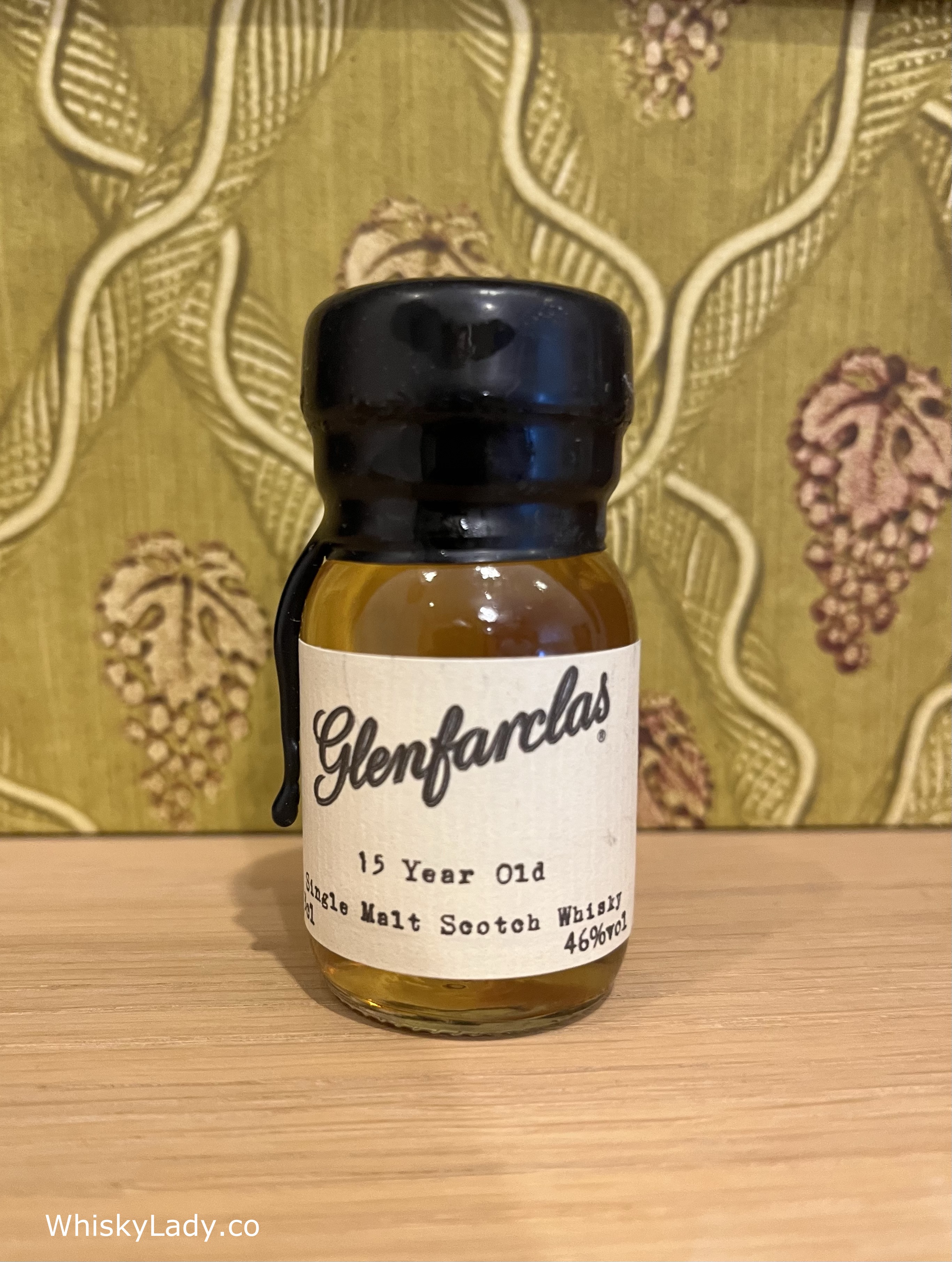
Glenfarclas 25 year “The London Edition” (2023) 50.5% GBP 300

The aroma was a lovely dry sherry, quite nutty, joined by vanilla cream on top of a warm pumpkin pie. On the palate, it was full and robust – some oak joining the Christmas pudding. There was also some salted caramel, and found it both buttery and jammy. It had a darker finish with a hint of coffee bitterness. What a fabulous reminder of why we are rather partial to Glenfarclas!

Here is what the folks at TWE have to say:

Made at Glenfarclas distillery and matured in oloroso sherry casks for a quarter of a century before being bottled to celebrate The Whisky Exchange’s 20th Anniversary. Aromas of meadow flowers, baked apples, barley sugar and buttery brioche fill the nose, developing into earthy coffee and sweet raisins. The palate opens with notes of fruit cake, salted caramel and rich oak, developing buttery pastry, raisins and fruity espresso flavours and dry waxiness.

This bottle features a specially-created label, designed by our creative director Raj Chavda to pay tribute to London’s vibrant hospitality industry.

What fun! I made a mental note to try to get to The Whisky Exchange exclusives earlier in the day next year… though closing with choice options like we did in 2023 also worked!

And if you don’t want to miss a post, why not follow Whisky Lady on:

Aberlour without sherry? Could it be true?!

“How many drams do you have still in you?”

That was how we were greeted when we reached one of the whisky stands late in the day at  London’s Whisky Show 2023, It was a legitimate question. There is a point where whiskies and impressions begin to blur, and appreciation of the one becomes challenging in the cacophony of the many.

However, the temptation to keep exploring was strong and I am so glad that we did not miss the Aberlour stand. I was recently reminded of how enjoyable their Sherry Bomb A’Bunadh is, so was rather intrigued by their new line of ex-bourbon casks – with no sherry in sight!

We were in excellent hands as Master Distiller Graeme Cruickshank guided us through a lovely pair which led to a 3rd option too!

Aberlour A’bunadh Alba ex Bourbon Batch 7 58.9%

Much as I enjoy a good sherry-matured whisky, my heart falls for a brilliant ex-bourbon! The A’bunadh Alba was fruity, honeyed, a touch of vanilla on the nose – basically the kind of nuanced sweet that gets me every time. On the palate, I found pineapple – bringing a bit of zip and zing! It was nicely rounded and closed with a sweet slightly peppery finish. My last scribble? “Super fab!” So… clearly I enjoyed this one!

What do the folks at Aberlour have to say?

Meaning ‘the original’ in Gaelic, A’bunadh Alba is made in homage to Aberlour’s founder, James Fleming. Abunadh Alba is matured in ex American Oak resulting in an aroma of ripe red apples, along with honey, vanilla and a hit of cinnamon. Abunadh Alba is bottled at cask strength resulting in a sweet whisky with a creamy texture.

Aberlour 18 year Sherry Cask Finish Batch 1 48%

Then from ex-bourbon, we shifted back into the traditional Aberlour territory of sherry. Here I found plums, toffee, and all the lovely sherry elements of dried fruits, berries, and sweet spices. On the palate, the dried fruits carried through – particularly dried figs, more toffee, and sweet Christmasy spices – especially cinnamon, can also see the oak influence. I’ll be honest, I wish I had more time and quantity to slow down with this one. Here my closing note was “Comfort food!”

I tried to find out more on their website, however, it doesn’t seem that the 2023 expression has further details published yet. We understand it began with American and European oak casks and then it was finished in Pedro Ximenez and Oloroso sherry casks. 

Aberlour Casg Annamh 48%

My immediate reaction was – what a wonderful classic sherry Speyside whisky! It simply had the perfect balance between all the expected elements. I particularly enjoyed the liquorice – which I had found in either the ex-bourbon or mature 18-year-old just experienced.

As my notes stopped at this point, I thought to see what more the good folks at Aberlour have to say about this new expression? 

Translating as ‘Rare Cask’ in Gaelic, Casg Annamh is created from a limited number of carefully selected casks. These Spanish oak Oloroso Sherry casks/butts have a significant influence on the non-chill filtered liquid and perfectly complement Aberlour’s distillate flavour, bringing sweet and rich notes. Casg Annamh is a distinctively rich Single Malt providing adventurous malt lovers with the ideal introduction to Sherry cask matured whiskies.

  • Nose – Rich and sweet with fruity notes of tangy orange, glazed cherries, raisins and a hint of ginger. 
  • Palate – Sweet and fruity flavours of apple and cinnamon crumble and ripe peaches balanced with spicy notes of liquorice and cloves.
  • Finish – Long and rich. Fruity with a touch of dry spice.

It retails in the UK for a very reasonable GBP 65.

What a treat to spend a bit of time with Graeme and be introduced to three lovely whiskies. Thank you London Whisky Show 2023!!

Are we Aberlour fans? Yes! Over the years we have enjoyed :

And if you don’t want to miss a post, why not follow Whisky Lady on:

The Cabinet “Alt Islay” with The Organic, Caol Ila + Ardcore

Winnipeg’s The Cabinet whisky-tasting group literally has a special cabinet in which the club’s whisky bottles are locked when not in session.

This particularly wintery evening in November was focused on exploring “Alternative Islay” expressions – one new bottle for all of us, the balance opened. Which I augmented with a couple more!

What kicked off the theme was a distinctive Bruichladdich – part of their Organic line with very specific terroir – declaring the barley comes from Mid Coul Farms, Dalcross, Inverness. This wasn’t my first flirtation with The Organic. The last was nearly a decade ago, also featuring barley from Mid Coul Farms – previously Coulmor Mains of Tullibardine Farms.

Bruichladdich’s The Organic 2010 8 year 50% 

  • Nose – Citrus, some yogurt – actually lemon yogurt, some fresh hay shifting to cereals then bread, was that tinned pineapple too?
  • Palate – Fruity but also initially a bit sharp, and peppery, then it mellows out and grows on you… what was yogurt on the nose became cream on the palate with the citrus joined by apple sauce. Yet there was also something a bit oaky, lightly malty, and a bit of salty fudge
  • Finish – Didn’t stand out
  • Water – Why yes, don’t mind if I do! It rounds it out quite nicely, softening any remaining sharpness

It was a good place to begin… Nothing complicated or intense, it was just a pleasant way to ease into Islay. It was unpeated, matured in American oak casts, and – call it the influence of the name – had quite an “agricultural” feel. At least that’s my impression and I’m sticking with it!

From there we moved on to two Chorlton bottles – an Ardmore and Staoisha – these beauties deserved their own posts! (hint click on the links). But now, on to the next…

North Star’s Caol Ila 12 year (2006) 54.6%

I then brought out the third whisky I brought with me – just a small 100 ml that remained from this lovely North Star single cask Caol Ila at cask strength.

It was fitting for the theme as it was Caol Ila yet definitely not your standard “Original Bottling”. I’m not even going to attempt proper tasting notes. You can check out my earlier experience here.

What I can share, is that oxidation did a rather nice job polishing off any rough edges. What remained was a silky smooth liquid, soft and mellow, with some lovely nuances. I could definitely find the boiled sweets its indie bottler Ian describes, much more than heavy peat. And yet the peat was there too – just subtle.

Lovely lip-smacking stuff!

Here is where I openly admit, once upon a time, I was a punk rock chick. Yup. The spiky hair, creative shaved patterns, the clothes, and all that. Hey, it was the 80s! So anything truly punk is legitimately familiar territory. Which is why when something comes along claiming to be edgy and anti-establishment but is instead, well, insipid… Sigh…

For something so hyped up, it was surprisingly gentle – much more so than a core expression. My notes were embarrassingly scant.

Ardbeg’s Ardcore “Punktured” (2022) 46%A revisit for the Cabinet lads, new for me!

  • Nose – Sour, some toast?
  • Palate – Sweet, rather benign or innocuous, a bare hint of smoke, maybe some milk chocolate or malt?
  • Finish – Cinnamon

Don’t get me wrong. If I was tasting it blind and didn’t know it was Ardbeg, I would find it quite pleasant. My guess would be it was 40% (not 46%) and whilst there was light peat, it was the sweet and sour that came through more.

However, this was Ardbeg – known for its bold expressions. And the most shocking aspect? It was purchased for around CAD 250? Oh my!

What else did we try in our “Alt Islay” evening in Winnipeg?

f you don’t want to miss a post, so why not follow Whisky Lady on:

Chorlton – Staoisha 8 year 59.9%

I will openly admit I have a mixed relationship with peat. In the heat of India, I tend to shy away from peaty drams, preferring something lighter and more in keeping with the summery warm climate. Whereas in the cool of a Nurnberg fall or Winnipeg winter, a dash of peat can just hit the spot… or not!

This particular dram – the Staoisha 8 year (2021) 59.9% – was sampled with different companions and also solo, in three different places. Showing context can be everything!

1. Germany’s Schottland Forum Whisky Weekend Getaway

  • Nose – Red delicious apple skins, sweet grass, some maritime elements
  • Palate – Dry and ashy, yet not overpowering
  • Finish – Pink peppercorns

My tasting companion was not impressed. I was a bit more open however agreed that next to the dizzying array of fine drams sampled over the weekend, this one did not shine.

2. A quiet evening in Nurnberg, Germany just me, myself, and I

What a difference a different environment makes! I brought this home and splashed a little in a glass one cool rainy Nurnberg evening.

  • Nose – Buttery banana bread – like straight from the oven then slathered in butter, joined by some salty maritime breeze
  • Palate – Very dry, smokey with initially some sharpness, then mellows into the glass with a briney almost minerally element, underneath grew a hint of mocha
  • Finish – Still ashy, yet sweetens
  • Water – Oh yum! Yes, this makes all the difference! Softens the peat, and amps up the sweetness…starts with some citrus joining the nose, the ash subdued, the fires banked, and now there is a lovely cinnamon finish too!

Would this be my “go to” dram? No. But I could see how those who enjoy different peaty styles could gravitate towards it.

3. A wintery white evening in Winnipeg, Canada with The Cabinet lads

Was I a bit trepidacious in bringing this offering? Certainly.  Whilst I knew these gents enjoy coastal styles and peat, one simply never knows what will be considered a “hit” and what will be considered a “miss.”

  • Nose – Banana, or more precisely banana bread, quite coastal, as it opened, the smoke gave way to sea breeze and sweeter fruitier elements. Then after some time, I found salted roasted peanuts. Yum.
  • Palate – Ashy? Yes. Dry? Yes, that too. But also so much more. There is full flavoured reward with every sip.
  • Finish – Mmmmm a lovely cinnamon close
  • Water – Take your pick! I prefer it with, others without. Either works!

After the remarkable Ardmore 12 year old, I even more feared this Staoisha would pale by comparison. Nope. It more than held its own. Brilliant! It was even the pick of the evening for one Cabinet lad. Which made bringing the wee 200ml sample bottle worth it!

What did David have to say? The following is an extract from his email…

And next we have an 8-year-old Staoisha – this is peated spirit distilled at Bunnahabhain on Islay, and matured in a first-fill barrel.

On pouring you get such a distinct aroma of banana bread (albeit peat-smoked banana bread…), it’s really quite something! As it settles in the glass that recedes into the background, leaving a clean, coastal smokiness: pine smoke, herbs, sea air and a touch of vanilla from the cask. Fruitiness develops too, with lemon sweets and a tinned pineapple cube. Just the one.

The palate is bigger and smokier than the nose: ashy peat, barbecue smoke, salt & pepper, and maybe a kipper. Just the one. There’s very definite sweetness too, and quite a creamy mouthfeel. It develops on almond paste and lemon cream, before a long, smoky finish with little bits of tangerine fruitiness. With water it’s lime-clean, fruity and smoky – perfect!

Lovely spirit, this. It even reminded me of the recent Lochindaal in a few places which is no bad thing. I’m happy to have some younger stock for future years, and I hope at least some is being put into refill wood for the long haul so we’ll all have something to entertain us in our dotage!

Whilst this was from his December 2021 releases, I missed being able to purchase directly from David. So was delighted in June 2022 when it finally became available in Europe from Whisky.base (NL) for EUR 79 plus shipping and tax.

Here are a few more from La Nouvelle Vague series:

If you don’t want to miss a post, why not follow Whisky Lady on: