Whisky Lady

Canadian in India and Germany exploring the world of whiskies

Whisky Lady

Paris Whisky Live 2022 – Arlett

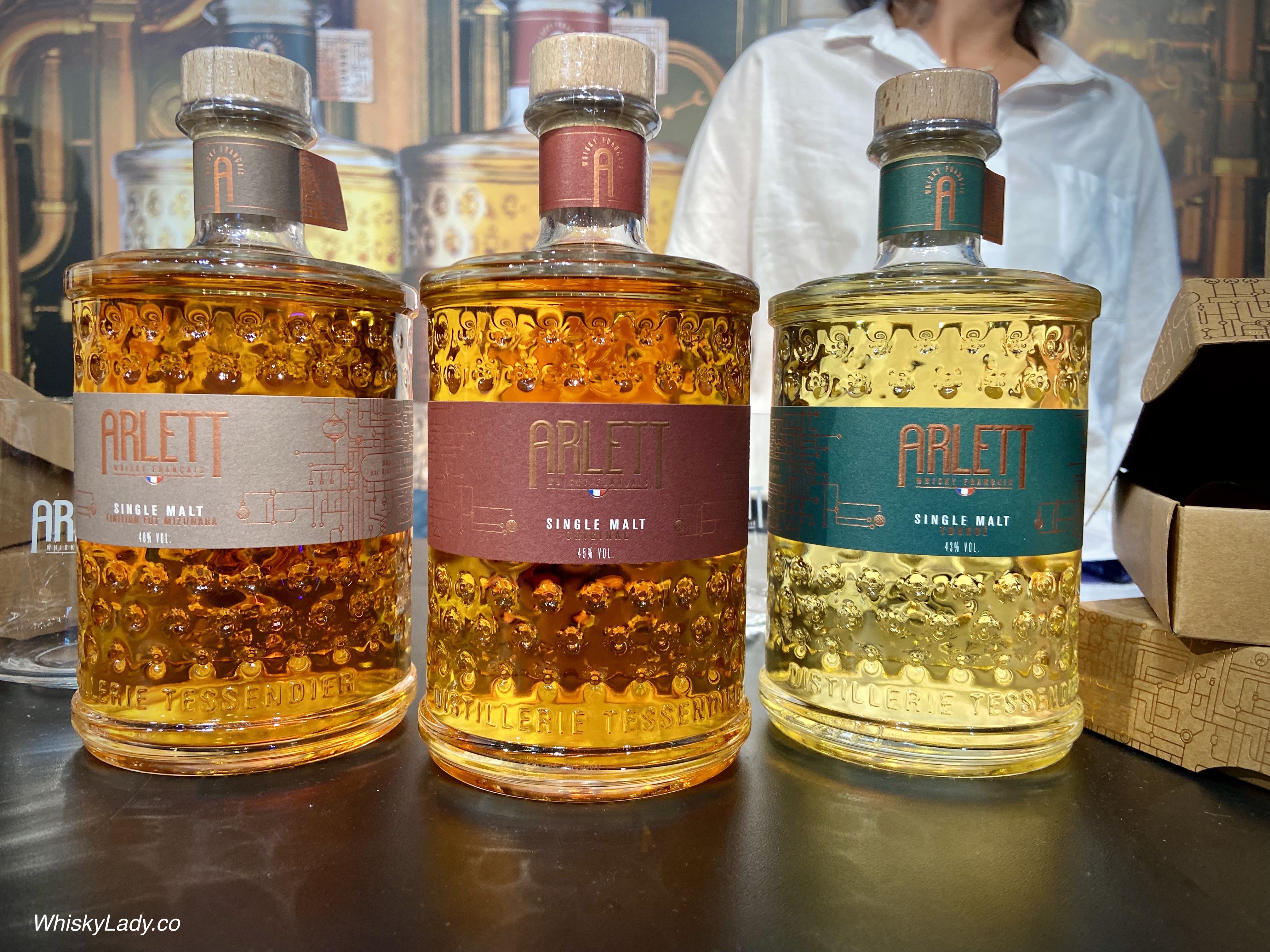
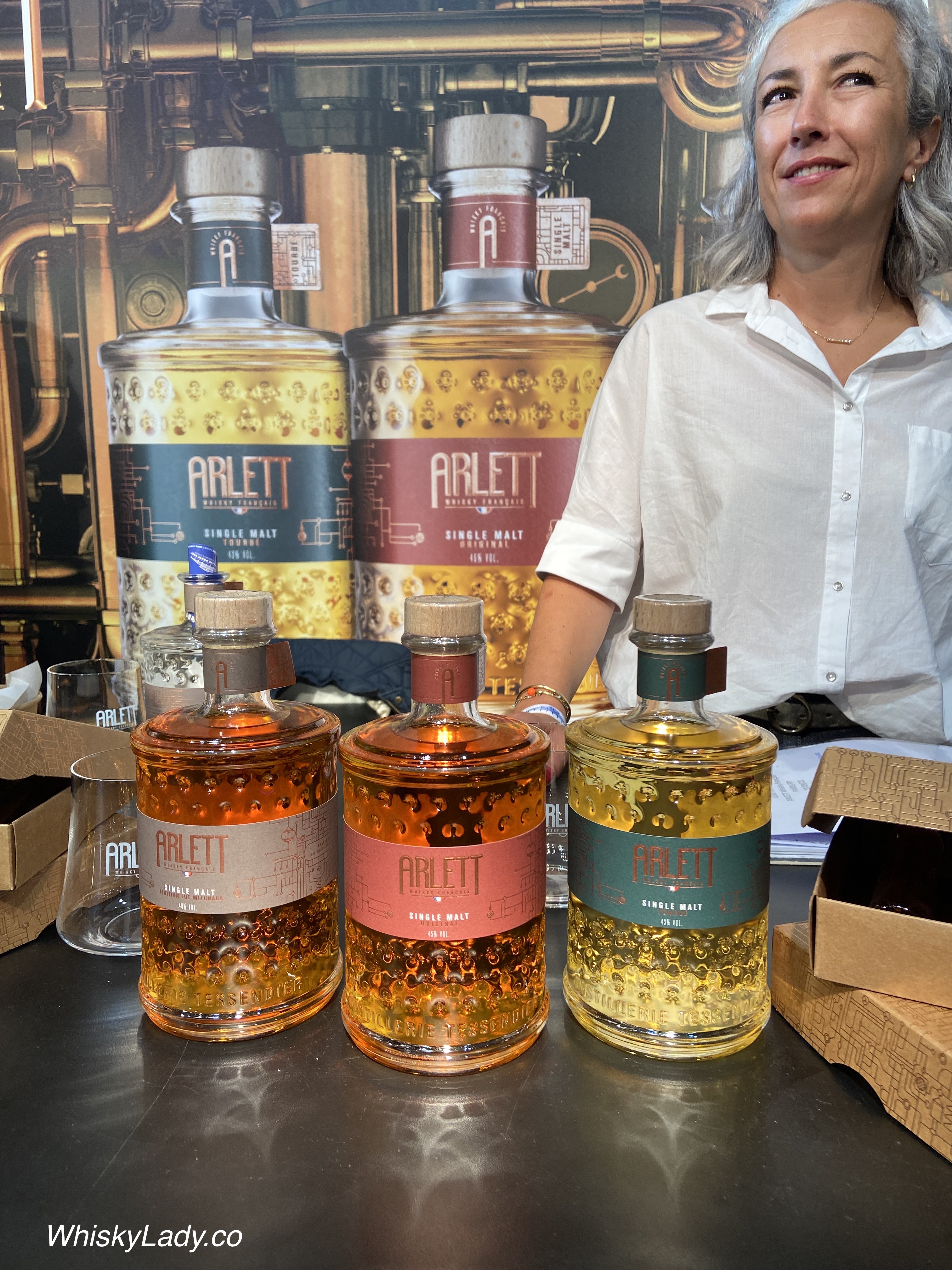
After spending some time wandering around the Scotland section and a stop by India too…. we happily returned to close our day at Paris Whisky Live in the French section. Distillerie Tessendier As the story goes, the Tessendier family has been distilling for generations. Their latest project is a “vintage-styled” whisky brand that pays tribute to the 1950s and more specifically the matriarch – Arlett – mother of Jérôme and Lilian.

This was my last stop at the festival, so hope I can both be forgiven for the limited notes and delay in sharing impressions. 

First off – the bottles themselves are works of art and the colour remarkable too! As for the liquid gold? 

Arlett Single Malt 45% 

  • Nose – Started off with sour cream, then sweetened, young yet promising, yummy pastries
  • Palate – Lots of baked goods, apple sauce
  • Finish – Tobacco and leather with a touch of oak, very round finish
  • Water – Creamy oats 

Matured for a mere three years, we overall found it delicate, layered with real promise.

Arlett Mizanura 48% 

  • Nose – Resin, woody, caramel apples
  • Palate – Nice spice, peppery, more apples
  • Finish – Lovely and sweet
  • Water – Creamy soft brie cheese

A clear shift from the dessert-like core expression – this was also fruity yet with some savory elements too.

Arlett Tourbe 43% 

  • Nose – Smoky then mild peat
  • Palate – Charcoal and soft wood
  • Finish – Cinnamon

Their last was a peat expression – using Scottish peat. Here we thought it would be the kind of dram to end your evening… and with that we ended our evening and fabulous whisky weekend!

If you don’t want to miss a post, why not follow Whisky Lady on:

Paris Whisky Live 2022 – Lagg Masterclass

I’ve made no secret of my love affair with Arran whiskies – cemented by time spent on the Island visiting both the Lochranza and Lagg Distillery. So at Paris Whisky Live, I jumped on the opportunity to explore further…

Our guide was Mariella Romano, who joined the group in 2019, and the focus of the Masterclass was to introduce the new expressions from their Lowland Lagg Distillery.

So what did we try? A trio of 1st releases with:

  • Batch 1 – Lagg 3 year 1st Fill Bourbon Cask (Summer 2023) 50%
  • Batch 2 – Lagg 3 year (30 month ex-Bourbon, 6 months Olorosso) 2023 50%
  • Batch 3 – Lagg 3 year (30 month ex-Bourbon, 6 months Roja Red) 2023 50%

We began with the Lagg 3 year 1st Fill Bourbon Cask (Summer 2023) 50% 50 PPM

  • Nose – Herbal notes to start, young, fresh mash, clean and sweet with a grassy rather than medicinal peat, a hint of heather and puff of smoke
  • Palate – Very promising, creamy with a citrus zest
  • Finish – Nicely lingers, more so than I had expected from such a young dram

What we tried was literally bottled the week before! It then officially launched in France on Oct 1, 2022 (after Paris Whisky Live!) as an inaugural limited summer release. Mariella shared that they see their peat as more “Aberdeen west coast style”, gentler than the robust peat monsters some Islay distilleries produce.

She also shared how the idea for Lagg’s full focus on peat began with their experiemnt’s with their Lochranza distillery peat expressions – like Machrie Moor and their Cask Strength. Since deciding to set-up the Lagg distillery, they have stopped producing any new peat expressions at Lochranza.

Next up was the Lagg 3 year – 30 month ex-Bourbon, 6 month Olorosso finish (2023) 50% also 50 PPM.

  • Nose – Mmmmm a chocolaty sweet peat, richer than the 1st dram with loads of dark fruit sherry notes, raisins and sweet spices
  • Palate – Very smooth – the sherry finish works wonderfully with the peat
  • Finish – A lovely cinnamon finish

Delicious! In this case, it was initially matured in bourbon casks before being finished for an additional six months in 55 liter ex-Oloroso sherry casks for 6 months. Mariella also mentioned how they used Concerto barley and peat from the North East of Scotland.

She then shared a virtual tour of the new Lagg distiellery (after some small technical hiccups!). While many interesting stories were shared, one element was the contrast between the “mountain” pure water at Lochranza distillery and Lagg distillery’s use of a borehole with distinctly different taste. Another is how important it is to have the significantly expanded space for cask storage at the new facility.

Mariella also shared that while Lochranza (Arran) whiskies are sweet and easy drinking, the intent for Lagg is not just peat but also a deliberately ‘harsher’ quality.

And with that we moved on to the last whisky, closing with Lagg 3 year – 30 month ex-Bourbon, 6 months Rioja Red 2023 50%:

  • Nose – Dry nutty element, sweet cinnamon, a bit herbal
  • Palate – Curious character – some minerals? Also a bit fruity – mostly dark berries, some oak
  • Finish – Wine followed by a cinnamon finish like the Olorosso

The peat in this was quite subtle – and the ex-Rioja red wine Firkan was a bit curious – particularly on the palate. I wish I had tried this with a bit of water, as have a feeling this one needs to open up a bit to reveal its full character.

It was terrific to have a chance to explore these early Lagg expressions. I’m curious to see how they evolve in the coming years.

In the meantime, I remain a complete fan of Lagg’s big sister Lochranza:

If you don’t want to miss a post, why not follow Whisky Lady on:

St Kilian Berry Metal Cocktail – with peat??

Sometimes you are just in the mood for a refreshing cocktail – especially on a warm summer evening! However, using an intensely peaty berry-infused liquor isn’t intuitively the “go-to” standard base…

However, that’s exactly the kind of experimentation you can expect from the folks over at St Kilian. So when we saw the cocktail suggestion for St Kilian Grave Digger – Berry Metal 40% Liqueur, we had to try it!

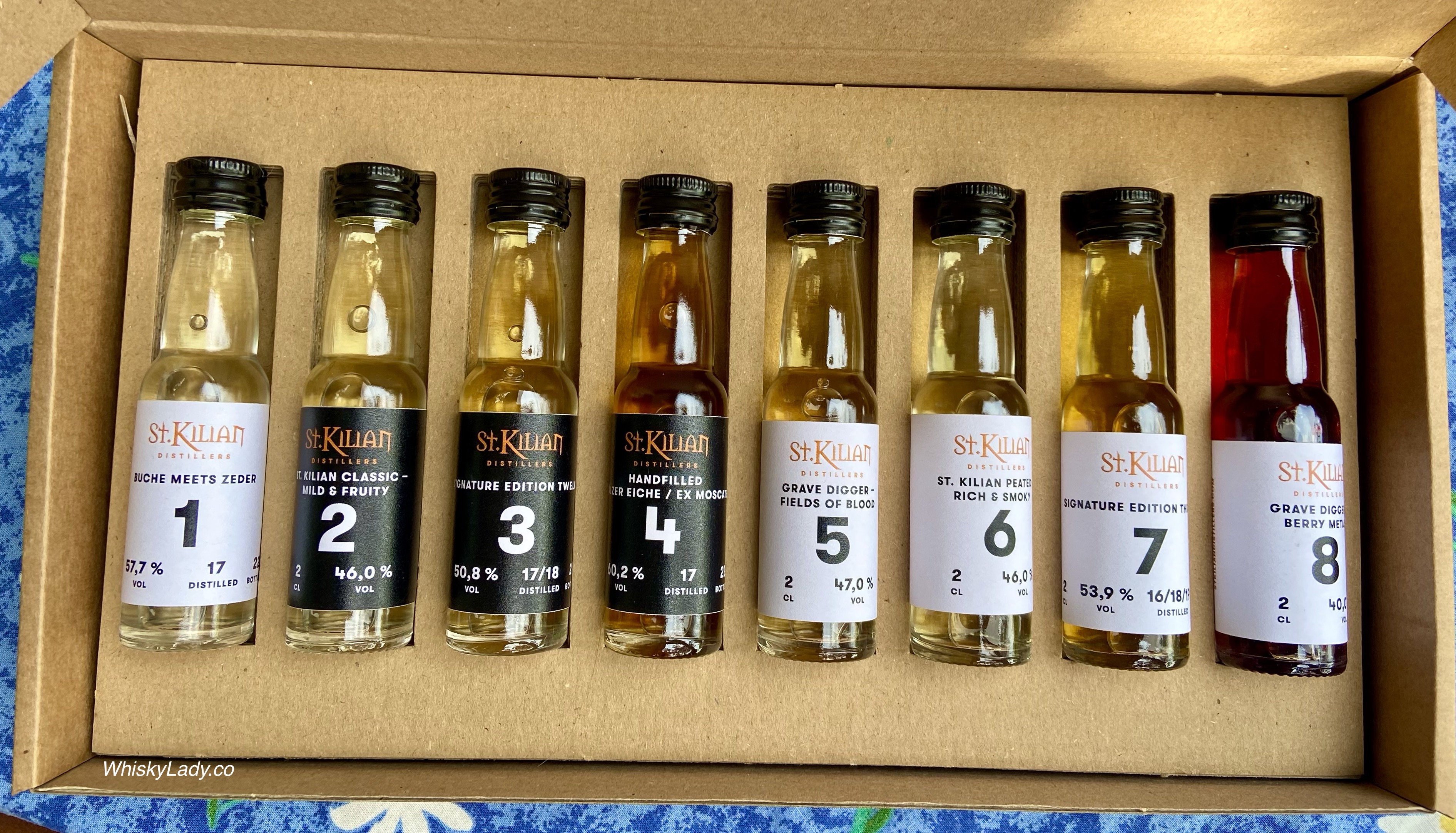
It came to us as #8 in a recent St Kilian tasting set – part of their December 2022 launch of some new expressions. On its own, the Berry Metal liqueur is an incredibly potent burst of berry “wow!” with a peaty kick.

So then we simply had to try it in a cocktail. They provided a recommended recipe – something they called a St Killian Berry Tonic. It is simple and straightforward, and most importantly, we just so happened to have everything needed.

If you don’t want to miss a post, why not follow Whisky Lady on:

Deconstructing the St Kilian Signature Edition ‘Thirteen’!

A Single Malt simply means malts from the same distillery. Unless it is specifically designated as a “Single Cask”, it could mean wildly different types of casks used in order to achieve the desired outcome.

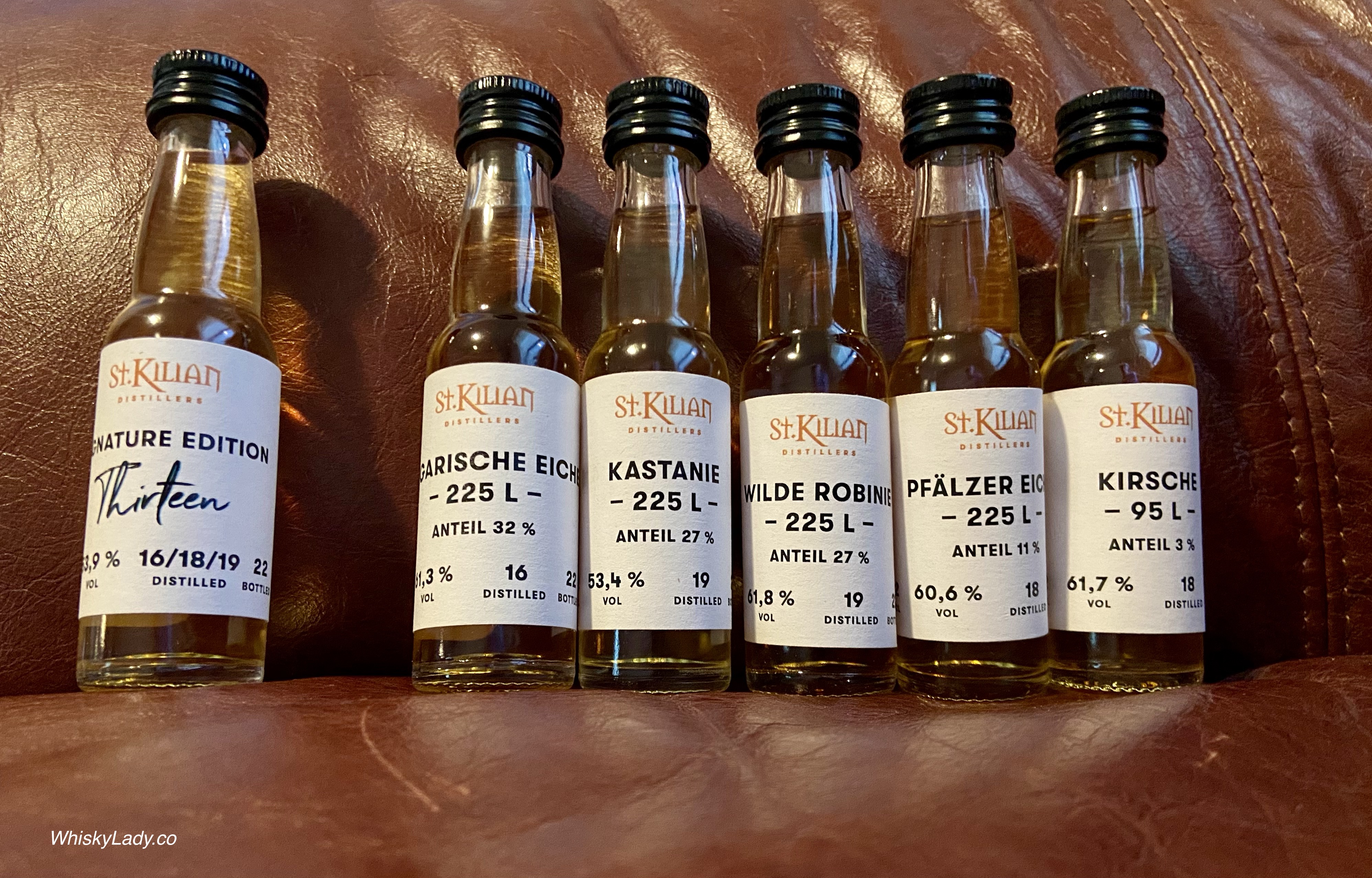
In the case of St Kilian’s Thirteen Signature Edition, it is a mix of five different virgin casks – put differently, these are all “fresh” casks that never held any other liquid like Bourbon or Sherry before being used to mature the whisky. Master Blender Mario Rudolf chose Palatinate and Hungarian oak combined with “unique” woods like wild robinia (mock acacia), chestnut, and cherry. The oldest whisky was approx 6 years and the youngest 3 years. All used Scottish peat smoke malt with 54 ppm – hence this falls into St Kilian’s peated range.

In Scotland, there are regulations that stipulate that only Oak wood may be used, however, the rules are considerably more relaxed in countries like the USA, Ireland, or Germany. This enables considerable experimentation – from apple wood chips to chestnut! This expression clearly falls into the “experimental” category!

So how did we go about exploring this tasting set? We began by calibrating our palates – cracking open the delicious Classic “Mild & Fruity” 46% (the lone black bottle ie unpeated whisky) before shifting to peat with the balanced Peaty “Rich & Smoky” 46%. It was a perfect way to start!

We then tasted the ‘Thirteen’ to get a feel for the combination before going step by step through each component and then revisiting the ‘Thirteen’ again. What a super cool concept – sharing transparently the five different elements that go into creating the Signature Thirteen expression.

So let’s take you on our tasting journey…
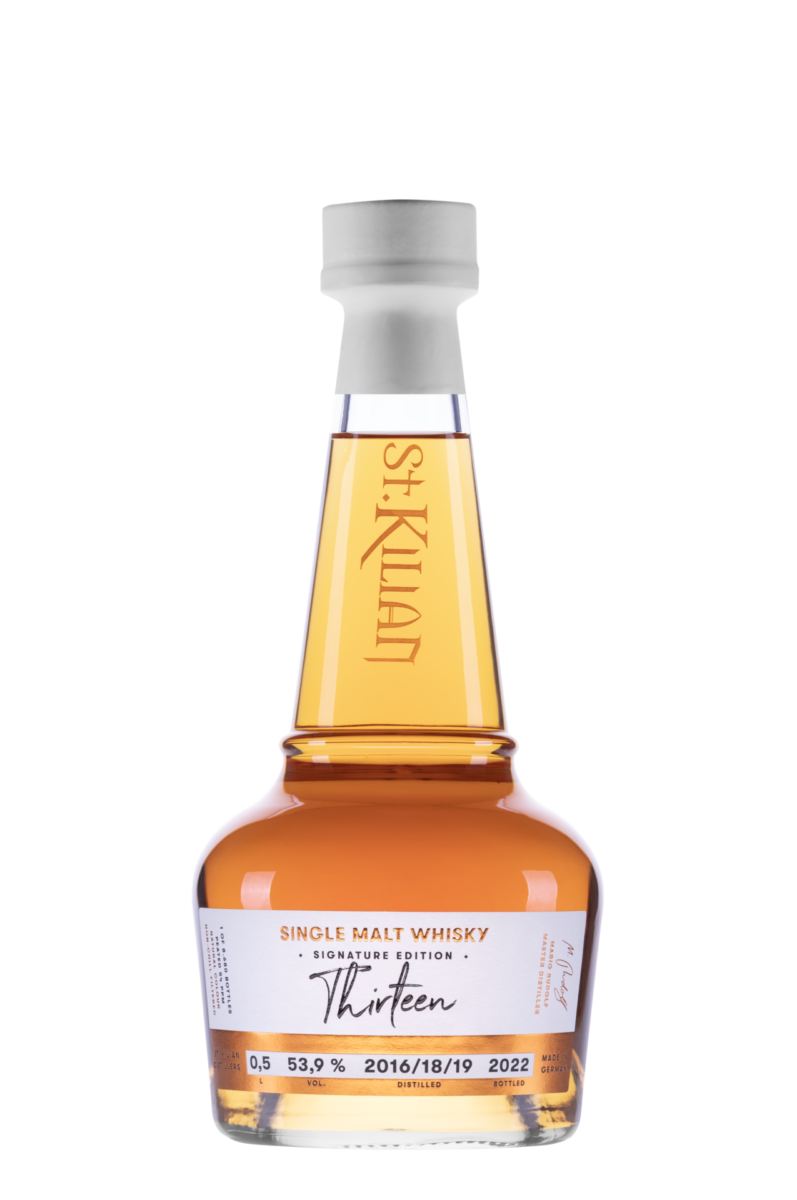
Signature Edition ‘Thirteen’ (2016/18/19 – 2022) 53.9%

  • Nose – Yummy! We were immediately greeted by maple glazed smoked bacon, a campfire with fatty bacon, charred peppers, cherries, a hint of wood
  • Palate – Quite a contrast – cinnamon bark, bittersweet, light ginger, some peppers, oak, mild peat, and overall quite dry
  • Finish – A spice burn, slightly ashy
  • Water – Makes a big difference – brings out the fruit and cream, shifting from dry to juicy.

Overall we found the nose really quite wonderful, with the palate having a curious yet interesting character. This is no “easy” dram but certainly one to experience!

32% of Thirteen: Virgin Hungarian Oak (2016 – 2022) 61.3% Ungarischer Eiche

We began with the largest component – virgin Quercus Petraea aka Hungarian Oak.

On the nose, it had a fresh and clean approach – like shaved wood that then deepened into a nutty aroma – particularly Brazil nuts. As for the taste? Warm and really quite fabulous, joined by a prickly spice. Surprisingly smooth and mature for a mere 6-year-old – and that too at cask strength!

We speculated that this may also be a base for their Peated Rich & Smoky – at least we found elements of what we enjoy in that blend also in it. What a promising start!

27% of Thirteen: Virgin Chestnut/Kastanie (2019 – 2022) 53.4%

We moved on to Chestnut – a wood that outside of Scotland, some whisky distilleries are increasingly exploring as an alternative to Oak – at least for some time. I’ve tried several experiments from Sweden’s Agitator to Ireland’s Method & Madness to Germany’s Aureum.

We found it more subtle than anticipated. On the nose, it was like new fresh chestnuts before roasting – green and unripe – fragrant with a hint of fruit and only the lightest touch of sweet peat. Whereas on the palate? Quite interesting, with a substantive texture with a light spice spike at the back. Then it finished with herbal elements with a touch of bitterness.

Overall we found this one quite mild with a smooth warmth that lingers. Rather nice!

27% of Thirteen: Virgin Wild Robinia / Wilde Robine (2019 – 2022) 61.8% 

We moved on to a wood called “Wild Robinia” – an Eastern European timber, considered a “mock Acacia” – a tropical timber, native to Africa, Australia, and South America.

We had no idea what to expect, however, suffice to say, this one was VERY different and hard to describe. The aroma was a bit elusive whereas the palate? Hmmm…. It was strong, forceful with an “in your face” harshness, heavy bitter roasted nuts. Curiously, it reminded us a bit of a strawberry stomach medicine.

Though we had only 2cl between the two of us, we found this one definitely needed a dash of water. Certainly helps… however overall this one wasn’t for us – at least as a stand-alone.

We struggled to understand why to add something so brash as the Wilde Robine into the mix… until we finished tasting all five elements and revisited the Thirteen.

11% of Thirteen: Virgin Palatinate Oak / Pfälzer Eiche (2018 – 2022) 60.6% 

We then moved on to a more traditional wood – Oak – more specifically Palatinate Oak from SouthWestern Germany.

Ahh… nice! Back to more traditional aromas – mild and fruity like a fruit stew. On the palate, we found sweet spices, warm with a mild almost “numbing” astringency on the finish.

This was a return to more familiar territory. And whilst it was a smaller portion of the Thirteen, we thought perhaps it added some of the fruit!

3% of Thirteen: Virgin Cherry/Kirsche (2018 – 2022) 61.7% 

We closed our “deconstruction” exploration with Cherry wood. St Kilian has some company experimenting with this wood – both Teeling and Woodford Reserve have expressions that are partly finished in Cherry. Reputed to be more porous than oak leading to intense flavours.

So what did we find?

Woooaaah! Smells like Cherry wood, freshly chopped, green, carnation flower, dank, musty… and on the palate? Varnish, so dry it made one almost “pucker up!”, more of that carnation, green and unripe fruits, wood polish, bitter cherry cough syrup\. Followed by a smokey finish.

On its own, this wouldn’t work but we could see how this whisky would add an interesting counterpart.

100% Signature Edition ‘Thirteen’ (2016/18/19 – 2022) 53.9% Revisited

We reflected on each of the five elements. On their own, we could see real promise in both the Hungarian and Palatinate Oaks and also the Chestnut… On its own the WIld Robinia didn’t work, however, with the revisit, we could understand how it added depth to the character. Similarly, the cherry solo would be too intense however with just a touch, that distinctive aroma augments rather than detracts.

Clearly, this is an example where the sum is greater than its parts! What a fabulous experience to have an opportunity to deconstruct the St Kilian Signature Edition Thirteen!

SINGLE MALT WHISKEY THIRTEEN FACE 1

Here is what the folks at St Kilian have to say:

The special thing about the smoky Signature Edition THIRTEEN is its unusual composition. Because it is a composition of five different wood species. Thus, in addition to Palatinate and Hungarian oak, unique woods such as wild robinia (false acacia), chestnut and cherry were used. Distillates from 2016, 2018 and 2019, made from 54 ppm Scottish peat smoke malt, matured in the five virgin-fresh wood barrels to create a full-bodied, color-intensive single malt with a strong character.

And their official tasting notes:

  • Appearance – Amber
  • Aroma – Intense fruit notes of ripe cherries and apricots harmonize with creamy vanilla, fine peat smoke and a juicy BBQ note, complemented by aromatic wood tones and spicy oak.
  • Taste – Juicy apricots, red cherries and sweet vanilla cream combine with warming notes of wood, finely spicy oak, white pepper and a hint of ginger, subtly wrapped in aromatic peat smoke.
  • Finish – The creamy, spicy blend of dark fruit jam and fine tannins has a pleasantly long lingering finish with warming peat smoke, subtle dry ash notes and a hint of cocoa.

If you don’t want to miss a post, why not follow Whisky Lady on:

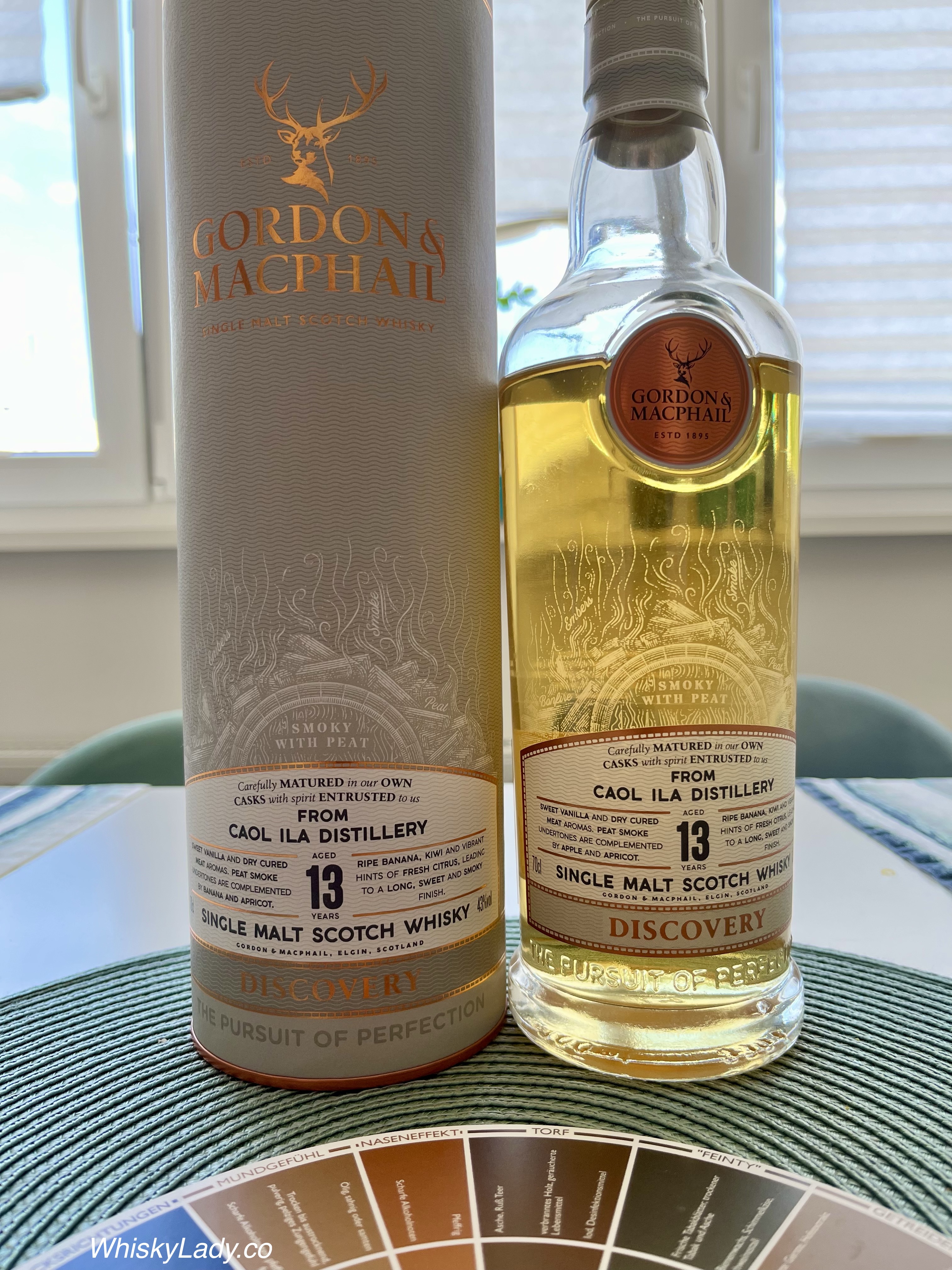
Gordon + MacPhail Discovery: Caol Ila 13 year 43% 

Amongst the Islay distilleries, Caol Ila is generally known to be one of the lighter whiskies – both in terms of its peat and colour as they typically stick with ex-bourbon barrels for maturing. This leads to generally quite an approachable balanced peat dram. And for all those folks who love the light peat in Jonny Walker? Caol Ila is likely responsible!

All of this made it a perfect choice for our final whisky in our evening exploring different dimensions of single malts. I already sampled this particular Gordon & MacPhail Discovery series expression at Paris Whisky Live. It was just a teasing taste, yet enough to be confident in adding it as the “peat” element in our 1st Nurnberg International Whisky Tasting evening.

So what did we think?

Caol Ila 13 year 43% 

  • Colour – Old gold (0.6)
  • Nose – Initially greeted by wet wood and embers, then warmed into smoked pork belly, maple bacon, and cured sweetmeats. After some time, the fruit came more to the fore with glazed banana, roasted pineapple, sweet grass
  • Palate – Smoked meat, soft, gentle peat, fruity
  • Finish – Long sweet cinnamon and lightly smoky
  • Water – Personal choice – for some, this helps open up the whisky to enhance the fruitiness, for others, it was not needed at all!

We had a few peat skeptics in the room… many of whom were pleasantly surprised at the subtle sweet peat and balance of this whisky – cured meats glazed with fruit were much more approachable than some “in your face” bold peat “bonfire” and “iodine” whiskies!

For those of us familiar with the distillery – it is what we have come to expect – a balanced peat, the kind of dram that invites you to slow down, curl up into a comfy chair, put on some good music, and just relax, slowly sipping and savouring.

What do the good folks over at Gordon & Macphail have to say about this expression?

Sweet vanilla and dry cured meat aromas. Peat smoke umdertones are complemented by banana and apricot.

Ripe banana, kiwi and vibrant hints of fresh citrus, leading to a long, sweet and smoky finish.

With this peat expression, we closed our inaugural tasting session in which we explored the impact of cask (ex-bourbon and ex-sherry) and peat in the Gordon & Macphail Discovery series!

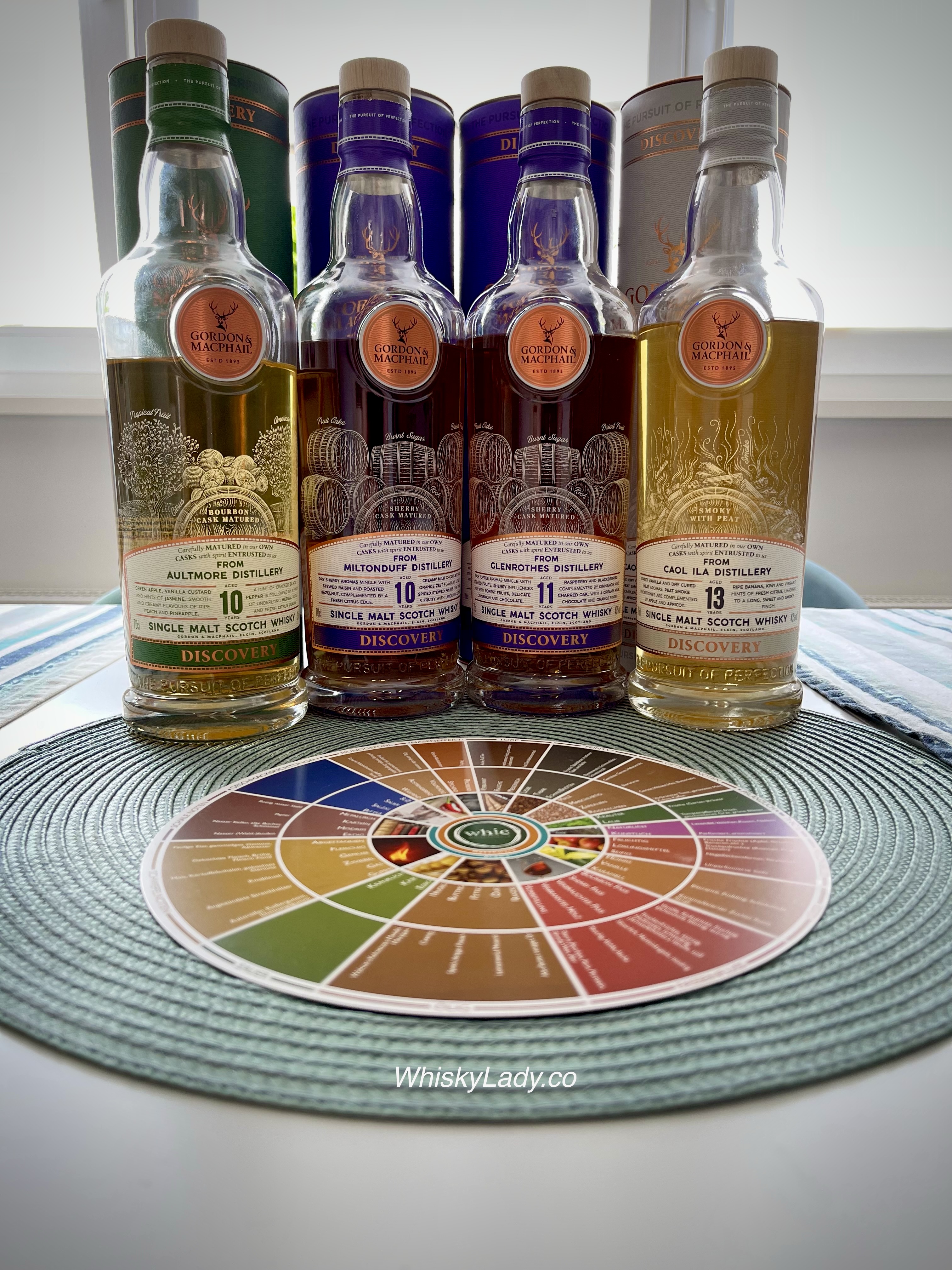
Our evening explored a quartet from Gordon & Macphail’s Discovery series.

Around the room, we had slightly different preferences – however if you pushed me to rank, I would probably put the Miltonduff 1st, followed by the Aultmore, then this Caol Ila, finishing with the Glenrothes.

What additional Caol Ila tastings over the years? There have been a few – mostly from independent bottlers:

Curious to know more? Why not follow Whisky Lady on:
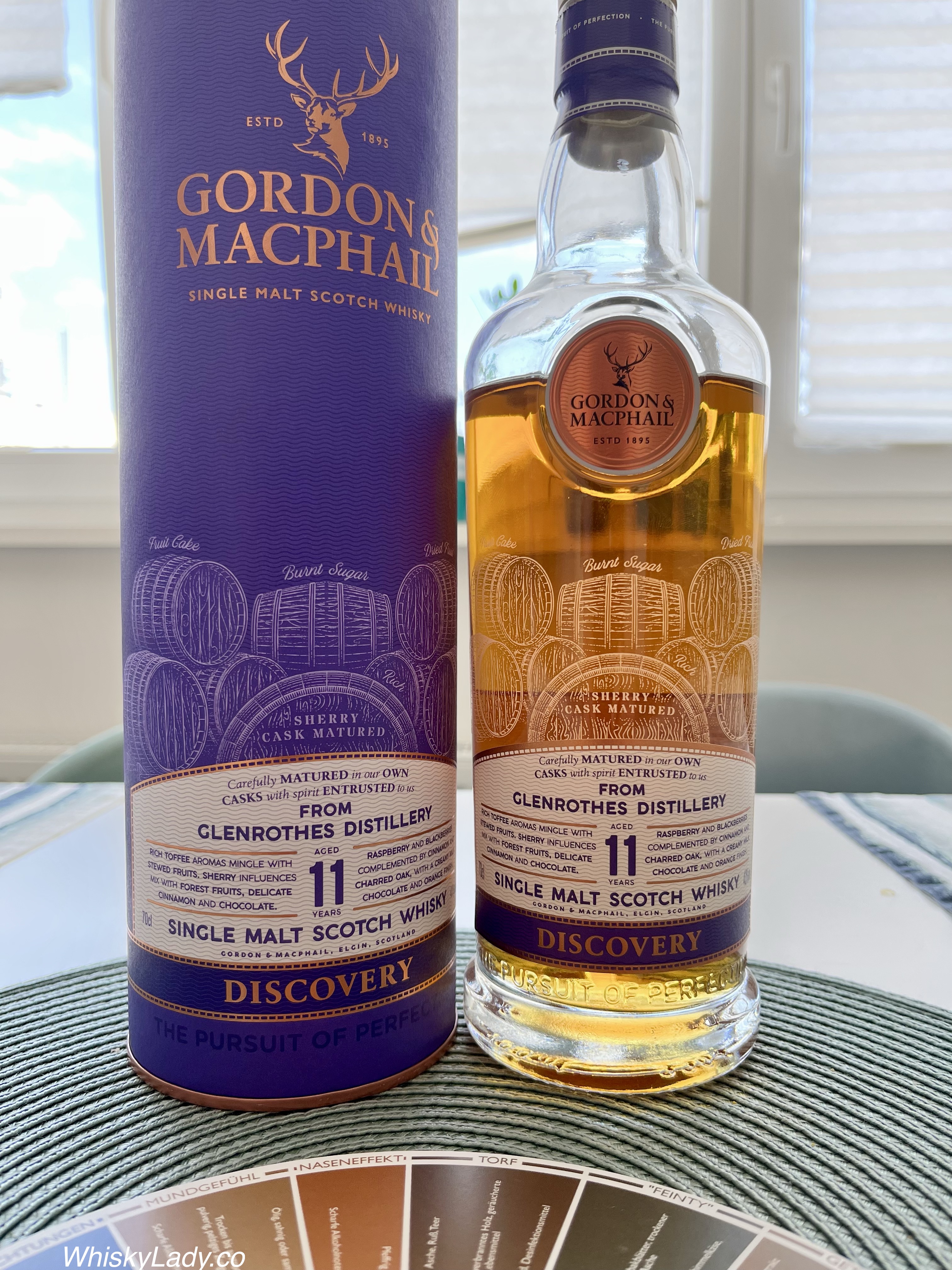
Gordon + MacPhail Discovery: Glenrothes 11 year 43% 

In our exploration of Gordon & MacPhail’s Discovery range, we had not one but two Sherry expressions. The Miltonduff was a sheer delight – sherry with lovely balance. So what about this 2nd Sherry expression from the Speyside distillery Glenrothes?

Known to typically mature in sherry casks, slowing down is one of their mantras – aware that their spirit tends to need more time in the barrel and also needs time in the glass to open up. What this means is that even an 11-year-old can come across as “young”, a bit brash and spicy along with the rich sherry notes.

What did we think?

Glenrothes 11 year 43% 

  • Colour – Tawny (1.4)
  • Nose – Quite spirited taking some time to settle down. Green grapes then started to reveal more typical sherry elements of toffee, dried fruits, some mocha
  • Palate – A bit aggressive, the fruits and berries were there but also had a spice kick with pronounced wood qualities too
  • Finish – Spicy with some cinnamon chocolate
  • Water – It helped! Brought the sherry elements more to the front – stewed plums, sweet spices, and some herbs too. Also a nice tobacco on the nose and hazelnut on the palate.

We would 100% recommend trying water with this one – certainly gentled some of the more forceful elements. There was none of the balance we absolutely loved in the 1st two whiskies sampled – the Aultmore and Miltonduff – however for all the intense top notes, it wasn’t as rich as I had expected.

It might be one to try again… What do the good folks over at Gordon & Macphail have to say?

Rich toffee aromas mingle with stewed fruits, sherry influences mix with forest fruits, delicate cinnamon and chocolate.

Raspberry and blackberries complemented by cinnamon and charred oak, with a creamy milk chocolate and orange finish.

Nearly without fail, I find Gordon & Macphail’s tasting notes on point. In this case, I could understand where they were coming from, however, you can tell from our description we found a different character, even if some elements were in common.

Perhaps had we tried just the Glenrothes without the Miltonduff, we would have been perfectly satisfied. However side-by-side, the Glenrothes was simply outclassed by the gentler, more nuanced, and elegant Miltonduff for most of us – with one exception! This simply goes to prove – palate preferences are personal. What appeals to one may differ from others’ opinions. And that’s what makes tasting with others so much fun!

Our evening explored a quartet from Gordon & Macphail’s Discovery series.

And what about other experiences with Glenrothes? There have been more than a few!

Curious to know more? Why not follow Whisky Lady on:
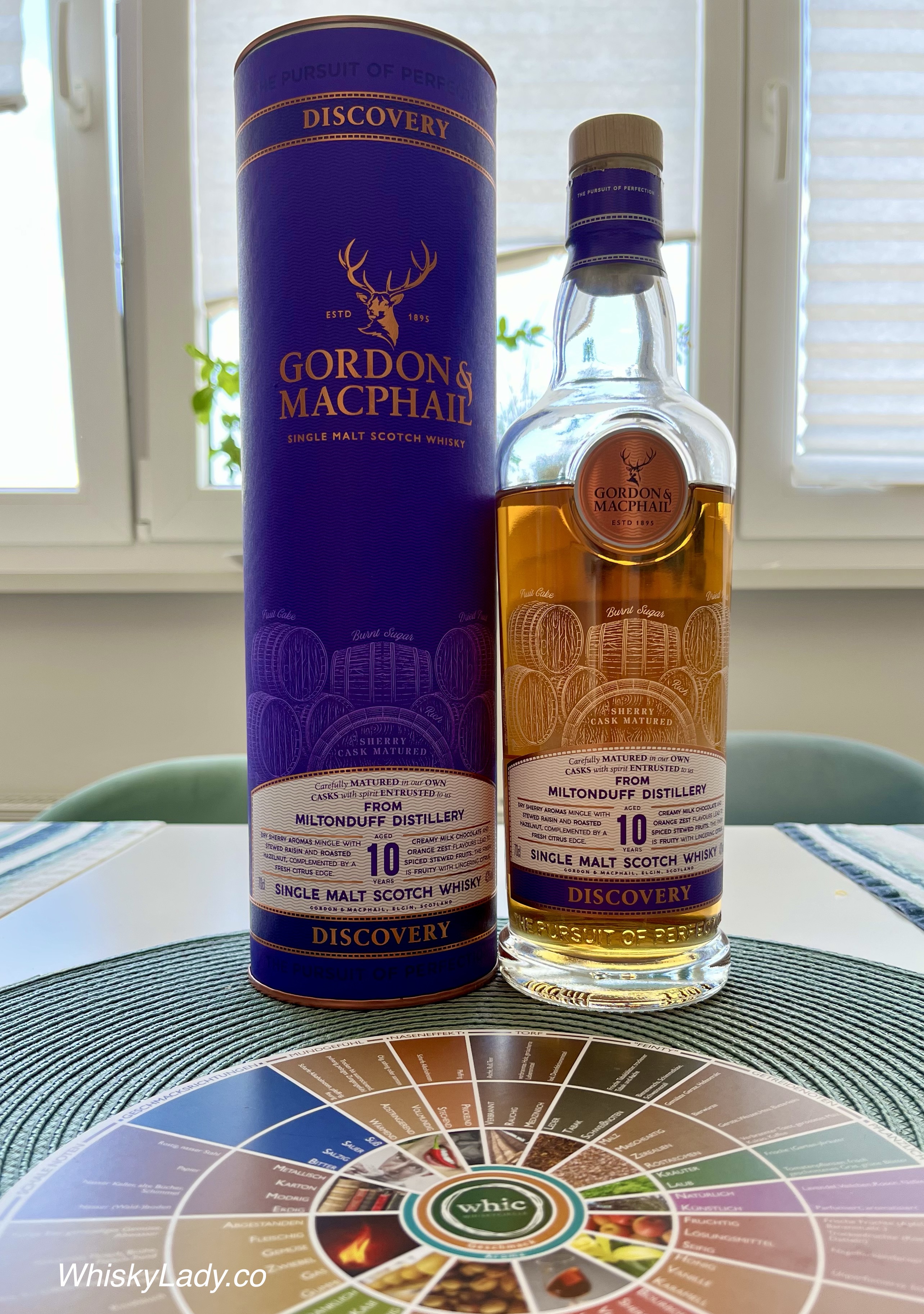
Gordon + MacPhail Discovery: Miltonduff 10 year 43% 

After the delightful Aultmore10 year, we moved on to Miltonduff. A key element in Ballentine’s blend, increasingly, we see more and more Miltonduff standing on its own as a single malt. I’ve generally found my experience with Miltonduff positive – charming, elegant yet with enough substance to not be a total lightweight.

As for this ex-sherry expression? After twice sampling it at whisky shows (Singapore 2018, Paris 2022), I simply HAD to have a full bottle to experience at leisure!

So what did we think this summer in Nurnberg?

Miltonduff 10 year 43% 

  • Colour – Tawny (1.4)
  • Nose – Wow! Stewed fruits, dates, plums, Christmas pudding, sweet spices, rum raisins, over time a lovely marshmallow sweetness
  • Palate – What a delightful dry sherry! Some spice, dark fruits, creamy cocoa, a special cake, dry wood
  • Finish – Toffee, honey… over time shifting to a lovely honeyed citrus orange finish
  • Water – At 43% it may seem counter-intuitive to add, however, it really boosts the creamy caramel and treacle quality, amps up the sweet spices, goes from stewed fruits to juicy tropical fruits, dry to fresh wood

So wonderfully smooth, balanced with a truly lovely mouthfeel. Whilst a bit “dry” without water, a few drops of water transformed it.

For those newer to whisky tasting, the impact of just a little water was a revelation! How could just a few drops of water make such a difference? Yet it does!

Overall we were rather pleased with this one – most enjoyable! The more time in the glass, the more it delighted – a delicious dessert in a glass!

What do the good folks over at Gordon & Macphail have to say about this expression?

Dry sherry aromas mingle with stewed raisin and roasted hazelnut, complemented by fresh citrus edge.

Creamy milk chocolate and orange zest flavours lead to spiced stewed fruits.

The finish is fruity with lingering citrus.

All in all, a great start to an evening exploring Gordon and MacPhail’s Discovery range.

Our evening explored a quartet from Gordon & Macphail’s Discovery series.

And what about other explorations of Miltonduff? Here are some tastings:

Curious to know more? Why not follow Whisky Lady on:
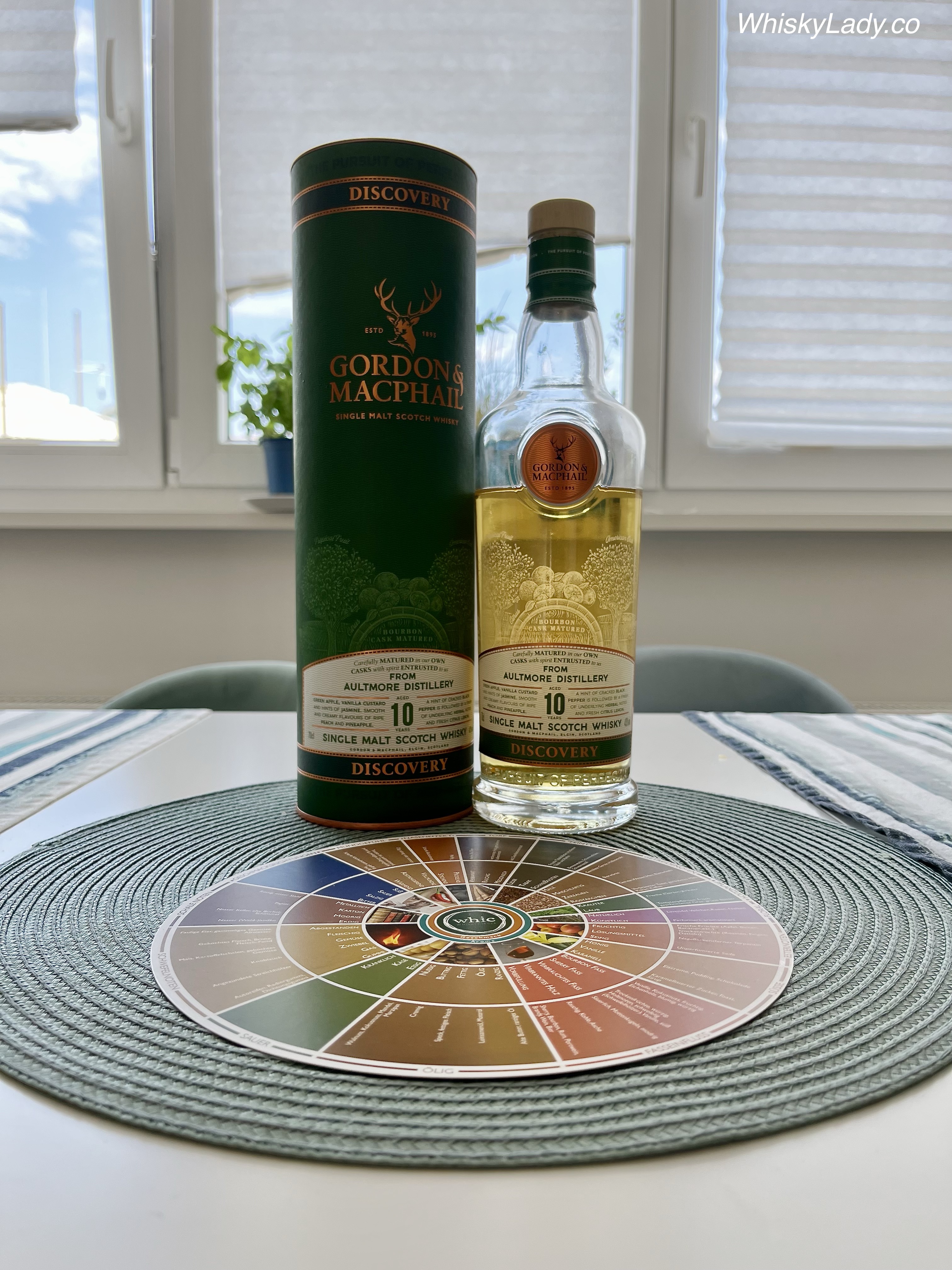
Gordon + MacPhail Discovery: Aultmore 10 year 43% 

We began our “proper” tasting with a distillery known for its lighter style – Aultmore.  Part of the Bacardi family, it is known for a lighter, fruity nose and more substantial palate, this Speyside distillery has both official bottlings and can be found in select independent bottlings – like this one from Gordon & Macphail.

So… what did we discover?

Aultmore 10 year 43% 

  • Colour – Yellow gold (0.5)
  • Nose – A lovely fresh green apple, later joined by a pear too. As it opened further, revealed soft French vanilla and cereals, lightly floral – especially jasmin, gentle lemony cream
  • Palate – Delightful crisp pears, fresh wood, some spice – primarily cracked black pepper, more of that cereal (lightly toasted?), then pineapple and apricot, creamy mouthfeel, very smooth and balanced
  • Finish – Sweetwood, fresh herbs, and light spice with a faintly bitter close
  • Water – No inclination to add! It was perfect exactly as it is!

A perfect fresh spring-like dram – a lovely balance, nuanced and most enjoyable. Even going back, it stood the test – remaining a delightful, fragrant, easy-sipping dram with just enough “oomph!” and depth going on to make it interesting.

This was a clear “hit” of the evening – as evidenced by more of a ‘dent’ made into this bottle than the others! And as we are in the summer months, I wouldn’t be surprised if there are more occasions to dip into it again!

What do the good folks over at Gordon & Macphail have to say about this expression?

Green apple, vanilla custard, and hints of jasmine, smooth and creamy flavours of ripe peach and pineapple.

A hint of cracked black pepper is followed by a finish of underlying herbal notes and fresh citrus lemon.

All in all, a great start to an evening exploring Gordon and MacPhail’s Discovery range.

Our evening explored a quartet from Gordon & Macphail’s Discovery series.

And what about other experiences with Aultmore? Check out the following:

Curious to know more? Why not follow Whisky Lady on:
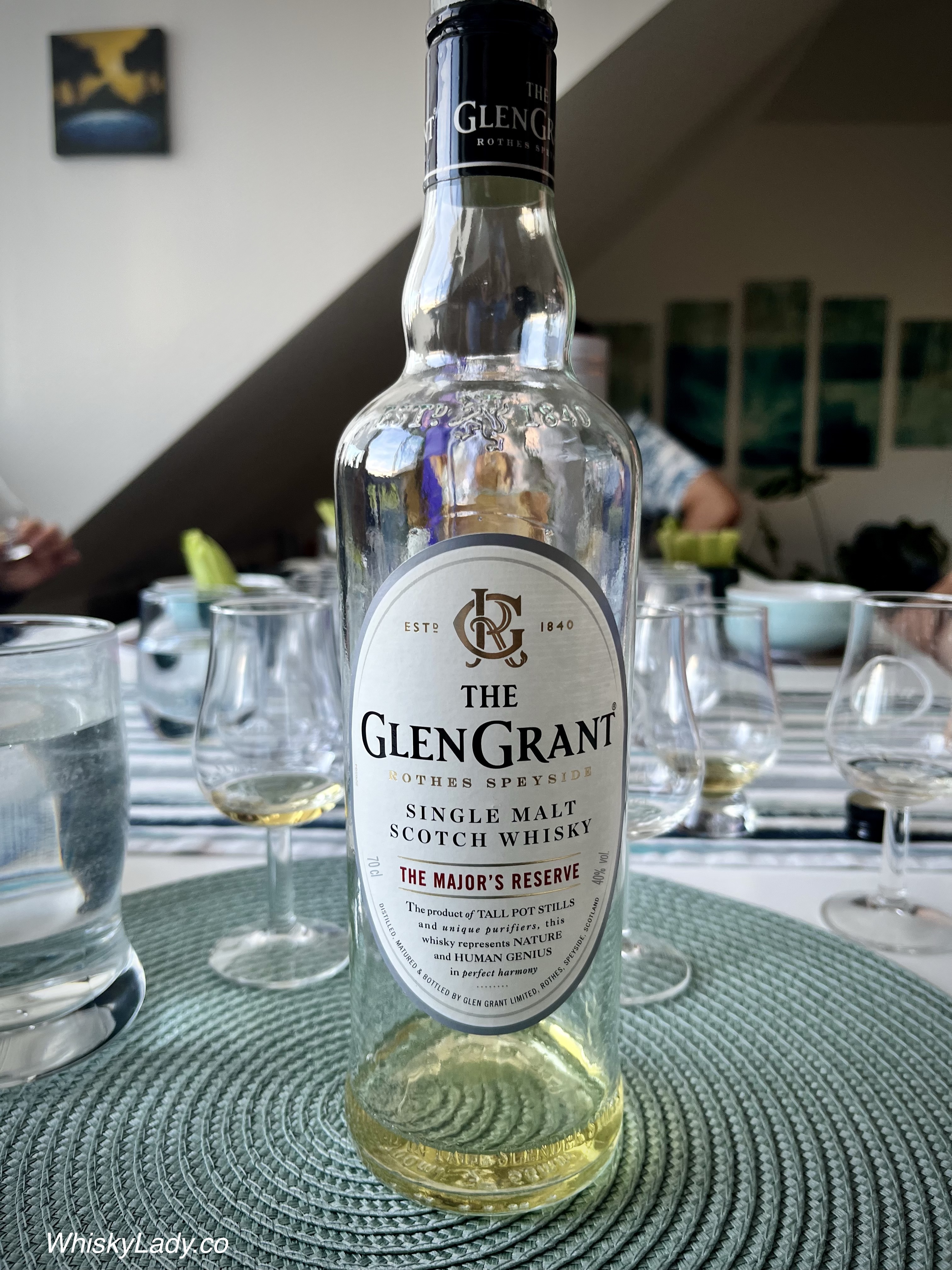
Calibration Dram – Glen Grant “The Major’s Reserve” 40%

During our inaugural Nurnberg Whisky tasting group evening, my co-conspirator in setting up the event brought along his “Calibration” whisky… It was an easy-drinking dram that he consistently starts with – a brilliant idea!

The beauty of this approach is to be able to discern immediately whether one is truly in the mood for a tasting. If something that normally is appealing and amiable doesn’t suit you – chances are it isn’t the whisky, it’s you! As let’s face it, every night is NOT whisky time! 🙂

By easing the palate into each tasting in a consistent way – with a straightforward accessible dram – he’s already tuned in to aromas. And with a low alcohol count (only 40%), one’s palate adjusts to spirits, ready to interpret flavours beyond the initial hit of alcohol. Genius.

So what did he bring?

Glen Grant “The Major’s Reserve” 40% 

  • Nose – Honey, fruit – mostly apples and pears – then also a nuttiness, shortbread, vanilla cream, hint of tobacco leaf, a lovely floral perfume
  • Palate – Gentle spice, creamy butterscotch, fruit, oak
  • Finish – Slightly bitter and astringent, tobacco and spice

Overall an affable, accessible, and exceedingly affordable dram. In Germany, you can find it for only Eur 18!

I was lucky to have just a few drops remaining in the bottle to linger over with most of my tasting notes from that later revisit.

My previous experience with Glen Grant has been at more sociable gatherings where no tasting notes were taken or venerable drams like a 60 year old or 64-year-old. It was quite interesting to glimpse a significantly younger avatar – perhaps as little as just three years!

After our palate calibration dram, we continued with a quartet from Gordon & Macphail’s Discovery series.

Curious to know more? Why not follow Whisky Lady on:
Wilkommen to our Nurnberg International Whisky Tasting group!

Wilkommen in unserem neuen Internationalen Nurnberg Whisky-Verkostungsclub!

Why “new”? Well, there exists already a well-established Whisky Club in Nurnberg. And the “international”? This is a clear reflection of our wee group – a mix of nationalities and international orientations – many of whom met via an International social “Meetup” group.

We kicked off our explorations together in July 2023 with a set I had been waiting to open for quite some time! Thinking initially to bring to India, it was a delight to open instead in Deutschland.

Before we began, one guy pulled out a nearly empty bottle of Glen Grant – with the brilliant idea to have a sip of a palate “calibration” dram! Something that he shared he does consistently before sitting down to a tasting – what a great alternative to spitting out the 1st sip!

We then got on with the “main course” with a quartet from Gordon & Macphail’s Discovery series.

Two I already had a fair idea of what to expect from a brief brush in Paris, two were new expressions from familiar distilleries. If you are curious to dive deeper, detailed tasting notes are available in the above links!

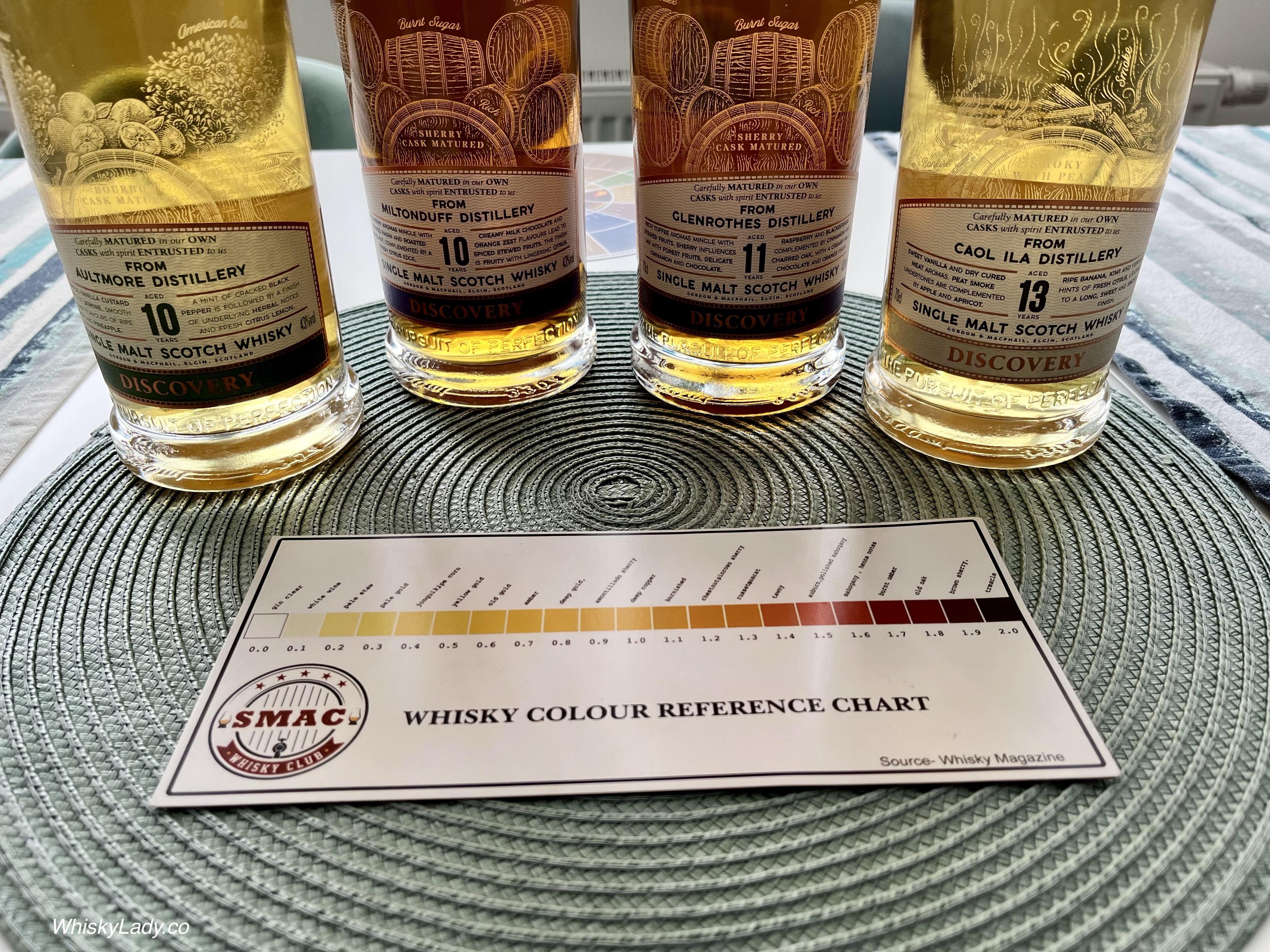
Our evening was a mix of experienced whisky explorers and those simply curious to learn more. I thought a couple of “reference points” could help make it easier to spark a creative conversation.

One was a colour chart from the Single Malt Amateur Club (SMAC) from Bangalore and Pune which provided a range of points for judging the whisky colour with a description. Why consider colour? In the case of all four whiskies, we understand they are without “added” colour, hence colour was a helpful way to illustrate the impact of an ex-Sherry cask vs ex-Bourbon cask on the whisky.

Another tool we used was a Tasting Wheel – courtesy of Whic.de (via SWRI). The reaction to some of the descriptions was amusing.

Do you really find “Speck, festiges Fleisch” (bacon, fatty meat) in whisky? How can that be a good thing???

As we wandered through our quartet, we did indeed find several standard whisky aromas and tastes…. including bacon in our peaty Caol Ila!!

We concluded it was a good start and can’t wait to see where we go next!

PS – If you are curious about my sampling of the Miltonduff and Caol Ila from Paris Whisky Live, check this out:

Paris Whisky Live – Gordon + Macphail Discovery Tomatin, Miltonduff, Caol Ila

Curious to know more? Why not follow Whisky Lady on: