The Whisky Ladies of Mumbai!

What do you get when you combine kick-ass brilliant women and interesting whiskies? An insanely good time!

Years ago, I was interviewed as a woman whisky drinker, with the implication that the fairer sex enjoying a good dram is something new. Let me be clear – it is not!

However at all the recent whisky ‘Master classes’ in Mumbai and Delhi, lead by Master Distillers hoping to capture the hearts and palates of the Indian market, just where were the other women whisky appreciators? Why was I a rarity rather than the norm?

Wake up gents! We do exist… we are a growing tribe globally… no less so in India… and you ignore us at your peril!

So, how did this particular ‘Whisky Ladies’ event come about?

It all started with an innocent query about whisky drinking habits… Which lead to a conversation about women whisky afficiandos… Which sparked an idea to bring together a few ladies for a fine evening!
Without any effort, it was easy to gather a group of amusing women with diverse interests and one shared passion – whisky. Our host for the evening opened her gorgeous home in South Bombay for a most convivial setting – perfect for a merry night!
Whisky Ladies 1st Set (Table For One)

Whisky Ladies 1st Set (Photo: Table For One)

As for our killer line up of whisky?? Oh baby!

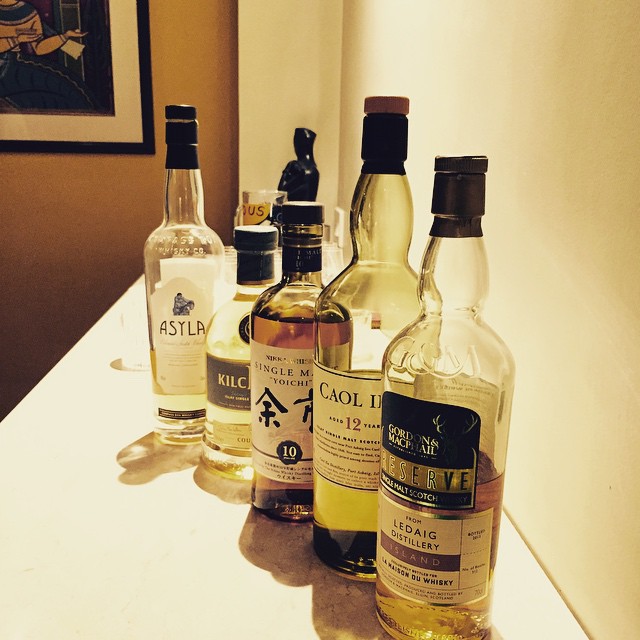
  • Compass Box’s Asyla – Love Compass Box blends and this delightful light number is like a joyous summer romp – fresh and flowery. A decidedly feminine start to the evening and a favourite of a few.
  • Kilchoman Coull Point – A complete contrast from a newer Islay distillery with a little wild ocean spray… top pick of one discerning whisky aficionado!
  • Nikka Yoichi 10 year – Then a jaunt to Japan for some mid–autumn cider after a wander through pine-filled British Columbia forests… Mmm….
  • Caol Ila 12 year – Ahh…. where would we be without this good old faithful Islay? Many fans in the room welcomed back an old friend!
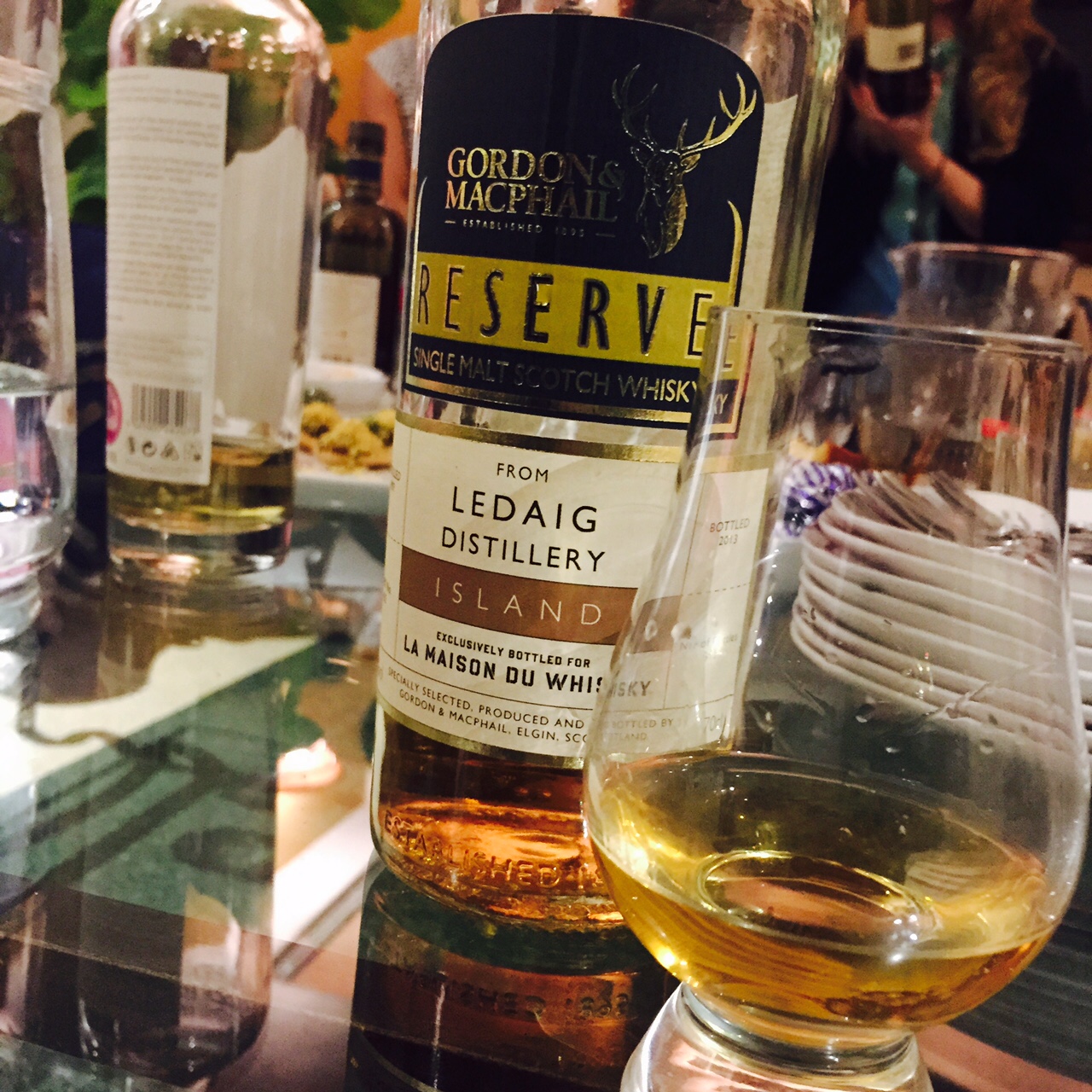
  • Ledaig 1997/2013 46% – From the independent bottler Gordon & MacPhail, we closed our evening with a little trip to the Isle of Mull. Calmer seas, peat smoke, complexity with an enthusiastic conclusion – “It’s really, really, reeaaaallly yum!” This one caught favour with more than one female!

I can’t wait for Pollywood‘s weekly vlog which will have a few seconds from our evening. And with the success of our first gathering, there is no doubt this will become a monthly affair!

In fact, such are our ambitions there was talk of hatching plots to get Whisky Live (or something similar) back to India…

So gentlemen be warned. We are loud, proud whisky sipping women and we aren’t waiting around for an invitation. We’ll be making them!

Nikka 'Yoichi' 10 year (Table For One)

Nikka ‘Yoichi’ 10 year with goodies (Photo: Table For One)

Quote of the night from our host: “Please guys, let’s now just enjoy!!” Considering 3 bottles were emptied… we did indeed comply.

Farewell my lovely Ledaig (Table For One)

Farewell my lovely Ledaig (Photo: Table For One)

For a few amusing takes by some other Whisky Ladies… check out:

You can also find Whisky Lady in India on:

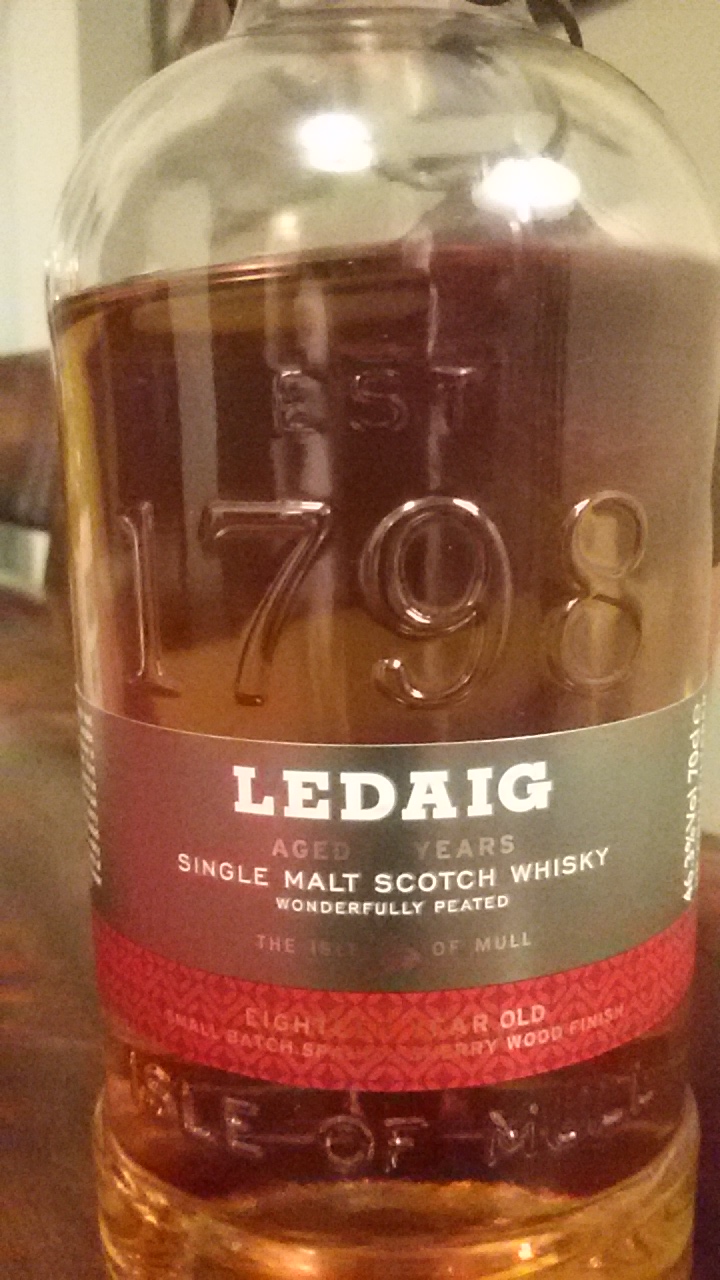
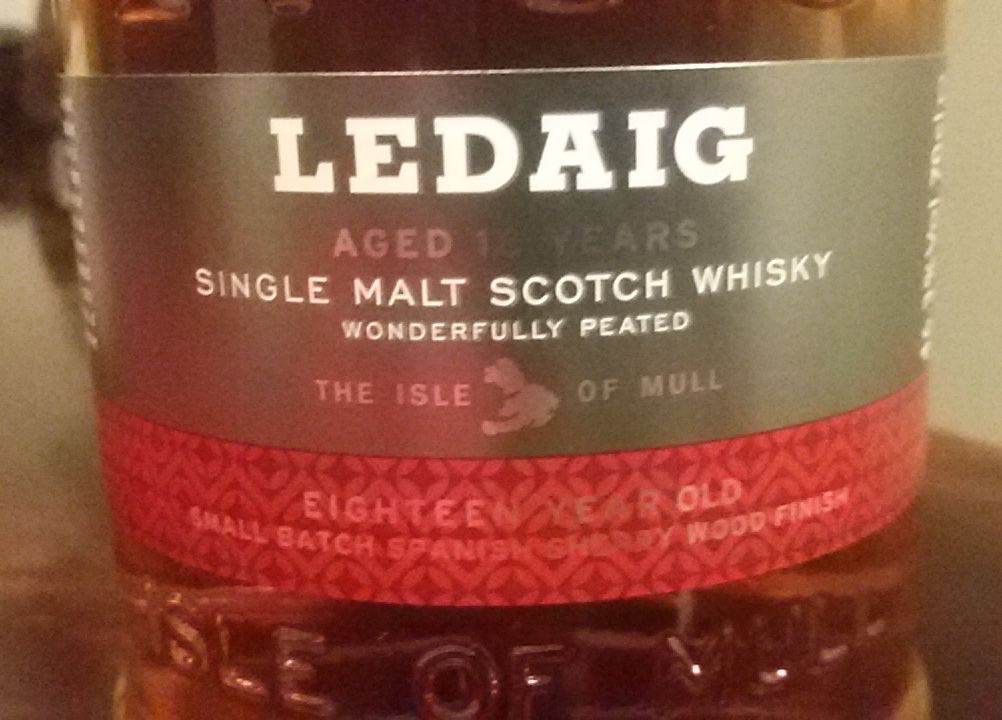
Ledaig 18 year 46.3%

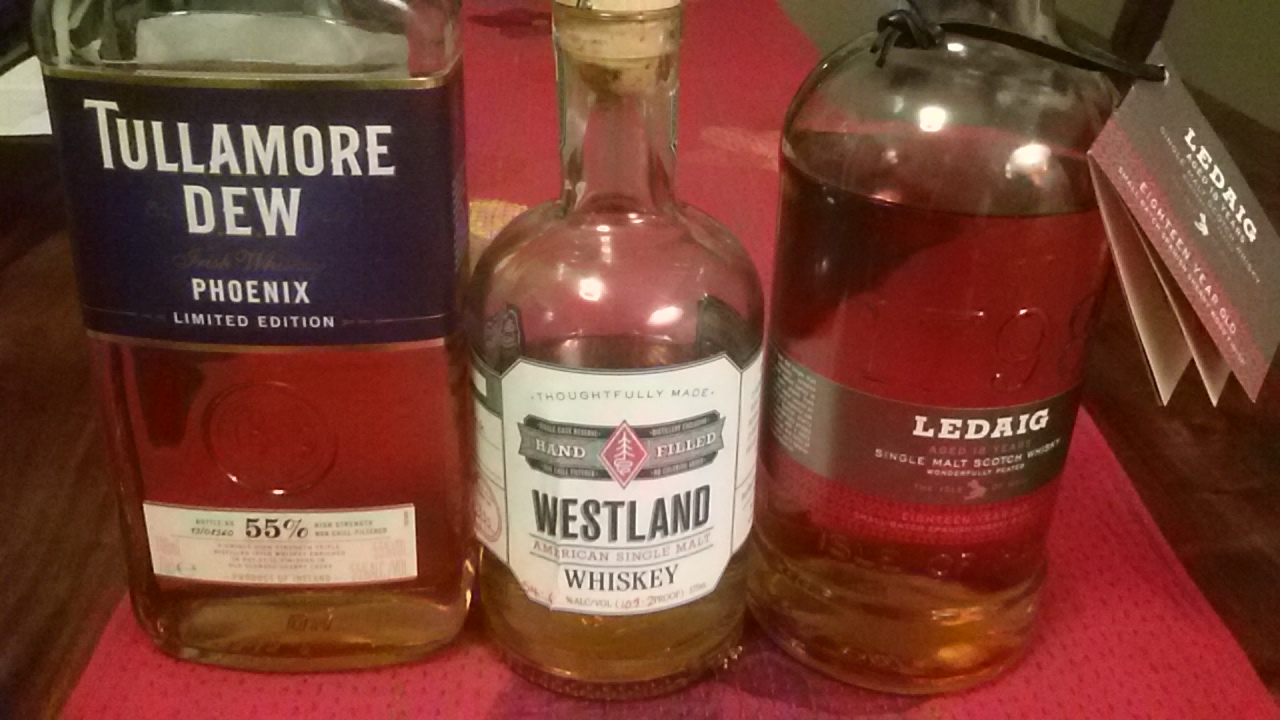
Our June 2015 monsoon tasting trio featured whiskies from Ireland, USA and Scotland:

The Scottish contribution may have been last but was definitely not the least!

Ledaig 18 year (Whisky Lady)

Ledaig 18 year (Whisky Lady)

  • Nose –  Opening up a box of biscuits, the dive  deep into the forest with wet moss, dripping in humidity, whiff of smoked bacon that became increasingly prominent, some fruit cake or Christmas pudding, fresh sawed lumber, sea salt, cod liver oil, musty
  • Taste – A meaty peaty, chewy body… As our host shared, as a vegetarian, the whisky simply doesn’t fall into a vegetarian profile so she had no real reference point! Tumeric, smokey tobacco, smooth and oddly mild, oily
  • Finish – Sweet, salty but significant. Some thought it had a salty bitter quality.

Ledaig is a whisky line from the Tobermory distillery – the only whisky distillery on the Isle of Mull. While it hearkens its origins to 1798, it has a checkered history with a revolving door of owners, times when the doors shut then re-opened and is currently owned by Burn Stewart Distillers who also own Deanston and Bunnahabhain distilleries.

The Tobermory distillery produces whiskies in various avatars:

  • The peated single malt Ledaig expressions
  • Some whiskies – both single malts and blends – under the Tobermory brand
  • And can be found in blends like Scottish Leader and Black Bottle
We previously sampled the Ledaig 1997 (bottled in 2013 i.e. 16 yr)  – this had some elements in common yet the 18-year-old was distinctively more ‘meaty’.
Ledaig 18 label (Whisky Lady)

Ledaig 18 label (Whisky Lady)

Official tasting notes:

A wonderfully smoky island single malt Scotch whisky which balances sweet and floral aromas with the richness and warmth of sea salt and smoke.

This 18 Year Old Ledaig represents the rebirth of the style of malt whisky that would have originally been produced at the distillery.

This sought after peated Hebridean style Single Malt Scotch Whisky balances rich and fruity, sherried smokiness with seaweed and light creosote that allows for a long and quite pungent finish with more smoke and a hint of liquorice and sea spray. Unchill-filtered @ 46.3% ABV.

Each whisky in our June tasting session was completely different from the others. For some, the winner of the day the American Westland – showing what quality, care and creativity can accomplish! For others, it was the Ledaig.
Monsoon trio - Tullamore DEW Phoenix, Westland Cask No 395, Ledaig 18 year (Whisky Lady)

Monsoon trio – Tullamore DEW Phoenix, Westland Cask No 395, Ledaig 18 year (Whisky Lady)

The Mumbai Amrut Jim Murray Experience

We came, we sniffed, we spat and were decidedly NOT conquered!

Over 150 folks showed up at Mumbai’s Taj Mahal Hotel Crystal Ballroom for a whisky tasting with whisky guru Jim Murray on 10 March 2015.

The invitation card said to arrive at 7:15pm as the tasting would begin sharp at 7:30. The doors were tightly shut until the appointed hour as the staff poured out 6 samples of whiskies in tulip glasses for each attendee.

Amrut

And then we experienced classic IST (Indian stretchable time) as those who reached on time, waited and waited and then la la di la la waited some more until 8:45pm when one of the ‘special guests’ meandered in…

Then the ‘show’ started. And it was a show… carefully curated to show off Amrut whiskies.

Beginning with a tribute to Jamshedji Tata on his 175th Birth Anniversary, the Amrut founder took us through Amrut highlights over the last decade before introducing Jim Murray.

After some crowd warming chit-chat, Jim began with lessons in how to nose through pointing out what NOT to do (push full snout into the glass), regaling us with tales and anecdotes while we warmed our glasses nestled next to our bodies.

Tasting steps according to Jim Murray:

  1. Lift cover off glass and take the first fresh whiff – dabbing against an imaginary moustache both right then left nostril
  2. Cup glass with both hands to seal the whisky in and warm it against your body for approx. 5 – 10 mins
  3. Hold covered glass away from body, lift hand to let alcohol evaporate while drawing close to then nose again
  4. Take a tiny sip to rinse mouth – the ‘mouth wash’ step – and spit
  5. Then a few seconds later take another whiff right and left nostril followed immediately by a large sip – the 1st taste – roll it around in your mouth, chin up, opening and closing your mouth like a fish, then spit it out
  6. ‘Listen’ to the whisky to ‘hear’ what it tells you about its character
  7. After a few minutes, take a 2nd taste… again whiff, sip, tilt head back, open and close fish style, then spit out or… perhaps… if so inclined… swallow
  8. Again ‘listen’ to what the whisky ‘says’
  9. Repeat steps 2, 3, 7 and 8 as required…

We were discouraged from discussing our impressions at the table, to reduce influencing each other, as part of the ‘lesson’ was to discover how the whisky ‘speaks individually.’ What this means is the notes that follow are the impressions of the two members of our whisky tasting club who jotted down our thoughts.
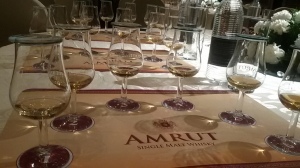
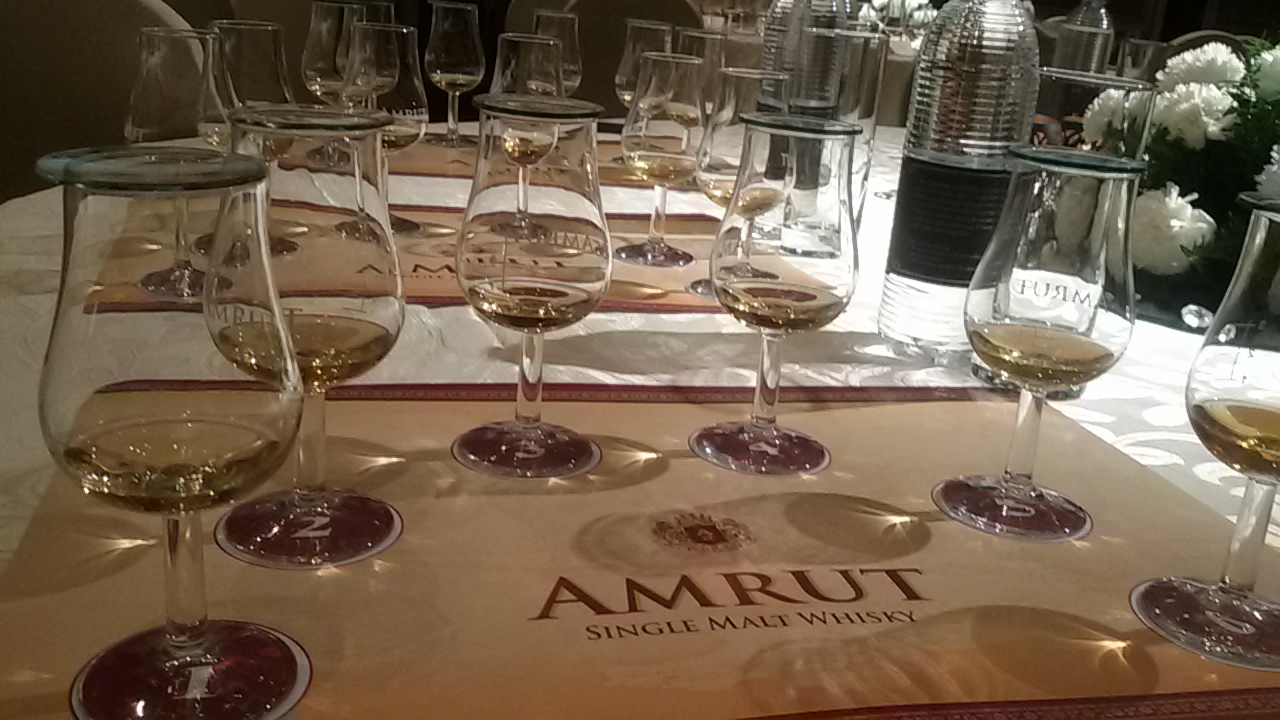
Sample setting

Sample setting before tasting…

I’ve kept the labels as per the place mat however notes in the tasting order.

And here come a BIG caveat – in fairness to all the whiskies – they were poured from 6:30pm so by the time we sampled, two to three hours had elapsed…

Whisky 1 – Glenmorangie 10 year

  • Nose – Initially very mild perfume (fruit) then nothing! Very light, slightly floral, perhaps hidden peat and apricot, dry. Post warming slightly sweeter, still very soft, remained exceedingly light
  • Taste – Dry ash, bitter, mildly briny, like weak (not very good) coffee,  slightly rancid undertone
  • Finish – Dry oak, short
  • Impression – Insipid

Whisky 2 – Amrut Single Malt

  • Nose – More character than the 1st, overripe fruit, dirty socks, sweet, very little peat
  • Taste – Oily, fruit gone slightly bad, with the 2ndtasting coaxed out a little chocolate after extra ‘warming’
  • Finish – Medium short, nothing to write home about
  • Impression – Weak and not terribly interesting

Experience – The first two were ‘revealed’ after we sampled both. We were challenged to identify which was Scottish vs Indian which lead to positively contrast the entry-level Amrut Single Malt against the mass produced entry-level Glenmorangie. While I’m not trying to defend Glenmorangie, I should note the sample was so small it could easily be misleading – the Amrut pour size was far more generous. While Jim extolled the virtues of Amrut vs Glenmorangie, neither were terribly noteworthy.

Whisky 3 – Jim Beam White Label 4 Year

  • Nose – Varnish, ash, an agave / almost tequila quality
  • Taste – Paan betel leaf sweet, a bit minty, dry, not quite leather, slight spice, after oxidizing even sweeter
  • Finish – Not exceptional
  • Impression – No body, no character

Experience – Universally this was noted as ‘different’ than the others tried but not particularly good. Two lone souls identified it as a bourbon. Jim asked one if he was a bourbon fan – the retort was ‘No!’ (and turned out to be a distributor so at least he knows his business!).

Whisky 6 – Amrut Peated

  • Nose – Peaty, smoky sweet, little citrus after warming
  • Taste – Spice, chewy, leather, not peaty on the palate. After further warming and again tasting, bit of coffee, still quite sweet, smooth, no longer spicy
  • Finish – Medium long, tinge of bitter cacao
  • Impression – Most interesting of the evening (which wasn’t saying much), also the most generous pour

Experience – Jim was clearly trying to get us to guess this was an Islay and shared insight into the art (and follies) of adding peat to whiskies – so why not to an Indian whisky? Certainly no objection from this corner!

Whisky 4 – Talisker 10 year (tried after Whisky 6)

  • Nose – Slight smoke, hint of blue cheese, light sweet… in short quite bland
  • Taste – Dry, spice, off-balance, toothpaste? ‘weird whisky’
  • Finish – Jim shared how the ‘weird taste’ lingers
  • Impression – Jim was definitely steering the audience to discover something ‘off’ with this whisky

Experience – Here is where Jim really got after the Scots for their laziness and neglect of their craft – justifying adding caramel vs what Jim would like to see – a ban on caramel! Also castigated Scottish distilleries in general for their methods of cleaning and re-using casks. Shared how Talisker may have been the 1st distillery he visited, however Indian distilleries are now taking much more care with the craft of making single malt.

Whisky 5 – Amrut Fusion

  • Nose – Sweet, varnish, smoke, tannin from oak, clean, mild peat
  • Taste – Oily, mocha, smoke, sugar, oaky
  • Finish – Medium long
  • Impression – Jim shared how ‘well balanced’ the whisky is with its different elements

Experience – Jim extolled the use of quality wood however (not sure if others caught this) did later admit an ‘inconsistency’ with this whisky. Which remains my ‘beef’ with Fusion – either quality control issues at the distillery or massive incompetence and neglect in storage before it makes it to our table. Even after our blind sampling a couple of years ago when we went ‘Yuck!’, I’ve had very mixed experiences with Amrut Fusion ranging from ‘passable’ to ‘no way’ to ‘tolerable’ to ‘ok’ and back to ‘average at best.’

Evening close…

When Jim took a poll at the end of the evening, Amrut was preferred over non-Amrut whiskies, with more preferring the Peated than Fusion (though Fusion also had its fans). He also observed more women preferred the Peated than Fusion.

Jim finished his part of the evening by sharing how he believes India has two outstanding distilleries – Amrut and Paul John – that are way ahead of anything else.

While I certainly applaud his recognition of the efforts of both Indian distilleries and appreciate Mr Murray is an expert genuinely devoted to the world of whisky, not sure the evening truly achieved either the stated objective of ‘education’ or unstated but understood aim of promoting Amrut.

Jim Murray is certainly entertaining and his enthusiasm and love of whisky undisputed, however his slightly bombastic claim of rampant independence was belied by obviously steering the evening in one direction.

And while he repeatedly said how he will keep Amrut ‘on their toes’ if he sees quality slip, the question really is – where does Amrut aspire to be?

If it is truly wants to out-class Scottish whiskies yet with a distinctly Indian character, then why fear including at least one ‘aspirational’ whisky in the sampling to show what true quality single malt craftsmanship is about? Better question, if Amrut is producing cask strength whiskies, why not showcase at least one of those which may have proven more interesting?

The only answer seems to be that clearly this event was targeted primarily at novices to whisky.

For those more familiar with single malts, one could hear various versions of the following remark:

“Have you ever had so many bad/mediocre/below average whiskies in a single eve?”

For me, even the ‘best’ of the lot – Amrut Peated – didn’t stand the test when revisited later in the evening without being juxtaposed next to Jim Beam!

If anything, the evening did a disservice to Amrut, dumbing down what could have been a more interesting debate with a renowned authority on the world of whiskies and, more specifically, where one Indian distillery is forging ground.

Not a complete waste of an evening but I for one was highly grateful to make copious use of the spittoon!

View of the Gateway of India from Taj Mahal Hotel

View of the Gateway of India from Taj Mahal Hotel (Whisky Lady)

You can also find Whisky Lady in India on:

Ledaig 1997 46% (Gordon + MacPhail)

The more I explore the offerings from the independent bottler Gordon & MacPhail, the more I want to check out even more.

Ledaig is the peated line from Tobermoray distillery, the only distillery on the Isle of Mull. It was bottled for La Maison du Whisky and I picked it up during a rather enjoyable early evening in Singapore last year.

Ledaig (Whisky Lady)

Ledaig 1997 (Whisky Lady)

Ledaig 1997 Island Cask No 462 46% (Gordon & MacPhail)

  • Colour – Bright gold
  • Nose – Peat, smoke, tincture of iodine, orange, toasty warm, bold
  • Palate – After an initial punch of peat, hint of pepper, mellowed into a lovely elegant lady. The longer it aired the more notes discovered – fruit, more smoke, salty nuts, and more!
  • Finish – Sweet chewy finish, long and smoky, warm spice

This particular Ledaig was distilled in 1997, bottled in 2013 and is from cask no 462 with a total of 312 bottles.

We originally tasted this whisky as part of our monthly tasting sessions on 17 June 2014 together with Tyrconnel and Talisker Dark Storm.

It was definitely the whisky find of the evening. We had great fun with a guessing game of region, distillery… none came close until the hint was dropped that it is actually bottled by an independent company that specialises in bringing unique expressions and smaller distilleries whiskies to the world.

I revisited this whisky again last month… and enjoyed it even more. A delightful dance on the nose and palate. All the earlier flavours brightened and matured.

I added a dash of water and it ramped up the citrus, punched up the spice on the palate but dampened the smoke. Still lovely liquid gold but my vote is to go for it neat.

Definitely a very special dram – one to savour!

What other’s are saying about related whiskies:

You can also find Whisky Lady in India on:
Talisker Dark Storm NAS 45.8%

Many whisky distillers are chasing after that elusive ‘different’ element. Some succeed, many do not.

Talisker Dark Storm is the latest Duty Free release in Talisker’s efforts after Talisker Storm.

Another thing we are learning is that the true test of a ‘good’ whisky is not in the initial impression… it is when it settles in… reveals another side… is revisited and even more nuances emerge.

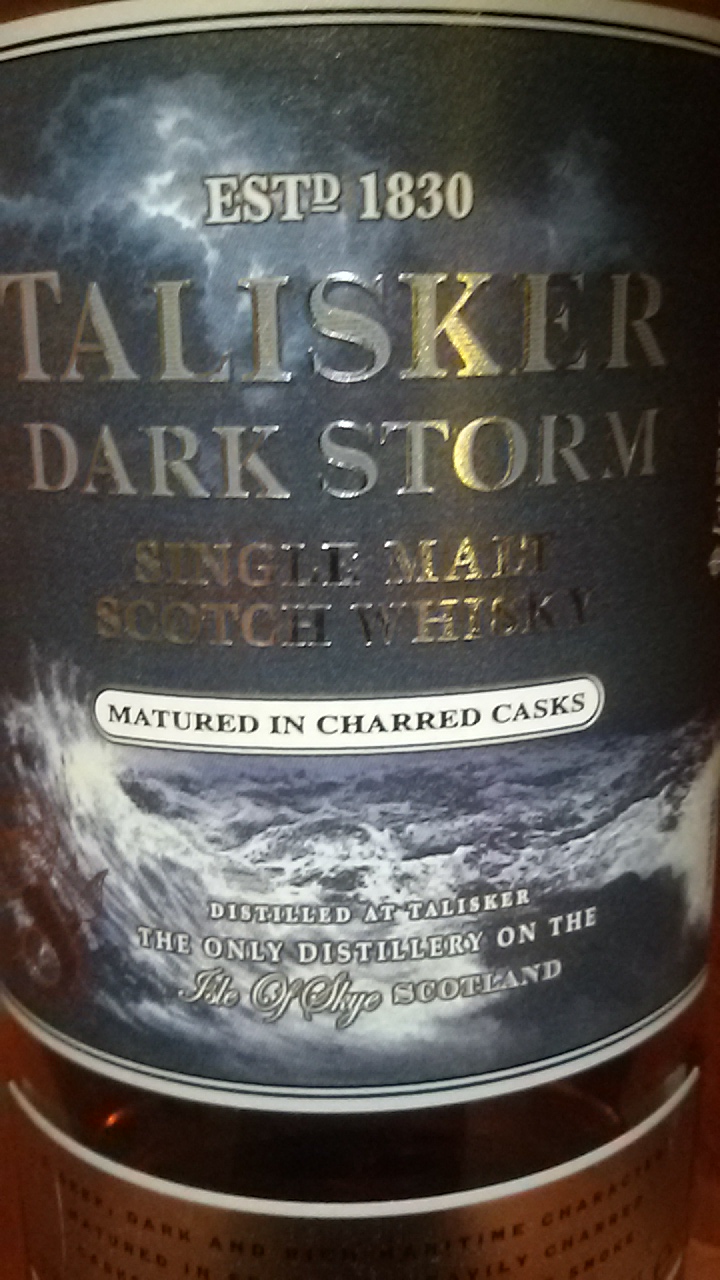
Talisker Dark Storm (Whisky Lady)

Talisker Dark Storm (Whisky Lady)

Talisker Dark Storm 45.8%

We originally tasted this whisky on 14 June 2014 together with Tyrconnell and Ledaig 1997. I re-sampled it in February 2015.

First impression:

  • Colour – Copper
  • Nose – Rubber, leather, caramel, heavy burnt wood
  • Taste – Full-bodied, wet mud, medicinal, more leather, yet smooth with no harshness – in the ‘hoo whee that’s whisky!’ exclaim
  • Finish – Spicy, ash, doesn’t disappear instantly

The unveiling? Surprise! Most were not terribly impressed with earlier Talisker offerings… to learn this was duty-free, no age stated… and actually yummy?!

The stated gimmick is it is matured in heavily charred oak. Hmm…

Second tasting:

Unlike the 1st tasting when the bottle was freshly opened and we quickly snipped, swished, savoured and swallowed, the 2nd round was slightly more leisurely and less complimentary.

Did we get the same notes? More or less… the nose was exceedingly sweet, the medicinal taste seemed to have a vaguely manufactured quality to it. Same with the ash… which dominated both the palate and finish.

The other elements seemed considerably more subdued, less nuanced the longer it had time to breathe. If anything, it became increasingly ‘flat’ like pop loosing its fizz. Yet the ash remained.

Overall assessment

Given the unrelenting ash element and the highlighting the charred oak casks (um… aren’t they all?), clearly Talisker achieved its aim of celebrating burnt wood.

Does it work?

While certainly different from the Talker 10 year, it makes for more of a social gathering whisky than a top choice for an evening at home with a true whisky afficianado.

Up close with Talisker Dark Storm (Whisky Lady)

Up close with Talisker Dark Storm (Whisky Lady)

Other brushes with Talisker:

You can also find Whisky Lady in India on:

Highland Park 1998 40%

Relatively early in my whisky sipping days, I was introduced to Highland Park’s 18 year by a dear friend. It was one whisky I kept returning to savour and enjoy – most often with the very same friend. That whisky and I have some good memories.

Along the way, I also tried other Highland Park options too :

  • 12 year – Decent but for a few extra bucks, the 18 was sublime!
  • 16 year – Good but not worth the raving one would hear, in my ever so humble opinion…
  • And even 21 year – Superb but not my price range!

Yet my favourite remained the 18 year which to me had a delightful balance – a complex nose, full-bodied palate with a finish that lovingly lingered. Add a dash of water and a whole new world of flavours opened up. It had enough going on to keep coming back…

Most important, the 18 year fit into my ‘pinch’ not ‘yeouch!’ pricing category and was easily accessible at Singapore’s Changi airport to grab when passing through en route home to Mumbai.

And then the year based approach took over – bottles of this Orkney offering were found in labels of 1998, 1994 and 1990 – with a sharp price jump – especially the older options.

Sceptical, I decided to start with the Highland Park 1998. The one I picked up was bottled in 2011 – making it almost equivalent to the 12 year.

And the verdict?

I cracked it open, sampled and sighed… in disappointment. Not even up to my memory of the earlier 12 year.

And here I will admit… I dismissed it, forgot about it. I didn’t even offer it as a sample at our monthly whisky sessions as didn’t think it worthy. It joined the league of left overs that would be available at social evenings for less discerning palates.

However in dusting my whisky cabinet the other day, I decided to revisit. After all… it is not improving with age just sitting there and perhaps – just perhaps – I may have been a bit too harsh in my initial assessment.

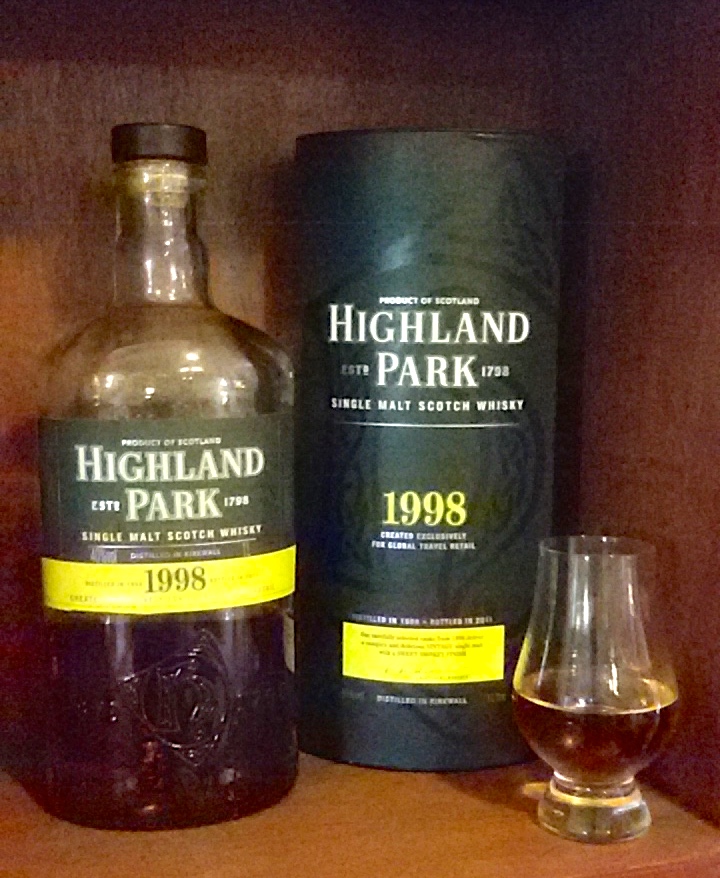
Highland Park 1998 (Whisky Lady)

Highland Park 1998 (Whisky Lady)

Re-tasting the Highland Park 1998 40%:

  • Colour – Rich gold
  • Nose – Pronounced honey, sweet with little else initially then out peeped a hint of smoke with an underlay of peat… as it continued to breath, dried fruit notes emerged
  • Palate – The peat undertone was unmistakable, slightly chewy, dry, faintly bitter and sweet simultaneously. After letting it settle more, a light nuttiness also joined
  • Finish – While it doesn’t dash off immediately, the first impression is light smoke, still retaining the sweetness of the nose and taste yet also adding a clear bitter element too

In fairness, one really should not rely on tasting from bottles opened ages (years!) ago. However while it still lacks a certain quality that makes a truly superb single malt such a marvel, it isn’t a bad dram. It just isn’t a particularly good dram.

Perhaps I was just a wee bit harsh in my initial assessment.

A little more info: Aged in sherry oak casks from Spain. According to the label, the colour is natural.

PS. Interesting that most reviews seem to be of a version bottled in 2010 however unless the label on mine is a typo, it was a year later!

What others say about the Highland Park 1998 bottled in 2010:

You can also find Whisky Lady in India on: