Switzerland’s Säntis 6 year Snow White No 8 Pineau 48%

Switzerland is known for many things – gorgeous mountains and lakes, chocolate and cheese, watches and banking… but whisky? That isn’t exactly the first thing you think of… in fact, just 25 years ago it wasn’t even legal! However, like many parts of the world, Switzerland is now very much in the whisky-making game.

My first brush was the Old Bear from Langatun Distillery – courtesy of a recommendation from the good folks at The Whisky Exchange in London. It was smoky and certainly left an impression.

Next up was a random selection from a spirits shop in Munich on a trip, before there was even a possibility of moving to Germany. In this case, it was the surprisingly accessible Forty-Three Swiss Highland Single Malt Whisky.

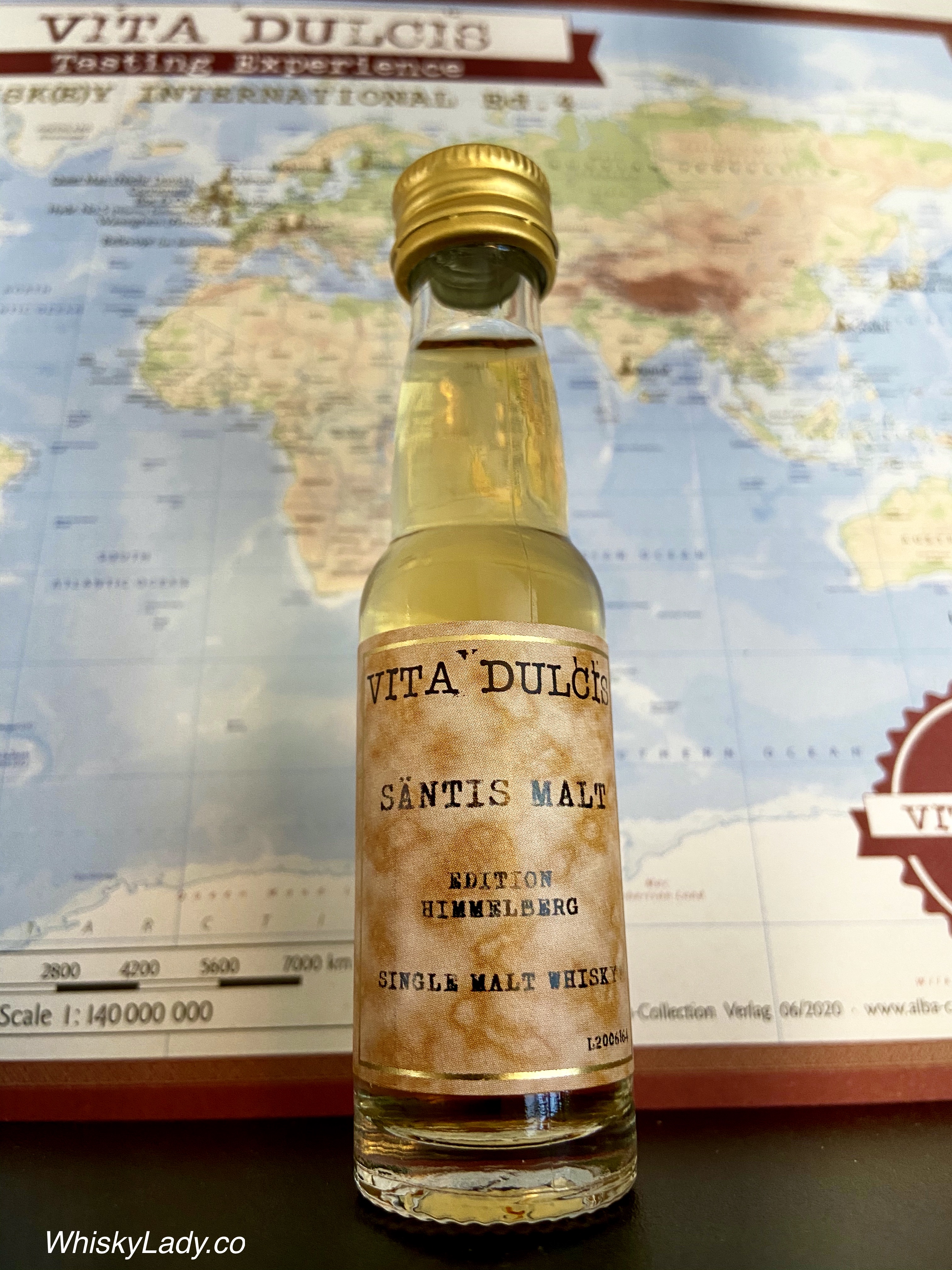
Fast forward a few years and I found myself living in Nurnberg, Germany. And three years ago, in December 2020, there was a mini from Säntis in an Advent Kalendar I tackled as a pre-Christmas project.  In this case, it was the Säntis Malt Himmelberg Edition 43%. I have to admit, it didn’t exactly impress. Why? In part because it reminded me of drinking a Radler – a sweet lemony beer – more than whisky!

So when a Säntis was recommended for our European whisky session in December 2023, I decided to keep an open mind. I have learned one should not judge a distillery solely based on one experience alone.

What did we think?
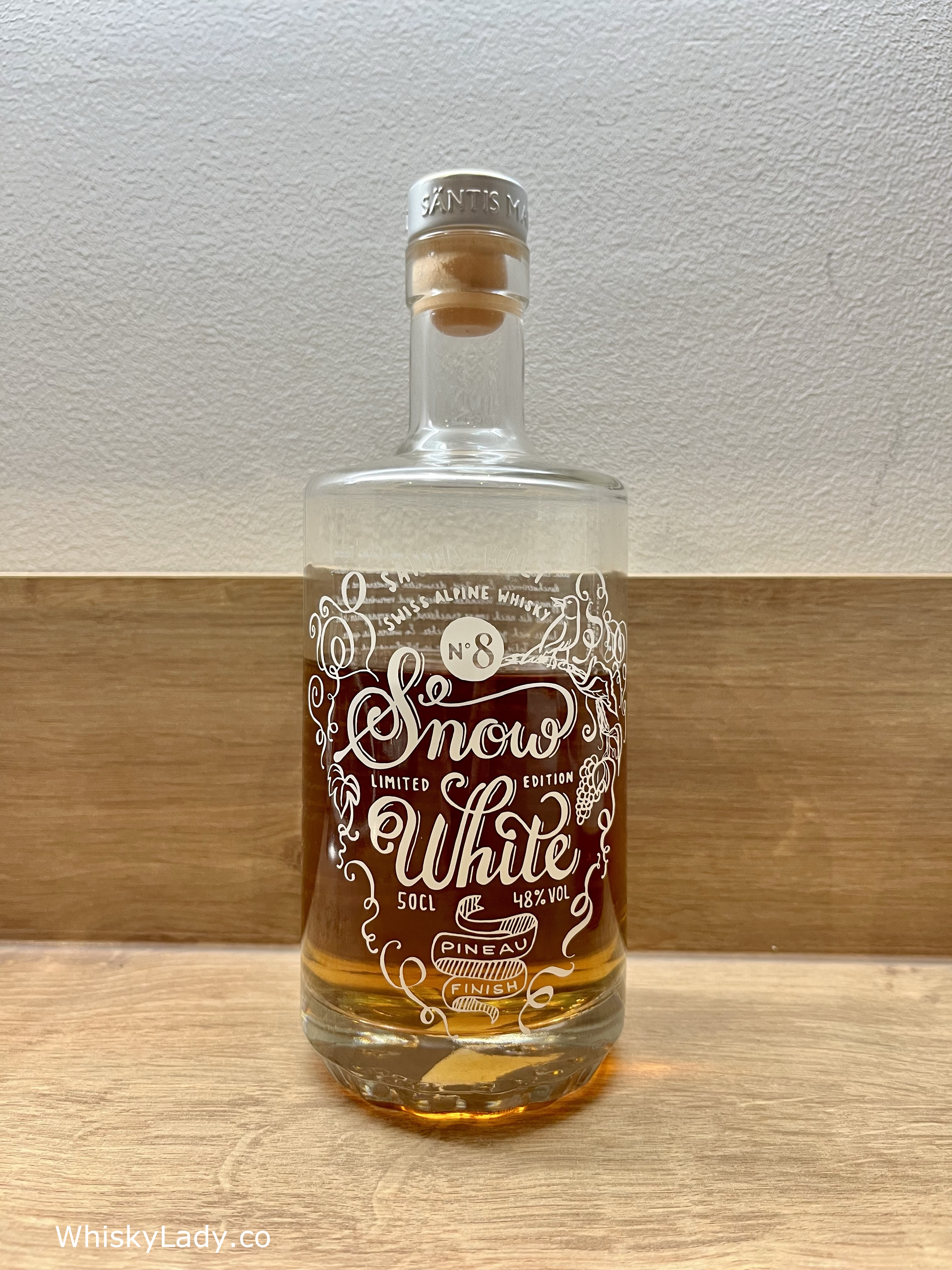
Säntis No. 8 Snow White 6-year Pineau 48%

  • Nose – At first it was just a hit of alcohol, then sweetened into candy, a bit nutty, plum skins, curiously it reminded me more of schnapps than whisky!
  • Palate – A bit aggressive and prickly, past the pepper were wine tannins, shifting from plum skin to grape, very dry and a mixed red fruit jam (the kind that doesn’t have a distinguishable type of berry or fruit), lemon-lime soda (or dare I say? Radler!), maybe joined by some cherry?
  • Finish – It was like it was impersonating a sherry finish but wasn’t quite able to pull it off, some generic cola

We really didn’t mean to be uncharitable, however descriptions like “headache-inducing” and “one flavour blob” were bantered about. We generally agreed that the nose outperformed the palate and finish. And if anything, it had a schnapps-like quality – depending on your opinion of schnapps, this could be a good or not-so-good thing.

Our discussion turned to the many distilleries around Germany and Switzerland that started off brewing beer or distilling schnapps, and then veered into the whisky business. Using stills meant more for distilling fruit than malted barley mash does lead to some curious results. I confessed how my original impression of German whiskies was direct to the point of being a bit harsh, lacking nuance and complexity. Until I discovered St Kilian and Aureum and a few notable others, which both show a different, much more interesting range and style.

But back to the Säntis, our whisky contributor shared the story of the Lochar distillery’s Swiss “whisky trek“…. starting with one inn, there are now some 26 barrels found at different hiking locations around Switzerland. Each barrel is slightly different, thanks to the differing maturing conditions such as altitude or barrels.

She found the boxed set with two nosing glasses – available online for around Eur 72. What more do we know? It was initially aged for 5.5 years in small beer barrels of the Appenzeller Brewery Locher before being finished for 8 months in ex-Pineau des Charentes casks from France.

It was a bit of a disappointment, however, we then thought to put it into context. If we spent a day trekking in the alps, the crisp cool air, coming in from such exertions, would this do the trick? Perhaps. And context is everything! So let us be more charitable and go back to the glorious views, cheese fondus, and chocolate… In my case, a memory of a couple of days in Weggis earlier this summer, including a boat trip on Lake Lucerne for a fabulous meal with great company.

What else did we explore in our European evening?

Don’t want to miss a post? You can follow Whisky Lady in India on:

Closing the year with a continental European exploration…

We held our last Nurnberg International Whisky evening mid December. It was an exploration of continental European whiskies and more from France, Switzerland, Denmark, Germany, and Portugal. We went well beyond our three-bottle focus however it made for a proper year-end close to an evolving tasting group.

So what did we explore?

So let’s begin at the beginning… from our 1st session, we were introduced to the concept of a calibration dram. In this case, I thought the Bellevoye would be a nice way to set the stage for our evening. Their whiskies are approachable and generally have an easy-drinking style – a perfect way to “whet the appetite” for delights to come. As each bottle had a slightly different approach, I gave everyone the option to choose which best matched their mood and inclination. The reactions to the different options –  Blue (French Oak)White (Sauternes) or Red (Grand Cru) were so positive that a couple of folks did a tasting within a tasting – sampling all three!

We then moved on to the Whisky “Main Course”… and for that, you will simply have to check out the separate tasting notes. Suffice it to say, the Fary Lochan was a singular and memorable whisky, the Ayer’s surprised us by being far more enjoyable and interesting than expected, and the Säntis? Well, it was a bit of a disappointment, however, that goes with the territory when exploring whiskies! It is also a good example of a certain direct style of whisky that works for some.

In between, a mystery bottle was circulated. It was completely unlabelled with no clue provided. We sniffed it. Sipped it. Considered it. Whilst nothing remarkable, we gave it due attention discovering beneath the plastic and diesel was a dark cherry, mowed grass, wood polish, and then sweet cotton candy. On the palate, it was easy to drink, perhaps a hint of tobacco but nothing else really stood out. The reveal? Not a whisky at all. Instead, Arc Royal VS Cognac 40%, which is available for a mere Eur 20 at any Aldi. Our contributor pulled out a printout of wildly different tasting notes – from those that completely trashed the Cognac to those that were exceedingly kind. In our case? We were somewhere in between, but generally positive.

We closed with a merry round of nibbles and a few additional splashes of this and that… including a Madeira from Marques Campoalto. Increasingly we are seeing whisky finished in ex-Madeira casks. The Welsh Penderyn was an early adopter of using Madeira cask finish for a core expression, however, the Irish also joined this bandwagon with Tyrconnell, with the Scots also part of this trend – such as Loch Lomond’s Inchmurrin Madeira and many more. This is exactly why one member brought a bottle along – to show how the original fortified wine smells and tastes to help us better understand how this contributes to the final Whisky product with a Madeira finish.

As a kind of “desert”, we closed with a Beerenweine honey whisky liqueur – the kind of liqueur that you can get at local Medieval fairs all over Germany. In fact, I brought a bottle of their herbal schnapps – called Druids Fire – back to Winnipeg for a bit of fun.

As this company also makes mead, talk turned to the local honeyed mead available at the Medieval pub near the castle, how some folk’s palates tend towards sweet and others not (in case you wondered, I am generally in the not category). This is why when I did try a wee sample, I was reminded why I prefer my whisky unadulterated and not overly sweet!

Overall it was an evening that crossed the line from careful consideration of three focus whiskies to something social, making for a marvelous evening and a brilliant way to close the year.

If you are in the Nurnberg, Germany area and interested in learning more about our Nurnberg Whisky Explorers activities, check us out on Meetup: https://www.meetup.com/nurnberg-whisky-explorers/

Don’t want to miss a post? You can follow Whisky Lady in Germany & India on:

Vita Dulcis 6 – Swiss Säntis Malt Himmelberg Edition 43%

From Beer to Whisky, Säntis Distillery started experimenting in 2002. Säntis Himmelberg is the distillery’s fourth standard bottling. After beer barrel maturation, the malt was matured in a wide variety of wine barrels such as port, sherry and merlot.

So what did I find with the Vita Dulcis 2020 Advent Calendar mini?

Switzerland – Säntis Malt Himmelberg Edition 43%

  • Nose – Its starts off like wine, then pears yet a bit on the sour not sweet side, and something roasted, a bit sharp and smells a bit like you’ve wandered into a brewery
  • Palate – Even on the palate it has a distinctly beer and lemon element, throw into the mix some ginger, spice
  • Finish – Short, dry and lightly spiced with more ginger

Don’t laugh, but I couldn’t get a Radler out of my mind – a refreshing combination of lemonade and beer found in Bavaria. Except this wasn’t really a Radler… and there was something just… well… different. It is hardly like a whisky at all… more and more it reminded me of sipping on a wine shandy or… yup… back to that Radler!

Distillery official tasting notes?

As with all of our whiskeys, the spring water for our Säntis malt “Edition Himmelberg” comes from the Alpstein. Julia Nourney characterizes it as follows: “Light and fruity, which shows its true face on the palate with spicy and woody aromas.” The secret lies in the transfer of the beer barrel into different wine barrels.

Other encounters with Swiss whiskies:

If you don’t want to miss a post, why not follow Whisky Lady on:

European Explorations – Switzerland’s Swiss Highland Forty Three 43%

From Rugen Distillery, who have been brewing beer on Rugen Mountain since 1892… they ventured into making whisky when the Swiss laws changed in 1999. Their 1st offering was “Mountain Highland” in 2003 and now regularly produce small batches, aged a minimum of three years in oak casks. The wort and distillation all take place on their distillery premises.

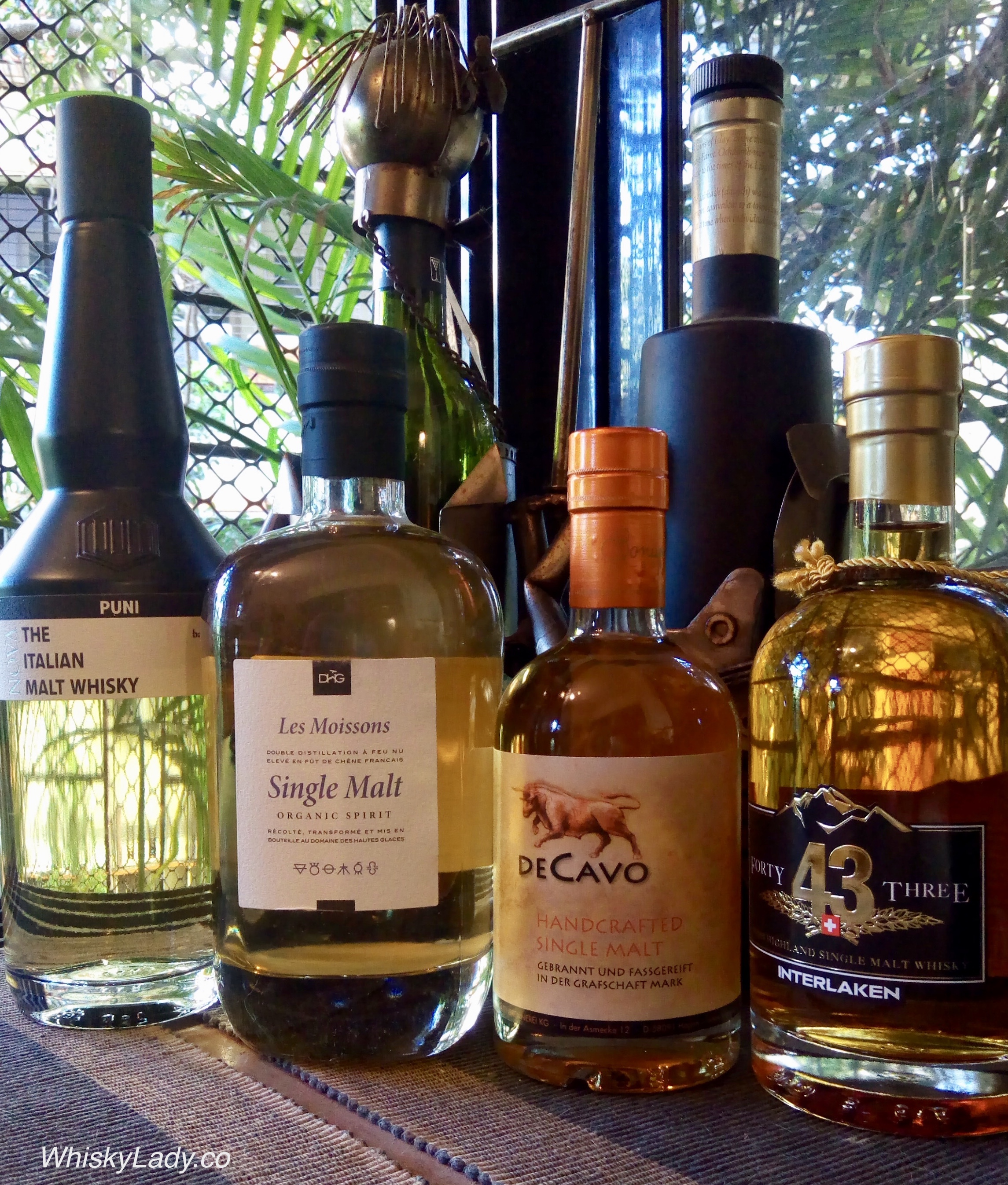
This particular whisky is originally named Forty Three for its alcohol content – 43%. We sampled it as part of a European Explorations evening, just after a rather delicious Duetsch dram from DeCavo.

So what did we think of the Swiss Highland?

Forty Three Swiss Highland Single Malt Whisky 43%

  • Nose – Initially quite dry, some sawdust, light balsa, sweet honey, bay leaf, a bit of a shy nose, salt sheen, restrained, hint of vanilla, cream
  • Palate – Soft – surprisingly soft, well rounded, hay, malty like marmite at the back, really grows on you, tasty
  • Finish – Quite long, warm… actually make that remarkably incredibly long

We had anticipated this would be a bit raw and harsh, to discover quite the opposite!  It was again far more accessible and enjoyable than we had anticipated.

Here is what they have to say on the label:

  • Colour – Deep golden amber
  • Body – Soft texture, lightly creamy
  • Nose – The fresh and fiery notes are surrounded by subtle honey and some floral aromas topped off with lovely vanilla notes
  • Palate – Slightly woody notes are combined with coffee and chocolate leading to a light smoothness. A slight maltiness is felt at the beginning, which then rises beautifully in caramel and fermented vanilla bean.
  • The fine balance between sweetness and strength give a special tension to the product, the soft creamy mouth feel creates an exclusive sustainability.

I purchased this bottle at Wien Laden in Munich in November 2017.

My European Explorations with the Bombay Malt & Cigar gents included:

You can also find Whisky Lady in India on:

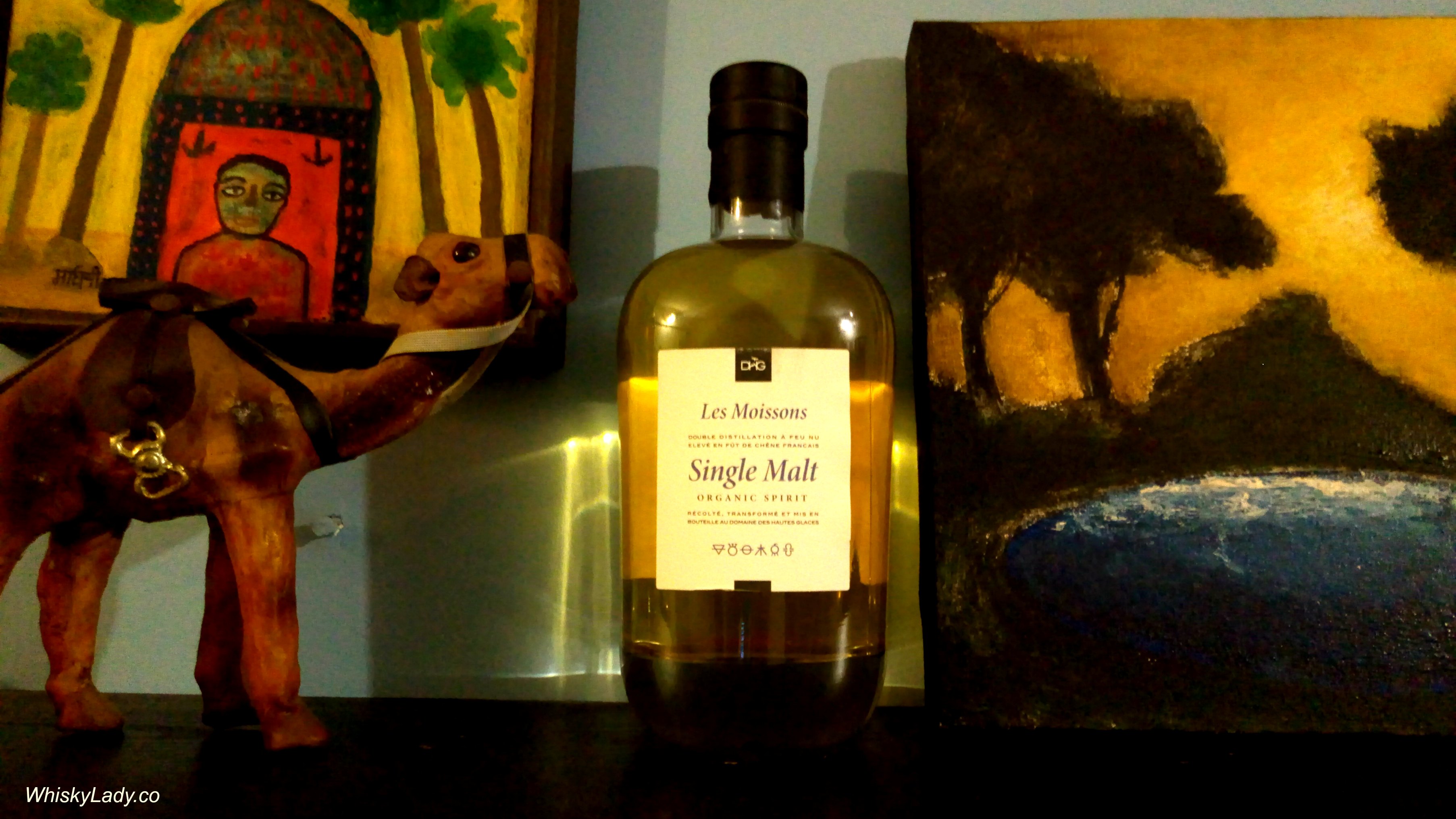
Can spirits “spoil”? The mystery of Domaine Des Hautes Glace – Les Moissons Organic

It was supposed to be an interesting experiment – exploring the boundaries of malts – with an organic spirit that technically is not yet whisky.

Les Moissons Single Malt is made using organic barley grown and malted on-site at Domaine des Hautes Glaces in the alpine region of south-east France with harvests from 2010 to 2012. Matured in a combination of virgin oak casks and those which used to hold either Cognac or white wine.

Sounded interesting! And we were intrigued… Except there was a different kind of experiment at work – a bizarre swirl of something that started as a spot… then grew… and grew… from a few specs of dust into a fuzzy swirl of a dirty muddy sandy brown. Who knew such a thing is possible?

But we are intrepid souls, so decided to open it up and try it anyways… what did we find?

Domaine Des Hautes Glace Organic Single Malt 42%

  • Nose – Musty, mushroom, sharp, fungal, yeast, rotten fruit, penicillin, rancid, rough, one even went so far as to pronounce it “Horrible!”
  • Palate – Believe it or not, we took a sip! And were rewarded with rotten pickle.

After spitting it out and hoping no one would go blind, we were incredibly perplexed. How could a closed bottle of spirit go bad? And what exactly was this odd growth like substance inside the bottle? Is it really possible for a whisky to go off?!

Turns out such a strange dusty sedimentation tends to be found when E150a i.e. caramel is added to enhance colour. After a few years, it can settle – particularly when stored, even more likely if in warmer conditions or direct sunlight.

While I’m not completely sure when it was bottled, I bought it last year and it is pretty obvious that here  in Mumbai warmer conditions applies. As for direct sunlight? Nope.

Yet here is the challenge with the explanation in this case – the bottle specifically states no additives, not chill filtered and that it is natural colour. Hmm….

So what do the folks at Domaine des Hautes Glaces say? It is possible that what we found is actually what they intended?

  • Colour: Gold.
  • Nose: Powerful and refined, with hints of truffles, spices and white flowers, then we pass through fields of barley. The malt emerges hand in hand with aromas of candied fruit.
  • Mouth: Deep and silky. Notes of almond paste, citrus and vanilla. The pastry texture runs into herbs and fresh figs.
  • Finish: Firm and long-lasting. Its taste draws on underlying artichoke, dark chocolate and mint, with an aftertaste of apricot, lemon and earth.

Can I just repeat? Hmm… Fungal vs truffles? Rotten fruit vs candied fruit?

I guess we just chalk it up to an experience – yet another adventure in our explorations of the world if whisky and spirits!

I purchased this at La Maison du Whisky for SGD 105, who suggested the possible explanation and offered to help with my next purchase from them… very kind.

My European Explorations with the Bombay Malt & Cigar gents included:

You can also find Whisky Lady in India on:

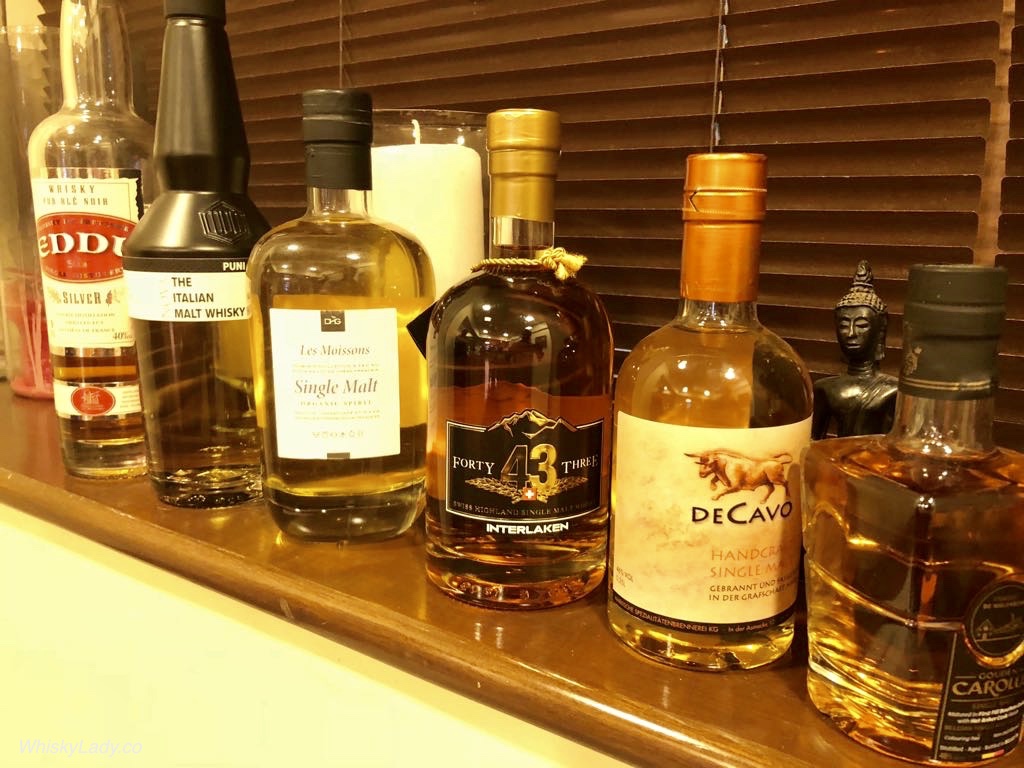
European Explorations – Domaine des Hautes Glace, DeCavo, Swiss Highland, Gouden Carolus, Puni

Over the last few years, I’ve had a few opportunities to explore European whiskies… so much so that I created a separate page devoted just for whiskies with European origins.

I will also admit that the novelty factor is often higher than the quality factor. Hence I knew I was taking a gamble with this particular quartet – acquired over a few years for the Bombay Malt & Cigar gentlemen.

What did we try?

And just because I happened to have an open bottle, I shared a snifter of Bretagne’s Buckwheat whisky Eddu Silver 40%. It was quickly quaffed, pronounced like calvados and we moved on to the main event!

You can also find Whisky Lady in India on:

Swiss Whisky – Langatun Old Bear (2010/2016) 62.8%

Our adventures in whiskies continued… with our first whisky from Switzerland.

Langatun distillery is located in Langenthal and while new to us is definitely not a new kid on the block… It can trace its lineage to 1857 when Jakob Baumberger founded a distillery on his father’s farm. Their granary harkens back to 1616. And they are no stranger to peat, playing around with its use for over a hundred years.

But what about the whisky??

Langatun Old Bear Cask Proof (May 2010/Feb 2016) 62.8% Peated Single Malt, Cask Chateauneuf-du-Pape, Non-coloured, Lot No L0116

  • Nose – Apricot, plum, sweet, wood smoke, quite Christmassy, plum cake (one even described as edible rotten fruit)
  • Palate – Complex… finally a truly complex dram! Layers upon layers upon layers, coating the palate beautifully with rich balance, lots of sweet spices of cinnamon, cloves, allspice, quite dry, caramel, treacle…. Yum!
  • Finish – Fabulous! Dark chocolate with cherry fruit, wonderful sweet spices settling on clove

Just as the Box Dalvve was a summer dram, the Langatun was clearly a winter whisky.

Here is what the folks in Switzerland have to say about their malt:

The “Old Bear” is a homage to Jakob Baumberger, who founded a distillery on his father’s farm in 1857, and who also took over a small brewery in 1860 in Langatun. The company logo of the brewery was in the coming decades the bear, the “Old Bear”.

The “Old Bear” is prepared in the same way as the “Old Deer”, but with slightly smoked barley malt, therefore the additional name «Smoky». Incense is carried out as in the case of meat or fish: during the drying of the germinated barley, the drying air smoke is added, the aromas of which are deposited on the barley malt and reach the finished product through the further processing steps. 

The “Old Bear” is stored in oak barrels, where Châteauneuf-du-Pape was previously cultivated, a very strong deep red wine. Its traces can be found in the “Old Bear”: an intense red-brown color, in the nose beautiful notes of wood and smoke, in the taste a typical malt component and in the finish subtle smoky flavor with a slightly vinous undertone.

Back in 2013, Jim Murray gave this whisky a remarkable 96 points for the 2008/2012 Lot No1201 described only as “Whisky for the gods…”

Stuart P over at Master of Malt has this to say for tasting notes:

  • Nose: Herbal and pine-cone freshness leaps from the glass, then richer aromas of vanilla custard and stewed red berries.
  • Palate: More custard notes on the palate, subtle smoke and black pepper, along with stewed fruit, cake spices and toasty oak.
  • Finish: Burnt sugar and cinnamon, with a hint of red berries.

Purchased at The Whisky Exchange for £69.55 and sampled from an unopened bottle in December 2017.

What else did we sample in our Après-ski evening:

You can also find Whisky Lady in India on: