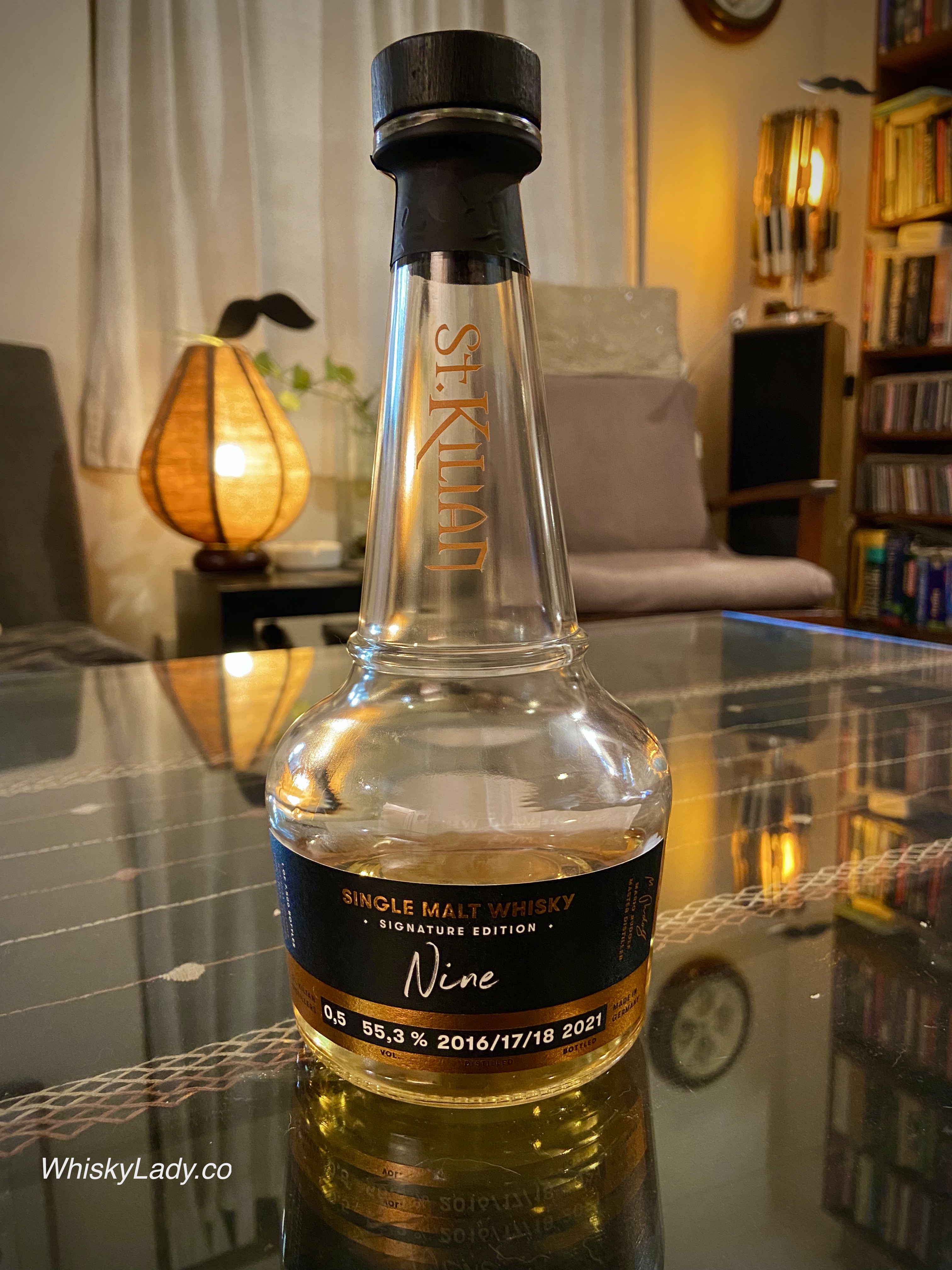
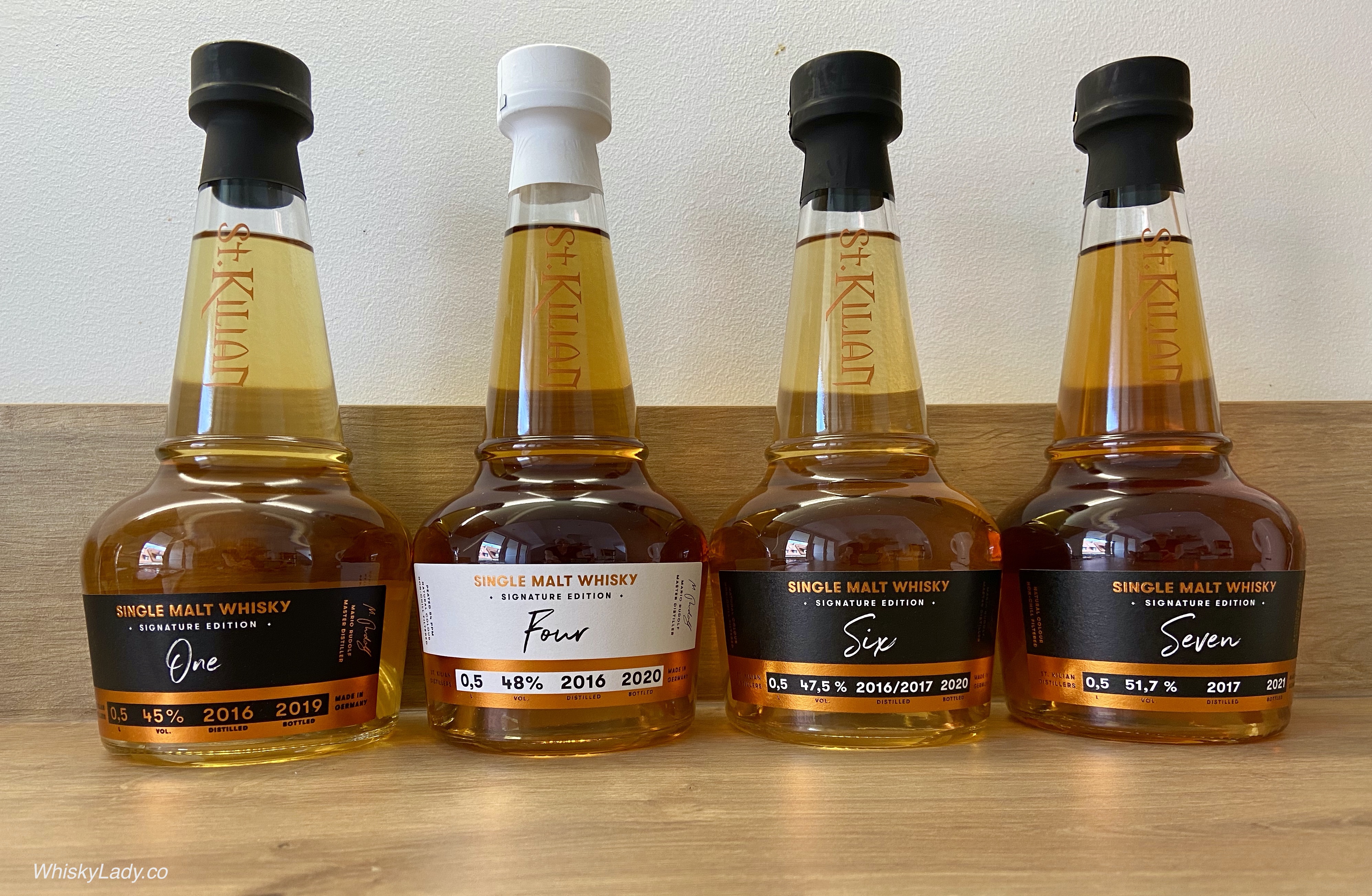
Whisky Ladies tryst with St Kilian Signature Edition One, Four, Six and Nine

Three from this particular set of St Kilian whiskies had made their way to India in late 2021 and were opened for the Bombay Malt & Cigar gents to explore… however being overall a generous lot, they decided the Whisky Ladies should also partake, so the bottles were set aside and tasted in April 2022. Naturally, I simply couldn’t resist augmenting with the German distiller’s latest Signature Edition – Nine.

What did we find?

Signature Edition ‘One’ (2016/2019) 45%

  • Nose – Sweet and smooth, cherry, fruity honey, rum and vanilla, orange, grilled pineapple, candied fruit with a slight hint of sweet spices like cinnamon
  • Palate – Subtle at first and then builds with a surprising spice. Green, fresh, and almost rye-like with capsicum, green peppercorns, a hint of dry hay with a nice bitterness. Overall quite smooth, rounded out by tropical fruits – especially pineapple
  • Finish – Short to medium finish

For some, it was almost on that ‘sickly’ sweet end of the spectrum – reminding us of a super sweet Shirley Temple cocktail! The rum influence brings a nice tropical quality. We concluded it was an easy sipper and a rather apt way to ease into our evening.

Personally, I recalled how my first impression was mixed but how much this grew on me in Germany – particularly its nice ‘warming’ quality in contrast to the cold outdoors. To discover it also adapts well to sweltering in Mumbai heat was a pleasant surprise.

Signature Edition ‘Six’ (2016/2020) 47.5%

  • Nose – Initially reaction was – yummy! A delightful rose of a sweet gulab jamun. Whilst it was incredibly sweet, warm with nice pepper spice, there were subtle additional elements like kafir lime leaf, hazelnut followed by chocolate milk
  • Palate – We could really catch the Rye in the flavors, joined by wood, sweet… Think more along the lines of a chocolate bar with red chili and cinnamon, joined by slightly bitter nuts
  • Finish – Closed with bitter chocolate, very nutty… certainly present but also a wee bit elusive or deceptive and teasing

Definitely interesting and could discern the rye influence. Worth trying, however, is it really the one to come back to? The verdict was never firmly made here.

Signature Edition ‘Four’ (2016/2020) 48%

  • Nose – Initially medical peat, it quickly settled into sweet peat and cola! There was that delicious smoked bacon, loads of hickory wood chips, nicely nutty – brazil or hazelnut? Followed by baked apple pie
  • Palate – Delicious! Tastes even better than it smells with sweet cured ham… over time tannins came forward followed by Montreal smoked meats or Canadian back-bacon drizzled in maple, beautifully oily and well-rounded, it had just a fabulous mouthfeel – as much chocolaty to the taste as the sense of melted  chocolate rolling around your mouth
  • Finish – I found a nice long cinnamon spice, others tasted a light leather with a hint of salt, and one even noted there was a bit of mustard oil!

A complete departure from the others, we absolutely loved it! No doubt this was a rather good peaty dram – enough that I’m hoping to catch their next peated edition.

As for our overall conclusion? By the end of the evening, we pronounced the St Kilian exploration worthy of our time and attention. In short, a terrific example of why we come together to explore and experience the range of what’s out there in the world of whiskies!

And what about the Nine? I haven’t forgotten about it. We tasted it after the ‘Six’ and before the ‘Four’ with the full tasting notes posted separately.

And if you are curious, you can read all about the different casks below or click the links to compare our Ladies and Gents impressions!

If you don’t want to miss a post, why not follow Whisky Lady on:

Denmark’s Stauning Rye with Mezcal finish

This wasn’t my first taste of Denmark’s Stauning offerings…. a distillery in Western Denmark started by nine friends back in 2005. I believe my first sample of their Rye was before it could even officially be called whisky and the 2nd their 2nd batch of peat. So I was curious to see how they evolved over the last few years.

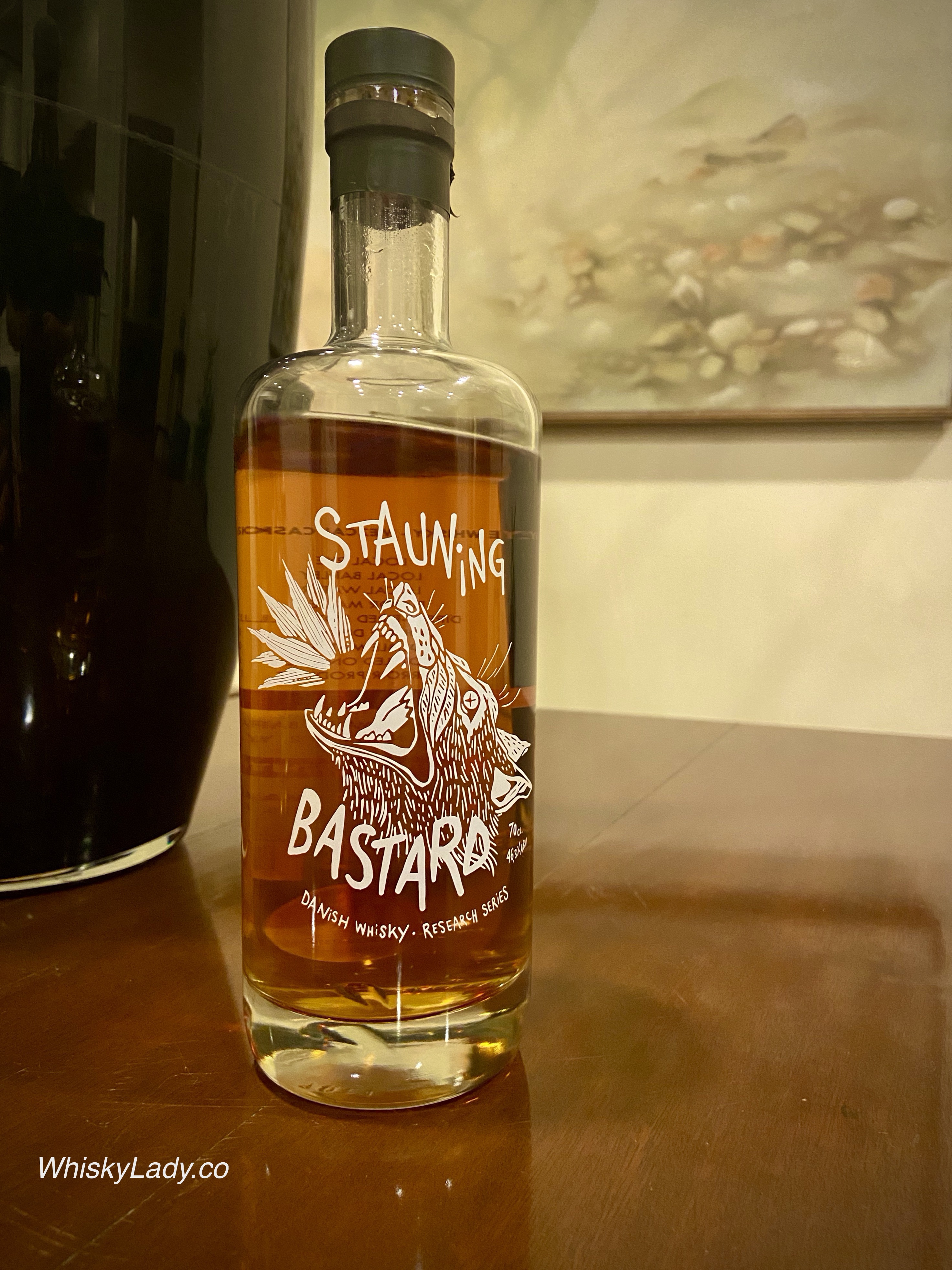
This particular bottle with its original artwork and distinctive name “Bastard” was what inspired the whole evening’s trio of unusual finishes. You gotta admit, with both a moniker like “Bastard” and a roaring slobbering wild beast on the bottle, one can’t help but think this will be a brash bold humdinger of a dram!

So what did we think?

Stauning Rye (2021) Mezcal Finish 46.3%

  • Nose – Caraway, rye, grassy, heather… a hint of smoke like faint smoke of sweet grass, some sour mash that then shifted into quite a strong sourdough bread, honey-sweet with slightly sour yogurt… then as it opened up further heaps of caramel, quite warming with a touch of salt, dried cherry or that Chinese dried plum that is all at the same time sweet, sour, spicy and salty! Then shifted to porridge, a bit of oak and something else which was a bit hard to pin down – perhaps this is the Mezcal element??
  • Palate – Think dark rye bread, some burnt caramel, resin, and yes – here you can find a Mezcal influence combined with sweet spices like cinnamon – a slightly curious combination with the rye
  • Finish – Wood shavings and sawdust, very bitter and long

Clearly young and a bit brash – once the aromas settled down there was a pleasant sweet sourdough on the nose. Overall an interesting experiment and talk turned to how it should pair well with cigars…. however I will admit this isn’t one I’m desperate to run out and repeat!

What do the folks at Stauning have to say about the “Bastard”?

The wind from the North Sea mixes blood with the desert of Mexico in this double-distilled rye whisky aged in old mezcal casks. An illegal love affair with a gentle and exotic aftertaste.

Stauning Bastard a rye whisky made purely of local ingredients, malted on the floor at our distillery and double-distilled in flame-heated pot stills. After three years in new, toasted virgin American oak casks, it has been rounded off with 6-months ageing in old mezcal casks from Mexican Oro de Oaxaca.

The result is an elegant love child whose equal you won’t find anywhere else in this world.

Official tasting notes:

  • Nose – Sweet tobacco smoke, raisins, oat biscuit, citrus, oak
  • Taste – Tobacco, vanilla, barley, dried fruit, cinnamon, brown sugar, molasses, shortbread, oak
  • Finish – Long sweet, slightly smoky, salty, brown sugar, pepper

Well…. I’m not sure I would describe this as an ‘elegant love child’ however would agree to the oats, oak,

So here goes an evening devoted to a curious trio of Rum, Tequila and Mezcal finishes with:

If you don’t want to miss a post, why not follow Whisky Lady on:

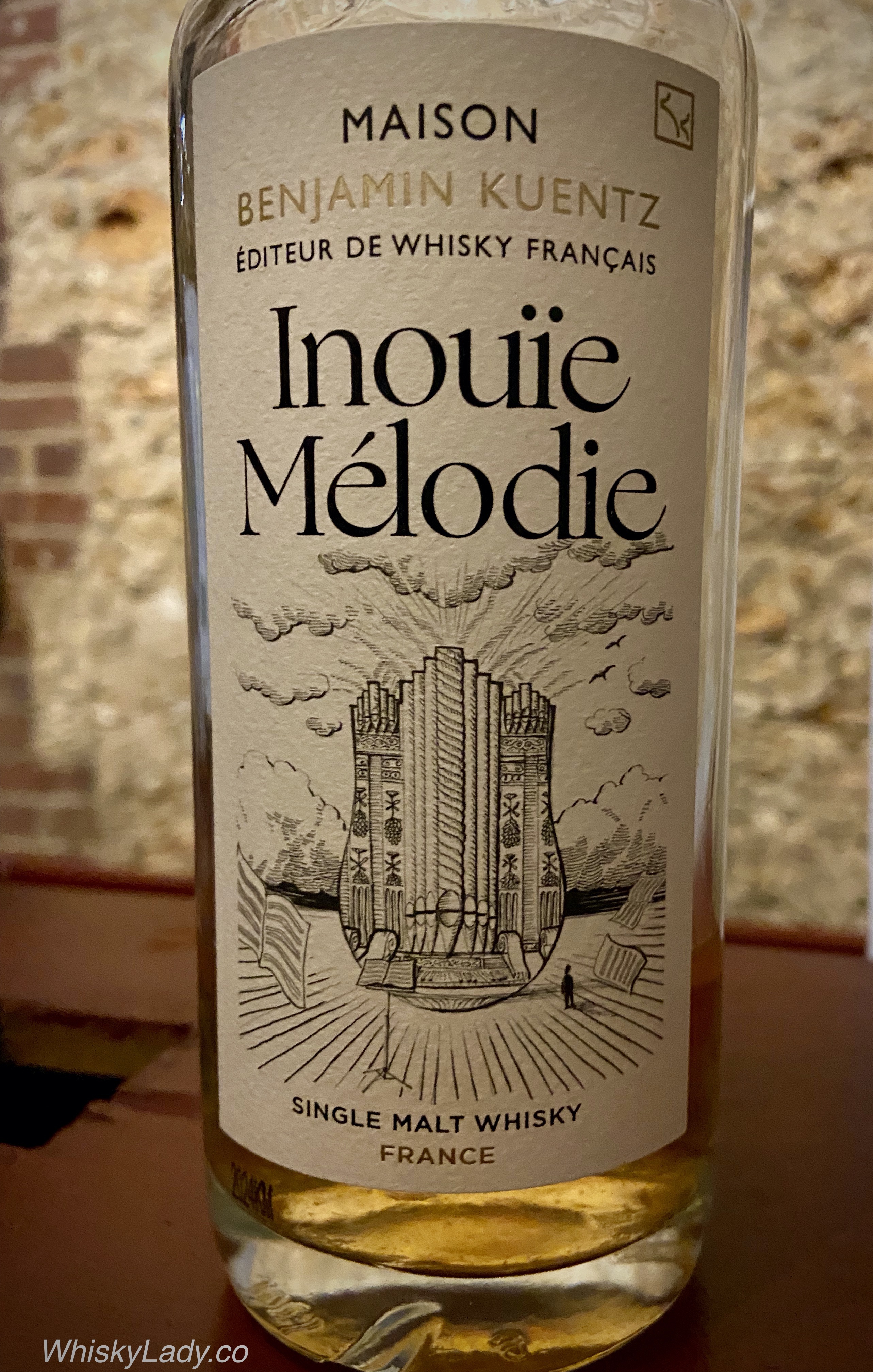
Maison Benjamin Kuentz – Inouïe Mélodie

With Maison Benjamin Kuentz whiskies, we were introduced first to their core trio with (D’un) Verre PrintanierFin de PartieAveux Gourmands then during a trip to Paris explored their limited editions of Aux Particulares Vines 1, 4 and 5.

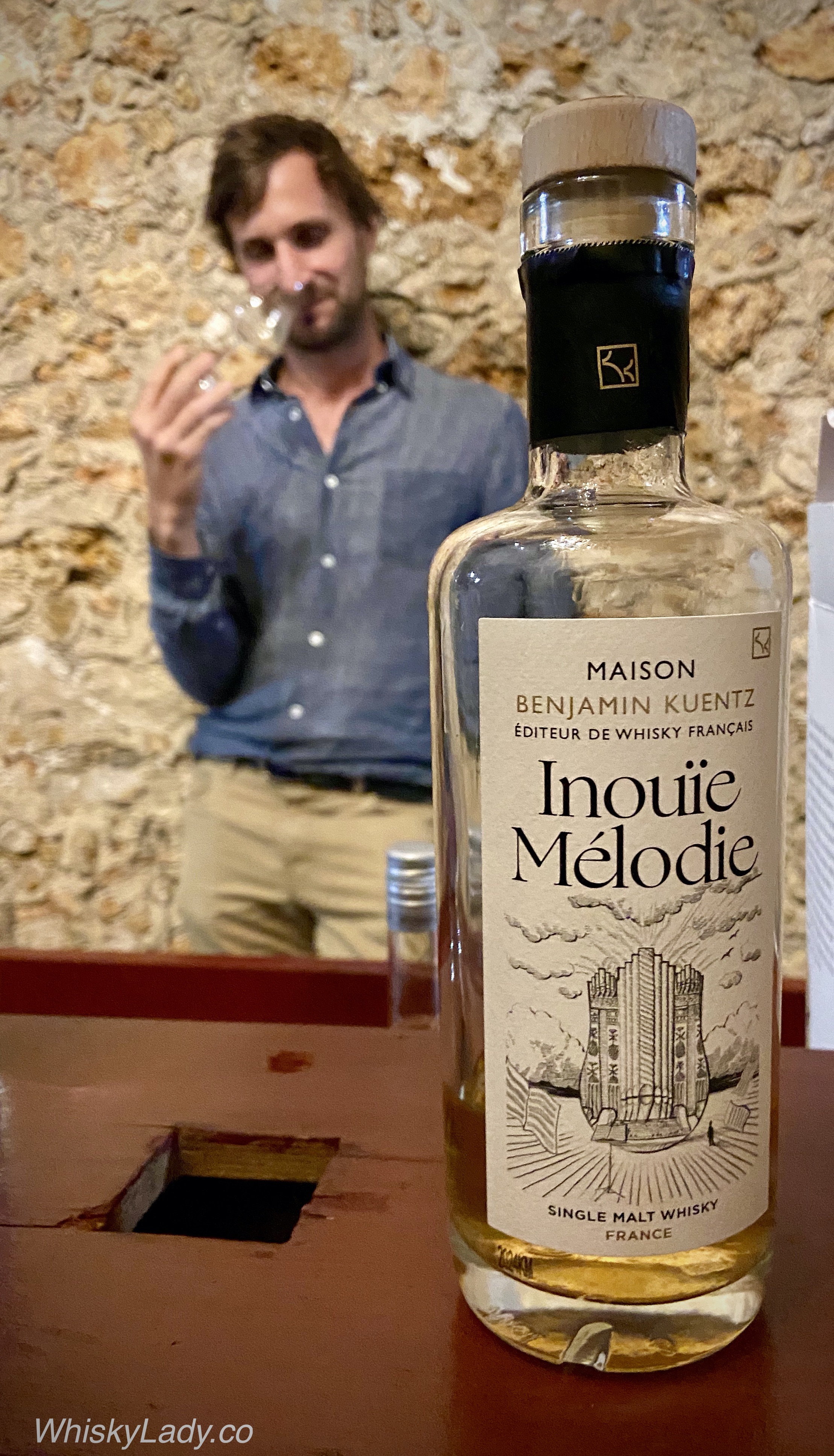
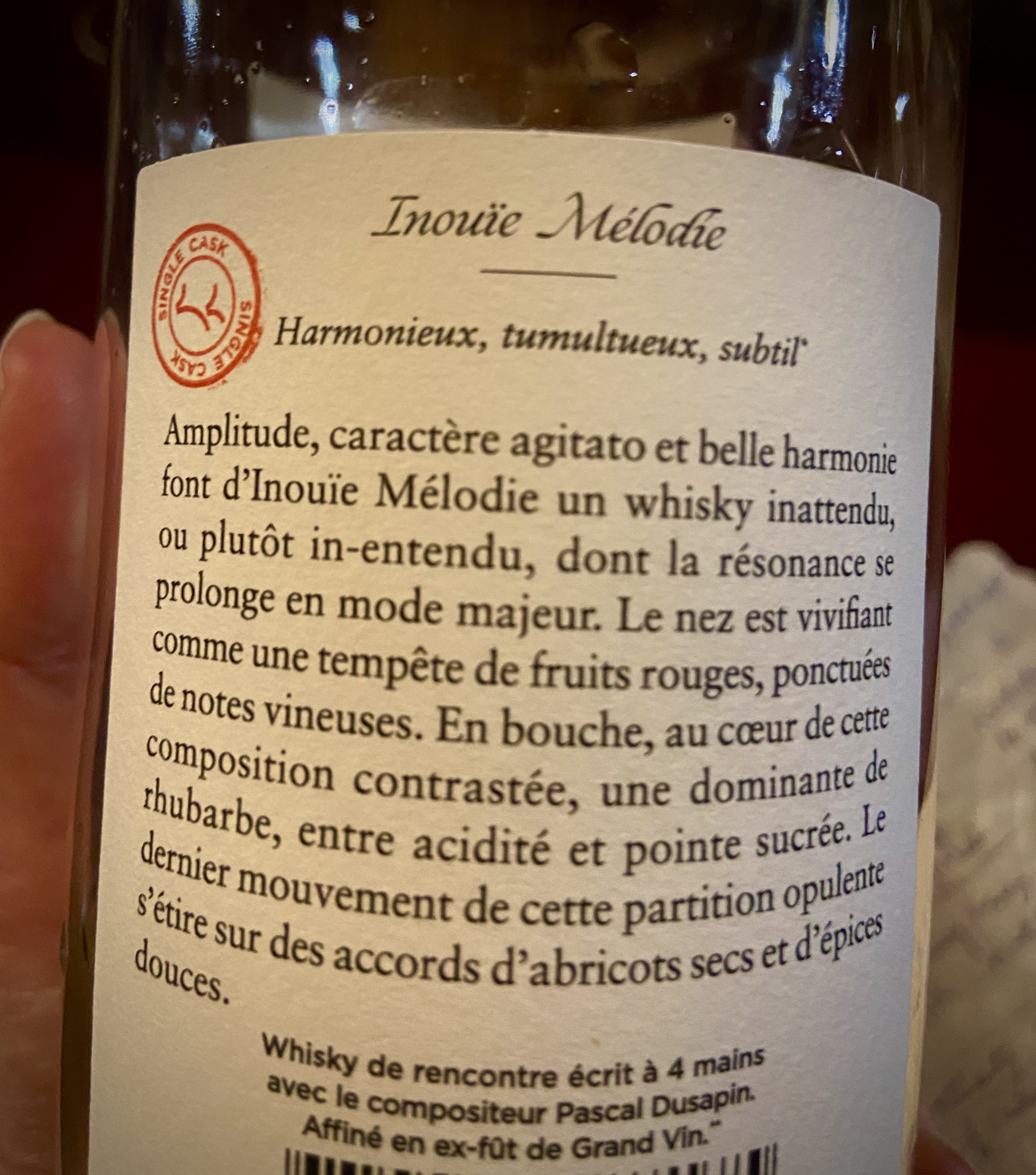
Next was a special treat in honour of a famous French composer – Pascal Dusapin – who is also a whisky fan…. whose music Benjamin described as stormy….  he is also known for microtonality, tension, energy and romantic constraint.

As Benjamin described it, this was a true collaboration –  a result of “four hands” at play. Where is the whisky from? Rozelieres distillery from a single cask which produced approx 600 bottles.
Inouïe Mélodie
  • Nose – Best word to describe? Stormy! Followed by fresh pine needles then a burst of juicy red berries and fruits
  • Palate – Sweet and very full, a feast in your mouth! Lots of sweet caramel counterbalanced with fresh forrest
  • Finish – Long sweet spices, bitter leaf and a hint of fruits like an echo resonating

It is aptly named! There is a delightful melody…

What more do we know? Here’s what the folks at Maison Benjamin Kuentz have to say on the back of their beautiful label….

Curious about other forays into whiskies created by Maison Benjamin Kuentz :

If you don’t want to miss a post, why not follow Whiskey Lady on:

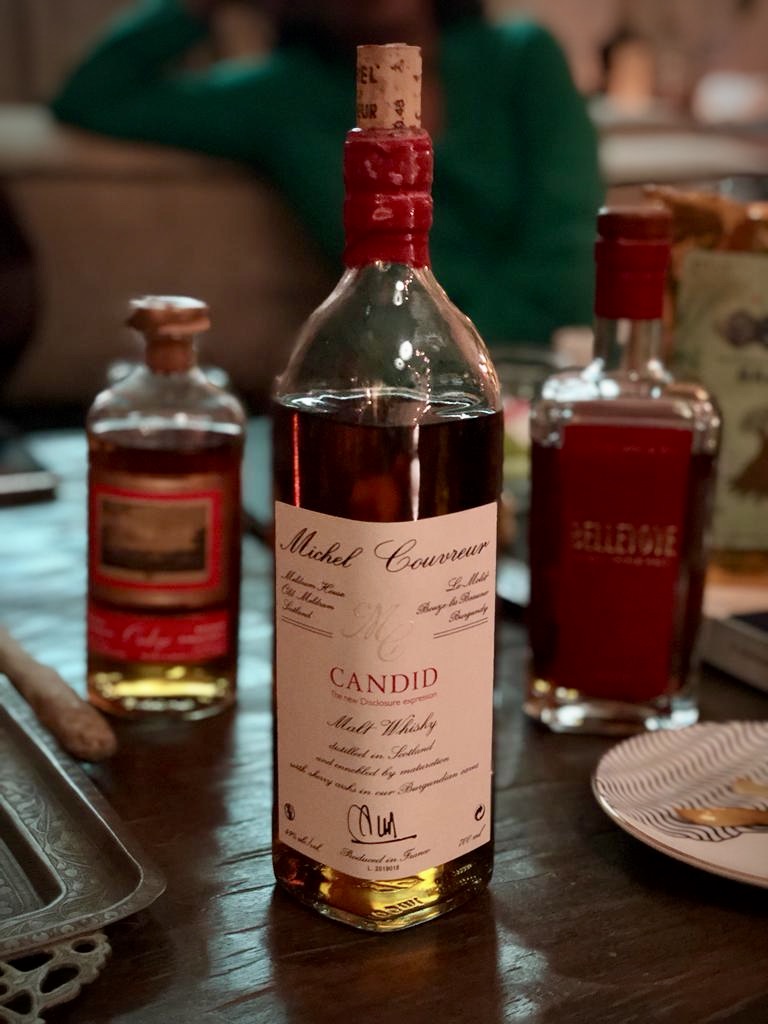
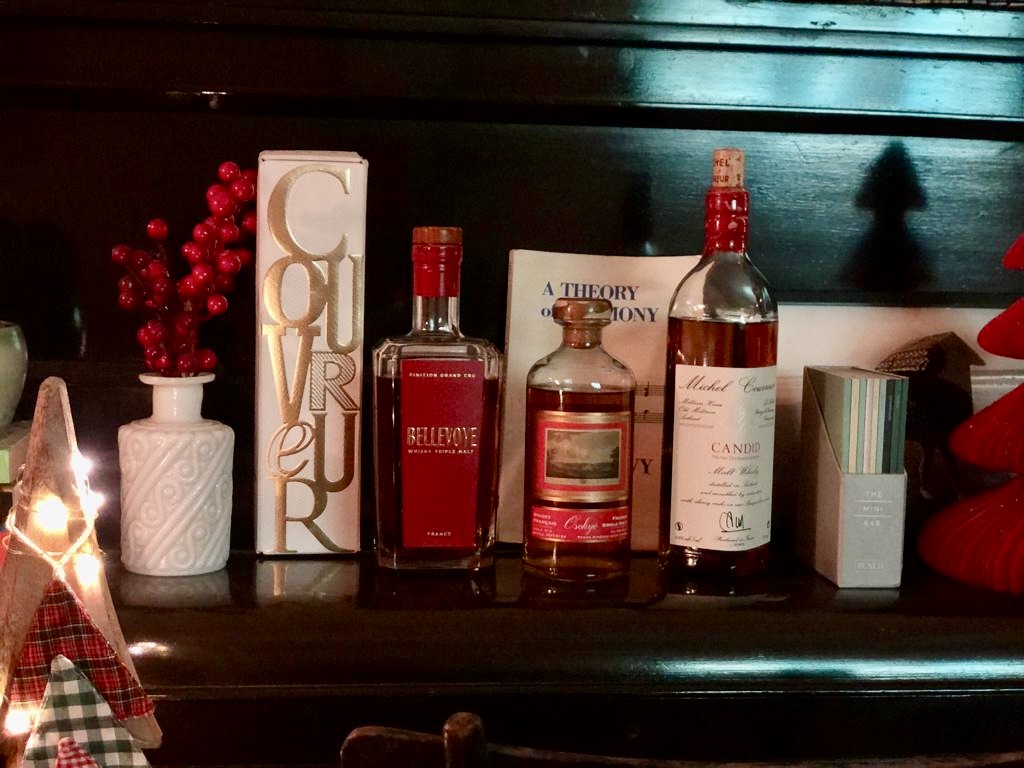
Paris Nights – Michel Courveur “Candid” and Godet Osokye

In December 2021, the Whisky Ladies of Mumbai got together to explore a trio recently acquired in Paris. Amusingly, at the same time I tasted one of the whiskies – The Bellevoye “Red” Grand Cru! When the host generously agreed to set aside samples, I, therefore, chose to bring back to Germany only the two not tried. And yes – I’m aware of the irony of European whiskies being brought to India and then back to Europe! Such is the wandering way of our whisky explorations.

So there I was… on a rather miserable February Friday night… the winds howling, the rain relentless… and decided this was the perfect moment to put on some fab French pop musique and pour myself a couple of drams…


This isn’t our first brush with Michel Courveur – which is a Burgundy based operation which adopts, matures and blends. Started in 1978 by cellar-master Jean-Arnaud Frantzen, the tradition continues with Michel’s wife, daughter, son-in-law.

Our initial experience was… peculiar… it was a peated Vatted Malt. It had quite a pronounced wine influence – not entirely harmonious. However, I always try to bring an open mindset to new bottles… So what did I discover?

Michel Courveur “Candid” L 2019018 49%

  • Nose – There is a sense of something almost musty at first, then it shifted into dark fruits, quince, cloves, nutmeg, it reminded of a rich butter tart bursting with raisins, rich old oak dry woods, dark purple grapes combined with dried dates and figs, classic Christmas cake and pudding, spiced eggnog, rich chocolate milk
  • Palate – Woh! Very sherry, a piquant spice, quite dry, and yes – there is certainly some peat here!
  • Finish – Long strong, spice and more of that bold sherry quality, black licorice, with a hint of almond and smoke chased by bitters
  • Water – Cranks up the spice, augments the rich sherry aromas, sweetens and softens it on the palate

There was a heavy sherry influence at work here – nothing subtle about it. On the palate I found it a bit imbalanced – loads of sherry elements, chili spice but somehow it was missing a fruity roundness… instead the peat pushes it into another direction.

However when I revisited it after some time…  found more chocolate notes, fruit and nuts, spice and smoke… coming together much better – with the peat much more pronounced. It worked!

What more do we know? Not much… It is a malt Whisky distilled in Scotland and then further matured in sherry casks in Burgundy, France.

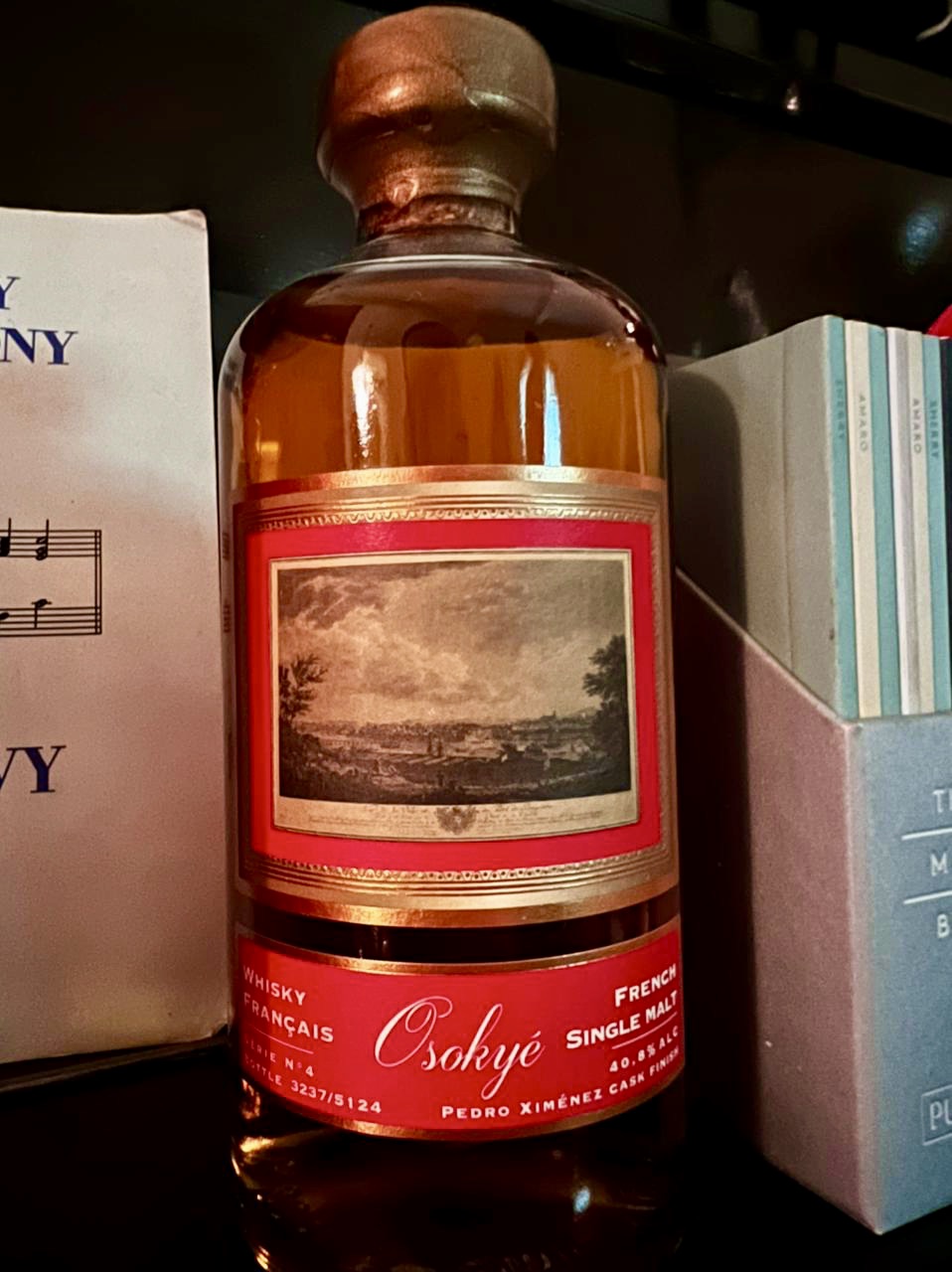
Osokye French Single Malt Series No. 4, PX Finish 40.8% Bottle 3237/5124

  • Nose – A curious mix of malt and dark fruits, cherries, sherry, a hint of lemon zest, almond, rum-soaked raisins, some salted caramel and was that also a hint of tobacco leaves?
  • Palate – Chocolate and peat, malt and more… it reminded me of crunching on a malted milk ball like “whoppers“, addictively tasty, creamy, softly well rounded
  • Finish – Nicely follows through – fruitier with roasted wood chased by cinnamon – delicious!
  • Water – No need at all

I have to admit this was dangerously drinkable. I barely realised how it went from being poured into the glass to gone!

What more do we know? Osokye is the name of a plot in Lorraine, France where barley is grown. This particularly whisky is made from that barley and then distilled with a Cognac Alambic, then finished in an ex PX cask.

What more do we know? I found this on The Cognac Expert:

Godet Osokyé Single Malt Whisky: a Burst of Smoke and Fruit

This French single malt is named after the lot in Lorraine where the Godet family grows their barley. Godet Osokyé Single Malt Whisky Batch 4 is a smoky malt, distilled in an alembic still normally used for Cognac and finished in Pedro Ximenez casks to balance out the spirit with a burst of dark fruits. Presented at a natural strength of 40.8%, this full-bodied whisky is complex but superbly drinkable – suited to whisky lovers and Cognac lovers alike. Only 5,124 bottles have been produced.

Founded in 1782, Godet Cognac ranges amongst the oldest Cognac houses. The Godet family has been based in the seaside town and former trading hub La Rochelle for 400 years and since the very beginnings of Cognac production, they have played an important role in perfecting this culture. Cognac Godet has been in the hands of the same family for an astonishing 15 generations, who have placed tradition and excellence at the heart of their business.

Tasting notes:

  • Eye: Antique gold.
  • Nose: Chewy barley, white fruits and a chalky-gravely minerality followed by honey, cherry liqueur and tart lemon.
  • Palate: Fresh, malty and honeyed with a hint of peat. Creamy with vanilla, poached pear and cooked apple, leading to a finish of smoke and oak wood.

So whilst I missed the merriment, with the samples I could get a glimpse into the Whisky Ladies experience. I much appreciated the opportunity and look forward to joining the next session in person!

If you don’t want to miss a post, why not follow Whisky Lady on:

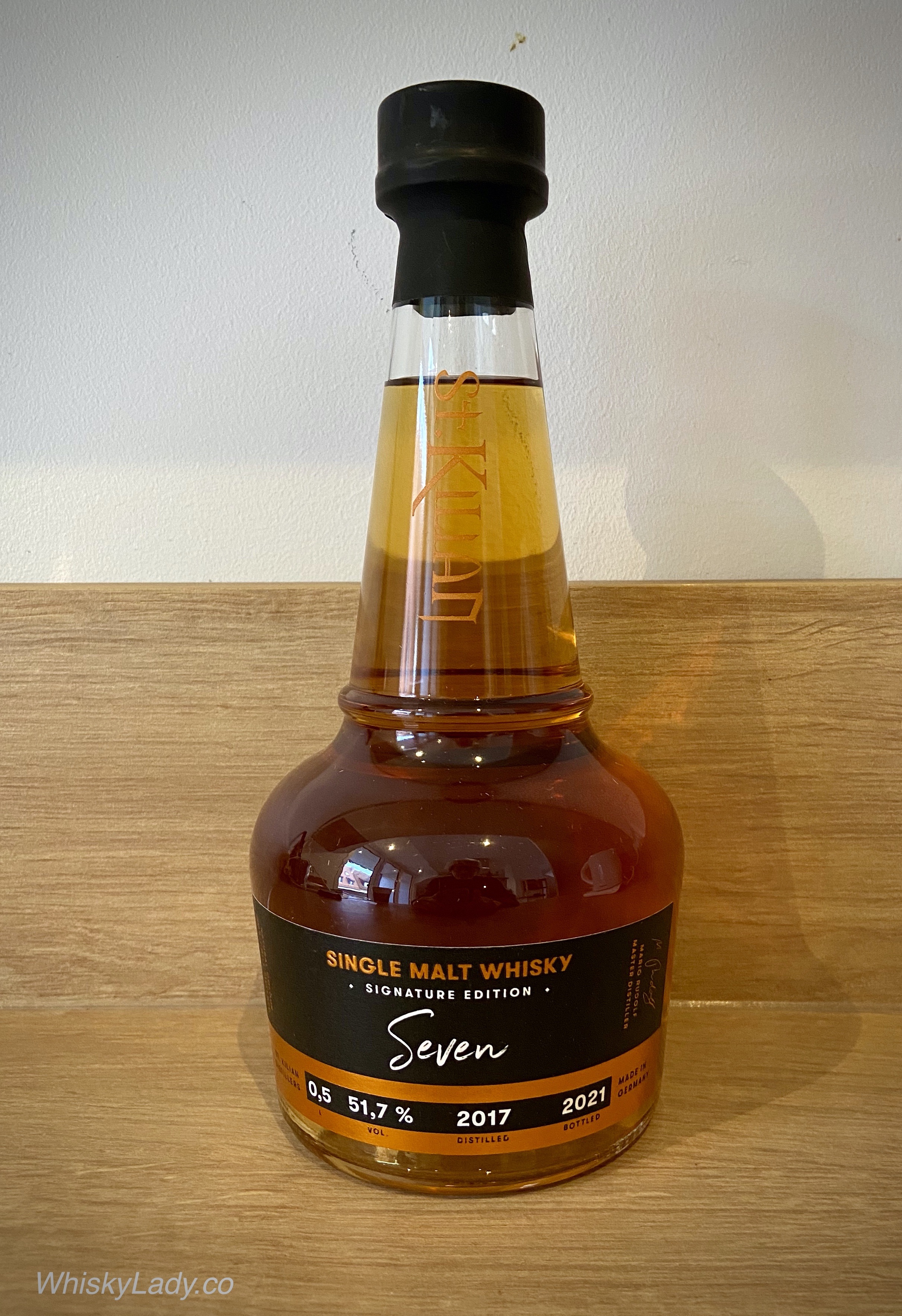
St Kilian ‘Seven’ Sherry PX + Oloroso 51.7%

Back in October 2021, the Bombay lads and I explored together St Kilian distillery from Germany’s Signature Edition One, Four and Six. One set made its way to India whereas a second remained in Europe. I augmented the European ones with the Seven, which was enjoyed in more sociable settings rather than proper sit-down tasting… until the new year!

Described by the St. Kilian folks as an “ideal companion for summer”, they introduce this expression by sharing it is

Matured in ex-sherry barrels, this bottling reflects the Andalusian summer sun. The balanced balance between ex-Sherry PX and ex-Sherry Oloroso barrels ensures a harmonious enjoyment.

What did we think?

St Kilian Signature Edition ‘Seven’ (2017/2021) 51.7% 5,700 bottles

  • Nose – Dark, rich treacle, coffee, plump and juicy raisins, salty licorice… shifts more and more into fruity elements, apricots, dates, sherry berry aromas
  • Palate – Spicy! A rich chocolate bar with cherries, raisins and nuts, a clear sherry stamp – chewy and rich, warming, full-bodied
  • Finish – Long, strong with a nice spice on the tail end…

While it starts out dark and stormy, with an initial hit of acetone, this one soon displayed its clear Sherry cask influences. We also tried it with water – with a bit of a debate depending on whether you prefer your whiskies more intense and indulgent or preferred a fruitier and creamier dram.

In some ways, I would say with a dash of water, this is the most ‘accessible’ of the quartet we’ve tried. While all four St Kilian’s tried from the Signature Editions are bursting with character, this one has more of a ‘nod’ to more classical sherry aromas even if the flavour retains something distinctively different.

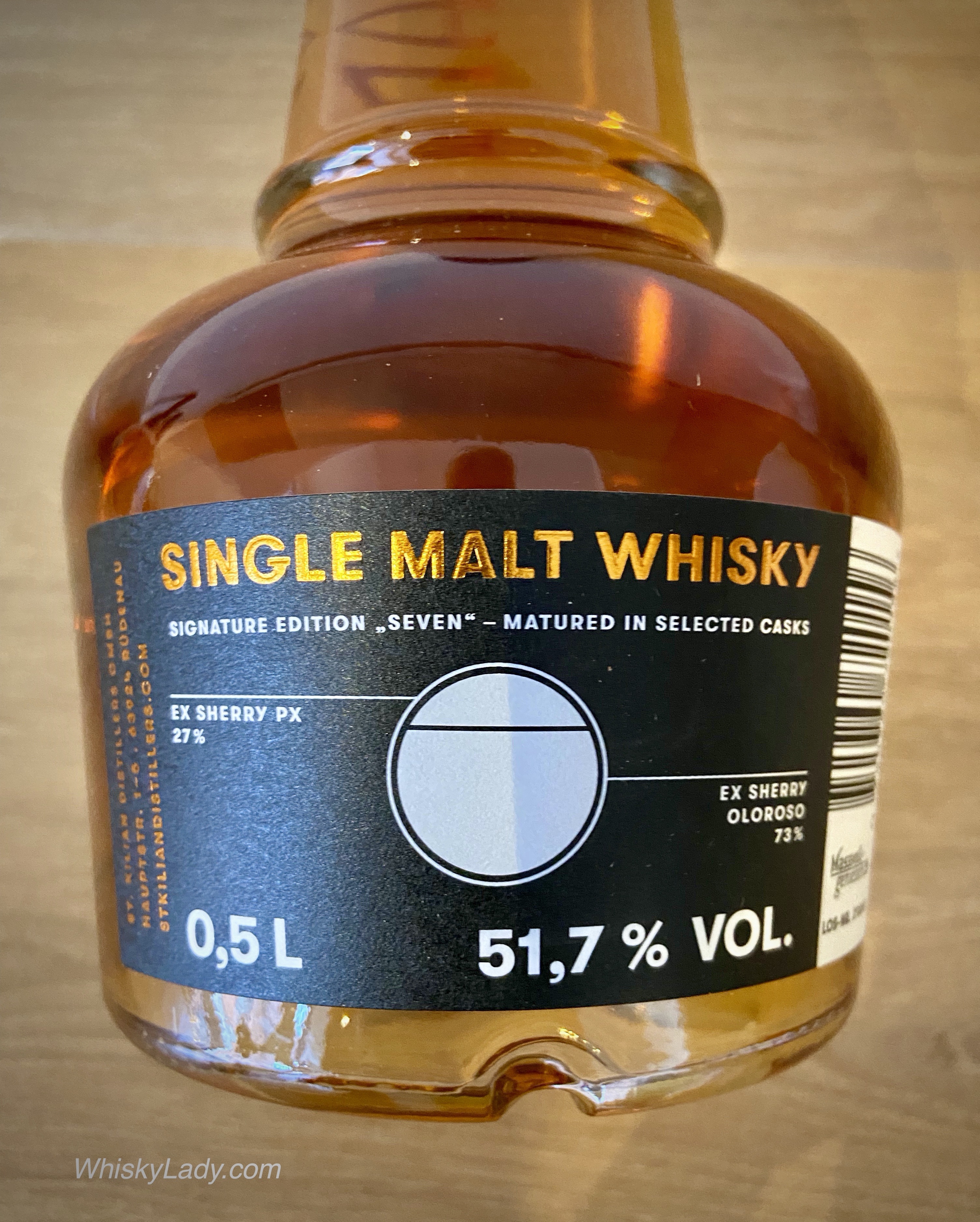
What more do we know? The St Kilian recipe is:

  • 73% ex Sherry Olorosso and
  • 27% ex Sherry PX

As for official tasting notes? Here’s what St Kilian has to say:

  • GERUCH Süße Noten von Rosinen und in trockenen Sherry eingelegte, dunkle Früchte lassen Raum für reife Pfirsiche mit Walnuss sowie feinen Kräutern, vorrangig Minze und Salbei.
  • GESCHMACK Die trockene Süße von Rosinen und Walnuss wird begleitet von reifen Pfirsichen und sahnigen Malzbonbons, mit wärmenden Anklängen von aromatischer Eiche, frischer Minze und Salbei.
  • NACHKLANG Lang, cremig und würzig-warm mit feinen Sherry-Noten, Honig, Malzbonbons sowie reifer Walnuss.

As for a rough translation?

  • Nose – Sweet notes of raisins and dry Sherry, dark fruits leaving room for ripe peaches with walnuts as well as fine herbs – primarily mint and sage
  • Taste – The dry sweetness of raisins and walnuts is accompanied by ripe peaches and creamy malt sweets, with warming hints of aromatic oak, fresh mint and sage
  • Finish – Long, creamy and spicy-warm with fine notes of sherry, honey, malt sweets as well as ripe walnut

What else did we try from St Kilian?

I would easily recommend Edition ‘Seven‘ however also kept coming back to the ‘One’ – which so far is my favourite! Next would be the peaty ‘Four‘ with the ‘Six‘s Rye / Burgandy combination not working quite as well for me. Based on this experience, I will also keep an eye out for future Editions too!

If you don’t want to miss a post, why not follow Whisky Lady on:

Bellevoye Trio – Red “Grand Cru” 43%

Last from the French National Flag trio from Bellevoye was “Red” with a Grand Cru finish… We had a promising start with “Blue” and “White” so were curious to see what this would bring.

Bellevoye Red 40% (Grand Cru)

  • Nose – Quite different at first – fresh seaweed and saline – then pears, fresh grass and herbal, very “green” and vegetal…aromatic…  then shifted again into honey, fresh almonds soaked in water, fresh almond oil, a hint of cloves, churan and dry wood, mango leather, bit floral – jasmine, vanilla
  • Palate – More spice than expected, strong mouthfeel, pear, bitter almond, sweet spices like cinnamon and dates, candied ginger
  • Finish – Initially a quick prick of spice then a nice lingering echo – long and lingering with a sweet aftertaste

We found this one quite interesting on the nose – the shifting character making it intriguing… but a bit disappointing on the palate with the first sip. However the more we settled into this one, the more we enjoyed.

I’m not sure what exactly we expected from a “Grand Cru” finish, but this had deeper tones than had anticipated.

This triple malt apparently five to ten years aging in French oak casks then post blend, spent six months in Grand Cru casks.

What all have I tried from Bellevoye?

I bought the tasting set of 200 ml bottles – Red, White & Blue – for EUR 55.

If you don’t want to miss a post, why not follow Whisky Lady on:

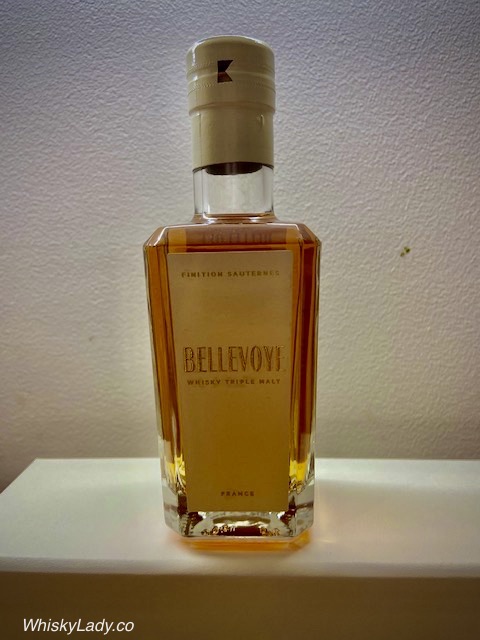
Bellevoye Trio – White “Sauternes” 40%

We continued our exploration of French Whiskies with another from Bellevoye. So where does the name Bellevoye come from? In an interview with Spirits Hunters, founder Jean Moueix shares:

The name Bellevoye is a creation that makes a lot of sense to us. With my partner Alexandre Sirech, we both changed our lives radically to take directions, paths that were not planned. Bellevoye, in Old French, means the Belle Voie, the beautiful path. Bellevoye’s philosophy is to try to make people happy by encouraging them to take beautiful new paths in life.

After a promising start with the Bellevoye Blue, we turned to White.,, what did we think?

Bellevoye White 40% (Sauternes)

  • Nose – Started out almost with a sherry like element with dried fruits like figs and dates, then shifted into cereals, honey sweet, pears and pineapple, apple sauce with cinnamon and dash of vanilla bean, buttery brioche 
  • Palate – Super smooth and silky, juicy fruits, salty toffee, buttery, fresh brioche, nice and round, apples and cinnamon
  • Finish – Hint of tobacco leaf, more toffee with a chilli chaser

This was a delight – easy sipper. One thing we found is a contrast between the aromas and the palate. In this case the silky buttery quality was endearing. 

What more do we know?

First the different single malts were aged three to eight years in French oak casks and then post blending spent an additional six months aging in Sauternes barrels from a famous Cru Classé.

What about other Bellevoye triple malts?

If you don’t want to miss a post, why not follow Whisky Lady on:

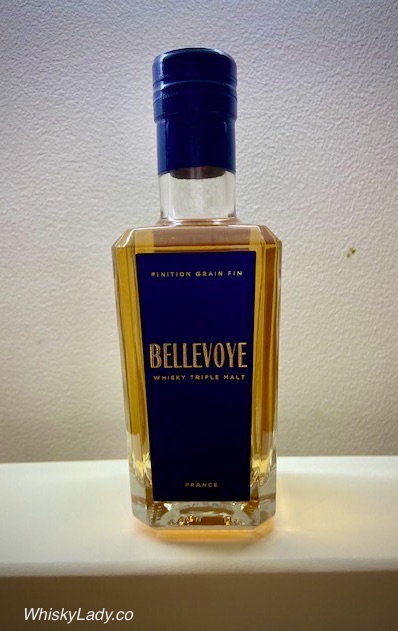
Bellevoye Trio – Blue “French Oak” 40%

Living in Europe means I’ve sought out new and different European whiskies to try. However I don’t always want to commit to a full bottle! Enter this pretty trio of 200ml whiskies from Bellevoye.

What are they? Single malts? Nope! They are instead a “triple malt” – meaning a blend of single malt whiskies from three different whisky distilleries – possibly from Brittany (Distillery Clauessens de Wambrechies?), Alsace (Maison Ledai – Distillery Hepp) and Cognac (Maison Brunet – better known for Brenne).

I earlier tried their peated “Black” as part of a Whisky Advent calendar so it was a perfect chance with the Blue, White and Red trio to try the balance.

We kicked off our tour of France’s Bellevoye “Flag” trio with the Blue – “fine grain” finish in a French Oak cask.

Bellevoye Blue 40% (French Oak Grain Finish)

  • Nose – Started with a hint of prune from the fresh cork after it popped open! Then in the glass – sweet hay, faintly floral, a dash of black peppercorn, some cherry chocolate with red chilli, followed by pear and charan
  • Palate – Warming on the surface, terribly easy to drink, imagine have this to spike your pani puri!
  • Finish – Certainly lasts in the mouth

Not such a bad start…whilst it isn’t complex, it makes for a nice pre-dinner malt. Simple and pleasant.

On the revisit, the aromas added a lovely vanilla flowers and spice… really quite nice!

What more do we know? The different single malts started their life in French oak casks, maturing for three to eight years followed by nine to twelve months post-blend in French new oak fine grain casks. No peat is used.

Here is a rough translation of their tasting notes:

  • The nose reveals notes of cereals, sweet spices, honey and white flowers.
  • The mouth is round and balanced with aromas of yellow fruit, cooked apple and gingerbread.
  • The finish is long on fresh notes

So what’ll is in the Bellevoye range?

If you don’t want to miss a post, why not follow Whisky Lady on:

Bellevoye Trio – Blue, White, Red

In our quest to delve deeper into European whiskies, I stumbled across this trio online in Germany. Having tasted the Bellevoye Peat (Black) in December, I was curious to explore further. This trio reflects the national flag with Blue, White, and Red.

Founded in 2013 by Alexandre Sirech (Bordeaux wine group) and Jean Moueix (spirits brands, production of Saint-Estèphe and Pomerol vintages), Les Bienheureux (“the blessed”) is a company formed for playing around with French whiskey, releasing malted blends under their brand “Bellevoye.”

Aleandra shared in an interview with “Toast” his view of French whiskies regional ‘styles’:

In Alsace, producers use Holstein stills, which produce very fruity and refined spirits. In the Nord region, the column still used there produces light, easy-drinking spirits. And in Charente, the onion-shaped pot still produces powerful, full-bodied spirits. Having three different cultures of distillation in regions so geographically close to each other is unique in the world. It’s also an excellent illustration of the cultural nuances of France.

So they set-up out craft a “triple malt”, bringing together single malts from different French distilleries already aged between 5 – 8 years, before blending together in their facilities, then finished in their casks for approximately another nine to 12 months.

Providing further insights in the same Toast interview, Alexandre explains:

We make a triple malt because we’ve noticed that, in the same way as Bordeaux wines blend different grape varieties, when the best spirits from the Nord, Alsace and Charente regions come together, the end result is significantly superior to the sum of its parts. It’s every blender’s dream! All the more so, since we always wanted to create a ‘patriotic’ whisky, like a synthesis of the three styles of French whisky I referred to earlier.

So we selected three from the thirty-five French whiskies we tasted in a blind tasting – one from each of the major whisky-producing regions – so that we could draw on the special features of each. Then, we got down to the heart of what it is we do: the blending. Then we allowed the whisky to mature.

So what did I pick up in the Bellevoye Trio?

We have three contrasting yet complementary expressions:

I bought this tasting set of 200 ml bottles online in Germany for EUR 55 with plans to share samples with tasting companions in Paris. Yes… you read that correctly… my thought was to send a French blend bought in Germany back to France.

Thankfully greater sense prevailed! As this trio happens to be readily available in Paris, my tasting companion did the logical thing and bought another set in France!

So I decided instead to loop in our London whisky afficiando handing over samples when we met up in Berlin. And with that – this trio was tasted by folks in three countries – UK, France and Germany!

If you don’t want to miss a post, why not follow Whisky Lady on:

Maison Benjamin Kuentz – Le Guip 55%

With Maison Benjamin Kuentz whiskies, we were introduced first to their core trio with (D’un) Verre PrintanierFin de PartieAveux Gourmands then during a trip to Paris explored their limited editions of Aux Particulares Vines 1, 4 and 5.

A lovely Euro Whisky Lady picked up a bottle of “Le Guip” which is a single cask limited edition which was crafted to reflect the character of her family home – Brittany. Picture a slightly gruff fisherman with the bracing spray of the sea – loads of saline notes and hint of peat… at least this is the idea…

What did we find?

Le Guip 55%
  • Nose – Sharp and salty, moss and sea spirit, then it slowly started to curl open… with hints of sweet vanilla and toffee – like a toffifee treat
  • Palate – Salty, spicy – mostly peppery, nutty…. as we sipped, started to reveal some toffee cream and fudge, salty sultanas
  • Finish – Long and strong

Quite direct in character with a truly bracing style. We imagined it would really hit the spot – coming in from the wet and cold… pour yourself a dram and instantly warm up! The salty sea breeze quality certainly brought a feel of wind and waves.

While most MBJ whiskies don’t need water, we thought to give it a whirl with this one… and I’m so glad we did!

The initial reaction from our Parisian was “Hmmm” not entirely convinced water helped, with the sense it took the whisky from interesting to… well… normal.

Whereas for me, I loved how it brought out a nice buttery “fat” feel in the mouth, with fruitiness coming to the fore with quince, vanilla and nuts… and yes sea salt! Whilst the aromas were slightly subdued, the way the flavours rounded out on the palate was reward enough! And the finish? A light tobacco leaf twist just added to the appeal. In truth, this was the only hint of peat we found.

A debate ensued – as to how generous the water needed to be to achieve optimal effect! However the verdict was clear – a dash of water transformed this dram from a rough around the edges swarthy seaman into something more like smooth sailing into the sunset!

What more do we know? Alas the online content has been removed as this edition is no longer available. I believe it is about 8 years and from Warenghem distillery – the folks behind the Amorik brand.

Curious about other forays into whiskies created by Maison Benjamin Kuentz :

If you don’t want to miss a post, why not follow Whiskey Lady on: