Unknown's avatar

About Carissa Hickling

Originally from Canada, then India for 20 years, now working in Germany... and quite a 'Whisky Lady' too!

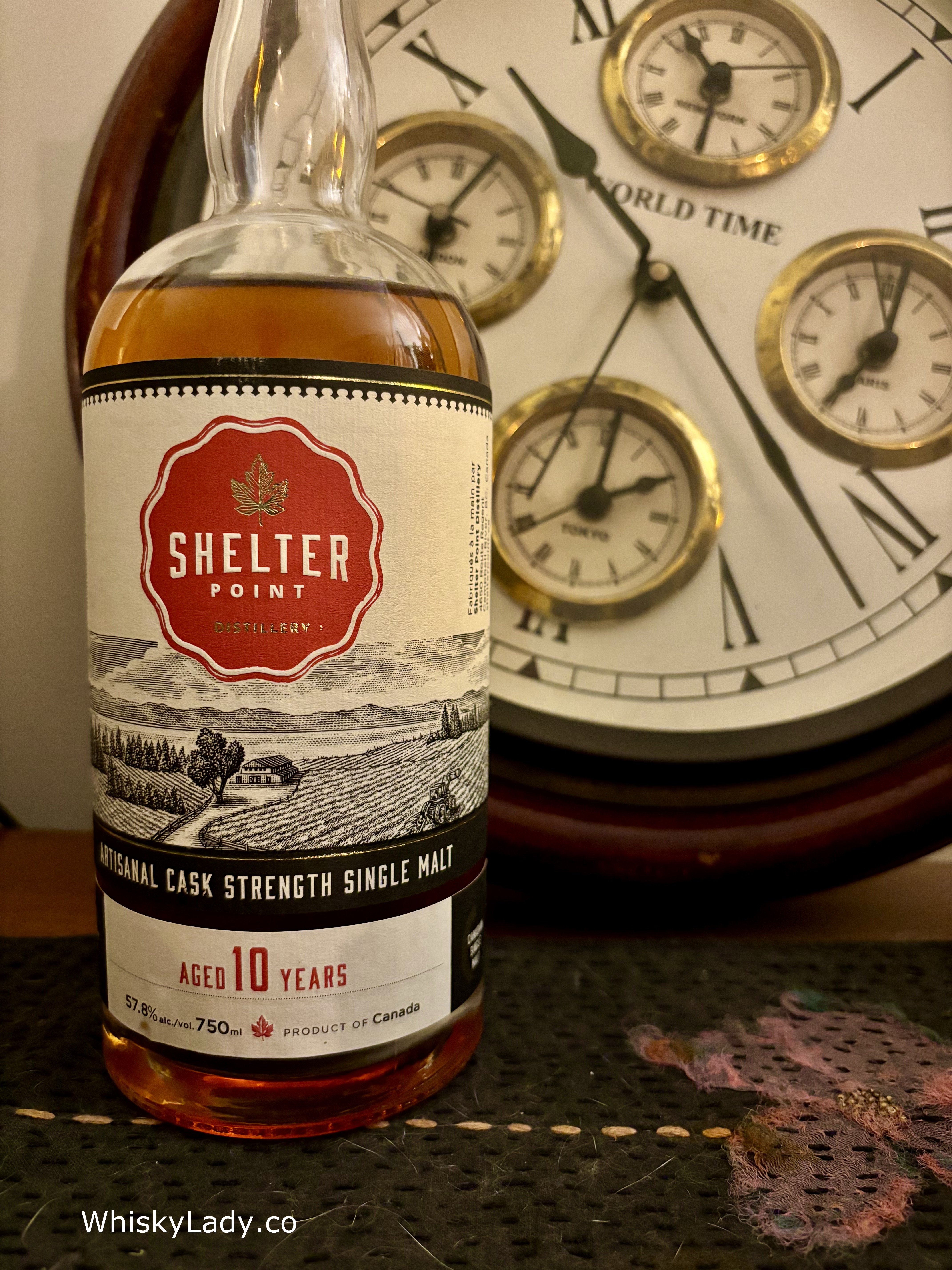
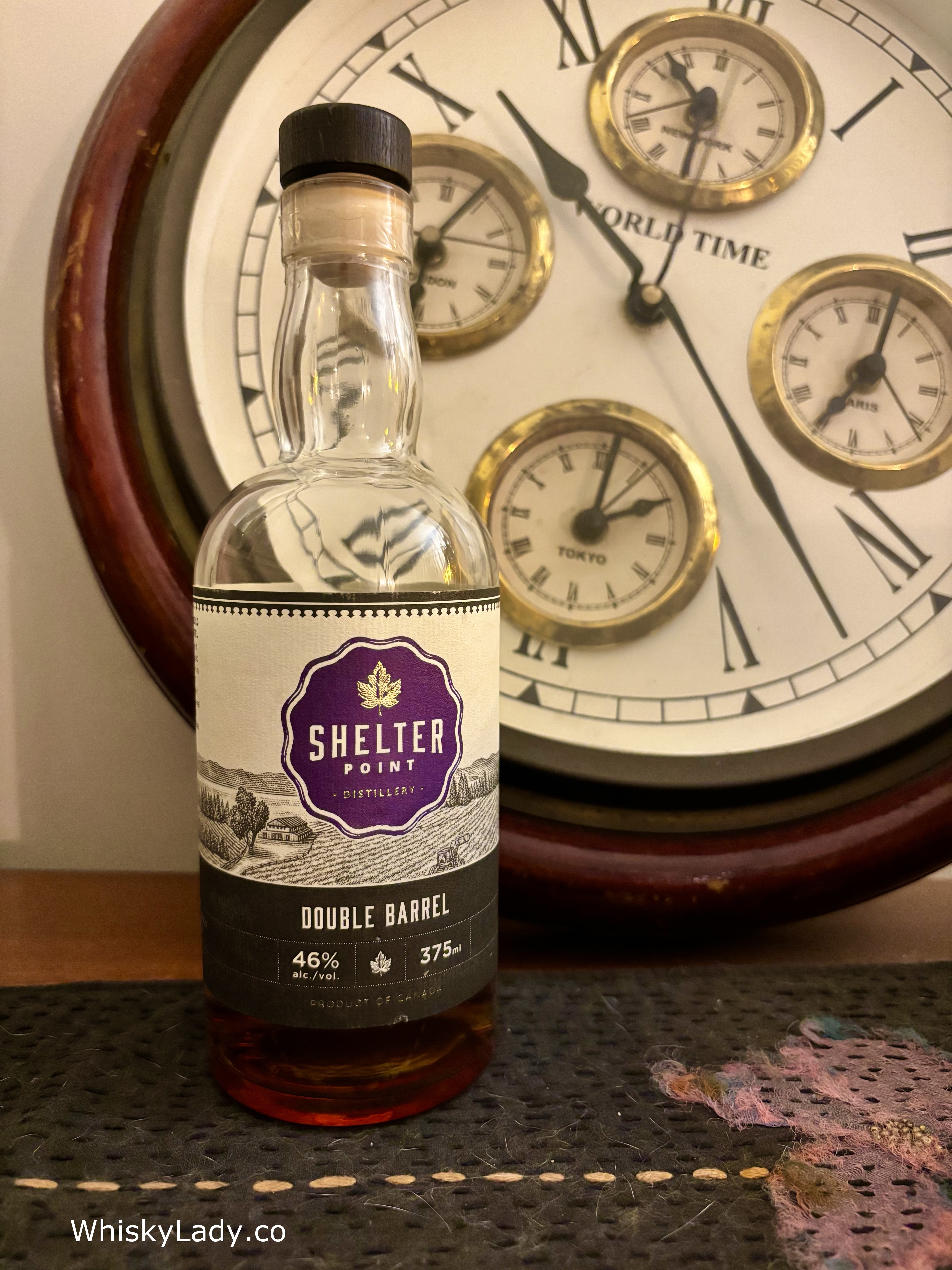
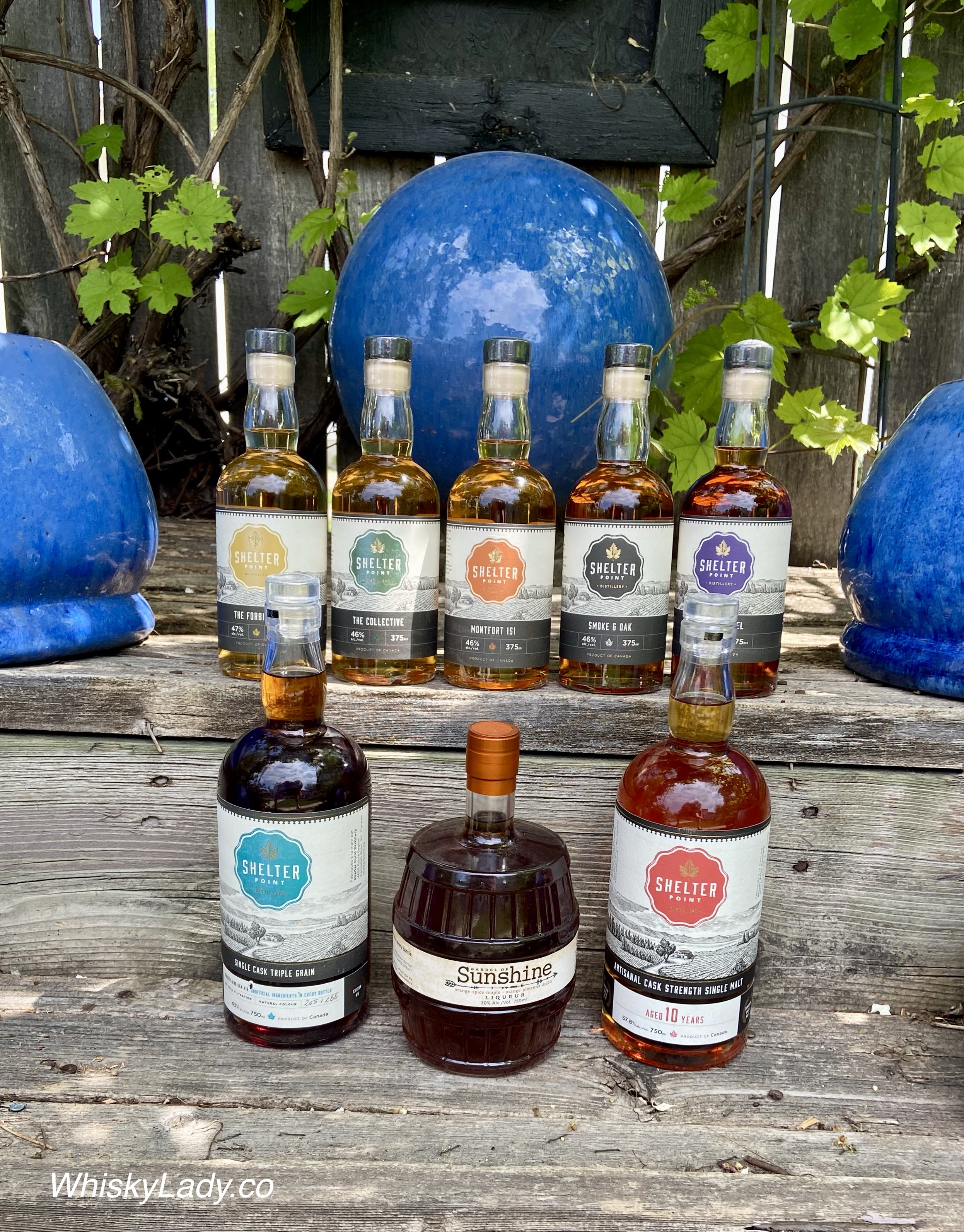
Shelter Point – 10 year, Double Barrel, The Collective

Over the years, I remotely acquired some Shelter Point whiskies. First I had to get them from Vancouver to Winnipeg. Then from Winnipeg to Nurnberg. And then for some, from Nurnberg to Mumbai!

Why bring Canadian whiskies halfway around the world? We have a few Whisky Ladies who have followed their journey from the 1st bottle of their inaugural batch that Patrick Evans kindly gifted us in 2016. We were captivated by their Single Malts from this farm to cask distillery in British Columbia. So it was only fitting that I share more recent releases. I was all primed to offer a trio in January 2024, however then the original folks familiar with Shelter Point – including a fellow Canadian – could not join. So I decided to postpone for another opportunity.

It was tough deciding which three to bring… What did I pick?

Curious to learn more? Just click on the above links to read tasting notes about our collective impressions!

Spoiler alert! We found three distinctive elements in all the whiskies we tried: Sunshine, sea salt, a herbaceous quality. Delicious.

Interested in receiving more Whisky Lady posts? Why not follow on:

BMC Indie Bottlers: Ardmore 1993 Gordon Macphail

It was the battle of the Ardmores and two different independent bottlers! After an absolutely stunning Ardmore a few months earlier from Chorlton, I will admit to being predisposed to enjoy…

I began with the Gordon & Macphail 1993 expression, anticipating it would be a light start at only 43%. This Ardmore bottle is part of their “distillery label” series where they are entrusted to use the Ardmore label, even though the maturation happens under the Gordon & MacPhail roof.

So what did I find?

Ardmore 1993 43% (Gordon & Macphail)

  • Nose – Curiously herbal, aromatic, rum sultanas, that become more and more sour, a bit like grapefruit that has gone off
  • Palate – Hot! And frankly a bit harsh…. hmm… not at all what I had anticipated. I struggled to get a feel for the elements. Maybe a fleeting hint of fruit? Was the spice black pepper or something else?
  • Finish – Heartburn chaser

So the lads warned me this wasn’t a hit. And I have to admit, it wasn’t a winner for me either. Pity. Normally I practically swear by anything from Gordon & MacPhail. It was also not what I would expect for the ABV – typically I find 43% quite approachable. This was not the case here at all!

Unfortunately, I don’t know much more. I think it was the expression bottled in 2008 – making it approximately 15 years. It is hard to say, as I couldn’t find more details!

So let’s shift gears… What about my Ardmore sample from 2018?

To be honest, I had completely forgotten I had it! I was rummaging through my old samples drawer to find more empty bottles to share samples from the current open bottles… and stumbled across this one from North Star. I simply had to open it up again!

Knowing it was peaty, I was prepared… however, it certainly toned down over the years. Which in my books isn’t necessarily a bad thing.

Ardmore Peat 8 year (June 2008 / Oct 2016) 58.7% (North Star)

  • Nose – Thankfully not as heavy peat, sour cherries. only a hint of BBQ
  • Palate – Still has spice, peat and more, an earthy element which is quite comforting
  • Finish – Continues to be dry with zest of orange

I always worry about these old samples from years ago. Will there be anything that remains of what once was? Thankfully, with these peaty drams, they tend to be able to stand the test of time a wee bit better… Nearly 6 years later, it still has character and leaves an impression.

So who won the battle? In this case clearly North Star over Gordon & Macphail!

What else prompted this “independent” theme?

And if you don’t want to miss a post, why not follow Whisky Lady on:

BMC Indie Bottlers: Benrinnes 1997 Singatory Vintage

The beauty of being part of the world whisky fabric is how even if you miss the main tasting experience, a generous soul or two can help arrange for a sample.

This was the case with the Bombay Malt & Cigar lads February 2024 session which featured a trio of independent bottles. I was warned that the experience had been a bit of a disappointment. However, one whisky was the clear favourite.

I decided to shake things up a bit more! I took the samples with me to our farm in rural Maharashtra and put their Singatory Vintage Benrinnes side by side with a recently opened Chorlton cask strength.

Not knowing anything about the Benrinnes beyond the vintage – 1997 – on 1st whiff it was clear this one needed to go 1st. We later discovered the ABV was reduced to 46% – the Connoisseur’s strength – making starting here the choice perfect!

Benrinnes 18 years (27 Feb 1997 – 28 July 2015) Hogshead 46% 

  • Nose – Shy, quiet aroma, soft fruits, biscuits, a hint of saline. After the 1st sip, it really opened up to reveal a super fruity side with mango and pineapple
  • Palate – What a contrast! It began with a spice kick, full and fruity, fresh figs and guava, then lychees and mangosteens, then opened up in a rather interesting way
  • Finish – A bit bitter
  • Revisit – Delightful! Though had a bit of a soapy perfume element… when the glass was drained, it kept a fresh fruity perfume

My tasting companion described it as quite sensual. Though muted, the subtle and nuanced aromas captivated us. The palate was much more colourful than anticipated. Above all, the more time in the glass, the more we enjoyed it.

We then compared it with the cask strength Chorlton’s Benrinnes 14 year 55%.

  • Nose – If the Signatory Vintage expression was shy, the Chorlton was the opposite! It greeted us with gorgeous fruits… then as it opened, we also found malty biscuits, tiramisu, burnt caramel
  • Palate – Whilst the Signatory had a surprising spice kick for a whisky that was only 46%, no surprise at 55% the Chorlton had HUGE spice!
  • Finish – Both had a bitter edge, with the Chorlton having a particularly long finish
  • Water – Does wonders on the nose, tames the palate, and brings it closer to the Signatory Vintage

We just so happened to have a fig and bocca with basil salad. It made for a marvelous combination with the Chorlton. However, in terms of just a sipping dram, the 1st was the preferred whisky.

The theme was Highland “independents” from two different well-known independent bottlers – Signatory and Gordon & Macphail, mostly acquired via La Maison du Whisky. In addition to the Benrinnes, we also had:

And if you don’t want to miss a post, why not follow Whisky Lady on:

BMC Indie Bottlers: Benrinnes, Ardmore, Tomatin

Whilst the cat is away, the mice will play! At least that was the case with our Bombay Malt & Cigar gents who enjoyed a trio of whiskies from independent bottlers without me.

Kindly, they decided to share a generous sample of each! They made their way to me in late March and were sampled in two sittings in early April.

The theme was Highland “independents” from two different well-known independent bottlers – Signatory and Gordon & Macphail, mostly acquired via La Maison du Whisky:

Now… I wasn’t going to do this as a simple 1, 2, 3 tasting. Nope! I just so happened to have with me another Benrinnes, recently opened. And was able to dig up from the Whisky samples archive a neglected Ardmore from North Star Spirits.

With the Tomatin I had nothing to compare, so am simply sharing here…

It has been some time since I sat down properly with a whisky from Tomatin.

My last experience with Tomatin was also bottled by Gordon & Macphail. It was a mere sniff swish back at Paris Whisky Live in 2022 – part of introducing their Discovery series. I actually rather enjoyed that one – it had a lovely fruity quality.

This particular expression was part of Gordon & Macphail’s now retired “Reserve” collection. “Reserve” was their previous entry-level range, replaced in 2018 by the “Discovery” series. In this case, it was bottled specifically for La Maison du Whisky.

Tomatin Reserve 8 year 20072015 ABV unknown

  • Nose – Marshmallows and acetone, then bananas and caramel
  • Palate – Generic fruit. Then it has a spice bite! Then sweet. A bit thin.
  • Finish – Curious, dry

In short, it had little in common with the more recent Discovery expression. And was honestly a disappointment.

I couldn’t see the ABV but it came across as quite active and potentially higher, whereas typically the “Reserve” range was a lower ABV – I’ve come across some bottled at 40%.

I set it aside, concluding perhaps I simply wasn’t in the mood for a malt, and thought to try again another evening. I didn’t. Which also says something about this dram.

What about other Tomatin experiences? From “Original Bottlings” there was a trio of Legacy 43%,12 year 43%, 14 year Port Wood 46%.

And if you don’t want to miss a post, why not follow Whisky Lady on:

Not your ordinary blend! North Star’s Super Sonic Mach 3 55%

Independent bottlers can truly be the “next level” of whisky explorations. For North Star Spirits, Ian and team have been bringing a range of whiskies to the world since just 2016. They’ve now branched into another series – Periodical – available only in the UK and launching soon – Obscurities and Curiosities. Even more recently, the lads are setting the stage for whisky production – with a new distillery Dal Riata in Campbeltown.

And yet, with all these developments, the foundation remains their North Star bottlings – which include in addition to their staple single malts, both a blended scotch (ie with grain) and blended malt (ie without grain).

Within the Blended Malt category, Ian introduced “Supersonic” in 2021 and released in rapid succession a series from Mach 1 to Mach 4, ranging from 46% for Mach 1 to 60% for Mach 4, all from Sherry butts. For our “Not an ordinary blendevening, I knew the Mach 3 at 55% would fit in perfectly! Just needed to be kept towards the end, given I anticipated it would have quite a sherry punch! And it did indeed deliver this!

Supersonic Mach 3 (2013/2021) 55% (North Star) 786 bottles 

  • Nose – Lots going on here! Reminds me a bit of a chocolate, raisin, and nuts candy bar, also creamy vanilla pudding, something else a bit elusive – a puff of smoke perhaps?
  • Palate – Bold spice, loads of sherry elements like dark fruits (think fig, plum, dates, and raisins). There is a peppery chili “catch” that comes from behind – one even called it akin to Tabasco sauce!
  • Finish – More of that chili, sherry carrying through with a drying close
  • Water – Recommended. It really works well with water which tames the beast and enables juicier fruits to emerge

This is a “blended” malt is indeed a powerhouse! So much so that before adding water, it is a bit imbalanced. Like the different sherry butts are bumping up against each other, vying for who comes first. In a later revisit, I simply add a generous splash of water from the start and sat back to enjoy.

I purchased this in November 2022 for €53,60 + Tax + Shipping. It was opened in February 2024 in Nurnberg, Germany.

What other North Star whiskies have we tried? It has become quite the list – most heavily weighted towards the early years!

The North Star Regional Series:

North Star Series 007 and 008 from 2019:

North Star Series 005 from 2018:

North Series 001 – 004 from 2016 to 2018:

Interested in joining our Nurnberg Whisky Explorer events? Just find us on Meetup!

And if you don’t want to miss a post, why not follow Whisky Lady on:

Not your ordinary blend! Wemyss Nectar Grove 46%

In the world of whiskies, Wemyss has created a space for whisky curation since 2005. Known for their core range of The Hive, Spice King, and Peat Chimney, an interesting array of limited editions, plus a special range of single casks. The last I tried was an absolute delight –  the Summer Breeze Lnkwood 20 year (1995/2015) Cask #20877 46%. 

For our evening of “Not your ordinary blend!, we were treated to a limited edition “Nectar Grove”. What I particularly appreciate about the contributor is how he carefully researches what he brings, and also opens it just before so he gets an initial feel for the whisky before sharing it with the group. In this case, he remarked how he had expected more honeyed “nectar”. Once he got past his preconceived notion, began to really appreciated the dram.

As for us? Read on!

Wemyss Nectar Grove Blended Malt Scotch Whisky with Madeira finish 46%

  • Nose – For me, the first whiff was quite prominently bananas! As in loads and loads of ripe bananas. This was later joined by peaches and apricots. Fruity candies. Most pleasant and inviting. Curiously we did not find honey and the more time it spent in the glass, the more we began to realize this is no lightweight, behind the sweetness a faintly bitter edge. Perhaps a little coconut too? Interesting.
  • Palate – Has body yet isn’t heavy. Think vanilla whipped cream rather than a heavy sauce. The fruit remains – now more nectarines or yellow plums. There is a clear ginger spice with more of that bitter woody element creeping in… together with a burnt brown sugar sauce, the caramel
  • Finish – Very dry and wood-heavy with a cinnamon chaser

Overall we found it well crafted with the different elements well integrated. Whilst it is not complex, it isn’t boring either.  At one point, we discussed how on the nose it has the illusion of peat smoke – there was no doubt – there is zero peat but perhaps the rechar cask played a more active role? We also speculated on how the Madeira cask fit into the equation – what it brought to the table? Perhaps some of the dryness yet also contributes to the rather nice ginger spice.

A limited edition, here is what the folks over at Wemyss have to say:

Nectar Grove is an exclusive Limited Edition small batch, hand-crafted Scotch whisky with a beautifully succulent character. A blend of fine single malts has been filled into hand-selected ex-Madeira wine casks to marry with the oak for a rich, warm finish.

  • Nose Aromas of sun-baked peaches, dried apricot and succulent nectarines.
  • Palate Orange oil, sumptuous rich vanilla and caramelised sugar.
  • Finish A warm finish of complex spices, toasted saffron and crystallised ginger.

Would have to say, these tasting notes are apt and this is certainly one worth trying. Retailing in Germany for around Eur 46, this is certainly value for money!

So what made its way into our theme of “Not Your Ordinary Blend“?

Interested in joining our Nurnberg Whisky Explorer events? Just find us on Meetup!

And if you don’t want to miss a post, why not follow Whisky Lady on:

Not your ordinary blend! Glenalba 30 year PX 41.1%

Is it really possible to get a 30-year-old whisky for under Eur 60? Impossible, right? Well, not at all if you are shopping in Lidl and don’t mind trying a Scottish blend – where it even occasionally goes on sale! (PS other places sell for ~300 Eur?!)

The theme of the evening was “Not your ordinary blend!“, and our Glen Alba contributor shared that we should begin with the oldest offering. The reasoning was both the style and that it was the only traditional “blend” of the evening – meaning a combination of grain and single malt. Given the price, it is assumed there must be a fair amount of grain and only a little single malt, however, that’s a secret only the blender would know!

What did we think?

Glenalba 30 year PX Blended Scotch Whisky 41.4%

  • Nose – Sweet honeycomb, joined by some raisins, plums, and other dark fruits, some vanilla cream and milk chocolate, light and sweet
  • Palate – Smooth, well rounded, and much more substance than anticipated, robust yet balanced, like sipping sweet flavourful syrup, with a marvelous mouthfeel
  • Finish – Long, strong with a touch of oak and nutmeg
  • Revisit – When we returned after tasting other whiskies, we found it to still be quite pleasant with pine nut joining the aromas

Overall we were really happy with this one. Sure it’s not a sophisticated complex whisky and we described more the experience than distinctive elements – yet the palate was frankly “superb.” The PX finish likely added a little bit of “oomph!”

We pronounced it a “pleasant Sunday or Holiday dram.” Something easy to drink, uncomplicated, and enjoyable.

What else did we try in our theme of “Not Your Ordinary Blend“?

Interested in joining our Nurnberg Whisky Explorer events? Just find us on Meetup!

And if you don’t want to miss a post, why not follow Whisky Lady on:

Not your ordinary blend!

We were toying around with ideas for whisky themes for our wee Nurnberg International Whisky Explorers group, and proposed exploring inventive and interesting blends. The goal was to avoid all mass-produced well-known names. Instead, we challenged ourselves to research and bring something a bit different for each other to discover!

So what made its way into our theme of “Not Your Ordinary Blend“?

Technically the last isn’t a blend, however, we were delighted to have it close our evening – in honour of our birthday lass!

We then had a “bonus” round with Two of Pentacles blended whisky alongside a pairing – with nuts and chocolate with special wafers joining our usual close with cheese and bread to help soak up the alcohol before going our different ways. This addition was a complete hit! And certainly something to consider for future sessions.

Interested in joining our Nurnberg Whisky Explorer events? Just find us on Meetup! https://www.meetup.com/nurnberg-whisky-explorers/events/

And if you don’t want to miss a post, why not follow Whisky Lady on:

Waterford Irish Whisky – Arcadian Farm Origin Peat Ballybannon 1.1 50%

When Waterford Irish Whiskies introduced their peated expressions, there was surprise. This was not what was expected or even talked about. And in keeping with the Waterford philosophy of ensuring the whisky was fully Irish, this meant tracking down Irish peat.

Waterford Arcadian Farm Origin Peated Ballybannon 1.1 (17 Sep 2018 – Aug 2022) Terroir P062E01-01 50%. 11,088 bottles. Retailing worldwide for Eur 92.

  • Nose – Woah peat! Then it started to settle down. Burnt rubber. A curl of acrid smoke. Iodine then campfire. Wet mop or a wet wool sweater with a distinctly humid smell. Shifted into yoghurty baby puke.
  • Palate – High heat then sweet cured meats. It was more bitter on the palate than the nose indicated. Also some salty damp elements too. Dare I say it has a kind of maritime quality?
  • Finish – Peat and spice with cinnamon
  • Water – Doesn’t do much. Subdues the palate but despite softening a bit, doesn’t shift the character significantly
  • Revisit – Is this the same whisky? Clearly, it needs much more time in the glass. The peat remains very much there however a sweet honey joins the seaweed with the fire dampened, and the palate becomes smooth – much more approachable with a bit of apple sauce easing into a nice cinnamon finish.

Fascinating. The peat was certainly unlike a Scottish peat, having a maritime swagger. At 47 ppm, it isn’t overwhelming. And definitely needs time to open up.

If you are curious to know more – check out the video telling the tale of how the folks at Waterford approached acquiring and using peat in their whiskies.

As for our specific dram, If you have never heard of Ballybannon farm? Well then read on…

Ballybannon in Co. Carlow could be the perfect terroir for growing barley for peating. Sitting on raised ground along the banks of the River Barrow, its heavy, lime-rich soils — archetypal Elton series — are directly adjacent to sphagnum-dense inland bog. Small wonder then that the Pender family’s barley and peat from Niall Carroll’s Ballyteige cuttings in Co. Kildare have proven such a natural combination. Such is Ballybannon barley’s natural affinity for peat, that we have been able to kiln-dry it to a high 47ppm and still find that the character of Ballybannon’s terroir itself remains the dominant flavour in the spirit. Along with its sister bottling, Fenniscourt, Peated Ballybannon represents the first marriage of Irish barley and Irish peat in generations.

Curious about the maturation period? 1346 days or 3 years, 8 months, 7 days. Want to know about the barley? Laureate. Yeast? Mauri distiller’s yeast. Production water? Volcanic aquifer. Fermentation period? 167 hours. Description of the soil? Fine, loamy drift, Elton association soils. Barrel composition?

  • 38% American First Fill (presumably ex-bourbon)
  • 21% American virgin oak
  • 30% French premium casks
  • 11% Vin doux natural

And the Head Distiller’s observations?

  • APPEARANCE: Light gold with everlasting oils.
  • NOSE: Soft peat, almonds, crisp, lavender honey, reminds me of a seaside escape, driftwood fire smoke, green apples, padrón peppers, salt crust, a morning walk on a fresh day.
  • TASTE:  Peat kick, very chewable, BBQ fish by the sea, buttery, warm apple and almond tart with honeycomb ice cream, wool, frangipane, samphire.
  • FINISH: What finish?!

All in all – what an experience! It will be interesting to see how Waterford evolves. And a good reminder of why being part of a tasting group is so rewarding – one is introduced to whiskies that likely otherwise might not have tried. So thank you to our whisky host of the evening!

What did we try in our evening devoted to exploring Waterford Irish Whisky?

Curious about more Whisky Lady ramblings? Why not follow on:

Waterford Irish Whisky – Arcadian Farm Origin Heritage Hunter 1.1 50%

Welcome to the world of Waterford Irish Whiskies… where things are clearly being done a bit differently.

After sampling the very salty Single Farm Origin “Hook Head” 1.1, we moved on to their Arcadian Farm concept – more precisely the Heritage Hunter expression:

Hunter, named after pioneering plant breeder Dr Herbert Hunter, was introduced in 1959 and  was for almost two decades noted for its distinctive flavour. We now reintroduce this game-changing barley to a new era of single malt connoisseurs. Vanished from the Irish landscape since the late 1970s, superceded by more economically rewarding crosses, all that remained of Hunter was a 50 gram bag in the seed bank of the Irish Department of Agriculture, Food & the Marine.

Planted in greenhouse grow bags, this 50 grams grew to four kilograms, and the cycle went again and again over two years, until there was enough for  ten acres at our partner Minch Malt’s test site in Athy. Test successful, Hunter was sown on a commercial scale on the lime-rich Elton series terroir of Donoughmore, yielding 25.5 tonnes of malting barley — enough to fill 50 casks. It is from that first pioneering distillation that this whisky has been drawn.

Now on to the whisky…

Waterford Arcadian Farm Origin Heritage Hunter 1.1 (23 Feb 2019 – Aug 2022) Terroir HE01E01-01 50% 9048 bottles. Worldwide distribution, sold out at Eur 100

  • Nose – Well well well… what have we here? For some, it began as caramel sweetness. For others, it was like walking into a chemistry lab! There was an organic agricultural quality. Then it shifted to different woods – particularly dry wood shavings, there was even a savoury side, which then was replaced with sweet
  • Palate – Deceptive as it began with sweet then the spice kicks in! Young, quite active. Think of an old peach pit. Another found dried prune seeds liquor. There is a vegetable earthy quality too. Yet sweet too… with a hint of dried orange
  • Finish – Lasts with a bit of burn, more peach pit with some bitter clove oil? Then salt
  • Water – A few drops opens it up a bit
  • Revisit – It sounds curious, yet for me it was spicier

If the Single Farm Origin “Hook Head” reminded me of the Bruichladdich Micro-Provenance experiments, the Arcadian Farm “Heritage Hunter” reminded me of some of AD Laws forays into ancient grains and barleys. Except MUCH better!

I described it as chewing raw grains or barley. I received a few quizzical looks. For some, this seemed to be the preferred.

Now diving deep into the details, we start with the terroir:

A dry and windy summer’s day at Donoughmore. This track begins inside some of the old stone sheds at the edge of the fields. Time has rendered them open to the elements, but they still give a little shelter. Heading outside into the open, the wind rattles the loose sheeting on a nearby barn, we’re surrounded here by a semicircle of trees filled with busy birds in the afternoon sun. A gap in the trees leads us out into the fields, the wind buffeting the barley as it blows through heading south.

Want to know about the maturation period? 1161 days or 3 years, 2 months, 6 days. Want to know about the barley? Hunter (obviously!). Yeast? Mauri distiller’s yeast. Production water? Volcanic aquifer. Fermentation period? 169 hours. Description of the soil? Fine, loamy drift with limestones, Elton association. Barrel composition?

  • 45% American First Fill (presumably ex-bourbon)
  • 18% American virgin oak
  • 21% French premium casks
  • 16% Vin doux natural

How does all of this equate into the glass? Here are the Head Distiller’s observations

  • APPEARANCE: Pale gold with unctuous oils.
  • NOSE: Earthy, dry soil, lemon sherbet, red apple skin, dry bark, barnyard, petrichor, rolled barley, baked salt, chalk.
  • TASTE: Orange cake, dry savoury spice, cloves, porridge with prunes, wood char, citrus oils.
  • FINISH: Dry greenness with a gentle spice.

And there you have it!

What did we try in our evening devoted to exploring Waterford Irish Whisky?

Curious about more Whisky Lady ramblings? Why not follow on: