
When Waterford Irish Whiskies introduced their peated expressions, there was surprise. This was not what was expected or even talked about. And in keeping with the Waterford philosophy of ensuring the whisky was fully Irish, this meant tracking down Irish peat.
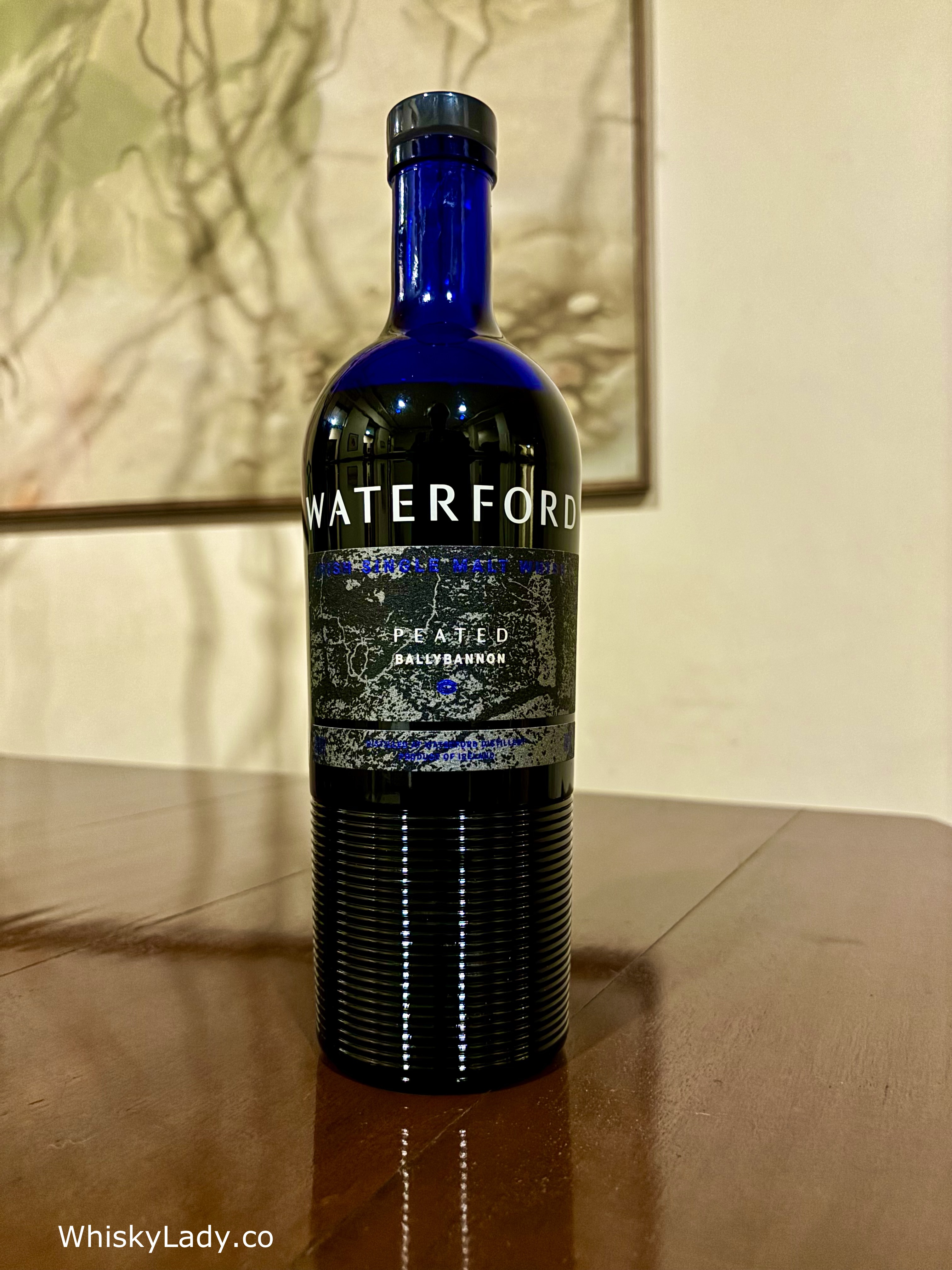
Waterford Arcadian Farm Origin Peated Ballybannon 1.1 (17 Sep 2018 – Aug 2022) Terroir P062E01-01 50%. 11,088 bottles. Retailing worldwide for Eur 92.
- Nose – Woah peat! Then it started to settle down. Burnt rubber. A curl of acrid smoke. Iodine then campfire. Wet mop or a wet wool sweater with a distinctly humid smell. Shifted into yoghurty baby puke.
- Palate – High heat then sweet cured meats. It was more bitter on the palate than the nose indicated. Also some salty damp elements too. Dare I say it has a kind of maritime quality?
- Finish – Peat and spice with cinnamon
- Water – Doesn’t do much. Subdues the palate but despite softening a bit, doesn’t shift the character significantly
- Revisit – Is this the same whisky? Clearly, it needs much more time in the glass. The peat remains very much there however a sweet honey joins the seaweed with the fire dampened, and the palate becomes smooth – much more approachable with a bit of apple sauce easing into a nice cinnamon finish.
Fascinating. The peat was certainly unlike a Scottish peat, having a maritime swagger. At 47 ppm, it isn’t overwhelming. And definitely needs time to open up.
If you are curious to know more – check out the video telling the tale of how the folks at Waterford approached acquiring and using peat in their whiskies.
As for our specific dram, If you have never heard of Ballybannon farm? Well then read on…
Ballybannon in Co. Carlow could be the perfect terroir for growing barley for peating. Sitting on raised ground along the banks of the River Barrow, its heavy, lime-rich soils — archetypal Elton series — are directly adjacent to sphagnum-dense inland bog. Small wonder then that the Pender family’s barley and peat from Niall Carroll’s Ballyteige cuttings in Co. Kildare have proven such a natural combination. Such is Ballybannon barley’s natural affinity for peat, that we have been able to kiln-dry it to a high 47ppm and still find that the character of Ballybannon’s terroir itself remains the dominant flavour in the spirit. Along with its sister bottling, Fenniscourt, Peated Ballybannon represents the first marriage of Irish barley and Irish peat in generations.
Curious about the maturation period? 1346 days or 3 years, 8 months, 7 days. Want to know about the barley? Laureate. Yeast? Mauri distiller’s yeast. Production water? Volcanic aquifer. Fermentation period? 167 hours. Description of the soil? Fine, loamy drift, Elton association soils. Barrel composition?
- 38% American First Fill (presumably ex-bourbon)
- 21% American virgin oak
- 30% French premium casks
- 11% Vin doux natural
And the Head Distiller’s observations?
- APPEARANCE: Light gold with everlasting oils.
- NOSE: Soft peat, almonds, crisp, lavender honey, reminds me of a seaside escape, driftwood fire smoke, green apples, padrón peppers, salt crust, a morning walk on a fresh day.
- TASTE: Peat kick, very chewable, BBQ fish by the sea, buttery, warm apple and almond tart with honeycomb ice cream, wool, frangipane, samphire.
- FINISH: What finish?!
All in all – what an experience! It will be interesting to see how Waterford evolves. And a good reminder of why being part of a tasting group is so rewarding – one is introduced to whiskies that likely otherwise might not have tried. So thank you to our whisky host of the evening!
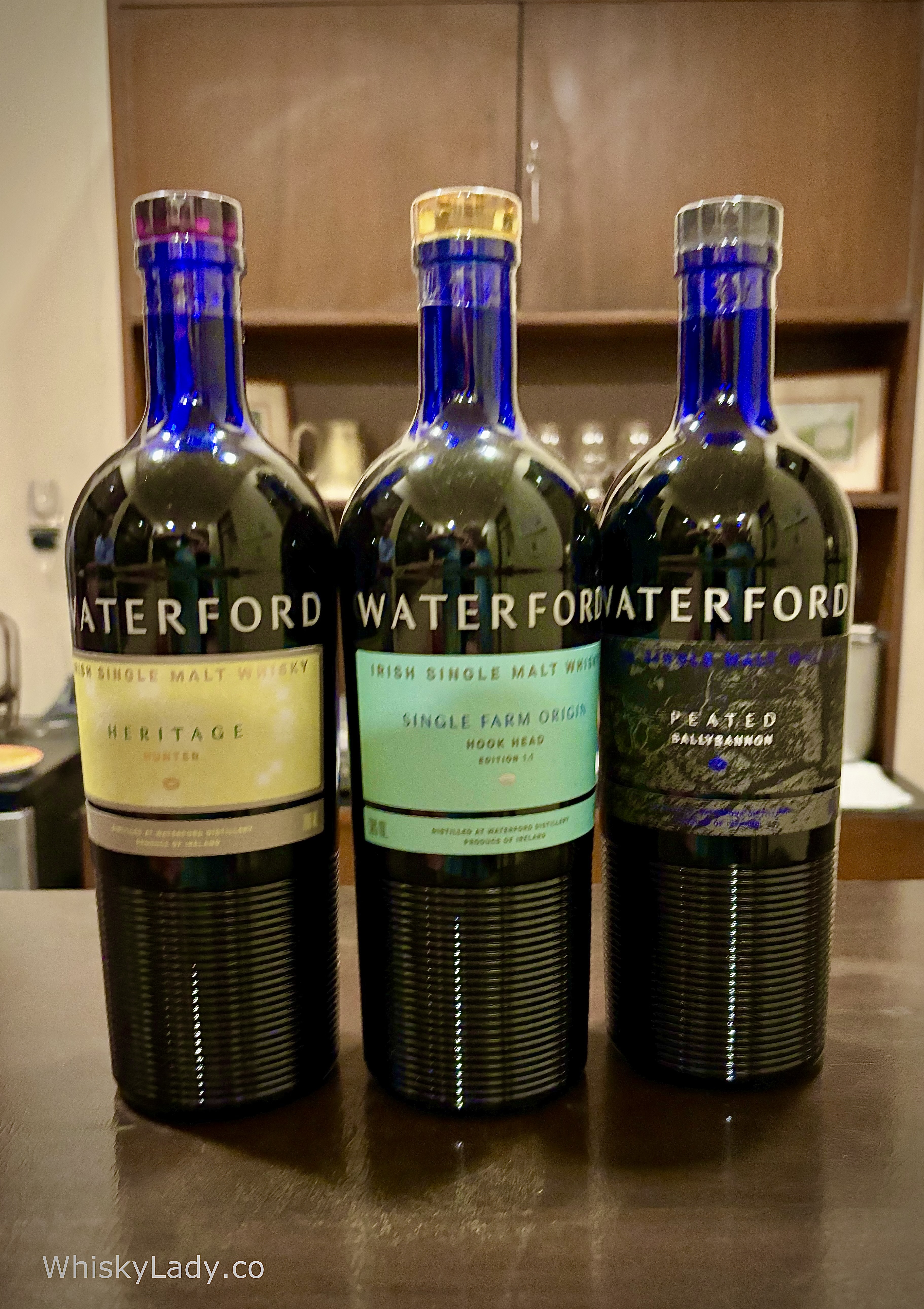
What did we try in our evening devoted to exploring Waterford Irish Whisky?
- Waterford Single Farm Origin Hook Head 1.1 Terroir F035E01-01 50% with a light green label distinctive yellow glass top, retailing for Eur 80
- Waterford Arcadian Farm Origin Heritage Hunter 1.1 Terroir HE01E01-01 50% with a yellow label and bright pink glass top, sold out at Eur 100
Curious about more Whisky Lady ramblings? Why not follow on:
- WordPress https://whiskylady.co/
- FaceBook Whisky Lady India – https://www.facebook.com/WhiskyLadyIN
 Whisky Lady